
Mon - Sat 7:00 am to 7:00 pm

Dumpster Rental in Chicago Neighborhoods: What You Need to Know
Renting a roll-off dumpster in Chicago is different from renting one almost anywhere else. Narrow residential streets, dense parking, city permit requirements, and Chicago’s distinct alley system all shape how a rental comes together. Whether the project is a two-flat gut rehab in Logan Square or a flat roof replacement in Beverly, the logistics require more upfront planning than a standard suburban rental.
Prime Dumpster coordinates dumpster rental across Chicago neighborhoods for home renovations, construction projects, cleanouts, and commercial work. We put together this guide to walk through what neighborhood renters need to know before booking.
Fast Facts: Dumpster Rental in Chicago Neighborhoods
“Chicago neighborhoods have a different set of rules than most markets,” says the Prime Dumpster Pro. “Permits, alley access, seasonal timing, and placement constraints all factor into a rental here in ways that don’t come up in most other cities.”
Planning to rent a dumpster for a Chicago neighborhood project? Here’s a quick look at general price ranges and common uses across all five standard roll-off dumpster sizes.
| Size | Price Range | Common Neighborhood Uses |
| 10-Yard Dumpster | $399–$499 | Concrete removal, small cleanouts, heavy debris |
| 15-Yard Dumpster | $449–$569 | Bathroom remodels, garage cleanouts, landscaping |
| 20-Yard Dumpster | $499–$649 | Flat roof tear-offs, multi-room renovations, estate cleanouts |
| 30-Yard Dumpster | $599–$799 | Full gut rehabs, two-flat renovations, larger construction |
| 40-Yard Dumpster | $699–$899 | Commercial buildouts, large demolitions, major remodels |
Price ranges reflect general estimates for standard 5-day rentals. Actual costs vary based on debris type, weight, rental duration, placement location, and seasonal demand across Chicago neighborhoods.
Find more ways to save here: How to Find the Best Dumpster Chicago Dumpster Rental Prices.
Street Permits for Chicago Neighborhood Dumpsters
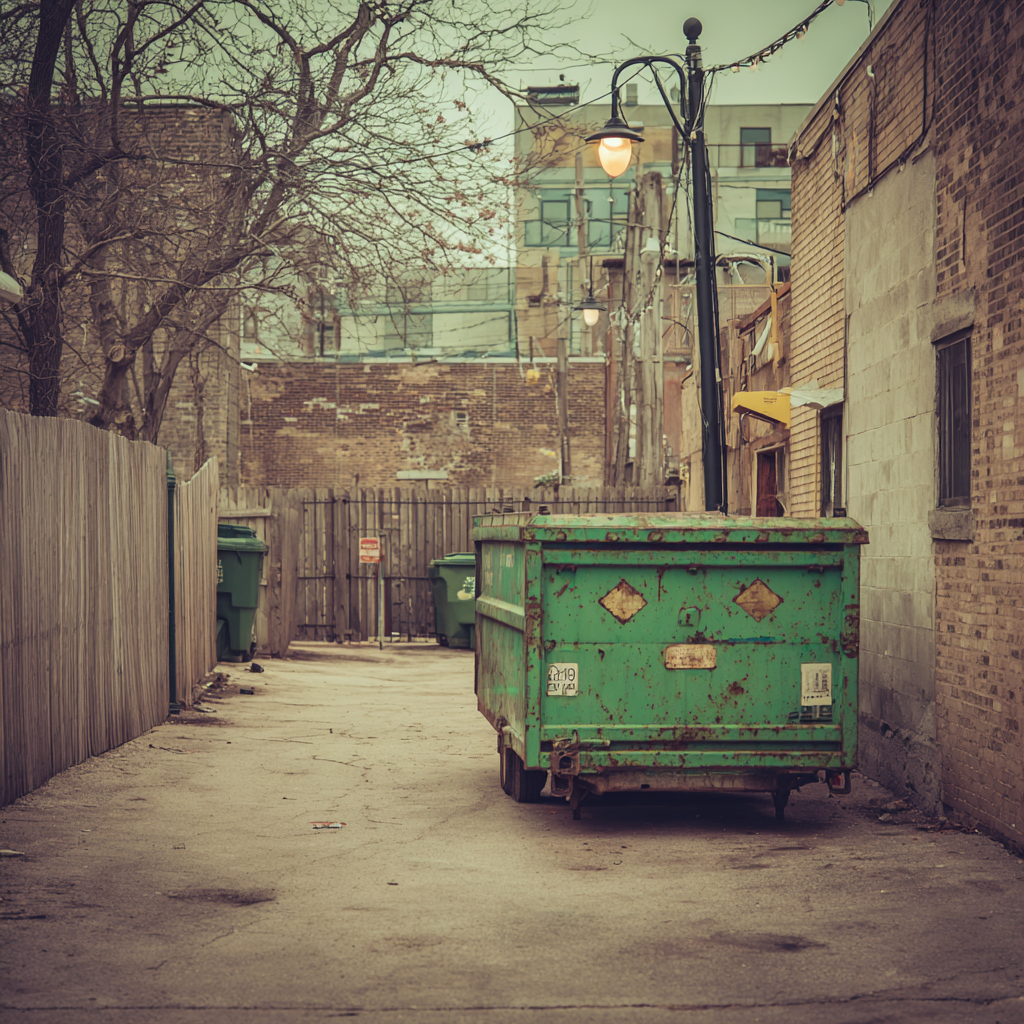
Any roll-off dumpster placed on a public street, alley, or sidewalk in Chicago requires a permit through the Chicago Department of Transportation. The city offers two permit options based on how long the container needs to stay on the public way: three day or 30 days.
The city’s dumpster license application also outlines a few important requirements for permitted street placements:
- The container must be placed immediately adjacent to the street address listed on the permit
- High-intensity reflective sheeting must be affixed to all four corners of the dumpster
- The permit must be secured before the dumpster is delivered, not after
Dumpsters placed entirely on private property — such as a driveway or job site lot — typically do not require a street permit. The details matter, which is why placement planning before booking can save both time and money.
Always check directly with the city of Chicago for the most current, accurate information.
Alley Placement: A Chicago-Specific Option
Chicago’s alley grid is one of the most extensive in the country, and it creates a placement option that doesn’t exist in most other cities. Rear alley placement can eliminate the need for a street permit entirely when the dumpster stays on private property behind the building.
Not every alley works. Clearance width, overhead utility lines, and surface conditions all determine whether a roll-off truck can safely access and drop a container.
A standard roll-off delivery truck needs roughly 60 feet of straight, unobstructed access to place a container. Narrow or bent alleys common in older Chicago neighborhoods may not meet that requirement. Confirming access before booking prevents a failed delivery on the day of the project.
Alley placement also requires checking whether the drop zone sits on private property or city right-of-way. If the container extends into the public alley, a permit is still required. Clarifying that boundary with your provider before scheduling keeps the rental compliant from the start.
Seasonal Challenges for Chicago Neighborhood Dumpster Rentals
Chicago’s seasons affect every part of a dumpster rental, from container availability to delivery logistics.
Winter Frozen Ground
Frozen ground in Chicago neighborhoods creates a real placement challenge, as the soil beneath driveways and unpaved surfaces can shift when heavy containers are set down.
Protective boards or steel plates under the container help distribute weight and prevent damage to surfaces that freeze and thaw repeatedly through the winter months.
Snow Removal Conflicts
A dumpster parked on a Chicago street during winter can directly conflict with the city’s snow removal operations, putting the container at risk of being ticketed or towed.
Coordinating pickup schedules around weather forecasts and keeping the area around the container clear helps avoid conflicts with city plows and snow emergency routes.
Spring and Fall Demand Surges
Chicago’s construction season launches hard in spring as contractors tackle projects delayed by winter, and container availability tightens quickly across neighborhoods citywide.
Booking four to six weeks ahead during peak season secures both availability and more predictable pricing before demand pushes rates higher.
Tight Staging Areas in Chicago Neighborhoods
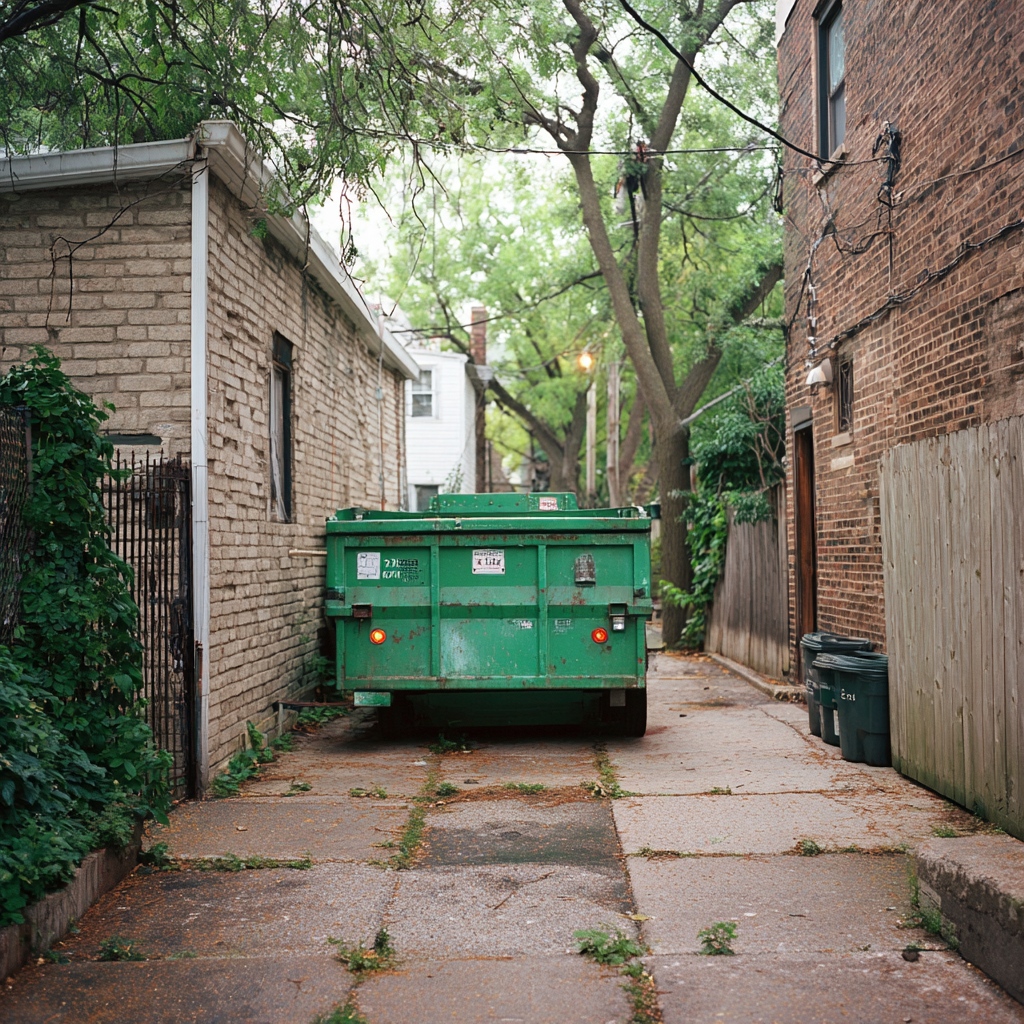
Chicago’s neighborhoods and residential streets were not designed with roll-off containers in mind. Parked cars, narrow lanes, and closely spaced buildings leave little room for delivery trucks to maneuver. Identifying a clear, accessible drop zone before booking is one of the most important steps in a Chicago neighborhood rental.
Overhead obstacles are a common problem that renters often overlook. Tree canopies, utility lines, and elevated train structures in neighborhoods like Wicker Park and Pilsen can block delivery routes entirely.
A delivery truck needs at least 50 feet of straight, flat access to safely place a container. Confirming that clearance exists at the drop location before scheduling prevents failed deliveries and additional trip fees.
Common Neighborhood Projects in Chicago
“Chicago neighborhood projects tend to follow pretty predictable patterns, and the debris output is usually higher than homeowners expect,” says the Prime Dumpster Pro. “Flat roofs, basement cleanouts, and gut rehabs each have their own sizing logic, and getting that right from the start saves a second trip.”
| Project Type | Recommended Size | Why |
| Flat roof tear-off | 20-Yard Dumpster | Roofing materials are heavy but manageable in a 20-yard; larger sizes often unnecessary |
| Concrete removal | 10-Yard Dumpster | Heavy materials hit weight limits fast; 10-yard is the only practical option |
| Basement cleanout | 15-Yard Dumpster | Mixed light debris fits well; compact size suits tight alley or driveway placement |
| Two-flat gut rehab | 30-Yard Dumpster | High debris volume across multiple rooms and floors requires larger capacity |
| Garage conversion | 20-Yard Dumpster | Framing, drywall, and mixed debris accumulate quickly during conversion work |
| Large demolition or buildout | 40-Yard Dumpster | Maximum capacity for high-volume commercial or structural debris |
| Kitchen or bathroom remodel | 15-Yard Dumpster | Right-sized for fixture removal, tile, drywall, and cabinetry debris |
Debris type matters as much as project scope when choosing a container size. Any project generating significant concrete, brick, or masonry should use a dedicated 10-yard unit regardless of overall project scale.
Plan Ahead for Your Chicago Neighborhood Dumpster Rental
Dumpster rental in Chicago neighborhoods involves more moving parts than a standard rental. Permits, placement constraints, seasonal timing, and project-specific sizing all affect how smoothly the process goes. Getting those details sorted before booking makes the difference between a rental that works and one that creates headaches mid-project.
Prime Dumpster coordinates dumpster rental Chicago neighborhoods projects of all sizes, from single-room remodels in Bridgeport to full gut rehabs in Andersonville. Contact our team to get a quote tailored to your project, your placement situation, and your timeline.
If you are looking for How to Find the Best Chicago Dumpster Rental Prices, Click Here
Recent Posts


Follow Us
Have any questions?
+1 844 853 3867
Give us a call today so we can help you find the right waste & sanitation solution for
your project!
Contact Us