
Mon - Sat 7:00 am to 7:00 pm

Half High or Crane Lift Porta Potty: Which is Best for Your Jobsite?
Choosing the right porta potty for your construction site makes a world of difference in worker morale, productivity, and even your project’s bottom line. And when your project involves heights, tight spaces, or challenging terrain, the choice becomes even more critical: half high or crane lift porta potty?
At Prime Dumpster, we understand the unique challenges of keeping a job site running smoothly, especially when it comes to those essential (but often overlooked) sanitation facilities. We’ve seen it all, from the logistical nightmares of navigating uneven terrain and dizzying heights to the delicate dance of ensuring worker satisfaction without sacrificing efficiency.
That’s why we’ve compiled this comprehensive guide to help you navigate the world of half high vs. crane lift porta potties. We’ll break down the features, benefits, and mechanics of each option, offering expert insights and practical advice to help you make the best decision for your project and your crew.
Fast Facts: Half-High vs. Crane Lift Porta Potties
Need a rental porta potty that can navigate tight spaces and challenging terrain? Among the many types of porta potties available, half-high units are a compact solution, designed to squeeze into narrow doorways and maneuver through crowded construction zones.
For those high-rise projects that reach for the sky, crane lift porta potties are your go-to choice, offering safe and efficient vertical transportation to ensure sanitation facilities are accessible on every level.
Choose a Half High Porta Potty if…
- You’re working on a multi-story building with limited elevator access.
- Your construction site has narrow alleyways or doorways that standard units can’t navigate.
- You need a portable restroom that can be easily moved around the job site as the project progresses.
Choose a Crane Lift Porta Potty if…
- You’re constructing a high-rise building with limited access to upper floors.
- Your project involves working on bridges, tunnels, or other challenging terrains where crane access is essential.
- You need a durable, weather-resistant portable restroom built to withstand the elements and heavy use.
Both half-high and crane lift porta potties offer unique advantages for construction sites, and choosing the right combination can significantly enhance worker comfort, productivity, and overall project efficiency.

Half High Porta Potty: Features and Applications
Construction sites face unique sanitation needs. The half high porta potty is a breakthrough for projects with limited space. These compact units are mobile and practical, fitting where standard units can’t.
Design and Mobility
Half high porta potties are built with a lower profile and narrower footprint than standard units, making them easier to maneuver through tight doorways, alleys, and crowded work zones. Features typically include heavy-duty casters for easy repositioning and exterior handles for added maneuverability, allowing crews to move the unit as the project progresses rather than committing to a single fixed location.
Mobility and Installation Requirements
Is a half high porta potty better for job sites with limited access? Absolutely. These portable restrooms excel in environments where traditional units cannot navigate. Their compact design allows placement in:
- High-rise construction areas
- Narrow doorways
- Confined alleys
- Emergency locations
- Cellars and garages
A half high porta potty offers a versatile sanitation solution for challenging work environments, ensuring practical convenience without sacrificing worker comfort or site efficiency. Exact pricing depends on rental duration, location, and project needs, so reach out to our team for a transparent quote tailored to your job site.
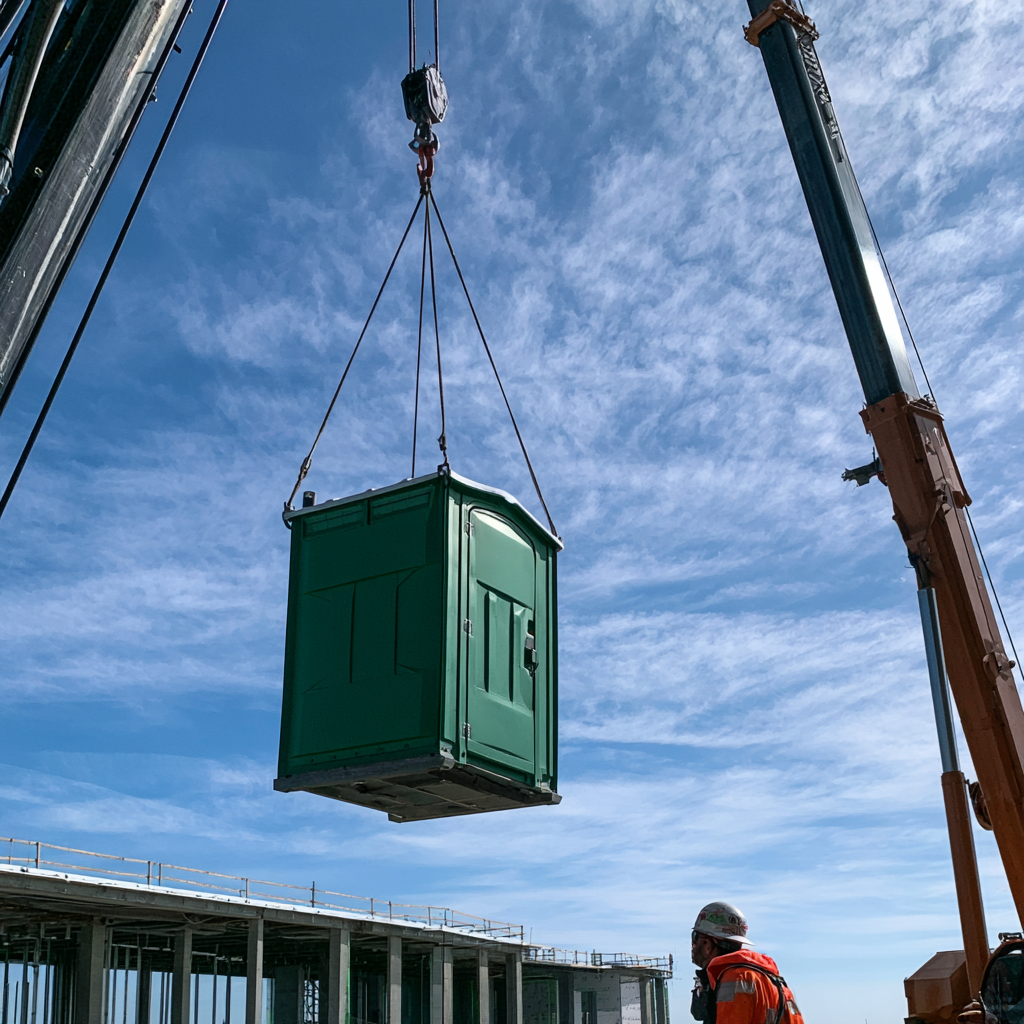
Crane Lift Porta Potty: Comprehensive Overview
The crane lift porta potty is a game-changer for construction sites needing restrooms at high elevations. These units are designed to tackle the unique challenges of high-rise and complex projects, with a sturdy build that ensures easy transport to otherwise inaccessible areas.
Design and Specifications
- Dimensions: typically 4 feet wide by 4 feet deep by 8.5 feet high
- Material: high-density polyethylene for durability
- Capacity: approximately 50 to 60 gallons
- Lifting mechanism: steel lifting hooks compatible with most crane rigging systems
- Ventilation: vent stacks to reduce odor buildup
- Door: occupancy indicator with an internal locking mechanism
- Sanitation: chemical treatments to minimize odors
- Built to comply with safety standards for lifting and operation at height
*Specifications may vary based on model and location.
Top 4 Benefits of Crane Lift Porta Potty
Here are the four features these units have that make them different from standard porta potties:
- Enhanced mobility for multi-story construction projects
- Reduced time waste for workers who no longer need to descend multiple floors
- Adaptable to narrow and restricted spaces at elevation
- Durable construction for rugged work environments
By placing crane lift porta potties strategically, contractors can boost productivity. These units save workers from descending multiple floors for restroom breaks, directly improving efficiency and worker satisfaction. Choosing a crane lift porta potty reflects a real commitment to worker comfort and site management, and pricing varies based on project duration and site logistics, so contact our team for an accurate quote.
How a Crane Lift Porta Potty Actually Works
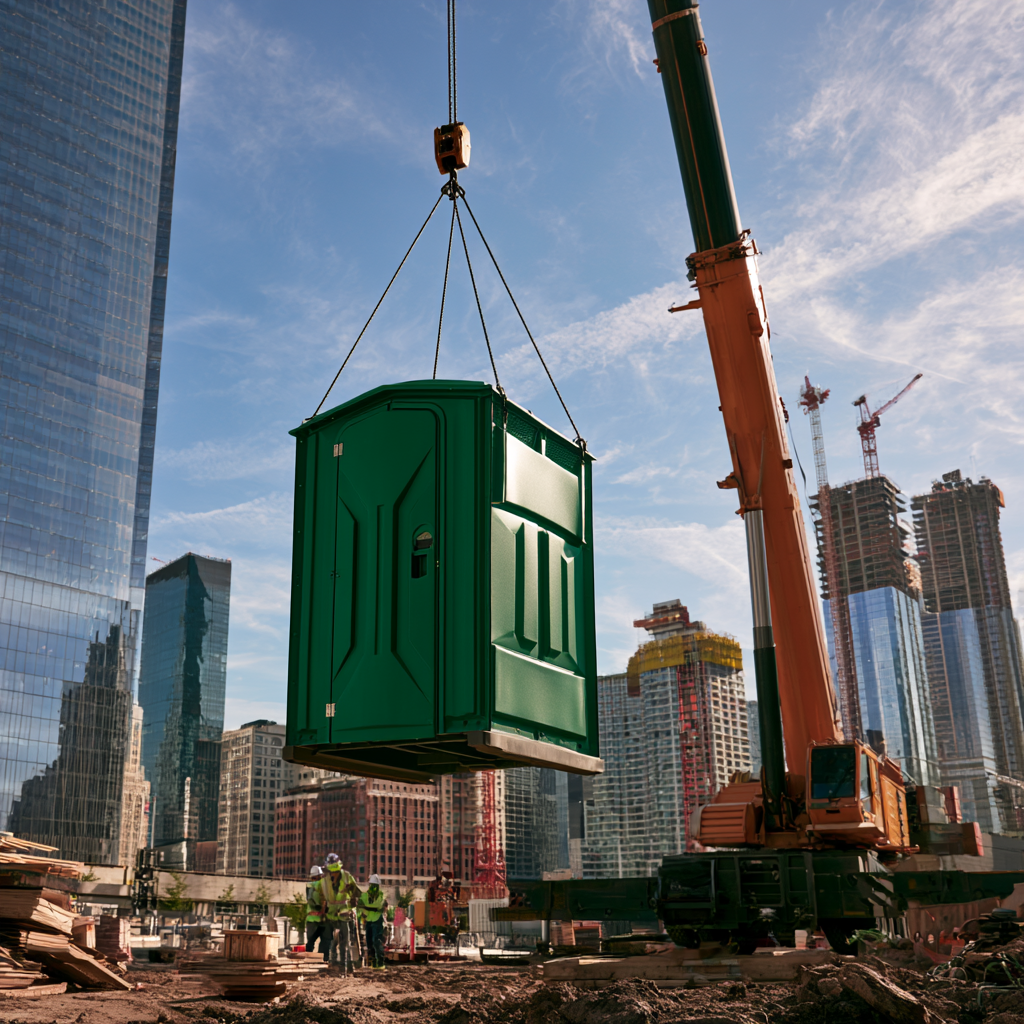
Setting up a crane lift porta potty involves several precise steps designed around safety and stability. Workers use heavy-duty construction cranes to lift the unit into place, relying on the steel lifting hooks built into the unit’s frame for a secure connection to the crane’s rigging.
Specialized rigging and precise crane operators ensure secure transport, reducing risk compared to traditional ground-level placement methods. A few structural features work together to keep the process safe:
- Reinforced attachment points that prevent shifting during lifting
- Anti-slip surfaces that maintain stability during crane movement
- Locking mechanisms that secure the unit throughout transportation and once it’s positioned
Once positioned, the unit is secured to the structure or floor, with tie-down points adding extra stability for workers using the facility at height. This process allows crews to place sanitation facilities in locations that would otherwise be impossible to reach, from upper floors of a high-rise to rooftop work areas and remote industrial sites.
Half High vs Crane Lift: Differences and Considerations
Construction sites require efficient sanitation solutions. Knowing the differences between half high and crane lift porta potties can significantly enhance worker comfort and project efficiency.
Size and Purpose
Half high models are built for ground-level mobility, with a compact, lighter design suited to tight spaces and frequent repositioning. Crane lift porta potties, by contrast, are purpose-built for vertical transport, with a reinforced frame designed to be lifted safely by crane and positioned at height. A crane lift unit measures roughly 8.5 feet high with a 4-by-4-foot footprint and holds approximately 50 to 60 gallons.
Accessibility and Maneuverability
When evaluating half high vs crane lift porta potties, mobility matters:
- Half high porta potties roll easily across flat surfaces, making them ideal for sites where the unit needs to move frequently
- Crane lift porta potties feature specialized lift hooks rather than casters, since they’re designed to be repositioned by crane rather than rolled
- Crane lift models work best in high-rise construction where ground-level relocation isn’t practical
Safety Features and Construction Requirements
Safety is essential in choosing portable restrooms. Crane lift porta potties are built with reinforced attachment points and robust lifting mechanisms for challenging environments, and these units adhere to strict safety standards for vertical transport. Your site’s specific needs, including project height, terrain, and how often facilities need to move, should guide your final decision.
Selecting the Right Portable Restroom for Your Construction Project
Choosing the right portable toilet for construction projects is a complex task. Construction managers must weigh various factors, including project needs, worker comfort, and adherence to regulations, to find the most suitable solution.
OSHA guidelines are essential for selecting portable toilets, and they call for adequate restroom access based on crew size to ensure basic sanitation and comfort for workers on site.
- Assess total workforce size
- Evaluate project duration
- Consider site layout and accessibility
- Review budget constraints
When deciding between a half high porta potty and a crane lift unit, contractors should weigh several project-specific factors:
- Site elevation and terrain
- Worker mobility needs
- Frequency of site relocations
- Budget for rental and maintenance
Placement matters too. Units should be positioned for easy worker access, and hand washing stations with antibacterial soap are recommended alongside any portable restroom to promote hygiene and meet safety standards.
Cost Considerations for Both Options
Rental costs for both unit types depend on rental duration, project location, site accessibility, and how long the unit will be needed on-site. High-rise or crane-assisted placement typically carries a premium over standard ground-level rentals given the added logistics involved.
Beyond the base rental cost, it’s worth factoring in installation time and overall site efficiency when weighing your options. A crane lift unit that saves workers from repeated trips down multiple flights of stairs can offer real productivity value that offsets its higher cost, particularly on larger high-rise projects.
Choosing the Right Fit for Your Jobsite
The right choice between a half high and crane lift porta potty comes down to your site’s layout, elevation, and how often facilities need to move. Half high units suit ground-level mobility and tight spaces, while crane lift units solve the unique challenges of high-rise and hard-to-reach work areas.
Contact our team for an accurate, itemized quote and expert guidance on the right portable restroom solution for your construction site.
If you are looking for How Does a Crane Lift Porta Potty Work?, Click Here
Recent Posts


Follow Us
Have any questions?
+1 844 853 3867
Give us a call today so we can help you find the right waste & sanitation solution for
your project!
Contact Us