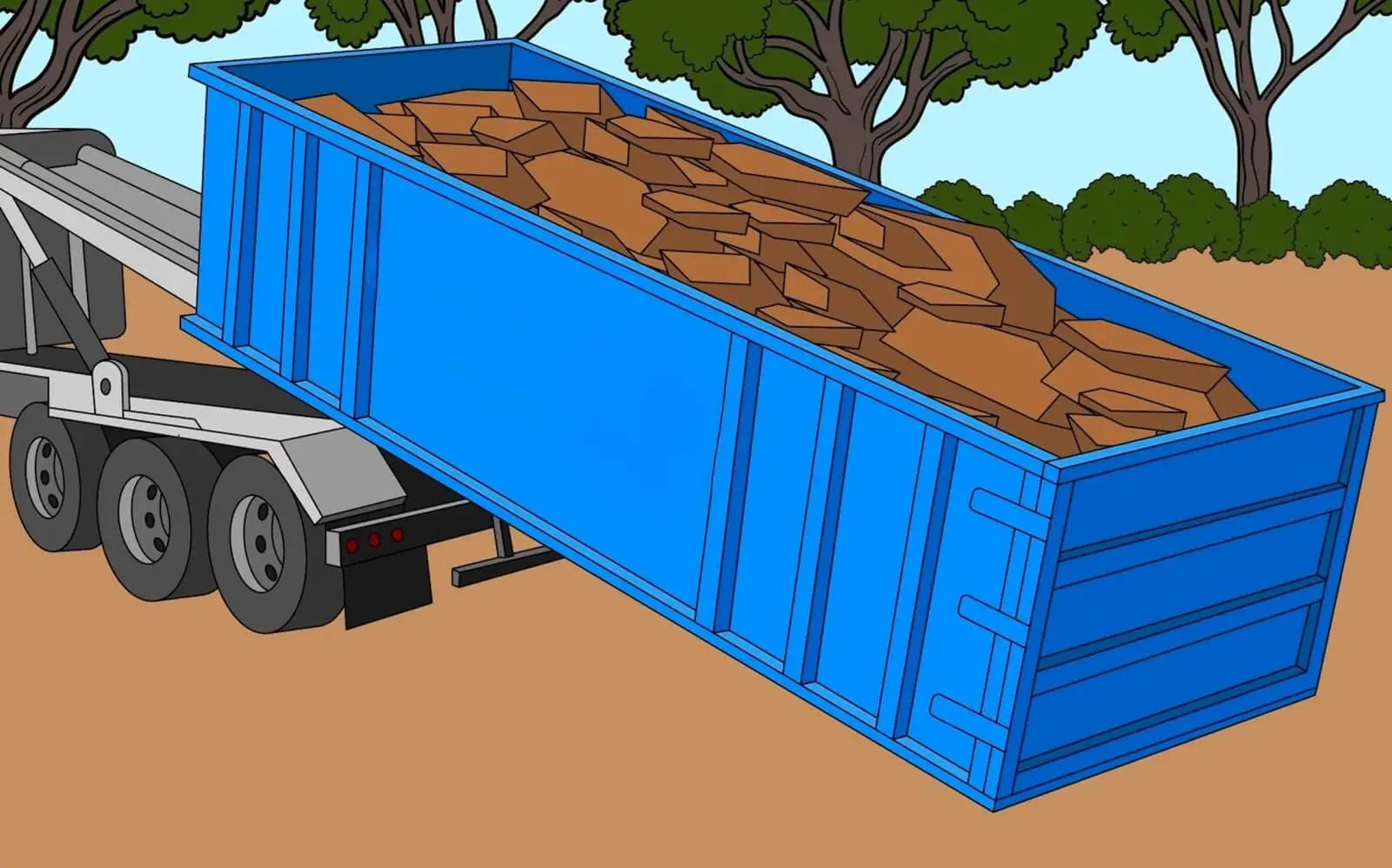
Everyday remodel and cleanout debris is fine. The real limits here come from Metro, the regional government that runs the transfer stations, and they are stricter than most places on construction loads.
Metro refuses asbestos-containing material, loads of liquids, petroleum-contaminated soil, burned material and wildfire ash, radioactive metals, electric vehicle batteries, vehicles, and flat or built-up roofing. That last one surprises people: flat roofing is turned away even with a clean asbestos test.
Asbestos screening is the rule to plan around. Construction debris from a home built before 2004, or from any commercial building whatever its age, needs an asbestos survey or lab results before Metro will take it. The results have to be on paper, since Metro does not accept an electronic copy, and the load has to test at one percent asbestos or less. Drywall joint compound, plaster, stucco, vinyl flooring and its adhesive, duct tape and duct cement, roofing felt, window glazing, and caulk are all on the list of materials that get tested.
Hazardous waste, wet paint, solvents, and fuel stay out of any standard container. Motor oil and antifreeze are capped at twenty gallons per customer per day and have to be in sealed, screw-top containers.
If you are gutting an older house, raise it with your account manager early. The testing has to happen before the load moves, not after.