
Mon - Sat 7:00 am to 7:00 pm
REQUEST A QUOTE
UNLOCK THE BEST DEALS FOR YOUR DUMPSTER AND PORTA POTTY RENTAL NEEDS!
Home Areas We Service Dumpster Rental in Oregon
Areas We Service
Dumpster Rental in Oregon
Prime Dumpster offers dumpster rental in Oregon across 31 Oregon cities and their nearby communities, from Portland and Salem to Eugene, Bend and Medford. Our containers handle garage cleanouts, siding and roofing jobs, kitchen remodels and new construction, and we serve commercial and federal work too.
Local details make the biggest difference to your price. The container size, the material you load, the spot the container sits on and the landfill or transfer station that takes it all count.
Use this page to check Oregon price ranges, permit basics, the state's landfill bans and the disposal sites that serve each region.
Call for a free quote
31
cities served in Oregon
10–40
yard containers available
5 days
standard rental period
Oregon Dumpster Rental Prices
The prices below reflect general ranges for a standard five-day rental period. Your account manager will confirm tonnage, overage rates, and other specifics before you book.
| Size | Average Price Range | Approximate Dimensions | Common Price Factors |
|---|---|---|---|
| 10-Yard Dumpster | $399–$499 | 12' L × 8' W × 3.5' H | Debris weight; heavy materials like concrete reach limits quickly |
| 15-Yard Dumpster | $449–$569 | 16' L × 7.5' W × 4–5' H | Debris mix; combined light and heavy materials affect disposal fees |
| 20-Yard Dumpster | $499–$649 | 22' L × 7.5' W × 4.5' H | Landfill distance; out-of-county loads may carry higher tipping fees |
| 30-Yard Dumpster | $599–$799 | 22' L × 8' W × 6' H | Debris volume; longer rental periods may apply for larger projects |
| 40-Yard Dumpster | $699–$899 | 22–24' L × 8' W × 8' H | Project scope; commercial and demolition loads vary widely by material |
Prices shown are general ranges for estimation purposes. Your final quote will depend on many factors, which your Prime Dumpster Account Manager will explain after learning about your project needs during your free consultation.
10-Yard Dumpster
Average Price Range
$399–$499
Approximate Dimensions
12' L × 8' W × 3.5' H
Common Price Factors
Debris weight; heavy materials like concrete reach limits quickly
15-Yard Dumpster
Average Price Range
$449–$569
Approximate Dimensions
16' L × 7.5' W × 4–5' H
Common Price Factors
Debris mix; combined light and heavy materials affect disposal fees
20-Yard Dumpster
Average Price Range
$499–$649
Approximate Dimensions
22' L × 7.5' W × 4.5' H
Common Price Factors
Landfill distance; out-of-county loads may carry higher tipping fees
30-Yard Dumpster
Average Price Range
$599–$799
Approximate Dimensions
22' L × 8' W × 6' H
Common Price Factors
Debris volume; longer rental periods may apply for larger projects
40-Yard Dumpster
Average Price Range
$699–$899
Approximate Dimensions
22–24' L × 8' W × 8' H
Common Price Factors
Project scope; commercial and demolition loads vary widely by material
Prices shown are general ranges for estimation purposes. Your final quote will depend on many factors, which your Prime Dumpster Account Manager will explain after learning about your project needs during your free consultation.
What Factors Affect Your Dumpster Rental Price?
Every rental price covers dropping the container off, the rental period itself and hauling the load to a disposal site. The job's details then move your quote up or down from there.
The main factors are container size, debris type, rental length and where the project is. Wet yard waste, tile and concrete add weight quickly, and extra days increase the cost.
Disposal is a big part of the total because Oregon facilities set their own tipping fees, and those fees pass into your quote. In Oregon, the gap between regions can be wide, and clean wood or yard debris often costs much less than mixed garbage.
Two examples of how county disposal differs in practice:
- Metro Central transfer station in Portland charges $176.70 per ton for garbage and $97.13 per ton for clean, untreated wood that's kept separate.
- Lane County charges $123.10 per ton for construction and demolition debris at its Glenwood and Florence sites, with a $25.00 minimum fee, while its rural sites charge small loads by volume instead of weight.
In the Portland area, pulling clean lumber out of a mixed load lowers its rate. In Lane County, which site you use changes whether a small load is charged by weight or by volume.
Rates change over time, so confirm them on the facility's official page. Your account manager can confirm the site that serves your address and explain what will shape your final quote.
Do I Need a Permit for a Dumpster in Oregon?
Leaving a container on your own driveway or job site usually doesn't call for a permit. Things change once it sits in a public street, on a sidewalk or in an alley. At that point you need permission from whoever maintains that road before the container is delivered.
Oregon doesn't issue a statewide container permit. Which office you work with comes down to the road:
- On a state highway, any activity other than normal travel needs prior permission from the Oregon Department of Transportation. ODOT gives that permission through a permit issued by one of its 14 maintenance districts.
- On a city street, the city sets the rules. In Portland, the Bureau of Transportation issues Temporary Street Use Permits for uses such as storage containers, construction and property maintenance, under its own street use fee schedule. Permits are typically issued within 5-10 business days, and the permit office's number is 503-823-7365.
Other Oregon cities write their own street use rules, so terms change from one town to the next. Your account manager can find the right contact before your delivery is booked.
What Can't Go in a Dumpster in Oregon
Most home and construction debris can go in the container. The limits come from each disposal site's permit, which the Oregon Department of Environmental Quality (DEQ) regulates.
Oregon law bans six kinds of waste from disposal sites: discarded vehicles, large home or industrial appliances, used oil, tires, lead-acid batteries, and covered electronics such as computers, monitors and televisions. Appliances like water heaters, refrigerators, stoves and washers fall under that ban, so leave them out of your debris.
Hazardous waste and free liquids are refused at ordinary landfills, as they are in every state, and friable asbestos needs a facility approved to take it.
Some sites add stricter limits. Portland's Metro transfer stations won't accept any asbestos-containing material, flat or built-up roofing, or loads of liquids.
If you have electronics, tires, appliances or anything else you're unsure about, ask your account manager where it should go before you load the container.
Oregon Landfill Disposal Sites
Oregon disposal runs through regional landfills, county transfer stations and Metro's public stations in the Portland area. The facility that receives your load depends on where your project is.
Metro Central transfer station is at 6161 NW 61st Ave. in Portland and is open to the public from 8 a.m. to 5 p.m. daily.
Lane County's Short Mountain Landfill is at 84777 Dillard Access Rd. near Eugene.
DEQ also collects per-ton fees from landfills and other final disposal facilities, and those costs are part of what each site charges. Your account manager confirms the receiving facility for your address when you book, along with any material restrictions there.
Metro Central Transfer Station
6161 NW 61st Ave., Portland, OR 97210
Open to the general public 8 a.m. to 5 p.m. daily; closed on major holidays.
Short Mountain Landfill
84777 Dillard Access Rd., Eugene, OR 97405
Lane County landfill for authorized commercial account holders only; closed to public access.
Cities We Serve in Oregon
31
locations served across Oregon
Portland metro:
Willamette Valley:
Southern Oregon:
Frequently Asked Questions
How much does a dumpster rental cost in Oregon?
A standard five-day rental in Oregon generally runs $399–$499 for a 10-yard dumpster and $699–$899 for a 40-yard. The container size, the debris you load and the county landfill or transfer station that takes it all affect the total. Your account manager confirms tonnage and overage rates before you book.
Do I need a permit for a dumpster in Oregon?
Not from the state. A container on your own driveway or property usually needs no permit. One on a public street does, and you apply to ODOT for a state highway or to the city for a local street, such as Portland's Temporary Street Use Permit. Your account manager can find the right office.
What can't go in a dumpster in Oregon?
Large appliances, used oil, tires, lead-acid batteries, computers, monitors, televisions, hazardous waste and free liquids. Oregon bars disposal sites from knowingly accepting the banned items for burial, so one hidden in the container can hold up your whole load.
Why does dumpster rental cost vary from one Oregon county to the next?
Each facility sets its own fees. Portland's Metro Central charges less for clean wood kept separate than for garbage, and Lane County charges its larger sites by the ton while rural sites price small loads by volume. Where your load goes and how well it's sorted both shape the cost.
Can I put tires in an Oregon dumpster?
No. Oregon bans tires from disposal sites, though some facilities accept them separately for recycling, usually for a per-tire fee. Take tires out of the pile and ask your account manager where they should go before the container is filled.
Does Oregon charge a state fee on landfilled waste?
Yes. Oregon DEQ collects per-ton fees from landfills and other final disposal facilities on the waste they receive. Those fees are built into the rates each site charges rather than billed to you directly. Your account manager can explain how disposal costs apply to your load.
Additional Dumpster Resources
Dumpster Rental Resources
Find everything you need for your dumpster rental, from sizing and pricing to permits.
Guide to Dumpster Pricing
Our guide includes updated price ranges, cost factors, and ways to save.
Dumpster Calculators
Estimating the weight of your debris helps you save money and time when renting dumpsters.
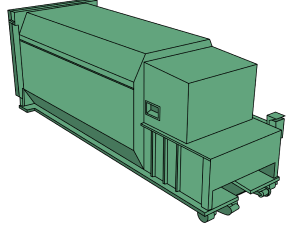
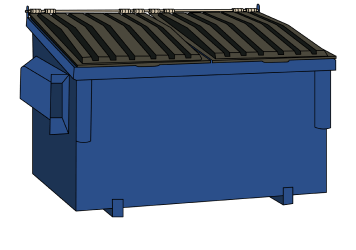
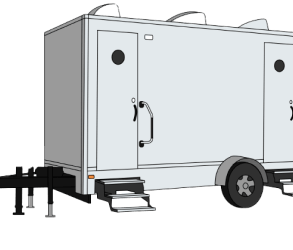
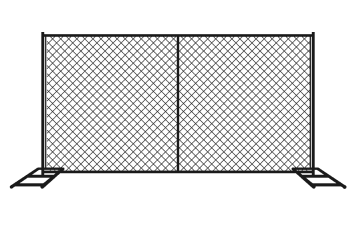
We offer other services in Oregon
Pair your dumpster rental with other services in your area
Give us a call today so we can help you find the right waste & sanitation solution for your project!