
Mon - Sat 7:00 am to 7:00 pm

Dumpsters for Kitchen Remodeling: Sizes, Tips, and More
Kitchen remodeling is one of the most rewarding home improvement projects, but managing the resulting debris can quickly become overwhelming. From old cabinets and countertops to broken tiles and flooring, a dumpster for kitchen remodeling makes cleanup straightforward and stress-free.
At Prime Dumpster, we’ve created this guide to help you select the right dumpster size, understand placement tips, and manage your renovation waste efficiently. Let’s explore how to simplify your kitchen remodel with practical waste management solutions.
Fast Facts: Dumpster Sizes for Kitchen Remodeling
Most kitchen remodels — whether in a home or a commercial space — fall within a predictable range of debris volume, and choosing the right container starts with understanding what each size offers.
| Dumpster Size | Approximate Dimensions | Approximate Weight Capacity | Common Uses |
| 10-Yard Dumpster | 12′ x 8′ x 4.5′ | Up to 2 tons | Minor residential updates, countertop or backsplash replacements, small cabinet removals |
| 15-Yard Dumpster | 16′ x 8′ x 4.5′ | Up to 3 tons | Mid-size residential remodels, cabinet and flooring removal, appliance disposal |
| 20-Yard Dumpster | 22′ x 8′ x 4.5′ | Up to 3 tons | Full residential kitchen gut jobs, multi-surface renovations, small commercial kitchen remodels |
| 30-Yard Dumpster | 22′ x 8′ x 6′ | Up to 4 tons | Large residential kitchen overhauls, mid-size commercial kitchen demolitions, remodels extending into adjacent spaces |
| 40-Yard Dumpster | 22′ x 8′ x 7-8′ | Up to 5 tons | Large-scale commercial kitchen demolitions, restaurant build-outs, institutional or industrial kitchen overhauls |
Dimensions and weight capacity are approximate and may vary based on local availability and provider.
What Kitchen Materials Weigh and Why It Matters
The right dumpster size depends not just on how much debris you generate, but how heavy it is. Kitchen materials vary significantly in weight, and a container that looks large enough by volume can hit its weight limit before it is full if you are removing dense materials.
| Material | Approximate Weight |
| Laminate countertops | 5-10 lbs per sq ft |
| Stone or granite countertops | 18-25 lbs per sq ft |
| Kitchen cabinets | 50-100 lbs per cabinet |
| Standard appliances (dishwasher, microwave) | 50-150 lbs each |
| Large appliances (refrigerator, range) | 150-400 lbs each |
| Ceramic or porcelain tile flooring | 4-6 lbs per sq ft |
| Hardwood flooring | 2-4 lbs per sq ft |
| Drywall | 2-3 lbs per sq ft |
Use these figures to get a rough sense of your total load before choosing a container. A kitchen with laminate countertops, wood flooring, and standard cabinets will land well within the weight capacity of a 10 or 15-yard dumpster. A full gut job removing stone countertops, tile flooring, and large appliances may push toward a 20-yard container even if the volume seems manageable.
When in doubt, contact our team and we can help you find the right fit for your specific project.
Rental Costs and Services
For most kitchen remodels, a 10-yard dumpster rental runs between $399 and $499, while a 20-yard rental typically falls between $499 and $649. These are general ranges, and your actual cost will depend on a number of factors specific to your project and location.
Common factors that affect your final price include:
- Rental duration: Standard rentals run about five days, which covers most kitchen projects. Extending your rental adds a daily fee, so building in extra time upfront is often more cost-effective than requesting a last-minute extension.
- Your location: Disposal costs, landfill fees, and delivery distances all vary by market. Urban areas tend to have more competitive pricing, while rural locations may see higher rates.
- Debris weight: Each rental includes a weight allowance. Dense materials like tile or stone countertops can push you over that limit, resulting in per-ton overage charges.
- Permit requirements: If your container needs to be placed on a public street or right-of-way, a permit may be required. Permit fees vary by municipality and are typically passed through to the renter.
- Container size: Larger containers carry higher base prices and higher weight allowances. Choosing the right size from the start helps you avoid paying for capacity you do not need.
Getting a quote specific to your project and location is the best way to understand your total cost before delivery day.
What to Expect When Renting a Dumpster for a Kitchen Remodel
Kitchen remodels are one of the most popular home projects for dumpster rentals.
Renting a dumpster for a kitchen remodel is a straightforward process, but knowing what to expect at each stage helps you plan ahead and avoid unnecessary costs or delays. Here is a step-by-step look at how it works, from your first call to final pickup.
Step 1: Choosing Your Container and Booking Your Rental
Start by estimating the scope of your project and the types of materials you will be removing. For most residential kitchen remodels, a 10 or 15-yard container is sufficient, while full gut jobs or commercial kitchen demolitions typically require a 20-yard container or larger.
Once you have a size in mind, contact your rental provider to confirm availability, pricing, and your delivery window. Commercial projects may require additional coordination around site access, crew schedules, and permit timelines, so booking further in advance is recommended.
Step 2: Preparing Your Site for Delivery
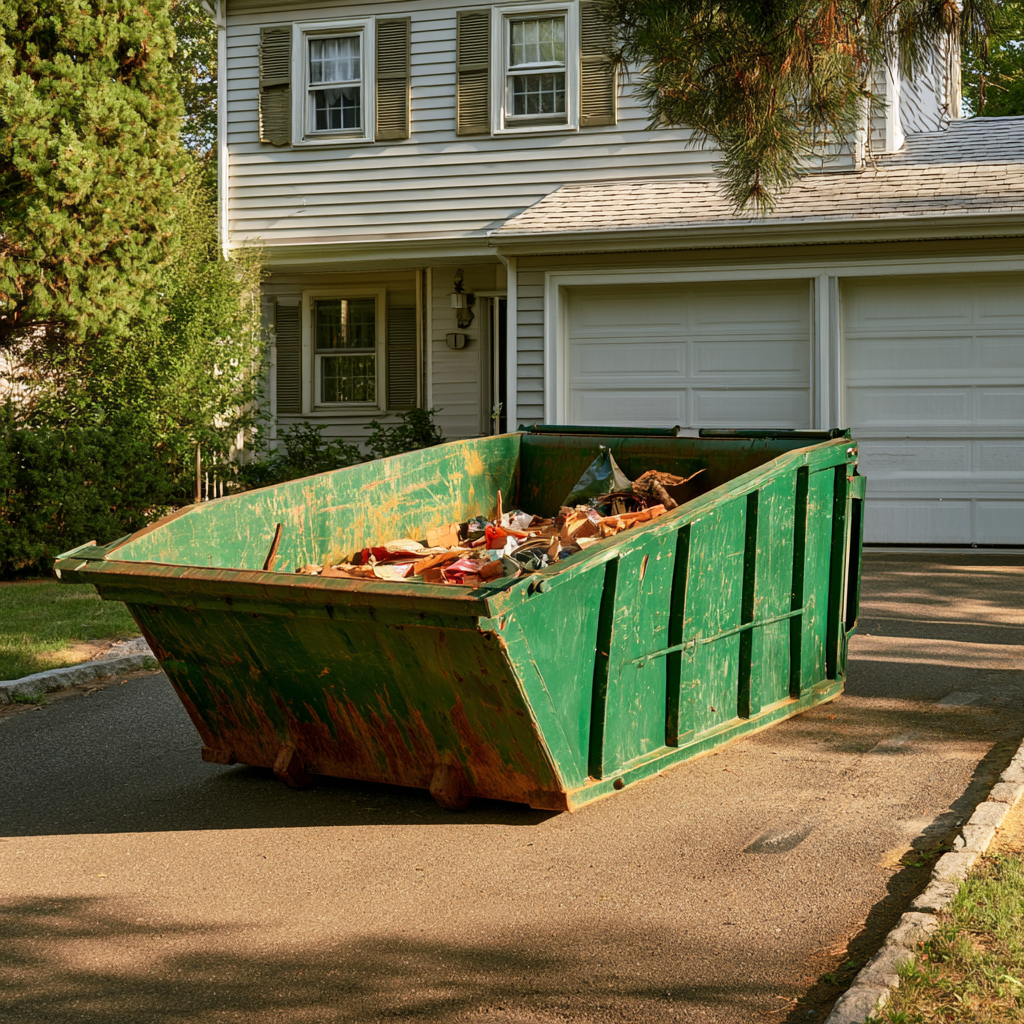
Before your container arrives, identify a clear, level placement area with enough room for the truck to maneuver. Residential driveways work well for most kitchen remodels, but placing plywood under the container helps protect the surface from scratches or indentations.
Additionally, you’ll want to place the dumpster your property, but away from open windows or other entrances, to help reduce bad odors in your house.
For commercial kitchen remodels, coordinate with your building manager or general contractor to designate a placement area that does not block loading zones, fire lanes, or other active work areas on the property.
Step 3: Loading the Container During Your Project
Load heavier materials like tile and stone countertops first, distributing weight evenly across the base of the container. Break down cabinets and larger items where possible to maximize space and keep debris below the container rim.
On commercial projects with larger crews, assign someone to monitor the container throughout the job. Keeping the loading area organized reduces the risk of overfilling and helps avoid delays when a swap or additional pickup is needed.
Step 4: Requesting an Extension or Swap if Needed
If your project runs longer than expected, contact your provider as soon as possible to extend your rental or schedule a container swap. Notifying your provider early typically results in a better daily rate than a last-minute call.
Commercial remodels with phased demolition schedules may require multiple containers or pickups over the course of the project. Building those intervals into your contract from the start keeps the workflow moving without interruption.
Step 5: Scheduling Pickup and Wrapping Up
When your container is full or your project is complete, contact your provider to schedule pickup. Make sure all debris is below the fill line and that no prohibited materials have been added, as these can result in additional fees.
For commercial projects, confirm that the pickup window aligns with site access hours and that the area around the container is clear for the truck. A quick walkthrough before the driver arrives helps ensure a smooth, uneventful removal.

What Can Be Disposed in Your Kitchen Remodel Dumpster
When tackling a kitchen remodel, a residential dumpster for kitchen waste is crucial. You can dispose of most debris in these containers. Cabinets, countertops, flooring, and drywall are common items found in these dumpsters. Non-hazardous construction materials are also generally acceptable.
Appliances often end up in dumpsters during renovations. You can usually dispose of refrigerators, ovens, and dishwashers in your rental. Old furniture, lighting fixtures, and hardware are also fair game. It’s important to clean and empty appliances before disposal to support recycling efforts. Refrigerators and freezers in particular require proper handling, since EPA’s Responsible Appliance Disposal Program notes that appliance foam and refrigerants must be recovered using approved methods to prevent the release of ozone-depleting substances.
Be mindful of what you can’t dispose of. Hazardous items like paint, solvents, and asbestos are usually prohibited. Also not allowed are various kitchen-specific hazards, such as cooking oil. (We also have a guide detailing safe, approved ways to dispose of cooking oil.)
Electronics may also not be allowed. Some rental companies might limit heavy materials such as concrete or brick. Always check with your provider for a complete list of accepted items to avoid extra fees.
- Acceptable: Cabinets, countertops, flooring, drywall, appliances
- Prohibited: Hazardous materials, paint, solvents, asbestos, electronics
- Check with Provider: Concrete, brick, heavy materials
For efficient waste management, consider separating recyclable metals from other trash. Materials like old copper piping and cabinetry can often be recycled or reused.
Doing so reduces environmental impact. By planning your disposal strategy, you’ll streamline your kitchen remodeling project and ensure proper waste handling.
Dumpster Rental for Residential vs. Commercial Kitchen Remodeling
Residential kitchen remodels typically generate a manageable amount of debris that fits within a 10 to 20-yard container. The scope is usually limited to one room, and materials like cabinets, countertops, flooring, and standard appliances are straightforward to load and dispose of. For most homeowners, a single container and a standard five-day rental period covers the entire project.
Commercial kitchen remodeling produces significantly more waste and often involves heavier, more specialized materials. Restaurant kitchen dumpster rentals, cafeteria demolition projects, and institutional kitchen overhauls frequently require 30 or 40-yard containers due to the volume of industrial equipment, heavy-duty flooring, and structural components being removed. Commercial dumpster rental for kitchen renovations also tends to involve stricter site logistics, including coordination with building management, permit requirements, and scheduled pickup windows that align with business operations.
The timeline and planning requirements also differ between the two settings. A homeowner can often book a dumpster a few days before a project starts and adjust on the fly. Commercial kitchen renovation waste disposal requires more advance planning, particularly for phased demolitions or projects in occupied buildings where access windows are limited. Working with a provider experienced in both residential and commercial dumpster rentals helps ensure the right container size, schedule, and service for the scope of your project.
Kitchen Remodeling Debris Removal Made Simple
A kitchen remodel can transform your home, but managing the debris is just as important as choosing the perfect design. A dumpster for kitchen remodeling ensures your project stays on track by providing an efficient and organized waste disposal solution.
At Prime Dumpster, we’re here to help you find the right dumpster size and service for your needs. Contact us today and let us simplify the cleanup process for your next renovation!
If you are looking for Guide to Dumpster Rental Prices in Los Angeles, California, Click Here
Recent Posts


Follow Us
Have any questions?
+1 844 853 3867
Give us a call today so we can help you find the right waste & sanitation solution for
your project!
Contact Us