
Mon - Sat 7:00 am to 7:00 pm

How to Dispose of Appliances
An old refrigerator in the garage, a washer that finally quit or a stove pulled out during a remodel can sit for months because no one is sure how to get rid of it. Appliances are heavy, bulky and sometimes contain materials that can’t go in the regular trash.
At Prime Dumpster, our team facilitates dumpster rentals for homeowners and contractors, and we created this guide to help you find the right way to get rid of each appliance. It covers your appliance disposal options, what can go in a rented dumpster, how to handle refrigerators and other units with refrigerant and when donating or recycling makes more sense.
Fast Facts: Appliance Disposal Options
“Start by asking whether the appliance still works and whether it has refrigerant,” says the Prime Dumpster Pro. “Those two answers narrow down your options quickly.”
| Option | Best For | Keep in Mind |
| Rented dumpster | Several appliances during a cleanout, remodel or move | Units with refrigerant and electronics are usually not accepted |
| Curbside bulk pickup | One or two appliances | Often requires scheduling, and rules vary by city |
| Retailer haul-away | Replacing an old appliance with a new one | Usually arranged at purchase, sometimes for a fee |
| Utility turn-in programs | Working refrigerators and freezers | Availability and requirements vary by utility |
| Scrap metal recyclers | Metal-heavy appliances like washers and stoves | Units with refrigerant may need extra handling |
| Donation | Clean, working appliances | Many charities have age and condition limits |
| Selling | Newer appliances in good condition | Takes time and may require you to arrange pickup |
When you’re deciding how to get rid of old appliances, the best choice depends on the appliance, its condition and how many items you need to clear out at once.

Can You Put Appliances in a Dumpster?
Often, yes, but it depends on the appliance and your provider. Appliances without refrigerant, like washers, dryers, dishwashers, stoves and ovens, are commonly accepted in rented dumpsters.
“The biggest exceptions are anything that keeps things cold and anything with a screen,” says the Prime Dumpster Pro. “Refrigerators, freezers and air conditioners need their refrigerant handled properly, and electronics usually go to a separate recycler.”
These items are commonly restricted:
- Refrigerators and freezers
- Window and portable air conditioners
- Dehumidifiers and other units with refrigerant
- TVs, computers, monitors and printers
Rules vary by provider and local landfill, so confirm before loading. You can review the full list of commonly prohibited items in our dumpster rental resources hub.
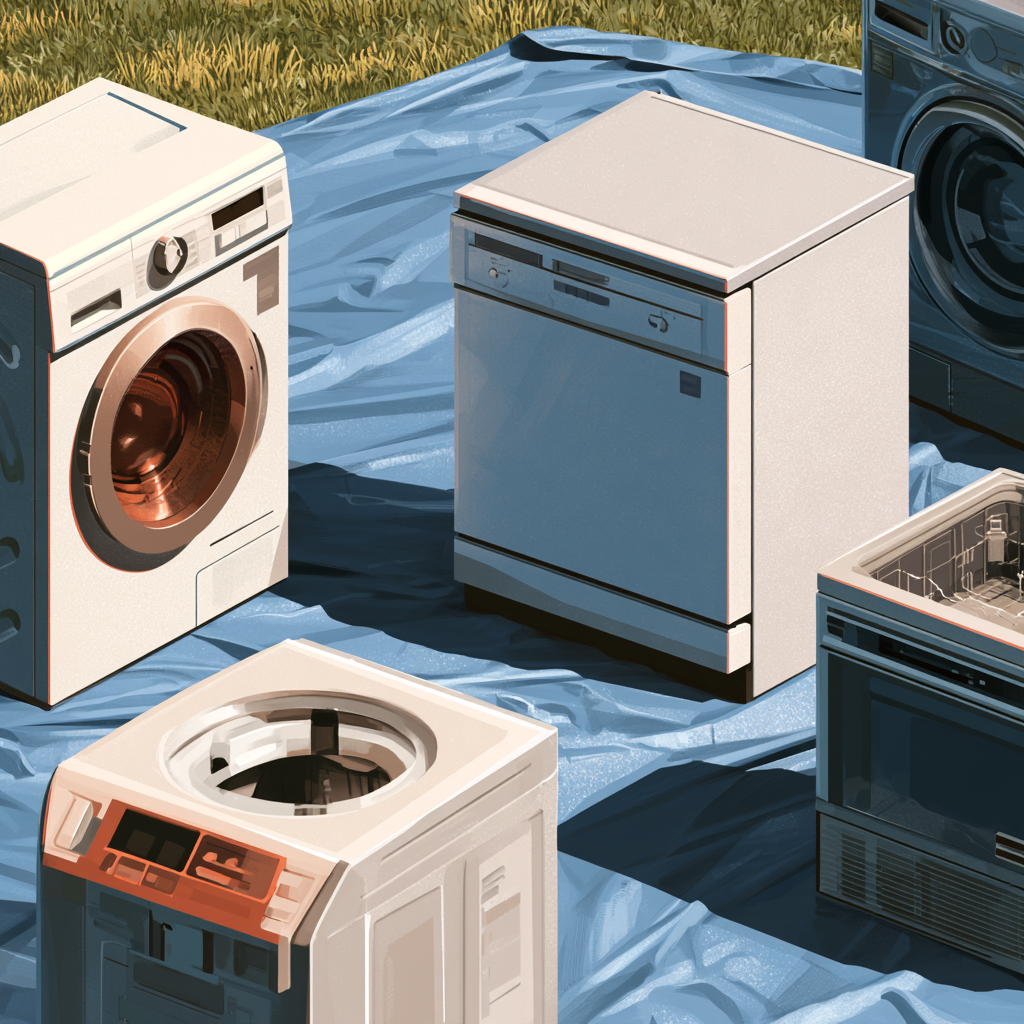
Washers, dryers, dishwashers and stoves are often accepted, while refrigerant units and electronics usually need separate disposal.
Refrigerator Disposal and Other Appliances With Refrigerant
Refrigerators, freezers, window air conditioners and dehumidifiers contain refrigerant and insulating foam that can harm the environment if released. Federal rules require the refrigerant to be properly recovered before these units are scrapped.
The EPA suggests first checking with your electric utility to see if it offers a rebate or turn-in program for old appliances. Some utilities and retailers take part in the EPA’s RAD program, which commits partners to collecting and disposing of refrigerated appliances using best environmental practices.
Other options include retailer haul-away when you buy a replacement, local transfer stations that accept refrigerant units and scrap recyclers that offer refrigerant recovery.
Check for utility turn-in programs first, then retailer haul-away, transfer stations or recyclers that handle refrigerant recovery.
Appliance Recycling Options
Most appliances are largely metal, which makes them good candidates for recycling. A few common routes:
- Local recycling centers and transfer stations: Many accept large appliances, sometimes for a small fee.
- Scrap metal recyclers: Washers, dryers, stoves and water heaters are often accepted, and some yards pay for scrap.
- Manufacturer programs: Some brands take back old units when you buy a new one.
- Retailer programs: Some stores recycle appliances at delivery or at drop-off locations.
Call ahead to confirm what each location accepts and whether it charges a fee.
Recycling centers, scrap yards, manufacturers and retailers all offer ways to keep appliance metal out of landfills.
Donating or Selling Working Appliances
A working appliance can still be useful to someone else. Habitat for Humanity ReStores accept new and gently used appliances, and many offer pickup for large items. Local charities, shelters and community organizations may also accept donations, though most have rules about age and condition.
Selling is another option for newer appliances. Online marketplaces and local buy-and-sell groups work well, and some used appliance dealers buy units outright.
Donate or sell appliances that still work, and check age and condition requirements before scheduling a pickup.
Curbside Pickup and Old Appliance Removal Services
Many cities offer bulk trash pickup for large items, including some appliances. You may need to schedule a pickup, buy a sticker or follow special rules for units with refrigerant.
Junk removal services are another option. They haul items away for a fee, which can be convenient for one or two heavy pieces. For larger cleanouts with several appliances and other debris, a rented dumpster is often more practical.
Check your city’s bulk pickup rules, or hire a removal service for one or two heavy items.

When a Dumpster Makes Sense
A dumpster works best when appliances are part of a bigger project. Kitchen remodels, whole-house cleanouts and moves often produce cabinets, flooring, furniture and other debris along with the appliances.
Prime Dumpster’s dumpster rental services include five common sizes:
| Dumpster Size | Common Projects With Appliances | Approximate Weight Capacity |
| 10-Yard Dumpster | A few appliances and small cleanouts | Up to 2 tons |
| 15-Yard Dumpster | Small kitchen remodels and garage cleanouts | Up to 3 tons |
| 20-Yard Dumpster | Full kitchen remodels and basement cleanouts | Up to 3 tons |
| 30-Yard Dumpster | Whole-house cleanouts and large moves | Up to 4 tons |
| 40-Yard Dumpster | Large renovations and estate cleanouts | Up to 5 tons |
Planning a remodel? Learn more about choosing a dumpster for kitchen remodeling. For bigger jobs, this guide to a whole-house cleanout covers planning and sizing. If you’re relocating, see our tips for renting a dumpster for moving.
Rent a dumpster when appliances are part of a remodel, cleanout or move, and choose a size based on the full project.
Frequently Asked Questions
We asked the Prime Dumpster Pros to answer common questions about getting rid of appliances.
How do I get rid of old appliances?
Start with the appliance’s condition. Donate or sell working units, recycle or scrap the rest, and use a dumpster or removal service for larger cleanouts.
Can I get rid of an appliance for free?
Sometimes. Donation pickups, some utility programs and some scrap yards don’t charge. City bulk pickup may be free or require a small fee.
Do I need to drain a washer or water heater first?
Yes. Drain all water and disconnect hoses before disposal to reduce weight and prevent leaks.
Can I remove the refrigerant from a refrigerator myself?
No. Refrigerant should be recovered with proper equipment, so use a turn-in program, retailer, transfer station or recycler that handles it.
What should I do with small appliances like toasters and microwaves?
Check your city’s trash and recycling rules. Some accept small appliances in regular trash, while others ask you to bring them to a recycling or e-waste drop-off.
Ready to Clear Out Your Old Appliances?
Getting rid of an old appliance is easier once you know whether it works, whether it contains refrigerant and how many items you need to clear out. Choosing the right path for appliance disposal keeps the process simple and keeps useful materials out of the landfill.
Our team can help you choose a size, plan around remodels and moves and line up a container for the rest of your debris. Whether you’re replacing one appliance or clearing out a whole house, we’ll help you find an option that fits. Contact our team to get started.
If you are looking for Moving Dumpster, Click Here
Recent Posts


Follow Us
Have any questions?
+1 844 853 3867
Give us a call today so we can help you find the right waste & sanitation solution for
your project!
Contact Us