
Mon - Sat 7:00 am to 7:00 pm
REQUEST A QUOTE
UNLOCK THE BEST DEALS FOR YOUR DUMPSTER AND PORTA POTTY RENTAL NEEDS!
Home Resources Porta Potty Rental Resources Porta Potty FAQ’S

Porta Potty Rental FAQ
Do you have questions about renting a porta potty? Our Prime Dumpster Pros have answers. Browse our porta potty rental FAQ below for clear, practical advice from our team. We cover everything, including permits, pricing, unit types, and how to determine the right number of units for your project or event.
Quick Navigation
Have a specific question? We’ve categorized our FAQs so you can find the information you need in seconds.
Porta Potty Permit Requirements: What You Need to Know
Our Prime Dumpster Pros field questions about porta potty permits every day, so here are clear answers to the ones that come up most often.
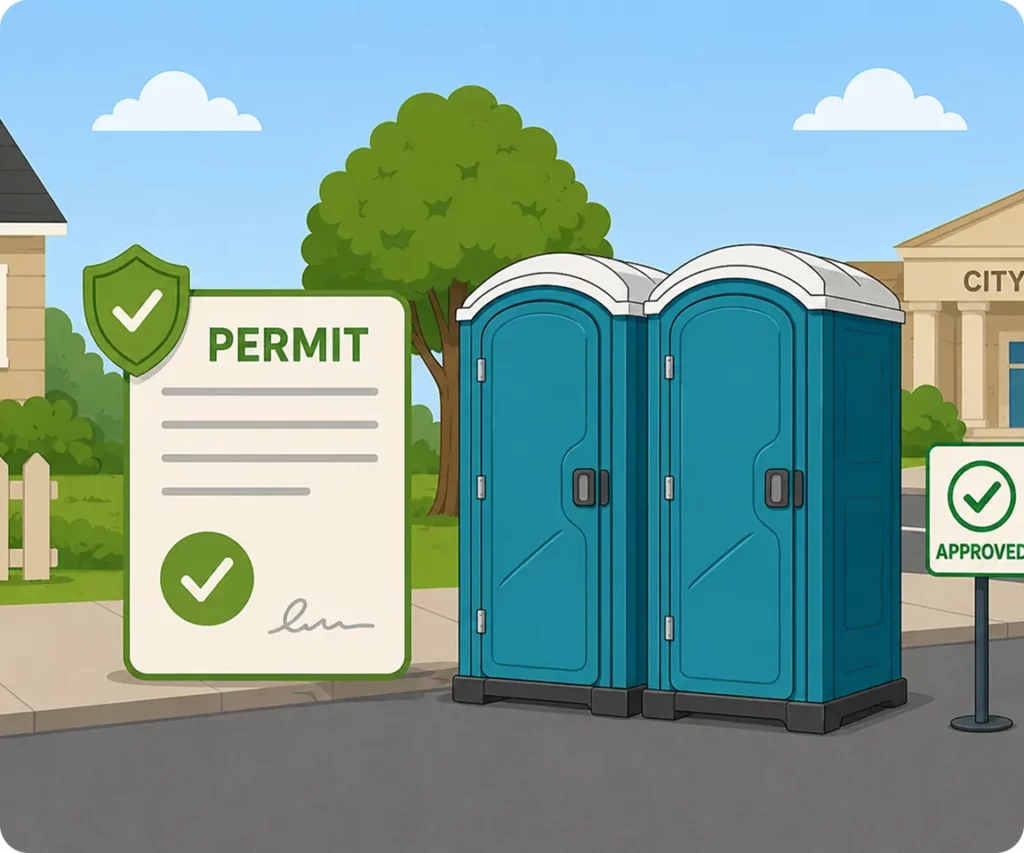
Whether you need a permit depends on where the unit will be placed, with public property placements almost always requiring one and private property placements typically not. When in doubt, a quick call to your local municipality before scheduling delivery is always the right move. Feel free to call us for help, too!
Start by searching your city or county’s website for portable restroom, right-of-way, or special event permits, and submit an application with your contact information, placement address, and rental dates. Allow at least two weeks for processing, as timelines vary by municipality and can stretch longer during busy seasons.
Permit fees vary widely by location and can range from a small administrative charge to several hundred dollars depending on your municipality and how long the unit will be in place. Always confirm the fee when you submit your application so you can factor it into your project budget.
Private events held on privately owned property typically don’t require a permit, but gatherings open to the public or held in shared spaces may require special event authorization from a local agency. Checking with your venue and local government before booking is always the safest approach.
Placement rules vary by location and are influenced by whether the site is public or private, local municipal regulations, and potentially even other regulations such as homeowners’ association guidelines. Regardless of location, units should always be placed on stable, level ground with clear access for delivery and service vehicles, and positioned away from food preparation areas, high-traffic pathways, and potential drainage zones.
Using a porta potty is not illegal. Portable restrooms are a widely accepted and legally recognized sanitation solution for construction sites, events, and locations without permanent plumbing. That said, using a unit on private property without the owner’s permission is not allowed, so always confirm you have authorization before accessing a portable restroom that isn’t part of your rental.
Standard porta potties don’t flush. Instead, waste drops into a holding tank treated with deodorizing chemicals that control odor and break it down until the unit is serviced. Deluxe flushing models are available and use a foot-pedal mechanism with a freshwater tank to flush waste after each use, providing a more familiar restroom experience.
Porta Potty Rental Pricing: How Much Does It Cost?
Pricing is one of the first things people want to know when renting a porta potty, so we asked our Prime Dumpster Pros to break down the most common cost questions for our porta potty rental FAQ.
Rental costs generally start around $199 for a standard unit and can reach $1,500 or more for luxury restroom trailers, with most construction and event rentals falling somewhere in the $199 to $400 range. Final pricing depends on unit type, location, rental duration, and service frequency.
Monthly rentals are billed on a 28-day cycle, with standard units typically ranging from $199 to $349 for the full period. Specialty units like solar porta potties and deluxe models carry higher monthly rates, while handwashing stations add $150 to $250 per billing cycle.
The biggest factors are unit type, location, season, service frequency, and how far in advance you book, with summer months and last-minute rentals typically carrying the highest rates. Renting multiple units through a single provider and choosing the right unit type for your needs are two of the most effective ways to keep costs predictable.
Booking early, choosing the right unit type for your situation, and bundling multiple units through one provider are the most reliable ways to reduce your total rental cost. Planning your rental period carefully before booking also helps you avoid extension fees that can add up quickly on longer projects.
Porta Potty Types: Which Types Will Work Best?
With so many portable restroom options available, choosing the right unit can feel overwhelming. Here are the answers our Prime Dumpster Pros hear most often about porta potty types.
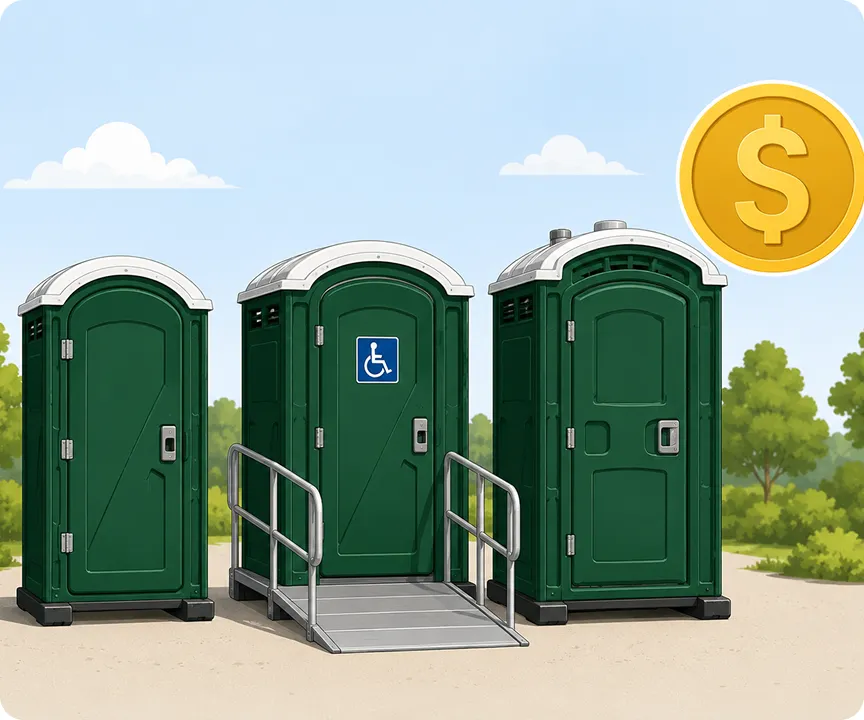
Common rental options include standard units, handicap-accessible and ADA-compliant models, deluxe flushing units, deluxe units with built-in sinks, solar units, towable units, and crane lift models, along with restroom trailers and handwashing stations. Each type is designed for specific situations, from basic construction site sanitation to upscale outdoor events requiring luxury restroom trailers.
A standard porta potty typically includes the essentials: a toilet, urinal, toilet paper dispenser, and hand sanitizer. Deluxe models add features like foot-pedal flushing systems, built-in sinks with running water, improved ventilation, and more interior space. Deluxe porta potties are commonly used at events like weddings, festivals, and VIP functions where a higher level of comfort and sanitation is desired to elevate the guest experience.
A restroom trailer is worth considering when guest comfort and appearance are priorities, such as at weddings, corporate events, and upscale festivals, where flushing toilets, running water, and climate control make a meaningful difference. For larger events, trailers are often paired with standard units to serve VIP areas while standard units handle general crowd capacity.
ADA-compliant portable toilets meet the specific standards set by the Americans with Disabilities Act, including a minimum doorway width of 36 inches, grab bars, and ground-level entry. They are required at public events and government projects and are recommended for any site where accessibility compliance is a legal or practical obligation.
Porta Potty Quantities: How Many Units Do You Need?
Getting the unit count right is just as important as choosing the right type, so here are the answers our Prime Dumpster Pros give most often when it comes to how many porta potties to rent.
OSHA construction standards require at least one toilet facility for crews of 20 or fewer workers, with the ratio increasing to one toilet and one urinal per 40 workers for sites with 21 to 200 employees. Always plan based on your peak crew size rather than your average, as shortfalls during busy periods create the most disruption.
A general starting point is one unit per 50 guests for events lasting up to four hours without alcohol service, with counts adjusted upward for longer events or larger crowds. Distributing units across the venue rather than clustering them in one location also helps reduce wait times and keeps foot traffic moving.
Events where alcohol is served typically see restroom usage increase by 15 to 20 percent compared to non-alcohol events, meaning your baseline unit count should be adjusted upward accordingly. Planning for the higher usage rate from the start is more cost-effective than arranging last-minute additions once the event is underway.
A general guideline is one handwashing station per seven portable restroom units, with additional stations recommended near food service areas and high-traffic zones. Construction sites with 20 or more workers typically benefit from at least one dedicated handwashing station on site to meet hygiene standards.
Additional Dumpster Resources
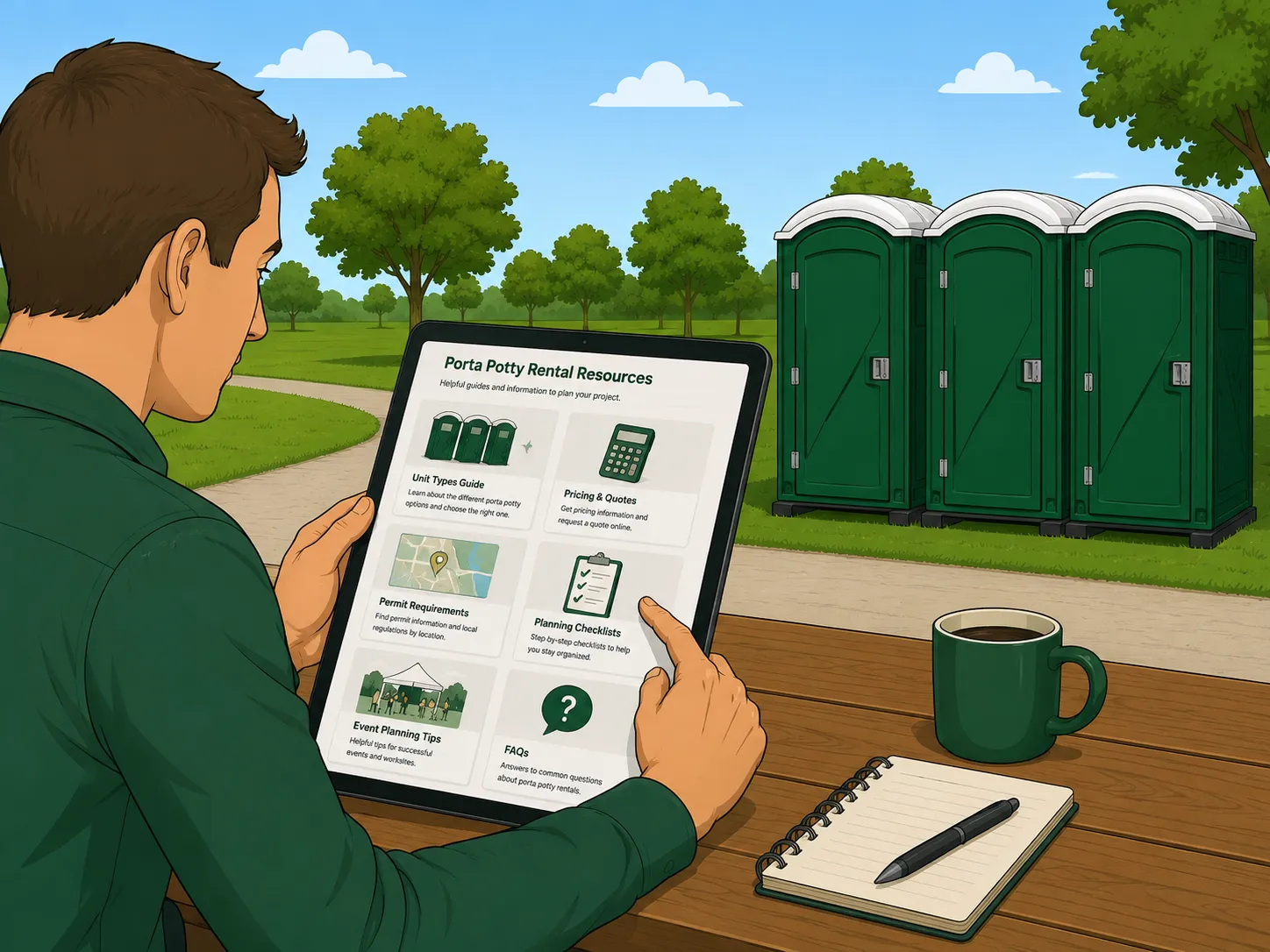
Porta Potty Resources Hub
Find all porta potty rental resources in one place, from pricing and unit types to permits and planning guides.
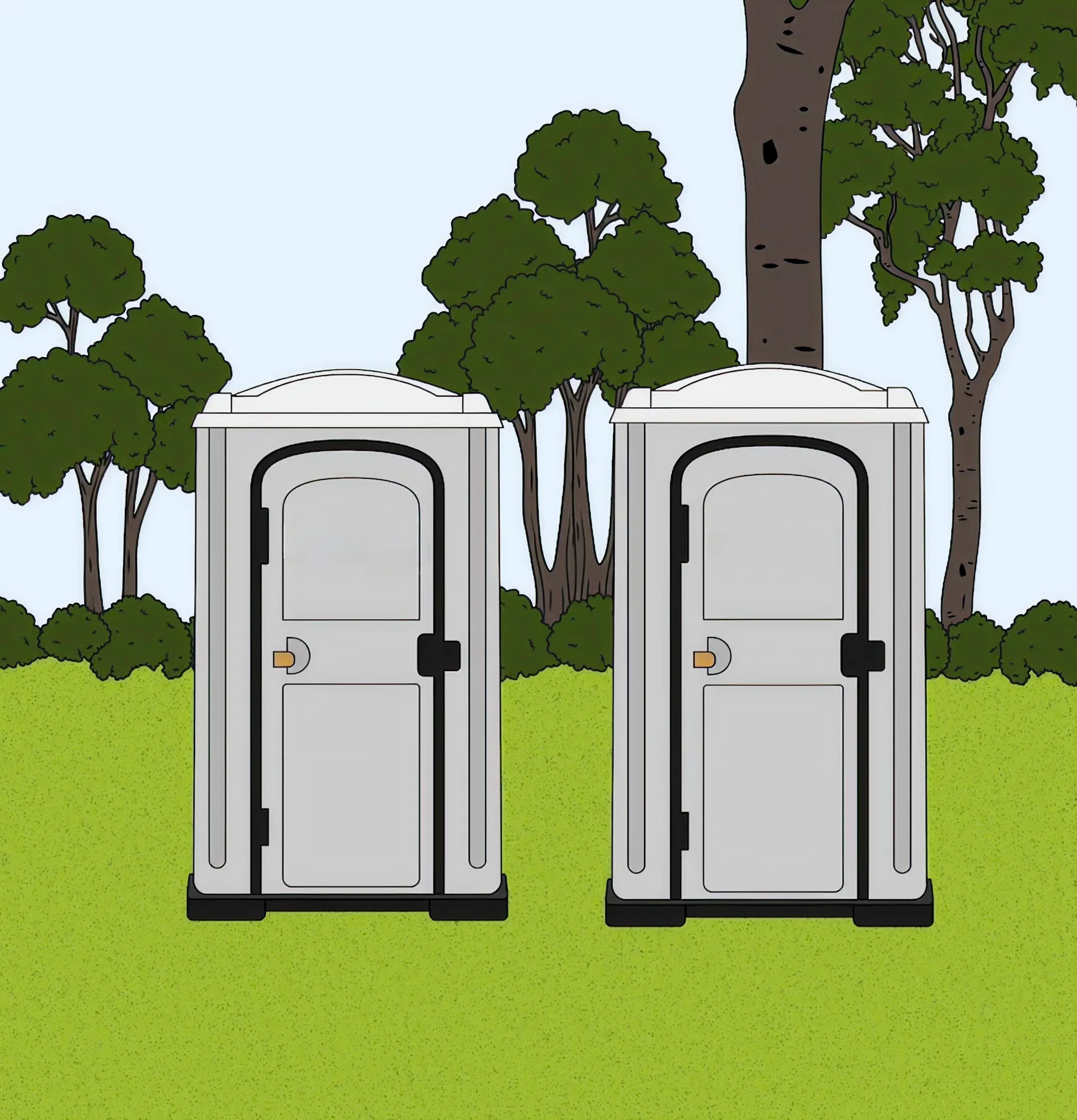
Porta Potty Pricing
Learn more details about porta potty rental pricing, including easy tips to save money.
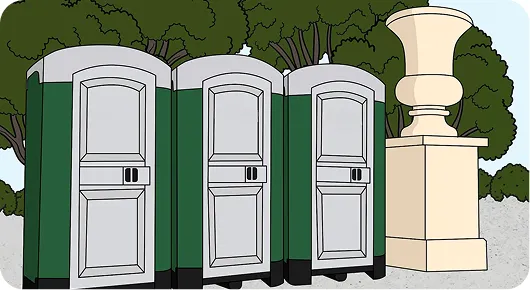
Porta Potty Types
Different types will impact your costs. You can read more about porta potty types in our resource page.
Give us a call today so we can help you find the right waste & sanitation solution for your project!