
Mon - Sat 7:00 am to 7:00 pm

Guide to Porta Potty Odor Control
Odor is the number one complaint about portable restrooms, and it’s almost entirely preventable. The smell people associate with porta potties comes from a specific biological process that responds predictably to cleaning frequency, chemical treatment, placement, and ventilation. When any of those factors is neglected, odor builds. When all four are managed together, it stays under control.
Prime Dumpster has coordinated portable toilet rentals for construction sites, events, and long-term projects where porta potty odor control is a daily operational concern. This guide covers what causes portable restroom odor, how service frequency and chemical treatments work to control it, and the placement and ventilation strategies that keep units fresh between service visits.
Fast Facts: Porta Potty Odor Control
“The secret to odor-free porta potties isn’t one magic trick. It’s combining multiple strategies that work together to neutralize smells at their source while preventing new odors from developing,” the Prime Dumpster Pro said. “Regular service, smart placement, and the right chemical treatments, working together, are what keep units fresh.”
- Service frequency is the foundation. Empty holding tanks and service units weekly for construction sites, daily for high-traffic events, and multiple times daily for festivals exceeding 200 attendees. Accumulated waste is the primary odor source that no amount of deodorizer can mask once tanks approach capacity.
- Shade reduces heat-driven odor. Place units away from direct sunlight. High temperatures accelerate bacterial decomposition and intensify odor production, with interior temperatures in sun-exposed units climbing significantly higher than shaded alternatives during summer months.
- Ventilation lets gases escape. Clear, unobstructed roof vents allow odorous gases like ammonia and hydrogen sulfide to exit the unit rather than building up inside.
- Chemical treatments break down waste. Blue liquid disinfectants containing biocides and surfactants neutralize bacteria and control odor between service visits.
- Handwashing stations reduce contamination. Providing soap and water access keeps interior surfaces cleaner between professional servicing visits, reducing the bacterial buildup that contributes to persistent odor.
At Prime Dumpster, our team is ready to help you find the best porta potty rentals for your specific project and budget. No two jobs are alike, which is why we create custom solutions for each client, complete with detailed, transparent quotes before you book.
What Causes Porta Potty Odor
Porta potty odor is produced by bacterial decomposition of waste, accelerated by heat and trapped by poor ventilation.
Understanding what creates the smell is the first step toward controlling it. The odor doesn’t come from the waste itself so much as from the gases released as bacteria break it down.
Research from NC State University on the microbial ecology of portable sanitation systems confirms that bacterial communities in holding tanks produce gases like ammonia and hydrogen sulfide as they decompose organic waste. These gases are the primary source of what people recognize as “porta potty smell.” The three factors that determine how strong that odor becomes are:
- Rate of bacterial activity, which increases with temperature and the volume of waste in the tank
- Ventilation, which determines whether those gases escape through the roof vent or accumulate inside the unit
- Chemical treatment levels, which control bacterial growth and neutralize odor-producing compounds between service visits
When all three factors are working against you, such as a full tank on a hot day with a blocked vent, the result is the worst-case odor scenario. When all three are managed, odor stays at a level most users barely notice.
How Service Frequency Controls Odor
Regular pump-outs and chemical recharging of the holding tank are the single most effective method of porta potty odor control.
The holding tank is where waste accumulates and where odor originates. No amount of deodorizer, ventilation, or strategic placement can compensate for an overdue pump-out. When the tank fills past its effective capacity, the chemical treatments become diluted and lose their ability to control bacterial growth.
Service visits include pumping out the tank, cleaning and sanitizing interior surfaces, restocking supplies, and recharging the tank with fresh chemical solution. The right frequency depends on usage:
- Construction sites with a standard crew: weekly servicing
- Single-day events under 200 guests: pre-event setup and post-event pickup, with a mid-event check for longer events
- Multi-day events or festivals: daily servicing at minimum, with multiple service checks for high-attendance days
- Long-term residential rentals: weekly, with the option to increase for larger households
“When we get a call about a unit that smells bad, the first question we ask is when it was last serviced,” the Prime Dumpster Pro said. “Nine times out of ten, the answer tells us everything. A unit that’s serviced on schedule rarely has an odor problem.”
For a deeper look at whether renters have any cleaning responsibilities between professional service visits, see our article on whether you need to clean a rented porta potty.
Placement Strategies That Reduce Odor
Placing porta potties in shaded, downwind locations with clear ventilation reduces heat-driven bacterial growth and directs residual odor away from gathering areas.
Where you place a unit has a direct effect on how it smells. Three placement decisions make the biggest difference.
Shade. Direct sunlight heats the interior of a portable restroom well above ambient temperature, which accelerates bacterial activity and intensifies odor production. Placing units under trees, against buildings, or under temporary canopies keeps interior temperatures lower and slows the process that produces the smell in the first place.
Wind direction. Position units downwind from areas where people gather, eat, or work. This directs any residual odor away from the population rather than toward it. At events, check the prevailing wind direction during site planning and place the restroom cluster accordingly.
Ventilation access. Every portable restroom has a roof-mounted vent pipe designed to let gases escape. Make sure nothing obstructs it: no overhanging branches, no canopy material draped over the top, no debris. For more on keeping airflow working properly, see our guide to porta potty ventilation.
“Placement is one of the cheapest and most effective odor control tools you have,” the Prime Dumpster Pro said. “Moving a unit 20 feet into a shaded spot or rotating it so the vent catches the breeze costs nothing and makes a real difference.”

Chemical Treatments and Deodorizers
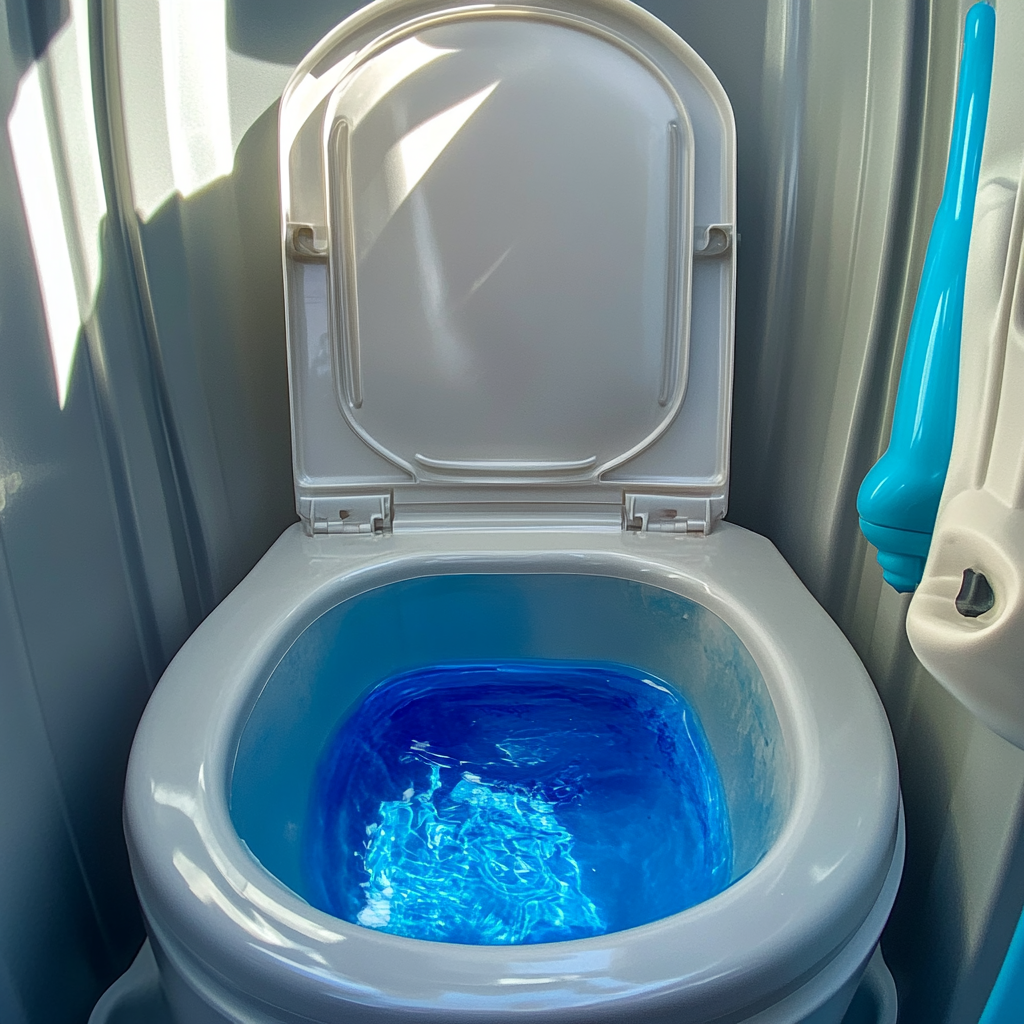
The blue liquid in porta potties contains biocides that kill odor-causing bacteria and surfactants that break down waste, forming the chemical foundation of odor control.
The blue liquid visible in the holding tank is a carefully formulated chemical solution, not just dye. Its components each serve a specific function in controlling odor between service visits.
Biocides, including compounds related to the Bacillus family of bacteria-targeting agents, inhibit the growth of odor-producing microorganisms in the tank. Surfactants reduce surface tension, helping the solution spread evenly and preventing waste from adhering to tank walls. Blue dye masks the visual appearance of waste and provides an indicator of tank capacity: as the liquid shifts from blue toward green or brown, it signals that the chemical charge is depleted and the tank needs service. Fragrance compounds provide a secondary layer of odor masking.
Commercial deodorizing products available for use between service visits include:
- Liquid blue disinfectant concentrates added directly to the tank
- Dry toss deodorizing packets that dissolve in the holding tank
- Anti-microbial fogging sprays for interior surface treatment
- EPA-registered disinfectants for high-touch surface cleaning
Your rental provider handles the primary chemical treatment at each service visit. Additional deodorizing products are most useful for high-traffic events where units see heavy use between scheduled service checks.
Natural and Eco-Friendly Alternatives
Natural odor control methods like baking soda, activated charcoal, and enzyme-based treatments offer effective alternatives to chemical deodorizers.
For renters and site managers who prefer to supplement professional chemical treatment with eco-friendly options, several natural approaches are effective at absorbing or neutralizing odor between service visits.
Baking soda is one of the most widely available natural odor absorbers. A cup of baking soda added to the holding tank helps neutralize acidic odor compounds. Activated charcoal works through adsorption, trapping odor molecules on its surface. Enzyme-based treatments introduce beneficial bacteria that digest waste naturally, reducing the organic material that produces odor in the first place.
Essential oils like eucalyptus, citrus, or pine can be added to cleaning solutions or placed on a cotton pad inside the unit to provide a pleasant scent that masks residual odor. White vinegar diluted with water is effective for wiping down interior surfaces and neutralizing bacteria without harsh chemicals.
These methods work best as supplements to professional servicing, not replacements. A natural deodorizer can’t compensate for a holding tank that needs to be pumped.
Odor Control for High-Traffic Events
High-traffic events require more units, more frequent servicing, and proactive odor management strategies to keep portable restrooms fresh under heavy use.
Events with large crowds create odor challenges that standard service schedules aren’t designed to handle. A porta potty that stays fresh for a week on a construction site can develop noticeable odor within hours at a busy festival.
The foundation of event odor control is unit count. Enough units to keep individual usage rates low means each holding tank fills more slowly and chemical treatments last longer. Beyond count, mid-event service checks are essential for events lasting more than four hours. A service crew that walks the restroom cluster to restock supplies, apply deodorizer, and assess tank levels can catch problems before guests notice them.
For upscale events where odor near the venue would be especially disruptive, restroom trailers with climate control and flushing systems offer a higher level of odor containment than standard units. Deluxe units with built-in sinks also help by reducing hand-to-surface contamination inside the unit. For a broader look at managing portable sanitation across a large event, see our guide to porta potty management.
“At big events, odor control is really about staying ahead of the curve,” the Prime Dumpster Pro said. “If you’re reacting to a smell complaint, you’re already behind. The service checks, the extra units, the placement planning, all of that is about making sure the complaint never happens.”

Safety When Handling Odor Control Products
Deodorizing chemicals and disinfectants used in portable restrooms require basic safety precautions including gloves, eye protection, and proper ventilation during application.
The chemical products used in porta potty odor control are designed to be safe when handled correctly, but they are industrial-strength cleaning agents that deserve respect. Anyone applying deodorizers, disinfectants, or cleaning solutions to a portable restroom should wear gloves and eye protection at minimum.
If the blue liquid or any concentrated chemical product comes into contact with skin, rinse the affected area with cool water and mild soap. Avoid mixing different chemical products, as some combinations can produce irritating fumes. Always apply treatments in a well-ventilated space with the unit door open.
Our full guide to porta potty odor control safety tips covers handling protocols, first aid steps, and storage best practices in more detail.
Keeping Porta Potties Fresh
Porta potty odor control comes down to managing the four factors that create and contain the smell: service frequency, chemical treatment, placement, and ventilation. When all four are working together, odor stays unnoticeable. When any one is neglected, the others can’t fully compensate.
Contact our team at Prime Dumpster to discuss service scheduling, unit selection, and placement strategies for your project or event. We’ll help you keep your portable restrooms clean, fresh, and comfortable for every user.
If you are looking for Porta Potty Odor Control Safety Tips, Click Here
Recent Posts


Follow Us
Have any questions?
+1 844 853 3867
Give us a call today so we can help you find the right waste & sanitation solution for
your project!
Contact Us