
Mon - Sat 7:00 am to 7:00 pm

How Are Porta Potties Cleaned? A Guide to Professional Servicing and Maintenance
A service technician pulls up in a vacuum truck, connects a hose to the holding tank, and within minutes the unit is pumped, scrubbed, recharged with fresh chemical solution and restocked with supplies. The whole visit takes about 10 to 15 minutes per unit. It happens on a set schedule, and when it’s done right, most people who use the portable restroom the next day never think about what happened the night before.
That’s the point. Professional porta potty cleaning is a background operation designed to keep portable restrooms functional, sanitary and odor-free without drawing attention to itself. For renters, event organizers and construction site managers, understanding how the process works makes it easier to set the right service frequency, spot problems early and communicate expectations to a rental provider.
Prime Dumpster has put together this guide to walk through the professional cleaning process, explain how service schedules are set, and cover what renters can do on their end to keep units in good shape between visits.
Fast Facts: Porta Potty Cleaning
“People assume porta potties just sit there until someone comes and hoses them out,” the Prime Dumpster Pro said. “The reality is a lot more systematic than that. There’s a four-step protocol, there’s chemistry involved, and there’s a disposal chain that ends at a licensed treatment plant. It’s a real sanitation operation.”
- Four-step process: Every service visit follows the same sequence: tank pump-out, chemical recharge, interior scrub-down, supply restock
- Standard frequency: Construction sites receive weekly service; events get daily or more frequent visits depending on crowd size
- Chemical recharge: Several gallons of blue deodorizing and sanitizing solution go into the tank after each pump-out, controlling odor and bacteria until the next visit
- Waste destination: Collected waste is transported by vacuum truck to a licensed wastewater treatment facility for processing
- Supply restock: Toilet paper, hand sanitizer, and soap dispensers are refilled at every service visit
At Prime Dumpster, our team is ready to help determine the best cleaning schedule, porta potty unit types, and other factors for your specific project, budget, and needs. Plus, we’re available for questions, concerns, and service adjustments throughout the entire duration of your rental.

The Professional Cleaning Process: Step by Step
Professional porta potty servicing follows a four-step protocol: tank pump-out, chemical recharge, interior scrubbing, and supply restocking.
Every service visit follows the same sequence regardless of whether the unit sits on a construction site, at a weekend festival, or in a homeowner’s driveway during a renovation.
Step 1: Tank pump-out.
The technician connects a vacuum hose from the service truck to the holding tank and extracts all accumulated waste. The tank is then rinsed to remove residue clinging to the walls and bottom. This step eliminates the primary source of odor and resets the unit’s capacity for the next service cycle.
Step 2: Chemical recharge.
With the tank empty, several gallons of blue chemical solution are added. This liquid contains biocides that suppress bacterial growth, surfactants that help break down future waste deposits, blue dye that masks the visual appearance of tank contents, and fragrance compounds that provide a secondary layer of odor control. The chemical charge is formulated to remain effective for approximately one week under normal usage conditions.
Step 3: Interior scrub-down.
The technician scrubs all interior surfaces using a high-pressure water spray and commercial-grade disinfectant. Walls, seat, urinal, floor and door handle all get treated. The goal is to eliminate bacteria on every surface a user might touch.
“The interior wipe-down is where the difference between a good provider and a mediocre one really shows,” the Prime Dumpster Pro said. “Anyone can pump a tank. The companies that take the time to scrub every surface and check every hinge and latch are the ones whose units still feel clean on day six.”
Step 4: Supply restock.
Toilet paper rolls, hand sanitizer, and soap dispensers are refilled. Technicians typically load two to three industrial-size rolls of toilet paper per unit. Any damaged components, such as a broken latch or cracked vent cover, are flagged for repair or replacement.
How Often Are Porta Potties Cleaned?
Porta potty cleaning frequency ranges from weekly for construction sites to multiple times daily for large festivals, based on the number of users and the duration of the rental.
There is no universal cleaning interval. The right schedule depends on how many people are using the unit, how many hours per day it’s in service, and the conditions it’s operating in. Heat, for example, accelerates bacterial activity and can make a unit that’s fine in October need twice-weekly service in July.
| Use Case | Typical Service Frequency |
| Construction site (10 to 20 workers) | Weekly |
| Residential rental (single household) | Weekly |
| Single-day event (under 200 guests) | Pre-event setup and post-event pickup |
| Multi-day event or fair | Daily |
| Large festival (500+ daily attendees) | Multiple times per day |
OSHA’s sanitation standards require employers to maintain toilet facilities in a sanitary condition, which in practice means regular servicing on a schedule that prevents unsanitary buildup. Most rental providers build weekly service into their standard construction contracts and adjust frequency for events based on the organizer’s crowd estimates.
“The biggest scheduling mistake we see is event organizers who plan service based on average attendance instead of peak attendance,” the Prime Dumpster Pro said. “Saturday at a three-day festival isn’t the same as Friday. The service schedule needs to reflect the busiest day, not the average.”
What Happens to Porta Potty Waste?
Porta potty waste is collected by vacuum truck and transported to a licensed wastewater treatment facility, where it enters the same processing stream as municipal sewage.
The disposal chain is regulated and straightforward. After the technician pumps the holding tank, the waste travels inside the service truck’s sealed vacuum tank to a permitted disposal point. In most areas, that’s a municipal wastewater treatment plant.
At the treatment facility, porta potty waste enters the same biological and chemical processing steps that handle residential and commercial sewage. The end result is treated water that meets discharge standards and solid byproducts that are disposed of according to local environmental regulations.
For a more detailed look at the disposal process, see our articles on the porta potty waste disposal process and how porta potties are emptied.
Why Regular Cleaning Matters
Consistent porta potty cleaning prevents disease transmission, controls odor, maintains regulatory compliance, and directly affects how users perceive the event or job site.
Skipping a service visit or stretching intervals to save money is a false economy. The consequences compound quickly.
On the health side, portable restrooms that aren’t cleaned regularly become breeding grounds for pathogens. The World Health Organization identifies sanitation management as a critical component of health risk reduction at mass gatherings. The EPA’s guidance on cleaning public spaces reinforces that high-touch surfaces in shared facilities require regular disinfection to limit transmission of bacteria and viruses.
On the perception side, a dirty portable restroom reflects on whoever is responsible for the site. Benefits of maintaining a consistent cleaning schedule include:
- Reduced risk of transmitting illnesses like norovirus, salmonella, and hepatitis A through contaminated surfaces
- Odor levels that stay within an acceptable range rather than building to the point of complaints
- Compliance with OSHA workplace sanitation requirements and local health codes
- Positive user experience that supports the reputation of the event, business, or project
A well-serviced unit costs the same per visit whether it’s cleaned on schedule or after a complaint. The difference is entirely in the outcome.
What Renters Can Do Between Service Visits
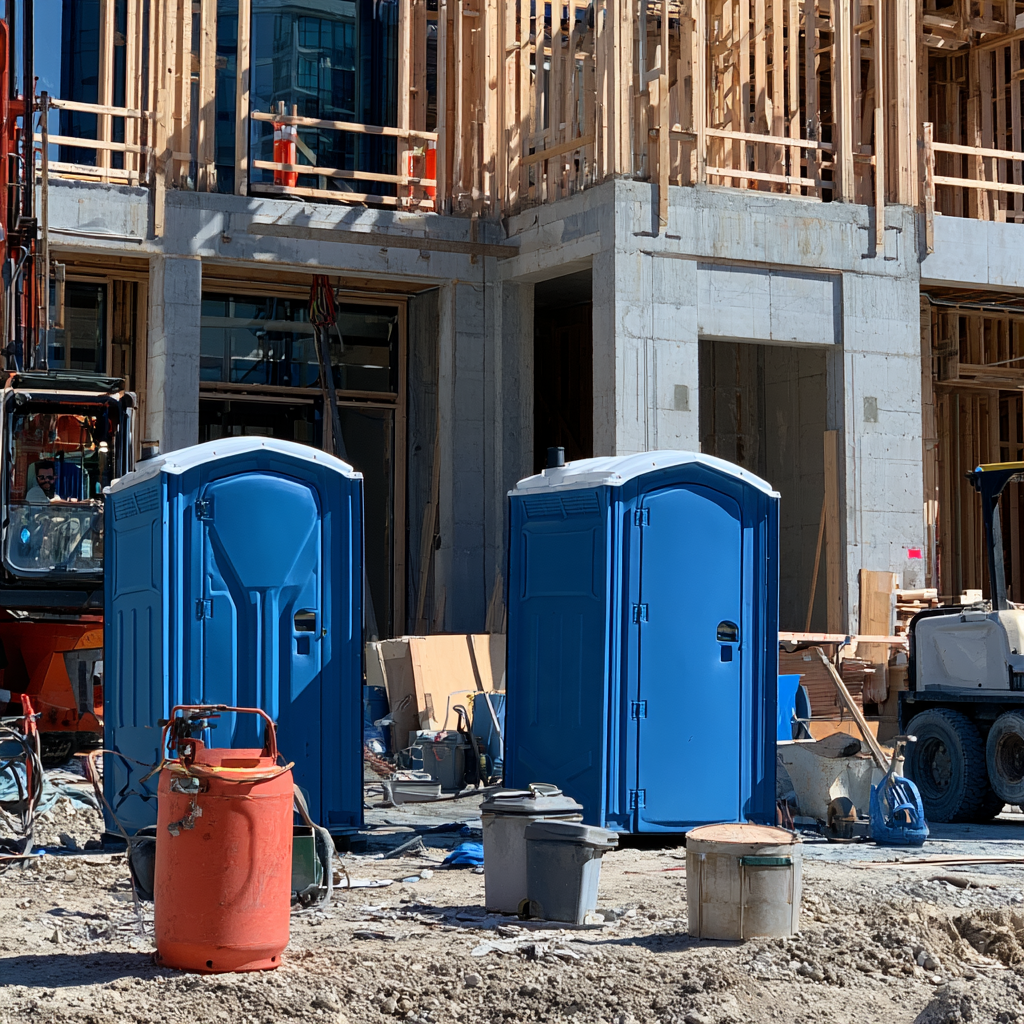
Renters and site managers can extend the freshness of a professionally serviced porta potty by monitoring supplies, reporting issues promptly, and keeping the area around the unit clean.
Professional servicing handles the heavy work. Between visits, a few simple steps keep the unit in better shape and reduce the likelihood of problems developing before the next scheduled service.
Check supply levels every day or two. If toilet paper, hand sanitizer, or soap runs low before the next service visit, contact your provider to request an interim restock or add supplies yourself. An eco-friendly air freshener placed inside the unit can help with residual odor between pump-outs.
Report mechanical issues immediately. A door that won’t latch, a vent pipe that’s come loose, or a hand sanitizer dispenser that’s jammed all degrade the user experience and can worsen sanitation conditions. Early reporting means faster resolution.
Keep the exterior area tidy. Trash, mud buildup around the base, and debris blocking the door all make the unit feel less maintained even when the interior is clean. A clear, well-kept perimeter sets expectations before the user opens the door.
For more on how the chemical treatments inside the tank work and how to support them between visits, see our guide to portable chemical toilets.
When to Adjust Your Cleaning Schedule
Signs that your porta potty needs more frequent service include persistent odor between visits, supply shortages, and visible waste buildup approaching the tank’s capacity.
A well-calibrated service schedule should keep units clean enough that users rarely notice a problem. When complaints start coming in or conditions visibly decline between visits, the schedule needs to change.
Triggers that warrant increasing service frequency:
- Odor that persists or worsens noticeably between scheduled visits
- Toilet paper or hand sanitizer running out before the next service
- Holding tank liquid shifting from blue to green or brown, indicating the chemical charge is exhausted
- Hot weather periods that accelerate bacterial growth
- Events serving alcohol, which increases per-guest usage rates significantly
Our guide to porta potty odor control covers the full range of strategies for managing odor, from placement and ventilation to chemical treatments and natural alternatives.
“If you’re getting complaints, the answer is almost always more frequent service,” the Prime Dumpster Pro said. “It’s rarely a unit problem. It’s a schedule problem. Adjust the frequency, and the complaints go away.”
Professional Porta Potty Cleaning You Can Count On
How porta potties are cleaned is a straightforward process, but doing it consistently and thoroughly is what separates a clean rental experience from a frustrating one. The four-step protocol, set to the right frequency for your specific use case, keeps units sanitary, odor-free and stocked with the supplies users expect.
Prime Dumpster coordinates portable toilet rentals with built-in professional servicing nationwide. Whether you need weekly service for a construction project or multiple daily visits for a large-scale event, our team can set the right schedule and adjust it as conditions change.
Contact us to discuss service frequency, unit selection, and scheduling for your next rental.
If you are looking for Portable Chemical Toilets: Maintenance and Sanitation Guide, Click Here
Recent Posts


Follow Us
Have any questions?
+1 844 853 3867
Give us a call today so we can help you find the right waste & sanitation solution for
your project!
Contact Us