
Mon - Sat 7:00 am to 7:00 pm

Guide to Renting Handwashing Stations for Food Festivals
Food festivals bring crowds, big appetites, and dozens of vendors handling food in tight spaces. Handwashing stations keep guests and vendors comfortable and help events meet local health rules.
Planning how many units you need, where they go, and how they’re serviced can make the difference between a smooth event and long lines or inspection problems.
At Prime Dumpster, we put together this guide to renting handwashing stations for food festivals. It covers why they matter, which features to look for, placement, health code basics, and servicing.
Fast Facts: Handwashing Stations for Food Festivals
“Treat handwashing stations like any other part of your site layout,” says the Prime Dumpster Pro. “Map them alongside your vendor rows and seating areas before the event, not after. Guests use what they can see.”
Here’s a quick look at what to plan for:
- Handwashing with soap and water is one of the most effective ways to prevent germs from spreading at food events.
- Many food vendors need handwashing access to meet local health department rules for temporary food service.
- Common options include single-basin stations, dual-basin stations, and units with hands-free foot pumps.
- Placement near food booths, eating areas, and restrooms gets the most use.
- Regular servicing keeps soap, paper towels, and fresh water stocked throughout the event.
Booking early and mapping placement ahead of time helps your handwashing plan run smoothly from opening to close.
Plan handwashing stations near food vendors and eating areas, and book handwashing station rentals early to lock in availability.

Why Hand Hygiene Matters at Food Festivals
Food festivals combine crowds, shared surfaces, and finger foods. Guests handle cash, condiment pumps, trash lids, and railings, then eat with their hands. That creates easy paths for germs to spread.
Handwashing breaks that chain. According to the CDC, handwashing education in the community reduces the number of people who get sick with diarrhea by 23% to 40%.
Accessible stations also improve the guest experience. When guests can clean up after messy foods, they’re more comfortable and more likely to leave with a good impression of the event.
Festivals that also rent porta potties can place handwashing stations beside restroom banks so guests can wash up right away. For restroom planning at shops, offices, and other non-construction sites, see our guide to porta potty rentals for small businesses.
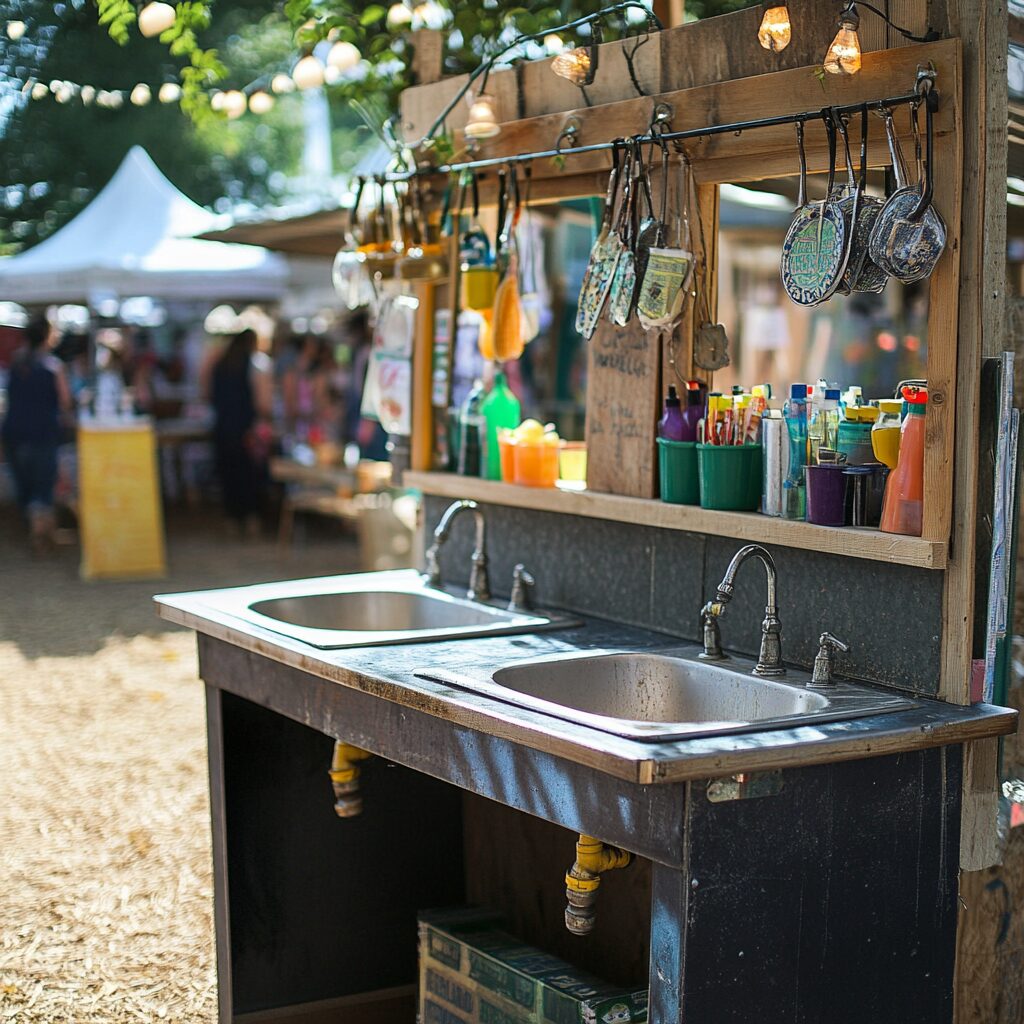
Handwashing stations reduce the spread of germs at food festivals and make it easier for guests to enjoy messy foods.
5 Features to Consider
Not every handwashing station is the same. The right features depend on crowd size, layout, and the types of food served.
Single-Basin vs. Dual-Basin Stations
Single-basin stations work well for smaller events and spots with light, steady traffic. Dual-basin stations let two people wash at once, which helps keep lines moving near busy food rows.
Hands-Free Foot Pumps
Most portable handwashing stations use a foot pump to dispense water. Guests can rinse without touching a faucet handle, and the stations don’t need a plumbing hookup.
Soap, Towel, and Sanitizer Dispensers
Look for stations with built-in soap and paper towel dispensers. Hand sanitizer stands can supplement handwashing during peak hours, but sanitizer doesn’t remove all types of germs, so it works best as a backup rather than a replacement.
Fresh and Gray Water Tanks
Portable stations carry a fresh water tank and a separate gray water tank for used water. Larger tanks mean fewer refills during long event days.
Here’s how the common station types compare:
| Station Type | Best For | Key Benefit |
| Single-basin | Small events, low-traffic areas | Compact footprint |
| Dual-basin | Busy food rows and eating areas | Two users at once |
| ADA-accessible | Public events | Accessible height and clearance |
Choosing the right mix keeps lines short and covers every part of your festival grounds.
Dual-basin stations and hands-free foot pumps help keep handwashing lines moving at busy food festivals.
Placement and Layout Tips
Placement decides whether guests use handwashing stations or walk right past them. Put stations where guests naturally stop and where food is handled. Good spots include:
- Near food vendor rows and food trucks
- Beside seating and picnic areas
- Next to porta potty banks
- At entrances and exits
Spreading stations across the grounds prevents crowding in one spot and keeps lines short.
Set units on firm, level ground with clear space around them for wheelchairs and strollers. For evening events, place stations in well-lit areas, and use signs so guests can spot them from a distance.
“Don’t hide handwashing stations behind vendor tents,” says the Prime Dumpster Pro. “If guests have to search for them, most won’t bother. Put them in the walking path where people are already headed.”
Place handwashing stations near food vendors, seating, and restrooms on firm, level ground with clear access.
Health Code Basics for Food Festivals
State and local health departments set handwashing rules for food events, and requirements vary by location. Many states base their rules on the FDA Food Code, which includes provisions for temporary food establishments.
In many areas, temporary food vendors must provide a handwashing sink stocked with soap and single-use paper towels. Some health departments also set rules for water temperature, gray water disposal, and how close stations must be to food prep areas.
Before the event, contact the local health department to confirm what’s required for vendors and for guest handwashing. Sharing your site map early helps catch problems before inspection day.
Confirm handwashing requirements with the local health department, since rules for food festivals vary by location.
Servicing and Supplies
Handwashing stations only work when they’re stocked. During a busy festival, soap, paper towels, and fresh water can run low quickly, and gray water tanks can fill up.
Plan servicing around your event schedule. Multi-day festivals typically need regular refills, and single-day events benefit from staff checks around peak meal times. A good servicing plan covers:
- Refilling fresh water and emptying gray water tanks
- Restocking soap and paper towels
- Wiping down surfaces and dispensers
- Checking foot pumps for proper operation
Assigning a staff member to check stations throughout the day helps catch empty dispensers before guests notice.
“Take a quick photo of each station during your checks,” says the Prime Dumpster Pro. “It gives you a simple record that stations were stocked and maintained if a health inspector has questions.”
Regular servicing keeps handwashing stations stocked with water, soap, and paper towels throughout the festival.
Keeping Your Food Festival Clean and Safe
Handwashing stations for food festivals protect guests, support vendors, and help your event meet local health rules. Choosing the right station types, placing them where guests gather, and keeping them stocked all make a difference.
At Prime Dumpster, we help you choose the right handwashing stations and coordinate delivery, servicing, and pickup, with availability that varies by location. Contact our team for a free quote and personalized recommendations for your food festival.
If you are looking for Porta Potties for Industrial Plant Shutdowns, Click Here
Recent Posts


Follow Us
Have any questions?
+1 844 853 3867
Give us a call today so we can help you find the right waste & sanitation solution for
your project!
Contact Us