
Mon - Sat 7:00 am to 7:00 pm

How Many Porta Potties Do I Need for My Wedding?
How many porta potties do I need for my wedding? Most couples should plan for two standard units per 50 guests, or two to three per 100 guests, plus at least one accessible unit. Adjust upward for longer receptions, an open bar, or a venue without permanent restrooms. At Prime Dumpster, we put together this guide to help you find the right count so guests stay comfortable from the ceremony to the last dance.
This guide covers wedding-specific ratios, counts by guest size, the factors that change your number, and tips for choosing and placing units.
Fast Facts: Wedding Porta Potty Counts
Most weddings need two porta potties per 50 guests and two to three per 100 guests, plus at least one accessible unit, with extra units for longer events or an open bar.
We asked our Prime Dumpster Pros to put together a quick reference based on the most common guest counts we see.
| Guest Count | Standard Units | Accessible Units | Longer Events or Open Bar |
| 50 | 2 | 1 | Add 1 |
| 100 | 2 – 3 | 1 | Add 1 |
| 150 | 3 – 4 | 1 | Add 1 – 2 |
| 200 | 4 – 5 | 1 | Add 1 – 2 |
| 250 | 5 – 6 | 1 | Add 2 |
“Weddings almost always need more units than a typical event of the same size,” says the Prime Dumpster Pro. “Guests are on site for hours, and restroom trips tend to happen all at once after dinner and between toasts.”
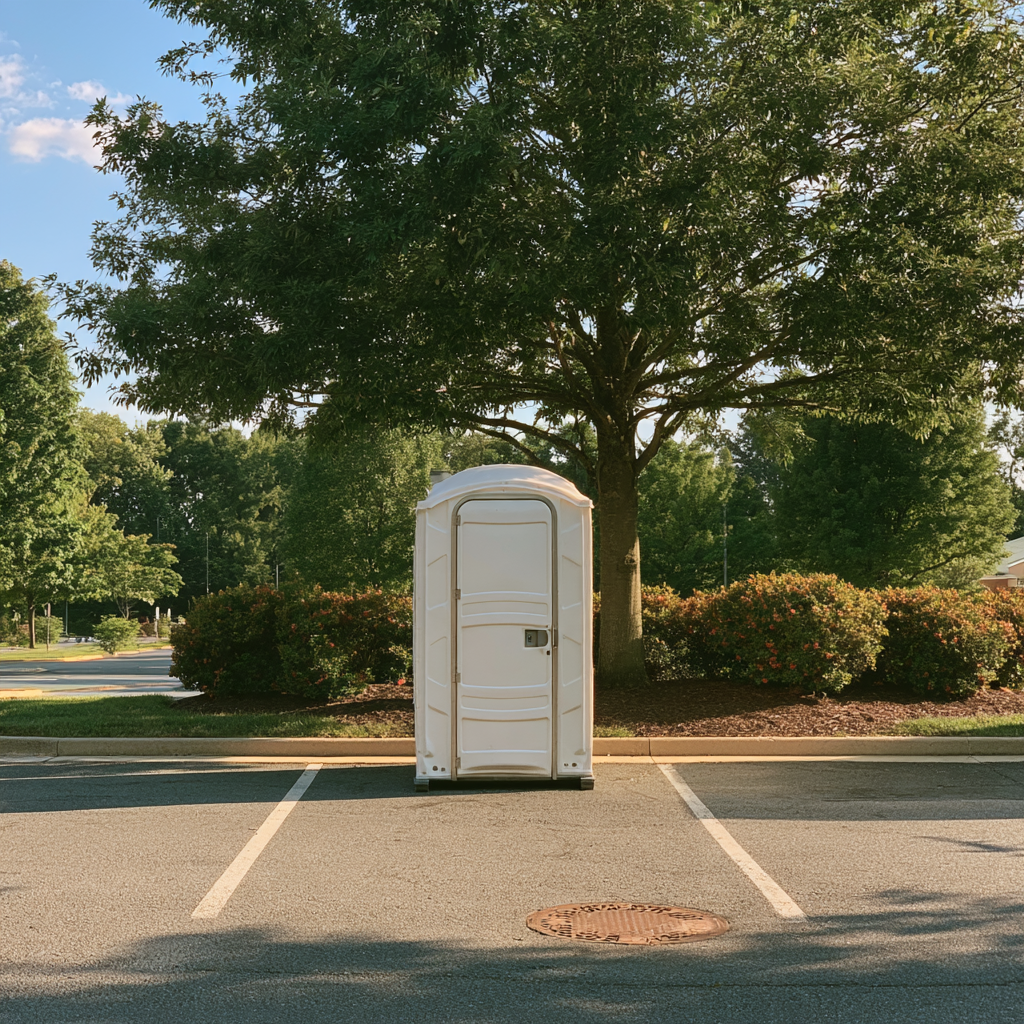
How Many People per Porta Potty at a Wedding?
For most events, the standard answer to how many people per porta potty is 50 guests for a gathering of about four hours. Weddings call for a tighter ratio of roughly 25 guests per unit.
Several things set weddings apart. Receptions often run five hours or longer, guests eat and drink throughout, and formal attire means each visit takes a little more time. Guests also tend to use restrooms in waves, such as right after the ceremony or once dinner wraps up.
For a broader look at event ratios, see our guide on how many porta potties per person you’ll need for other types of gatherings.
Weddings typically plan for about 25 guests per porta potty, compared with 50 for a standard four-hour event.
Wedding Porta Potty Counts by Guest Size
Guest count is the foundation of your restroom plan. Here’s how the house ratio breaks down for small, medium, and large weddings.
Small Weddings (Under 75 Guests)
Intimate weddings typically need two standard units plus one accessible unit. Even backyard gatherings benefit from two units, since a second unit shortens lines and provides a backup if one needs attention.
Medium Weddings (75 to 150 Guests)
Knowing how many porta potties for 100 guests is one of the most common planning questions. For a four-hour reception, plan for two to three standard units plus one accessible unit. At 150 guests, three to four standard units is a better fit.
Large Weddings (150+ Guests)
Larger weddings need four or more standard units, scaling up as the guest list grows. A restroom trailer is worth considering here, since one multi-stall trailer can typically serve 50 to 125 guests and replace several individual units.
Factors That Change Your Count
The table in the Fast Facts section is a starting point. Several details can push your count higher:
- Event duration. Receptions that run past four hours need additional units or mid-event servicing.
- Alcohol service. An open bar or extended cocktail hour increases restroom traffic.
- Vendors and staff. Caterers, photographers, musicians, and planners need restroom access too, so include them in your total.
- Existing venue restrooms. Permanent facilities can supplement your rentals, but consider their capacity and distance from the reception.
- Remote venues. Farms, beaches, and vineyards without permanent restrooms rely entirely on rentals, so a buffer unit is a smart addition.
- Special guest needs. Older guests, children, and pregnant guests may need easier access or more time.
When more than one of these applies, adding a unit is almost always better than risking long lines during the reception.
Planning for Accessible Units
Every wedding should include at least one accessible restroom. Under the 2010 ADA Standards for Accessible Design, where portable toilets are clustered at a single location, at least 5% of the units, and no fewer than one, must be accessible.
ADA-compliant porta potties offer wider doors, grab bars, and ground-level entry. Place them on firm, level ground close to main pathways so guests using wheelchairs or walkers can reach them easily.
Plan for at least one accessible unit, and at least 5% of units in any cluster.
Using a Wedding Porta Potty Calculator
A wedding porta potty calculator gives you a quick starting estimate. Enter your guest count, reception length, and whether alcohol will be served.
No
Yes
Use the result as a baseline, then adjust for vendors, venue restrooms, and any other factors listed above.
Choosing the Right Units for Your Wedding
Your guest count determines how many units you need, while your style and budget shape which ones you choose. Browse all porta potty rental options or consider these common wedding choices:
Standard Units. The most budget-friendly option, with a toilet, urinal, and hand sanitizer. Decorative screens or greenery can help them blend in.
Deluxe with Sink. Adds a built-in sink for handwashing, a practical upgrade for receptions with a meal.
Deluxe Flushing. Features a flushing toilet and improved odor control for added comfort.
Restroom Trailers. Multi-stall trailers with running water, lighting, and climate control, well suited to formal receptions.
Handwashing Stations. Standalone stations that pair well with standard units, especially near food service areas.
Mixing unit types is common. Many couples pair standard units with a handwashing station, or reserve a trailer for the reception area.

Placement Tips for Porta Potties at an Outdoor Wedding
Where you place units matters as much as how many you rent. Planning porta potties for an outdoor wedding works best when restrooms are easy to reach but out of the main sightlines.
A few placement guidelines help keep things comfortable:
- Place units on firm, level ground with well-lit pathways for evening receptions
- Keep restrooms close to the reception but away from the ceremony backdrop and dining tables
- Use decorative screens, greenery, or signage that matches your theme
- Choose shaded spots in hot weather and avoid low areas that collect rainwater
- Leave a clear route for service trucks to reach every unit
For more on outdoor logistics, The Knot’s outdoor wedding planning guide is a helpful resource. You can also find more ideas in our guide to porta potty rentals for weddings.
Thoughtful placement keeps lines short and helps restrooms feel like a natural part of your celebration.
Comfortable Restrooms for Your Big Day
How many porta potties do I need for my wedding? Start with two standard units per 50 guests, or two to three per 100, add at least one accessible unit, then adjust for reception length, alcohol service, vendors, and venue restrooms.
At Prime Dumpster, we help couples nationwide choose the right number and type of restrooms for their celebration. Contact our team for help planning your wedding porta potty rental.
If you are looking for How to Rent a Porta Potty: Your Complete Guide, Click Here
Recent Posts


Follow Us
Have any questions?
+1 844 853 3867
Give us a call today so we can help you find the right waste & sanitation solution for
your project!
Contact Us