
Mon - Sat 7:00 am to 7:00 pm
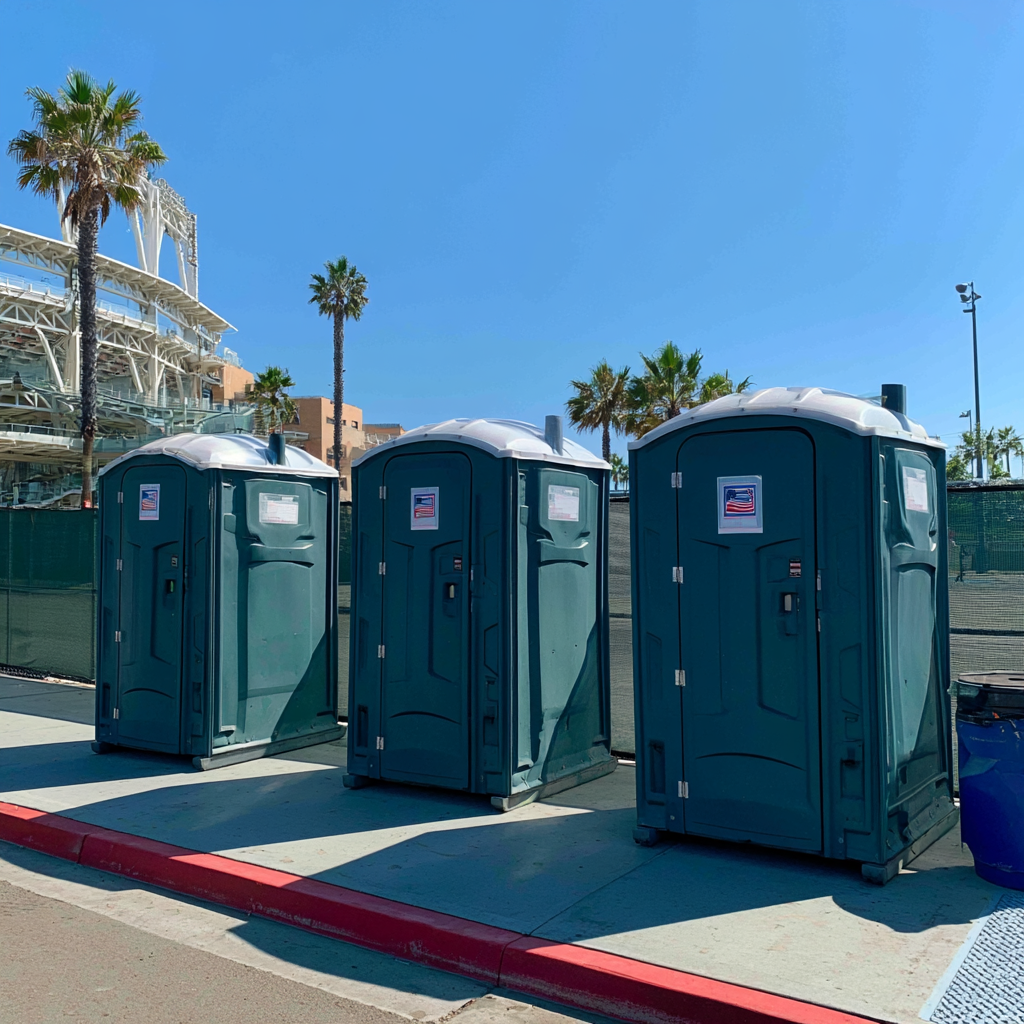
Porta Potty Rental for Events in San Diego: A Planning Guide
San Diego’s near-perfect climate means outdoor events happen every month of the year, and the city’s event calendar spans everything from massive beach festivals and Comic-Con gatherings to neighborhood street fairs and military community events across its sprawling geography. That variety creates a wide range of portable sanitation needs, and what works for a coastal surf competition looks very different from what’s needed at a Balboa Park cultural festival or a corporate reception in La Jolla.
Prime Dumpster put together this guide to porta potty rental for events in San Diego to help event planners, venue managers, and organizers find the right units and plan their sanitation setup around the specific demands of their event type. From unit selection to placement strategy and permit requirements, this guide covers what San Diego event organizers need to know before they book.
Fast Facts: Porta Potty Types for San Diego Events
“San Diego’s event scene is as diverse as any in the country, and the right portable sanitation setup depends entirely on where the event is and who’s attending,” says the Prime Dumpster Pro. “A beach festival, a corporate reception, and a trail race all have very different unit needs even if the headcount is similar.”
The table below outlines the most common porta potty options available for porta potty rental in San Diego, California, along with their notable features and typical event uses.
| Unit Type | Notable Features | Commonly Used When |
| Standard Porta Potty | Self-contained toilet, urinal, and hand sanitizer | General outdoor gatherings, festivals, community events |
| Deluxe Porta Potty with Sink | Built-in handwashing station with soap dispenser | Food festivals, farmers markets, events with food vendors |
| Deluxe Flushing Porta Potty | Foot-pedal flush system for a cleaner experience | Upscale events, corporate gatherings, VIP areas |
| ADA Handicap Portable Toilet | Grab bars, wider entry, and ground-level access | Any public-facing event with ADA compliance requirements |
| Towable Porta Potty | Attaches to a vehicle for repositioning | Road races, large venue footprints, roving event crews |
| Solar Porta Potty | Operates without external power, includes interior lighting | Remote coastal or backcountry events, multi-day outdoor gatherings |
| Containment Tray | Spill containment base beneath the unit | Coastal events, park venues, environmentally sensitive sites |
Prices and availability will vary based on unit type, rental duration, service frequency, and other factors. Many events that require portable toilet rentals also benefit from rented roll-off dumpsters. You can learn the details in our Local Guide to Dumpster Rental in San Diego, CA
Beach and Coastal Events
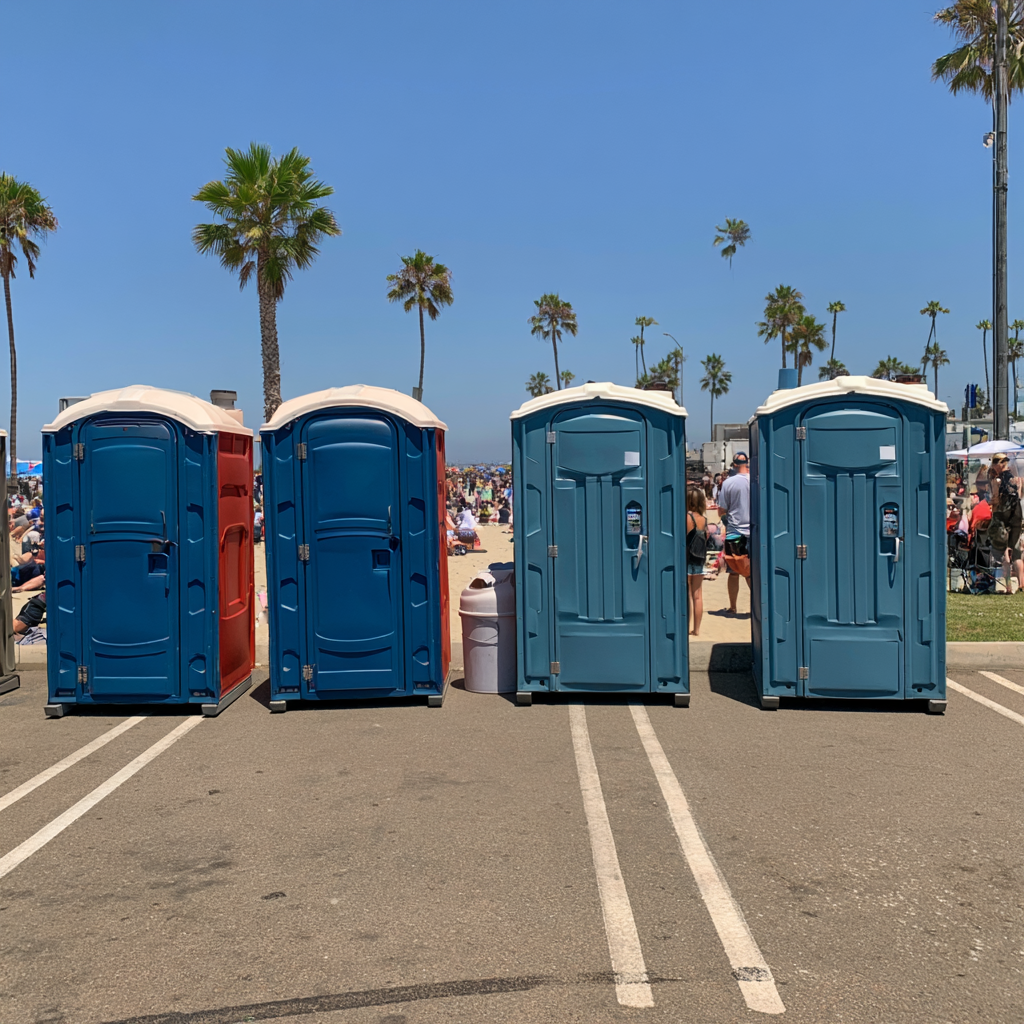
San Diego’s coastline hosts some of the most heavily attended outdoor events in Southern California, from surf competitions at Ocean Beach and Pacific Beach to large beach festivals along Mission Bay. Portable sanitation planning for coastal events comes with environmental constraints that inland venues don’t face, and those constraints shape both unit selection and placement before a single unit arrives on site.
Containment trays are essential for any unit placed near the water, the dunes, or the coastal vegetation buffer zones that California’s environmental regulations protect. The California Coastal Commission oversees development and activity within the coastal zone, and event organizers placing temporary structures near the shoreline should confirm placement requirements with both the city and the relevant coastal authority before delivery day.
“Beach events in San Diego are where placement planning matters most,” says the Prime Dumpster Pro. “The space between the water and the public access path is often narrower than it looks on a site map, and the environmental requirements for that zone are stricter than most organizers expect.”
ADA-compliant units at beach events need to be positioned on firm, level ground rather than soft sand, which means identifying a paved or compacted surface near the event footprint before delivery is as important as the unit count itself.
Outdoor Concerts and Music Festivals
San Diego’s music and festival scene is active year-round, with major events at Balboa Park, waterfront venues along the Embarcadero, and outdoor amphitheaters across the county drawing tens of thousands of attendees at peak times. Unit counts for these events need to account for peak usage windows during set breaks and intermissions, not just average attendance spread across the day.
Alcohol service is common at concert events and pushes the unit ratio from the standard one per 50 guests toward one per 35. Multi-day festivals need at least one service visit between days, and high-attendance single-day events may need a mid-event service call depending on how usage tracks against the schedule.
Sink-equipped units near food and beverage vendor corridors are worth adding to the unit mix for any festival with on-site concessions. Balboa Park events also carry specific placement considerations given the park’s historic grounds and seasonal moratorium periods that restrict special events from Memorial Day weekend through Labor Day, which means permit timing needs to be confirmed well before booking portable sanitation for summer events in that venue.
Marathons, Races, and Sporting Events
San Diego hosts a robust calendar of road races and athletic competitions, including the Rock ‘n’ Roll Marathon and numerous cycling events and triathlons that span the city’s diverse terrain from the coast to Mission Valley. Start and finish areas need the heaviest concentration of units, where participants gather for extended periods before their wave goes off and return after crossing the finish line.
Planning a unit distribution that covers the full course requires thinking through three distinct placement zones:
- Start and finish areas, where usage peaks in the 30 to 60 minutes before the race begins and again immediately after participants cross the finish line
- Aid station locations along the course, where participants are already stopping and restroom access fits naturally into the flow of the event
- Spectator gathering points along the route, particularly at high-visibility turns or entertainment zones where crowds linger for extended periods
“Towable units are worth considering for large courses where participant flow or course conditions shift between the planning stage and event day,” says the Prime Dumpster Pro. “They give race organizers the flexibility to reposition without waiting for a full service truck.”
Pickup logistics for road races require coordination with the city’s street reopening schedule, managed through San Diego’s Office of Special Events and Filming. Planning that coordination with your provider before race day prevents post-event complications that can delay venue restoration.
Beach and Coastal Events
San Diego’s coastline hosts some of the most heavily attended outdoor events in Southern California, from surf competitions at Ocean Beach and Pacific Beach to large beach festivals along Mission Bay. Portable sanitation planning for coastal events comes with environmental constraints that inland venues don’t face, and those constraints shape both unit selection and placement before a single unit arrives on site.
Containment trays are essential for any unit placed near the water, the dunes, or the coastal vegetation buffer zones that California’s environmental regulations protect. The California Coastal Commission oversees development and activity within the coastal zone, and event organizers placing temporary structures near the shoreline should confirm placement requirements with both the city and the relevant coastal authority before delivery day.
“Beach events in San Diego are where placement planning matters most,” says the Prime Dumpster Pro. “The space between the water and the public access path is often narrower than it looks on a site map, and the environmental requirements for that zone are stricter than most organizers expect.”
ADA-compliant units at beach events need to be positioned on firm, level ground rather than soft sand, which means identifying a paved or compacted surface near the event footprint before delivery is as important as the unit count itself.
Outdoor Concerts and Music Festivals
San Diego’s music and festival scene is active year-round, with major events at Balboa Park, waterfront venues along the Embarcadero, and outdoor amphitheaters across the county drawing tens of thousands of attendees at peak times. Unit counts for these events need to account for peak usage windows during set breaks and intermissions, not just average attendance spread across the day.
Alcohol service is common at concert events and pushes the unit ratio from the standard one per 50 guests toward one per 35. Multi-day festivals need at least one service visit between days, and high-attendance single-day events may need a mid-event service call depending on how usage tracks against the schedule.
Sink-equipped units near food and beverage vendor corridors are worth adding to the unit mix for any festival with on-site concessions. Balboa Park events also carry specific placement considerations given the park’s historic grounds and seasonal moratorium periods that restrict special events from Memorial Day weekend through Labor Day, which means permit timing needs to be confirmed well before booking portable sanitation for summer events in that venue.
Marathons, Races, and Sporting Events
San Diego hosts a robust calendar of road races and athletic competitions, including the Rock ‘n’ Roll Marathon and numerous cycling events and triathlons that span the city’s diverse terrain from the coast to Mission Valley. Start and finish areas need the heaviest concentration of units, where participants gather for extended periods before their wave goes off and return after crossing the finish line.
Planning a unit distribution that covers the full course requires thinking through three distinct placement zones:
- Start and finish areas, where usage peaks in the 30 to 60 minutes before the race begins and again immediately after participants cross the finish line
- Aid station locations along the course, where participants are already stopping and restroom access fits naturally into the flow of the event
- Spectator gathering points along the route, particularly at high-visibility turns or entertainment zones where crowds linger for extended periods
“Towable units are worth considering for large courses where participant flow or course conditions shift between the planning stage and event day,” says the Prime Dumpster Pro. “They give race organizers the flexibility to reposition without waiting for a full service truck.”
Pickup logistics for road races require coordination with the city’s street reopening schedule, managed through San Diego’s Office of Special Events and Filming. Planning that coordination with your provider before race day prevents post-event complications that can delay venue restoration.
Community Festivals and Cultural Events
San Diego’s neighborhoods host a diverse calendar of community festivals and cultural celebrations throughout the year, from the Little Italy Mercato and North Park’s street fairs to cultural events in City Heights and Barrio Logan. Most community-scale gatherings need a straightforward unit mix of standard and ADA-compliant models, with sink-equipped units added near any food vendor areas.
Permit requirements for community festivals on public property in San Diego are handled through the city’s Office of Special Events and Filming. Events that incorporate city streets, sidewalks, or public parks require a Citywide Special Event Permit, and sanitation planning is part of what the city reviews during the application process.
“The neighborhoods that host the most festivals in San Diego tend to have the most established relationships with their permitting contacts,” says the Prime Dumpster Pro. “If you’re organizing a first-time community event, start the permit conversation early — the sanitation plan is one of the components that can hold up an approval if it’s incomplete.”
ADA-compliant units are required at any permitted public gathering and should be positioned on firm, level ground near main pedestrian entry points rather than tucked away at the edge of the event footprint.
Private and Corporate Outdoor Events
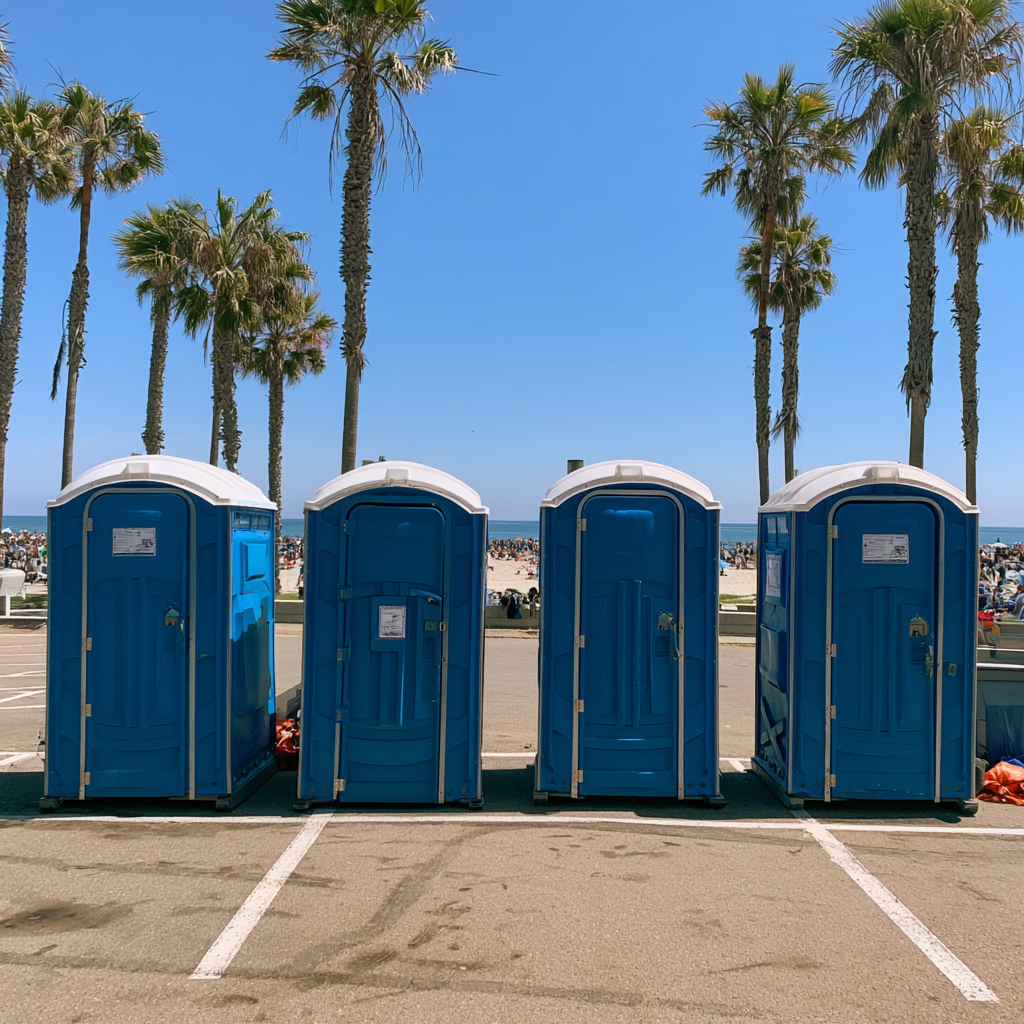
Private receptions, corporate gatherings, and upscale outdoor events at San Diego venues — from rooftop spaces in the Gaslamp Quarter to garden settings in Rancho Santa Fe — call for a different approach to portable sanitation than a public festival. Guest experience carries more weight in these settings, and deluxe flushing units or sink-equipped models are almost always a better fit than standard porta potties for an upscale outdoor gathering.
Placement discretion is a priority at private events. Units should be positioned far enough from dining and gathering areas to stay out of sightlines while remaining close enough that guests can reach them comfortably without crossing through active event spaces.
A smaller number of higher-quality units generally works better for private events than a larger count of standard models. San Diego’s mild climate also means that many private events run later into the evening than similar gatherings in other markets, which is worth factoring into the service schedule for multi-hour receptions.
Military and Government Events
San Diego is home to one of the largest concentrations of military installations in the country, including Naval Base San Diego, Marine Corps Air Station Miramar, and Camp Pendleton to the north. Events at or adjacent to these installations require portable sanitation vendors who meet federal compliance standards before any rental agreement is signed.
Vendors serving federally funded projects or military-adjacent events must hold active SAM.gov registration, GSA approval, and USFCR verification. Confirming those credentials through official federal databases before booking protects event coordinators and contractors from compliance gaps that can disqualify a vendor mid-project.
Prime Dumpster holds all appropriate registrations and verifications for these types of projects. Learn more here: Prime Dumpster Approval Badges
“Military events in San Diego often have tighter lead time requirements for vendor verification than civilian events,” says the Prime Dumpster Pro. “Starting that credentialing check early is one of the most practical steps an event coordinator can take when planning sanitation for a government-adjacent gathering.”
Long-term placements on or near military installations also require consistent service schedules and documentation that standard commercial rentals typically don’t require.
Placement Tips for San Diego Event Sites
San Diego’s varied terrain, from flat coastal lots to hillside venues in Mission Hills and historic park grounds in Balboa Park, means placement decisions require site-specific thinking rather than a one-size-fits-all approach. Here are the placement considerations that matter most across San Diego’s most common event environments:
- Coastal and beach venues require containment trays and placement on firm, compacted surfaces well back from the water and dune buffer zones
- Balboa Park placements need to account for the park’s historic landscape and any placement restrictions tied to the specific venue or lawn area being used
- Hillside venues in neighborhoods like Mission Hills or La Jolla require extra attention to ground stability and delivery truck clearance on narrow or steep access roads
- Large flat venues like parking lots or fairgrounds benefit from unit clusters distributed across the footprint rather than concentrated in a single location
Identifying the placement location and confirming truck access before delivery day is the most reliable way to avoid on-site complications at any San Diego event venue.
Permit Requirements for San Diego Events
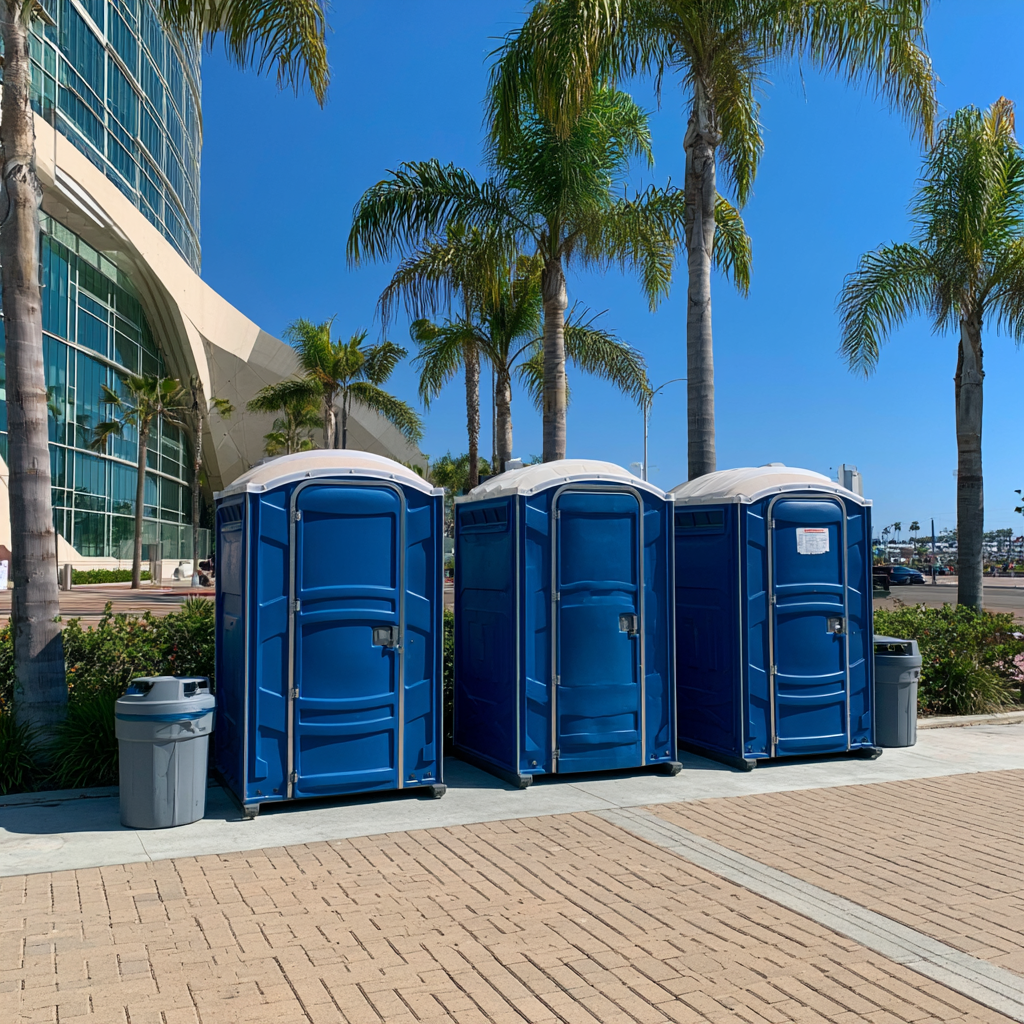
The City of San Diego issues Special Event Permits for events that incorporate public streets, sidewalks, rights-of-way, public parks, or other city-owned property. Sanitation planning is a required component of the permit application, and the city reviews it as part of the broader event approval process.
Applications submitted at least 60 days before the event are subject to the standard application fee, while applications received less than 60 days prior incur a late fee on top of the base cost. Event organizers can submit and track applications through the City of San Diego Special Event Permit Application System, which is available 24 hours a day. Events planned for city beaches or parks also require a Park Reservation from the Park and Recreation Department before the permit application is considered complete.
Events at Balboa Park, Mission Bay Park, and Shoreline Parks are subject to a summer moratorium that restricts special events from Memorial Day weekend through Labor Day. Confirming venue availability and moratorium status before committing to a summer event date in any of those locations prevents the kind of late-stage planning changes that affect every other part of the event, including portable sanitation bookings.
Plan Your San Diego Event Porta Potty Rental with Prime Dumpster
From beach festivals along the Pacific coastline to military community events and neighborhood street fairs, porta potty rental for events in San Diego requires planning that matches the unit type, count, and placement to the specific demands of each venue and event type.
Prime Dumpster coordinates portable sanitation for events of every size and type across San Diego and the surrounding region, with unit options and service schedules built around the specific demands of Southern California’s year-round event calendar. Our account managers work with event planners and venue managers to match the right configuration to each event’s headcount, duration, and site conditions.
Contact our team to get a quote for your San Diego event.
If you are looking for Temporary Toilet Options for Home Remodeling, Click Here
Recent Posts


Follow Us
Have any questions?
+1 844 853 3867
Give us a call today so we can help you find the right waste & sanitation solution for
your project!
Contact Us