
Mon - Sat 7:00 am to 7:00 pm
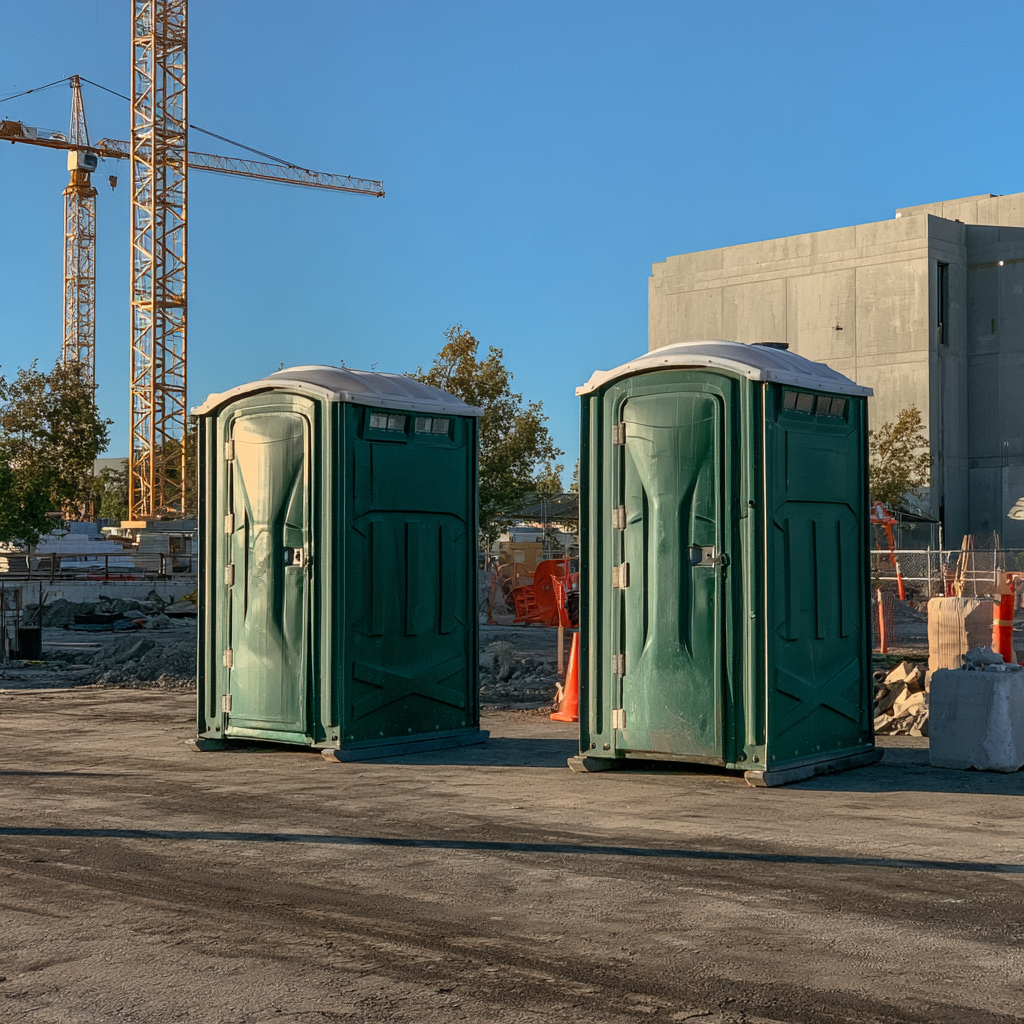
OSHA Porta Potty Requirements for Construction Sites
Construction sites require more than hard hats and safety vests. OSHA porta potty requirements mandate adequate sanitation facilities that keep workers productive and projects compliant. Federal regulations haven’t changed for 2026, but penalty amounts remain at record highs, making violations potentially costlier than the rentals they’re meant to enforce.
At Prime Dumpster, we’ve guided thousands of construction managers through portable sanitation compliance across the country, helping them navigate regulations that protect both worker safety and company finances.
Our guide covers OSHA porta potty requirements in full: federal ratios, penalty structures, placement standards, accessibility rules, and the practical considerations that experienced construction managers use to go beyond the minimum and keep projects running smoothly.
Fast Facts: OSHA Porta Potty Requirements
“OSHA porta potty requirements are straightforward on paper, but the details catch a lot of managers off guard,” says the Prime Dumpster Pro. “The ratio is just the starting point. Accessibility, handwashing, privacy, and service frequency all factor into compliance, and an inspector evaluates the full picture, not just the unit count.”
- Workforce ratios remain unchanged — Federal law requires one toilet for every 20 workers on sites with fewer than 20 employees, scaling to one toilet and urinal per 40 workers for larger crews, calculated against peak shift numbers
- Penalty amounts for 2026 — Maximum penalties remain at $16,550 per serious or other-than-serious violation, with willful or repeated violations capped at $165,514
- 10-minute accessibility rule — Workers must reach facilities within 10 minutes of travel time from any work location, with multi-story projects requiring units on upper floors when elevator access is limited
- Handwashing stations are a separate requirement — Toilet facilities alone don’t satisfy the sanitation standard; sites must provide handwashing capabilities through deluxe units or standalone handwashing stations
- Multiple contractors share responsibility — When several contractors work the same site, responsibility for adequate sanitation can fall on more than one party, and site managers should clarify accountability before work begins
Understanding these OSHA porta potty requirements helps protect both worker safety and your company’s bottom line.

What Is OSHA and Why Does It Regulate Portable Toilets?
The Occupational Safety and Health Administration was established in 1970 to ensure safe and healthy working conditions across the country, and sanitation on job sites falls squarely within that mission. Adequate restroom access isn’t a courtesy extended to construction crews. It’s a federal labor standard enforced the same way as fall protection or equipment safety.
The specific sanitation standard is found in 29 CFR 1926.51, which establishes the requirements for sanitation at construction sites, including toilet facilities, handwashing, and drinking water. OSHA has further clarified that unsanitary units do not count toward the required minimum, meaning maintenance and servicing are compliance obligations, not just best practices.
Most states operate under federal OSHA jurisdiction, but a number of states run their own OSHA-approved plans that can set requirements as strict as, or stricter than, the federal standard. Construction managers working across multiple states should confirm which set of rules applies to each job site, since a state plan may layer additional requirements on top of the federal baseline.
OSHA regulates portable toilet access on construction sites as a federal labor standard, and state plans may impose additional requirements beyond the federal baseline.
OSHA Porta Potty Ratios and Requirements
OSHA’s sanitation standard establishes minimum portable toilet ratios based on crew size. These calculations must reflect peak shift numbers, not average workforce size.
| Number of Employees | Required Facilities |
| 20 or fewer | At least 1 portable toilet |
| 20 or more | 1 toilet seat and 1 urinal per 40 workers |
| 200 or more | 1 toilet seat and 1 urinal per 50 workers |
These are federal minimums. Many experienced construction managers exceed them for practical reasons, which the next section covers in detail.
For a broader look at unit count planning that includes events alongside construction, the how many porta potties for events and construction sites guide covers both scenarios.
OSHA requires a minimum of one portable toilet per 20 workers, with ratios scaling for larger crews, calculated against peak shift numbers rather than daily averages.
Going Beyond OSHA Minimums: Practical Unit Count Recommendations
Meeting the OSHA minimum keeps you compliant. Exceeding it keeps your crews productive and your project on schedule. Experienced construction managers routinely provide more units than OSHA requires because the practical benefits outweigh the modest additional rental cost.
Industry best practice is one unit per 10 to 15 workers rather than the OSHA minimum of one per 20. This ratio reduces wait times during peak break periods, keeps crews on task, and prevents the kind of line congestion that eats into productive hours across an entire shift.
“The OSHA ratio is a floor, not a target,” says the Prime Dumpster Pro. “One unit per 20 workers is technically compliant, but on a busy site with staggered breaks and heavy physical work, that ratio creates lines. One per 10 to 15 workers is where most experienced managers land because it keeps people working instead of waiting.”
Several factors should push your count above the OSHA minimum:
- Projects lasting longer than three months benefit from adding extra units to accommodate maintenance rotations without reducing access during servicing
- Hot weather increases hydration and restroom frequency, and sites in warm climates should plan for at least 20% more units during summer months
- Crews working physical labor or in PPE-intensive environments use facilities more frequently than the OSHA ratio accounts for
- Sites with multiple active work zones need units distributed across each zone, which may require more total units than a centralized setup
Industry best practice recommends one portable toilet per 10 to 15 workers rather than the OSHA minimum, with additional units for long-duration projects, hot weather, and multi-zone site layouts.
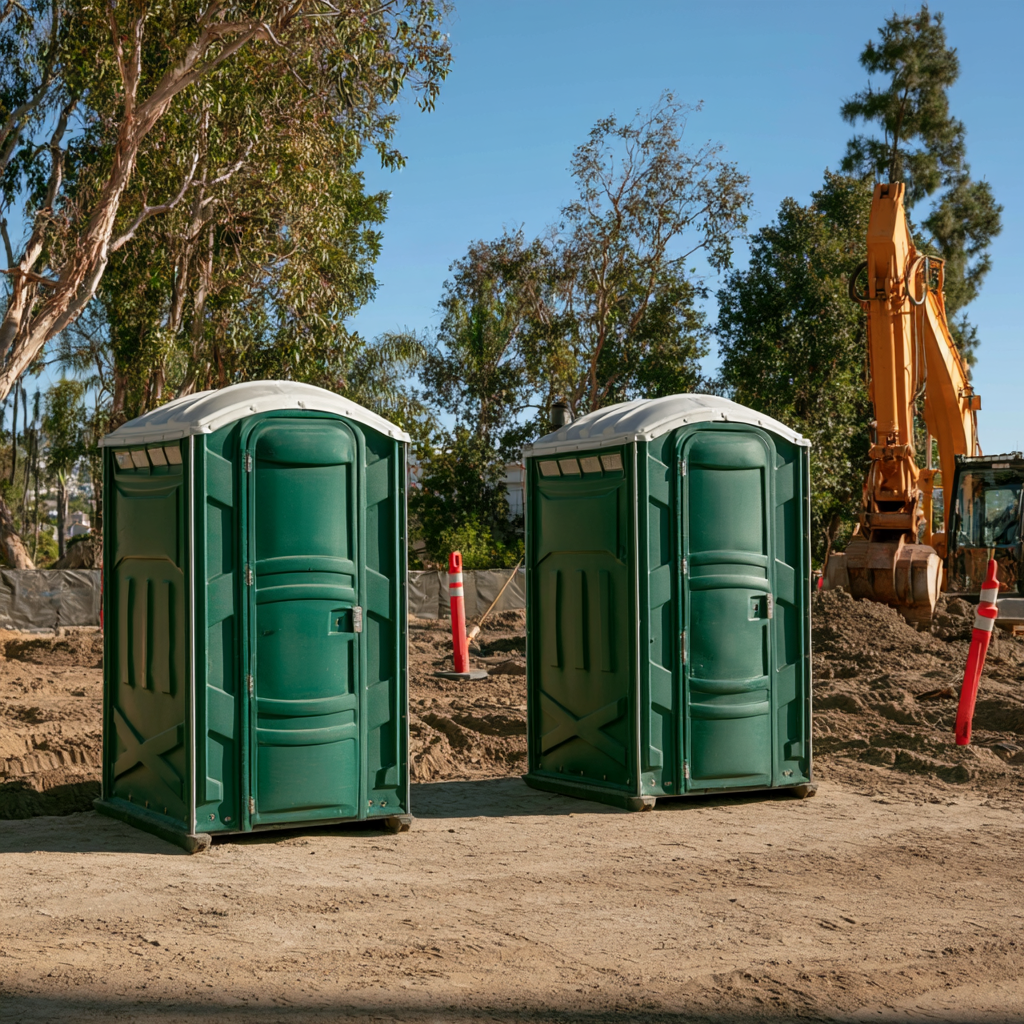
Penalties and Fines for Non-Compliance
Non-compliance with OSHA’s sanitation standard carries real financial consequences. Maximum penalties for 2026 remain at $16,550 per serious or other-than-serious violation, with willful or repeated violations capped at $165,514.
These aren’t abstract numbers. A Texas roofing contractor was fined $18,700 after an OSHA inspection found the company had failed to provide adequate toilet facilities for a crew working a multi-week job site, a violation that could have been avoided with a single additional unit and a modest monthly rental cost.
Multiple violations compound quickly. A site cited for inadequate ratios, insufficient handwashing facilities, and units placed beyond the 10-minute accessibility standard could face separate penalties for each violation, turning a preventable oversight into a five- or six-figure liability.
Penalties for porta potty OSHA violations:
- Serious violation — up to $16,550 per violation for conditions that could cause death or serious harm
- Other-than-serious violation — up to $16,550 for conditions that affect safety but are unlikely to cause death or serious harm
- Willful violation — up to $165,514 for intentional or knowing disregard of OSHA requirements
- Repeated violation — up to $165,514 for substantially similar violations found during re-inspection
- Failure to abate — up to $16,550 per day for violations not corrected by the abatement deadline
OSHA penalties for sanitation violations can reach $16,550 per serious violation and $165,514 for willful or repeated violations, with multiple citations compounding on a single inspection.
Placement Standards and the 10-Minute Rule
OSHA requires that workers be able to reach toilet facilities within 10 minutes of travel time from any work location. How that standard translates to placement depends on the site layout.
| Work Zone Type | Placement Guidance |
| Ground-level, single work area | One or more units centrally located within 10 minutes of all work points |
| Multi-building or spread-out sites | Units distributed across each active zone rather than centralized in one location |
| High-rise construction | Units placed on multiple floors once workers lack quick elevator access to ground level |
| Linear or roadway projects | Units staged at intervals along the route, moved as the crew progresses |
| Remote or rural sites | Units positioned near the primary work area, with delivery routes confirmed in advance |
Placement also affects physical safety around the units themselves. Units should sit on level, stable ground away from active equipment paths, overhead hazards, and vehicle traffic. Unstable placement creates tipping risks, and units positioned too close to equipment operations create collision hazards.
“Placement is where most first-time site managers make their biggest mistake,” says the Prime Dumpster Pro. “They put all the units in one corner of the site to keep things tidy, and then half the crew is walking 15 minutes each way. Distributing units across active work zones is almost always the better approach.”
OSHA’s 10-minute accessibility standard requires placement planning that accounts for site layout, with units distributed across work zones rather than centralized in a single location.
Accessibility, Privacy, and ADA Standards
Meeting the 10-minute travel time standard covers one part of accessibility, but OSHA’s sanitation requirements extend to how facilities accommodate all workers on a job site.
Sites must provide separate facilities for men and women once the workforce reaches a size where combined-use facilities are no longer practical. Many construction managers provide gender-specific units proactively rather than waiting until crew size forces the issue. Privacy matters just as much as proximity. Units should include functioning locks and be positioned so workers aren’t exposed to view from adjacent work areas or foot traffic.
ADA considerations come into play on job sites with public-facing components or workers who require accessible facilities. At least one ADA-compliant unit should be available, including a wider door and interior space that accommodates mobility equipment, positioned along the same accessible path as other job site facilities.
Accessibility standards require gender-specific facilities at sufficient crew sizes, functioning privacy locks on all units, and at least one ADA-compliant unit on sites with accessibility requirements.

Long-Term Project Considerations
Projects lasting several months or longer introduce sanitation challenges that short-term job sites don’t face. Unit counts, service schedules, and placement plans all need to adapt as the project progresses.
Subcontractor phases are the most common disruption. A site that starts with 15 workers may swell to 60 during peak construction phases and drop back to 20 during finish work. The portable toilet plan needs to scale with these shifts rather than staying fixed at the count established during mobilization. Adding units for peak phases and scaling back afterward is more cost-effective than maintaining peak capacity for the full project duration.
Service frequency also needs adjustment over long-duration projects. Units that receive standard weekly servicing during moderate-use phases may need twice-weekly service during peak occupancy or summer heat. Establishing a flexible servicing agreement with your provider at the start of the project is simpler than renegotiating mid-project when conditions change.
Maintenance rotation is another factor unique to long-term jobs. Units in continuous service for months need periodic deep cleaning or replacement to maintain conditions that meet OSHA’s sanitation standard. Planning for rotation units that can substitute during servicing prevents gaps in access.
Long-term construction projects require scalable unit counts that adjust with subcontractor phases, flexible servicing agreements, and maintenance rotation planning to sustain compliance over months of continuous use.
Physical Safety Around Portable Toilets
Portable toilet safety extends beyond sanitation. The units themselves present physical risks that site managers should address during placement and throughout the project.
Tipping prevention is the most common safety concern. Units placed on uneven, soft, or sloped ground can tip in high winds or when bumped by equipment. Level placement on firm ground is the baseline. On sites where conditions are less predictable, anchoring with stakes or weighted bases provides additional stability.
Chemical exposure is a secondary consideration. The deodorizing chemicals in holding tanks are effective but can cause skin and eye irritation on contact. Workers should know to avoid direct contact with the holding tank contents and to report any spills or leaks immediately. Service crews handle chemical replenishment, but accidental exposure during use is possible if a unit is damaged or improperly maintained.
Weather protection matters for worker comfort and unit longevity:
- Position units in shaded areas during summer months to reduce interior temperatures that can exceed safe levels in direct sun
- Secure units against high winds with stakes or straps, particularly in open or elevated locations
- Clear snow and ice from unit doors and pathways during winter to maintain safe access
- Increase service frequency during extreme heat, since high temperatures accelerate chemical breakdown and odor buildup
Physical safety around portable toilets includes level placement to prevent tipping, chemical exposure awareness, weather-appropriate positioning, and securing units against wind and storm conditions.
Staying Compliant Starts Before Day One
OSHA porta potty requirements are straightforward when they’re planned for at the beginning of a project rather than addressed reactively after an inspector arrives. The ratio is the starting point. Placement, accessibility, privacy, handwashing, long-term scaling, and physical safety all factor into a compliant and functional sanitation plan.
Prime Dumpster works with construction managers across the country on projects of every scale, from single-phase residential builds to multi-year commercial developments. Your dedicated account manager will help you calculate the right unit count for your peak crew size, plan placement across your work zones, and set up a servicing schedule that adapts as your project evolves.
Contact our team to set up your construction site porta potty rental and get a quote tailored to your project.
If you are looking for Carbon Footprint of Porta Potties, Click Here
Recent Posts


Follow Us
Have any questions?
+1 844 853 3867
Give us a call today so we can help you find the right waste & sanitation solution for
your project!
Contact Us