
Mon - Sat 7:00 am to 7:00 pm

The Professional Guide to Porta Potty Placement on Construction Sites in Los Angeles, CA
Strategic porta potty placement on construction sites in Los Angeles directly impacts OSHA compliance, worker productivity, and project timelines across diverse jobsites from Hollywood Hills to Santa Monica beachfront developments. Placement decisions require balancing federal regulations, California-specific requirements, crew access needs, and site-specific constraints unique to LA’s varied terrain and neighborhoods.
Prime Dumpster helps construction professionals throughout the LA metro area plan compliant, efficient portable restroom solutions for projects of all scales. Our guide covers optimal placement strategies, crew size calculations, project-type considerations, and local factors affecting sanitation planning from residential builds in Silver Lake to commercial high-rises downtown.
Fast Facts: Porta Potty Placement on Construction Sites in Los Angeles
We asked our Prime Dumpster Pro for answers to the most common questions about placing porta potties rented in the L.A. area.
How many porta potties does OSHA require for construction sites?
“OSHA requires one portable toilet for every 20 workers on a construction site, and that’s your baseline for compliance. Larger crews or projects running multiple shifts need additional units to prevent long lines during breaks. California sometimes adds stricter requirements, so always check local regulations before finalizing your count.”
Where should I place porta potties on my Los Angeles construction site?
“Position units within 200 feet of active work areas to keep your crew productive and meet OSHA accessibility requirements. Choose level, stable ground away from heavy equipment paths but close enough that workers don’t waste time walking across the site. On hillside projects in areas like the Hollywood Hills or tight urban sites downtown, you’ll need creative placement that balances crew access with limited space.”
Do construction sites need ADA-compliant porta potties?
“Yes, if you have employees with disabilities on your crew, OSHA requires accessible facilities with wheelchair ramps, interior grab bars, and spacious interiors. Even if you don’t currently have workers requiring accessible units, having one on site demonstrates compliance and prepares you for changing crew composition. Most LA contractors include at least one ADA-compliant unit as standard practice.”
How does Los Angeles weather affect porta potty placement and service?
“Valley heat means your crew drinks more water and uses facilities more frequently, especially during summer months when temperatures regularly exceed 90 degrees. Coastal fog and marine layer humidity in areas like Santa Monica require proper ventilation to prevent moisture buildup. Plan for more frequent service during hot months and position units in shaded areas when possible to keep interiors comfortable for your workers.”
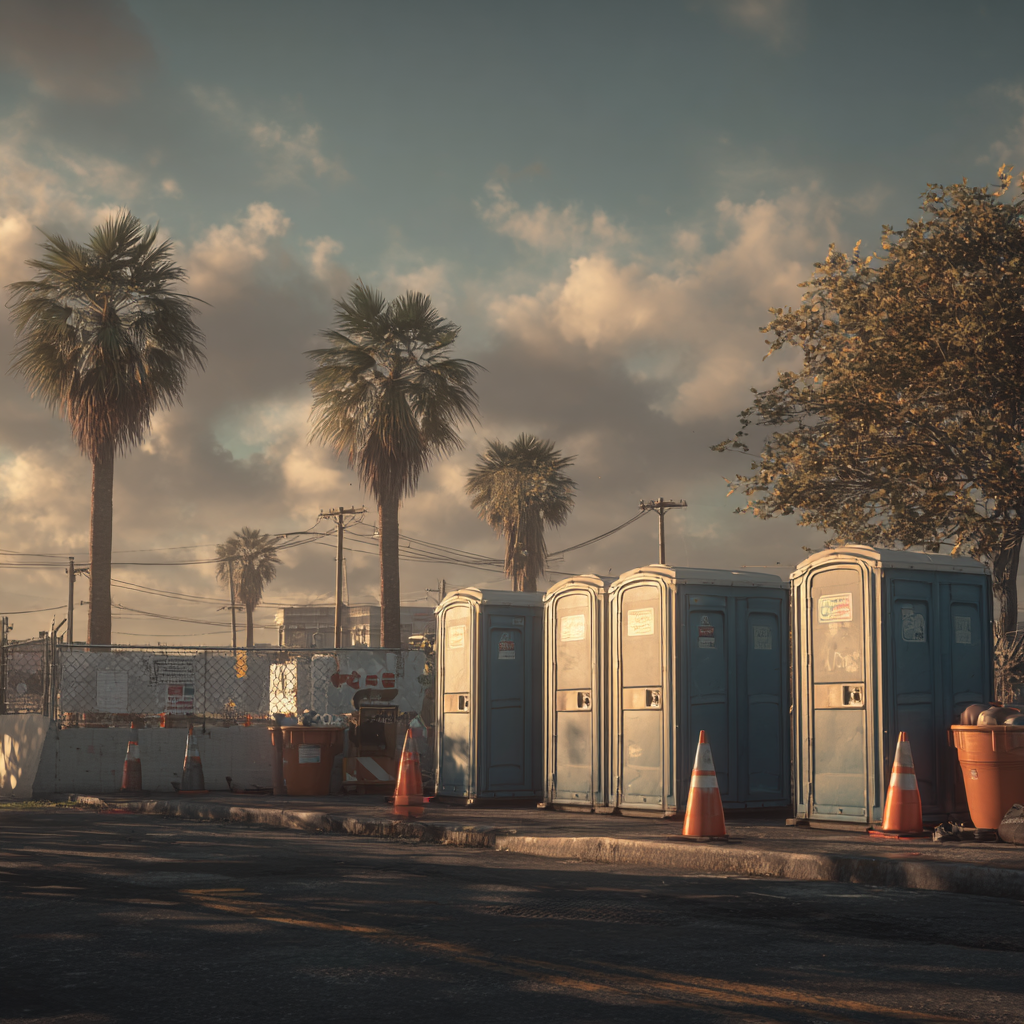
Aside from porta potties for construction sites, we’re also here to help with porta potties for events in Los Angeles.
Porta Potty Basics for Jobsite Operations
Modern rented porta potties are built for tough conditions. Look for features like anti-slip floors and roofs that let in light. Proper ventilation is crucial, especially during a hot valley summer.
Your service schedule is the heartbeat of good sanitation. It’s not just about waste removal. It includes restocking essentials and deep cleaning to prevent complaints.
Health, Safety, and Compliance Standards
Federal rules mandate one restroom for every 20 workers. California often has its own, stricter requirements. You also must provide an ADA-compliant unit if needed.
Local expectations add another layer. A project in a quiet neighborhood faces different scrutiny than a downtown high-rise site. Knowing this helps you plan.
Quality service is how you meet these standards. It protects worker health and keeps your sites running smoothly without unnecessary delays.
The California Department of Industrial Relations has state rules for toilets on construction jobsites available online.
Optimizing Porta-Potty Placement for Construction Sites in 90011
Before you drop a single unit on the dirt, take a hard look at your headcount and timeline. These two factors drive every other decision about your sanitation setup.
Getting the quantity wrong leads to lines and grumpy crews. Getting the location wrong wastes precious minutes of productivity every day.
Work Crew Size and Project Duration
Your crew size is the biggest number in the equation. The standard ratio is your starting point, but local job conditions demand adjustments.
- A high-rise project downtown has different space constraints than a sprawling residential build in the Valley. Each requires a custom approach for unit placement.
- How long your project runs changes the game. A multi-year build needs a more robust service schedule than a short-term fix. Think about maintenance frequency from the start.
- Also consider shift work. Multiple shifts or long hours mean you need enough facilities to cover everyone without creating a break-time traffic jam.
- Place units close to active work zones. Long walks cut into work time and frustrate your team. This is crucial on larger sites.
- Finally, look at your team’s makeup. A project with more female workers might need adjusted configurations to keep wait times reasonable.
Analyze crew patterns, shift schedules, and the site layout before you finalize your plan. This upfront work saves headaches later.
Assessing Different Construction Project Types and Their Sanitation Requirements
Not all job sites are created equal when it comes to sanitation needs. Your project’s scope and location shape the restroom plan from the start.
We see a wide variety of builds across the region. Each type has its own practical demands for facilities.
Residential vs. Commercial Projects
Residential builds often involve smaller crews. Think remodels in Pacific Palisades or new homes in Silver Lake.
Standard portable units are typically the go-to here. They fit well with shorter timelines and limited space.
Commercial projects are a different beast. Office towers and retail centers house big teams.
Restroom trailers with multiple stalls often make sense. They provide greater capacity and keep lines moving.
Unique Needs for Specialized Sites
The entertainment industry drives many local projects. Sites in Burbank or Culver City might need upgraded trailers.
These offer higher comfort for production crews and talent. It’s a practical consideration for specialized work.
High-rise construction presents vertical challenges. Ground-level units must serve workers on many floors.
Sometimes, facilities need to be transported up as the build progresses. Renovations in established neighborhoods face space crunches.
Compact units or creative placement solve this puzzle. Infrastructure jobs along freeways require facilities that follow the work.
| Project Type | Typical Scale | Recommended Facility | Primary Consideration |
| Residential Build | Small to Medium Crew | Standard Portable Unit | Space Limitations |
| Commercial Tower | Large Crew | Restroom Trailer | High Capacity Needs |
| Entertainment Site | Variable Crew | Upgraded Trailer | Crew Comfort & Image |
| High-Rise Project | Very Large Crew | Multiple Ground Units | Vertical Access & Placement |
| Neighborhood Renovation | Small Crew | Compact Unit | Minimizing Footprint |

Determining the Optimal Number of Portable Toilets for Your Project
Figuring out how many restrooms your crew needs is a mix of math and local know-how. Start with the standard ratio of one facility per 20 workers.
That’s your baseline. Then you must adjust for reality.
Methodologies for Accurate Estimation
Accurate estimation looks beyond the basic number. It accounts for shift patterns and total crew hours on site.
Do you run multiple shifts? That increases usage frequency. Your total unit count must cover peak times.
Adjusting for On-Site Variables
Next, layer in specific site conditions. Is the location remote with no alternative restrooms?
If yes, you’ll need more units. Available water and power access also shape your options.
| Adjustment Factor | Effect on Unit Count | Local Consideration |
| Crew Size & Shift Work | Increases needed units | Multiple shifts are common in urban projects. |
| Project Duration | Longer timelines need more units or frequent service | Year-long builds require a robust rental plan. |
| Site Accessibility | Isolated sites require higher counts | Hillside or beachfront locations limit alternatives. |
| Weather Patterns | Heat increases usage; rain demands covered units | Valley summers and coastal fog impact needs. |
| Local Regulations | Some districts mandate extra facilities | Always check with city building departments. |
Local Influences from Neighborhoods to Weather Conditions
Los Angeles weather directly impacts your numbers. Summer heat means more hydration breaks.
Dense neighborhoods like Koreatown limit space for facilities. Hand washing stations add essential hygiene.
Use your early project experience to tweak the count. Monitor usage and adjust service frequency.
Your Los Angeles Construction Sanitation Partner
Effective porta potty placement on construction sites in Los Angeles requires balancing OSHA ratios with project-specific factors including crew size, shift patterns, site accessibility, and neighborhood constraints. Construction professionals who calculate appropriate unit counts, position facilities near active work zones, maintain regular service schedules, and account for LA’s climate and terrain maintain compliant, efficient jobsites through project completion.
Contact us to discuss your Los Angeles construction project requirements and coordinate portable restroom solutions that keep your crew productive, comfortable, and your site OSHA-compliant.
If you are looking for How Many Porta Potties Do I Need for an Event in Los Angeles, CA?, Click Here
Recent Posts


Follow Us
Have any questions?
+1 844 853 3867
Give us a call today so we can help you find the right waste & sanitation solution for
your project!
Contact Us