
Mon - Sat 7:00 am to 7:00 pm
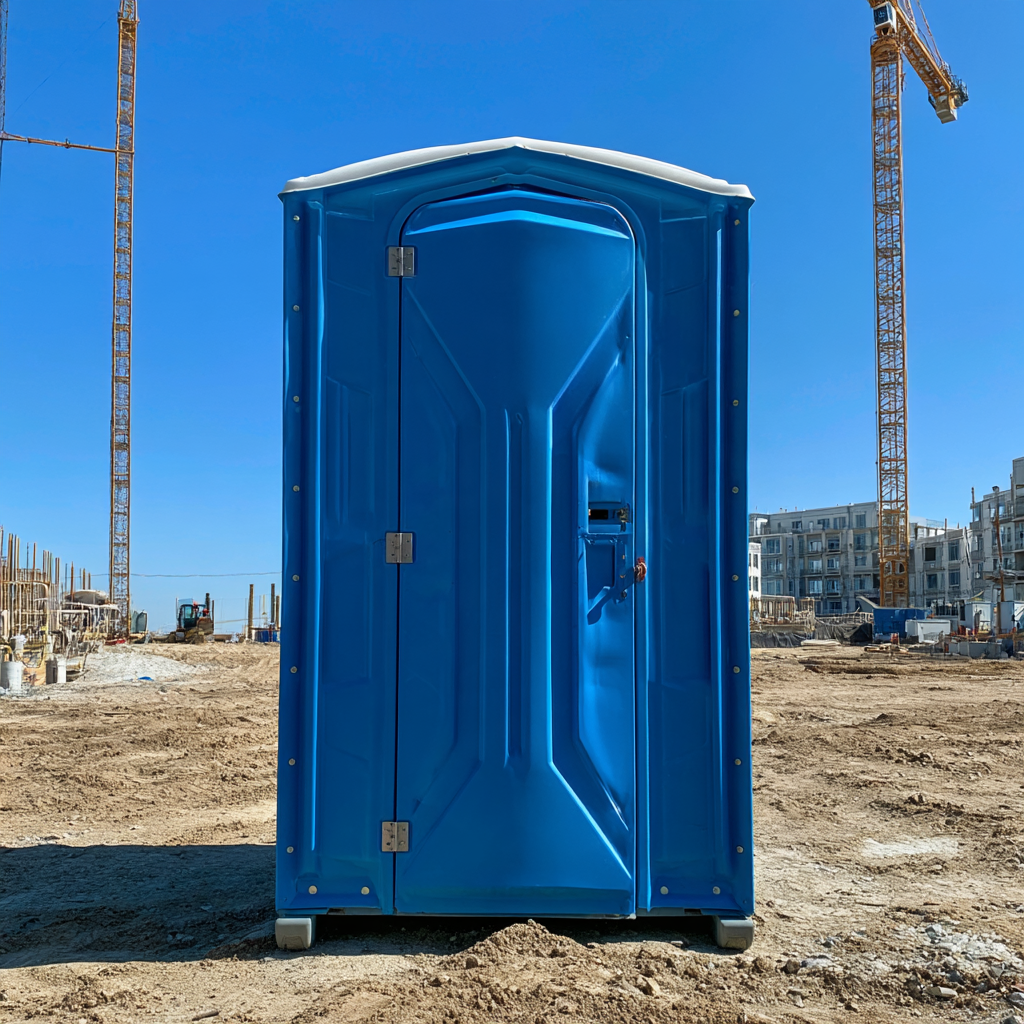
Guide to Porta Potty Placement: Construction, Events & More
Ordering the right number of porta potties solves only half the problem. A unit parked on a slope, tucked behind a stage, or blocked from the service truck can cause as many headaches as having too few.
Placement decisions affect everyone on site. Guests notice long walks and bad smells. Workers lose time. Service crews can’t pump a unit they can’t reach.
At Prime Dumpster, we put together this guide to help you plan porta potty placement for jobsites, weddings, festivals, and private property. It covers the site conditions, safety clearances, and accessibility rules that determine where each unit should go.
Fast Facts: Where to Place Rented Porta Potties
Porta potties work best on level ground, within reach of a service truck, close to where people gather, and clear of fire lanes, food prep areas, and heavy equipment.
| Unit Type | Best Placement Situations | Placement Tip |
| Standard Porta Potty | Jobsites, casual events, parks | Group near work zones or activity areas on firm, level ground |
| Porta Potty with a Sink | Weddings, corporate events, food-focused gatherings | Place near seating areas so guests can wash up without a detour |
| Flushing Porta Potty | Upscale events, VIP areas, longer celebrations | Set slightly apart from the main crowd for a more private feel |
| ADA Porta Potty | Any public event or jobsite cluster | Put on the main accessible route, never at the far end of a row |
| Towable Porta Potty | Road work, utility lines, farms | Reposition as crews move along the project |
| Crane Porta Potty | High-rise and multi-story construction | Lift to upper floors so workers don’t lose time climbing down |
| Solar Porta Potty | Remote sites, evening events, off-grid locations | Face panels toward open sky away from tree cover |
| Porta Potty Restroom Trailer | Weddings, VIP areas, extended events | Needs a wide, level pad and room for a truck and trailer to back in |
| Porta Potty Handwashing Station | Food areas, jobsite break zones | Place beside restroom clusters and near food service |
| Porta Potty Containment Tray | Jobsites near storm drains, finished surfaces | Set under units where a spill could reach soil, pavement, or drains |
Every site has its own layout, so the right unit mix depends on your project and location. Your Prime Dumpster account manager can help you choose the best combination of units and plan where each one should go. More information on rentals, unit types, and pricing is available on the Prime Dumpster porta potty resource hub.
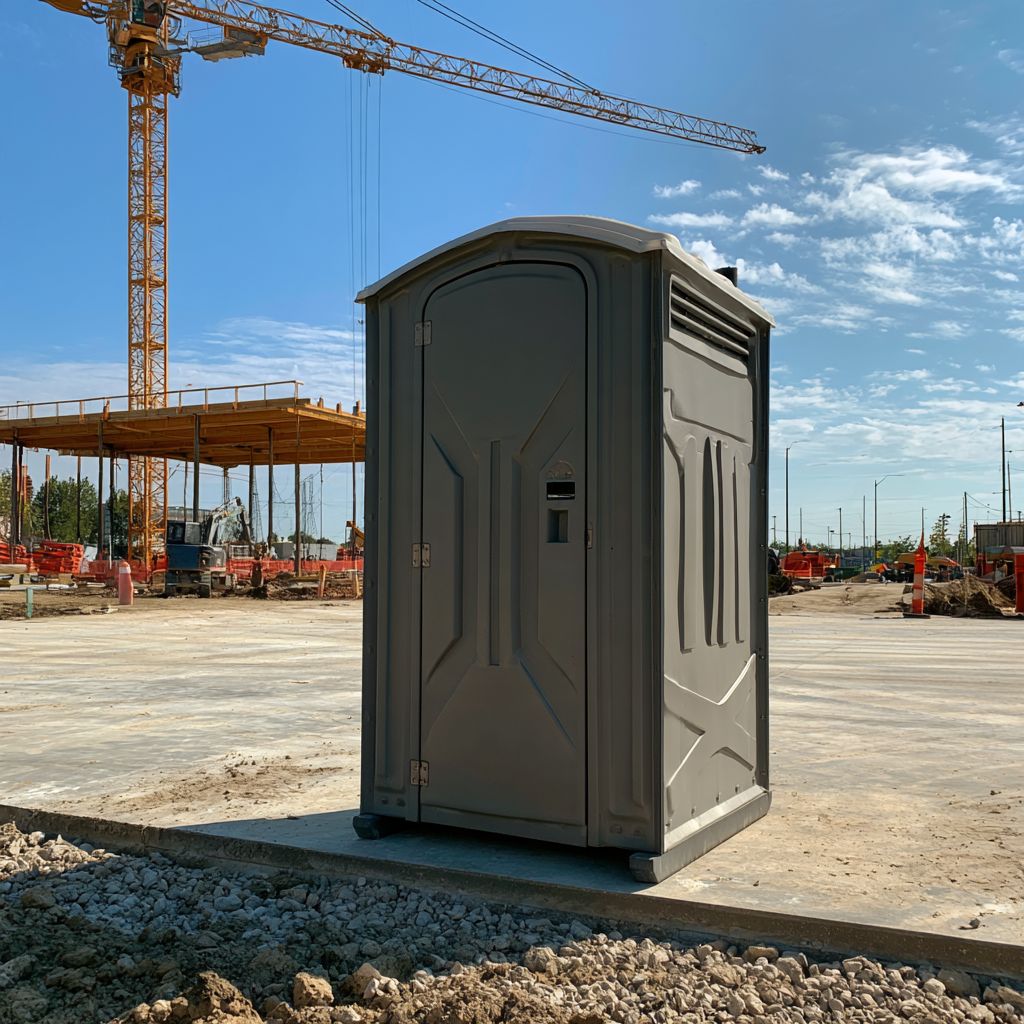
Placement Basics That Apply to Every Site
Any guide to porta potty placement starts with a few basic rules that apply to construction sites, backyards, and festival grounds. A good spot has to work for the people using the unit and for the crew that services it.
“Walk the service route before you finalize the spot,” says the Prime Dumpster Pro. “A location that looks great on a site map won’t help anyone if the pump truck can’t get within hose reach.”
Before choosing a spot, check each location against these basics:
- Level, stable ground: Units on a slope can rock or tip. Doors may also stop latching properly.
- Service truck access: Delivery, pumping, and pickup all require a clear path free of low branches, soft ground, and locked gates.
- Safety clearances: Units shouldn’t block fire lanes, hydrants, emergency exits, or electrical equipment.
- Wind shelter: A wall, fence, or building on the windward side keeps units stable and doors from slamming.
- Lighting and visibility: People should be able to spot the units easily and reach them safely after dark.
- Drainage: Low spots collect water and turn into mud after a storm.
Getting these basics right makes every other placement decision easier. It also keeps porta potty rentals running smoothly from delivery through pickup.
The best spot is level, well-drained, easy to find, and within reach of a service truck.
Construction Site Placement
Construction site porta potty placement has to balance worker access with jobsite safety. Units should be close enough that crews don’t waste time walking, but kept clear of the equipment and haul routes that move across the site every day.
OSHA’s construction sanitation standard requires toilet facilities on jobsites and sets minimum counts by crew size. Sites with 20 or fewer workers need at least one toilet. Sites with 20 or more need one seat and one urinal per 40 workers, and sites with 200 or more need one seat and one urinal per 50 workers. Many contractors plan for about one unit per 10 workers as common practice, which goes beyond the OSHA minimum. To find the right total for your crew, see this guide on how many porta potties you need for events and construction sites.
Residential Jobsites
On home builds and remodels, units usually go on the driveway or a flat section of yard near the street. A hard surface helps with stability and gives the service truck easy access.
Distance from the house matters for both comfort and local rules. For more detail, read about how close a porta potty can be to a house.
Commercial and Multi-Story Projects
On large commercial sites, it often works better to spread units across several work zones than to put them all at the entrance. On multi-story projects, crane units can be lifted to upper floors so workers don’t have to take long trips back to ground level.
“Every trip down from the tenth floor costs time,” says the Prime Dumpster Pro. “Putting restrooms where the work is happening keeps crews productive and cuts down on rushed trips up and down ladders.”
Road, Utility, and Linear Projects
Road crews, pipeline teams, and utility workers can move a mile or more in a single week. Towable units follow the crew, so the nearest restroom doesn’t get left farther behind each day.
Containment trays are useful on jobsites near storm drains, streams, or finished concrete. Handwashing stations should go next to restroom clusters and near break areas where workers eat.
On jobsites, place units close to active work zones and clear of equipment paths, and move them as the work progresses.
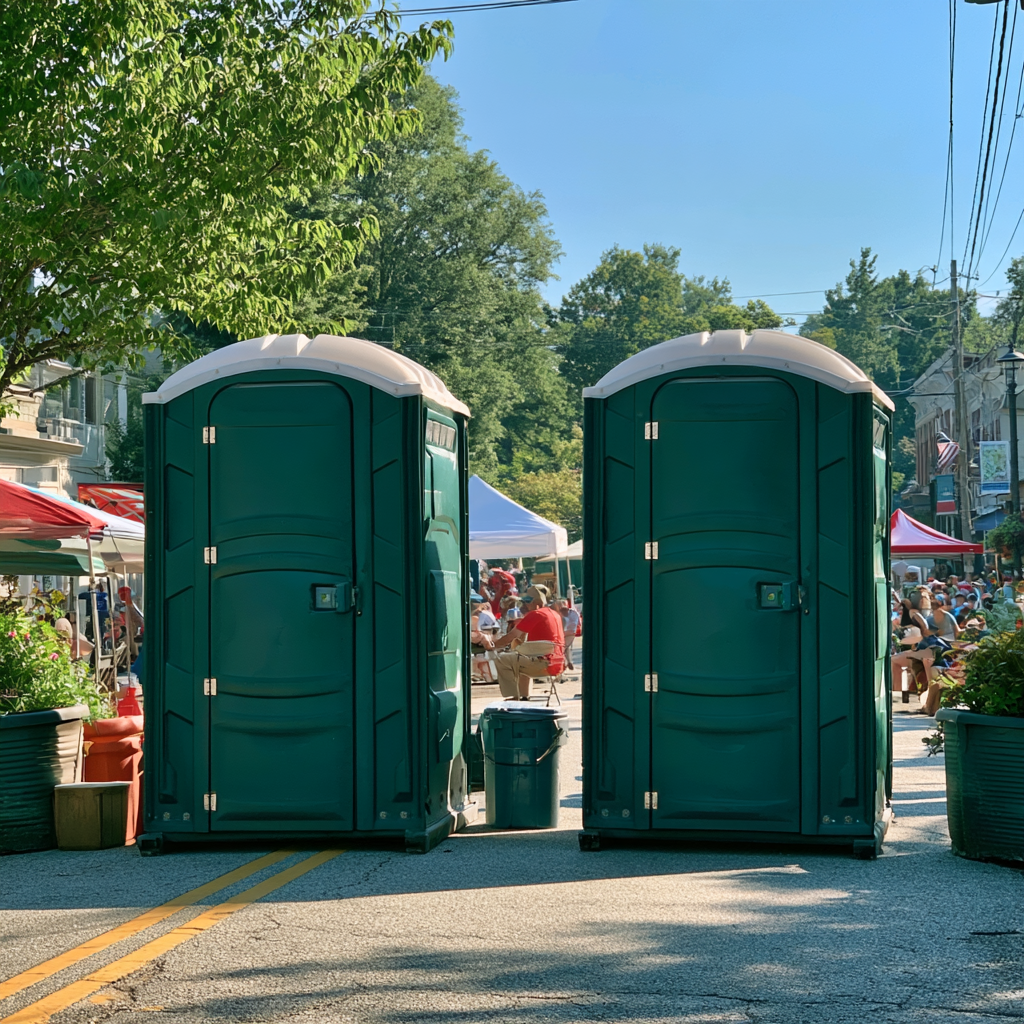
Event Placement
Porta potty placement at events depends on guest flow. People tend to gather around food, drinks, seating, and entertainment, so restrooms should be a short walk from those areas without being in plain view of them.
Several smaller clusters generally work better than one large bank of units, especially at spread-out venues. Keeping units downwind of dining and seating areas helps control odors.
The table below shows how placement differs by event type.
| Event Type | Where Units Go | What to Avoid |
| Weddings | Near the reception but out of the ceremony sightline, with lighting for evening use | Photo backdrops, the ceremony aisle, spots too close to dinner tables |
| Festivals and Concerts | Several clusters near food vendors, stages, and entrances | Main walkways, ticket lines, spots that block emergency lanes |
| Sports and Community Events | Near concessions and spectator seating | Areas where fans line up to enter or exit |
| Private Parties | Side yard or driveway, near the gathering but out of the main view | Soft lawn after rain, spots where trucks can’t reach |
Upgraded units call for extra planning. A restroom trailer needs a wide, level pad, and deluxe units look best when they’re partly screened with fencing, landscaping, or decorative panels.
“Guests should be able to find the restrooms without asking,” says the Prime Dumpster Pro. “Clear signage and a visible location matter more than any upgrade inside the unit.”
At events, place units in several visible clusters near food and seating, downwind of dining areas and out of main walkways.
Where to Place Accessible Porta Potties
Accessible units have to be both available and easy to reach. The 2010 ADA Standards for Accessible Design require that at least 5% of portable units in each cluster be accessible, with no fewer than one. The requirement applies to each restroom location, not just to the event or site as a whole.
Location matters as much as the count. Accessible units should sit on a firm, level route free of cables, curbs, gravel, and vendor equipment. The inside of an ADA unit includes a 60-inch turning space, and the approach outside needs to be just as clear.
“Accessible units belong at the front of the row, not behind the others,” says the Prime Dumpster Pro. “If someone has to cross grass or step over cords to get there, the unit isn’t doing its job.”
A handicap accessible porta potty should be placed in every restroom cluster, including satellite groups at large venues.
Place accessible units at every restroom cluster, on a firm and level route that stays clear of obstacles.
Permits, Property Rules, and Local Codes
Local rules can shape porta potty placement as much as site conditions do. Units placed on a street, sidewalk, or other public property often need a permit from the city.
Event permits sometimes include a sanitation plan showing where restrooms will go. Homeowners associations may have their own restrictions on temporary units in yards or driveways. Fire codes also require clearance around hydrants, exits, and fire lanes.
Requirements vary by city and county. Checking with the local building department or event permit office early in planning helps prevent delays.
Confirm permit, HOA, and fire code requirements before units arrive.
Weather and Seasonal Placement
Weather changes where a unit should go and how long it stays usable in that spot. Good portable toilet placement takes the season and local conditions into account.
A few seasonal adjustments keep units safe and comfortable:
- Wind: Place units next to a windbreak or anchor them on open, exposed sites.
- Rain: Keep units off low ground, soft lawns, and areas prone to flooding.
- Heat: Partial shade helps limit odors and keeps interiors more comfortable.
- Cold: Sun exposure and a spot sheltered from wind help slow freezing.
Checking the forecast before delivery gives you time to adjust the plan if a storm or heat wave is on the way.
Choose spots that account for wind, drainage, heat, and cold throughout the rental period.
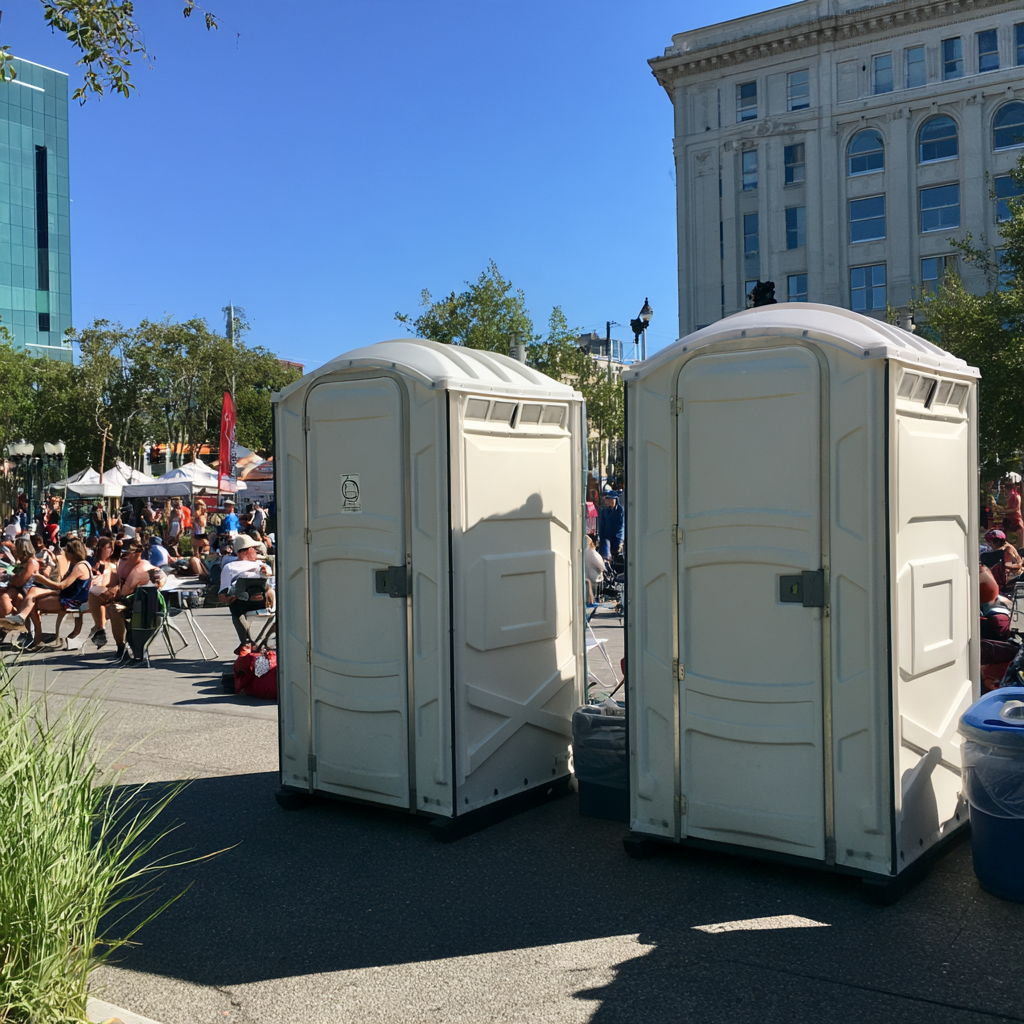
Placement Do’s and Don’ts
Placement mistakes are easy to make and often hard to fix once the units are delivered. This quick checklist covers the most common ones.
| Do | Don’t |
| Place units on firm, level ground | Set units on slopes or soft, muddy soil |
| Keep a clear path for service trucks | Block truck access with tents, vehicles, or fencing |
| Spread units across several clusters | Put every unit in one remote corner |
| Place units downwind of food and seating | Put units upwind of dining areas |
| Put accessible units on the main route | Put accessible units behind standard units |
| Add lighting for evening use | Leave paths and units dark after sunset |
| Keep fire lanes and hydrants clear | Block exits, hydrants, or emergency lanes |
Most of these problems are easy to prevent with a quick walk-through before delivery. Mark each unit location, check the truck route, and confirm clearances ahead of time.
FAQs
These are some of the most common questions about placing porta potties at jobsites and events.
How Far Should Porta Potties Be From Food Areas?
Porta potties should be close enough to food areas for convenience but far enough away that odors and sightlines don’t reach diners. Placing units downwind and to the side of dining areas usually works well. Some local health departments set specific distances, so check local rules for events with food service.
Can a Porta Potty Go on Grass?
A porta potty can go on grass if the ground is firm, level, and dry. Soft or wet lawns can sink under the weight of a unit and the service truck. A hard surface such as a driveway or gravel pad is a better choice when heavy rain is in the forecast.
Where Should Porta Potties Go at a Large Venue?
Porta potties at a large venue should go in several clusters spread across the grounds so no guest has a long walk. Knowing where to place porta potties at a big site starts with mapping where crowds will gather, including food vendors, stages, seating, and entrances.
Do Porta Potties Need to Be Near a Road?
Porta potties don’t need to sit right next to a road, but a service truck has to be able to reach them. Units placed far from any drivable surface can be difficult to pump and restock during the rental period.
Get Placement Right From the Start
Smart porta potty placement keeps workers productive, guests comfortable, and service visits on schedule. Level ground, truck access, safety clearances, and accessible routes all help each unit do its job.
At Prime Dumpster, we’re ready to help you plan the right units and locations for your jobsite or event. Contact our team to get started.
If you are looking for A Fun Guide to Porta Potty History, Click Here
Recent Posts


Follow Us
Have any questions?
+1 844 853 3867
Give us a call today so we can help you find the right waste & sanitation solution for
your project!
Contact Us