
Mon - Sat 7:00 am to 7:00 pm

Porta Potty Rental for Agriculture: A Guide for Farms, Vineyards, and Harvest Operations
Farming rarely happens near permanent restrooms. Fields stretch for acres, harvest crews move from row to row, and the closest facility might be a mile from that day’s work. For agricultural operations of any size, portable sanitation is both a legal requirement and a practical necessity that keeps workers productive, healthy, and compliant with federal field sanitation standards.
Prime Dumpster facilitates portable restroom rentals for agricultural operations nationwide, from small family farms and orchards to large-scale commercial operations with seasonal crews of hundreds. This guide covers everything farm owners, ranch managers, and agriculture employers need to know about agricultural porta potty rental, including the federal rules that apply, the right unit types for field conditions, and how to plan for harvest season.
Fast Facts: Porta Potty Rental for Agriculture
“Agricultural sanitation is one of the most overlooked compliance categories we work with,” says the Prime Dumpster Pro. “Farms get inspected, and field sanitation citations are common. The good news is that meeting the requirements isn’t complicated once you understand the unit counts and placement rules, and having the right equipment in place protects both your workers and your operation.”
| Question | Answer |
| How many units do I need? | Federal rules require one toilet per 20 workers; one per 20 for handwashing stations |
| Who must comply? | Farms with 11 or more workers on the same day, hand labor operations |
| Which unit type works best in fields? | Standard portable toilet or towable unit depending on crew movement |
| How often do units need servicing? | Weekly at minimum; more frequently for larger crews |
| Are handwashing stations required? | Yes, under OSHA field sanitation rules, alongside toilet facilities |
Your account manager at Prime Dumpster can help you choose the right units and confirm service frequency based on your crew size and site conditions. Our porta potty rental hub page is also an excellent source for pricing, sizing, and much more.
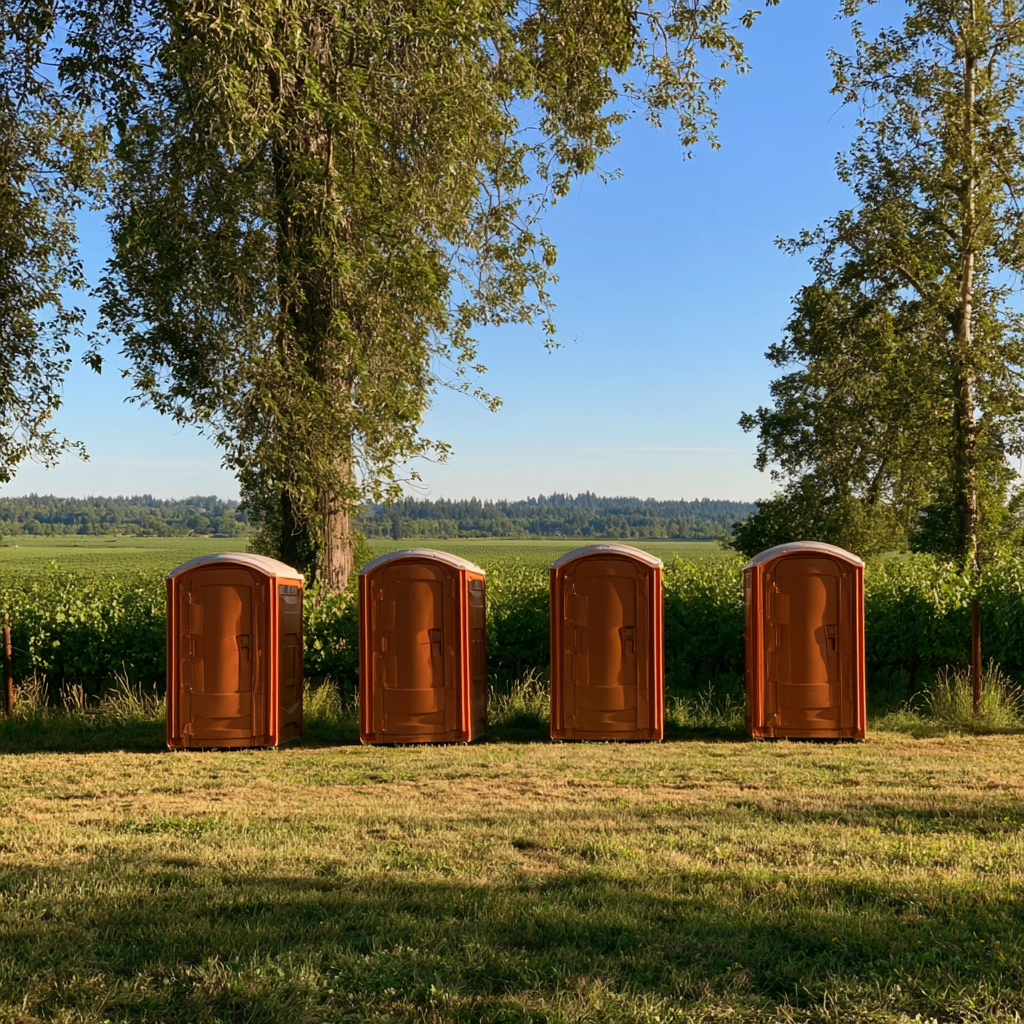
Federal Field Sanitation Rules: What Agriculture Employers Need to Know
Agricultural employers must provide toilet and handwashing facilities that are sanitary, reasonably accessible, and matched to the number of workers present. These OSHA field sanitation rules apply to any farm with 11 or more hand labor workers on the same day.
The Occupational Safety and Health Administration’s field sanitation standard (29 CFR 1928.110) governs portable restroom requirements for agricultural hand labor operations. Farms with 11 or more workers engaged in hand labor at any point during the day fall under the standard.
The core requirements are straightforward:
- One toilet facility for every 20 workers
- Toilet facilities located no more than a quarter-mile from where workers are working, or accessible by transportation when greater distances apply
- One handwashing facility for every 20 workers, providing potable water, soap, and single-use towels
- Facilities maintained in a sanitary condition
Some states have their own field sanitation standards that exceed OSHA’s federal rules. California, for example, enforces stricter requirements on response time for facility maintenance and the condition of toilet supplies. Check with your state labor department to confirm what applies to your operation.
Choosing the Right Unit for Farm and Field Use
Not every porta potty is suited for agricultural environments. Fields present conditions that require specific unit considerations, including soft or uneven ground, remote locations, limited truck access, and the need to reposition units as crews move through the operation.
Standard Portable Toilets
A standard porta potty is the right choice for most fixed-location farm needs such as packing sheds, equipment staging areas, permanent crew facilities, and field edges with regular truck access. They’re durable, widely available, and straightforward to service.
Towable Portable Toilets
Towable units are mounted on a wheeled frame and can be repositioned with a standard work truck or ATV. For operations where the crew moves through the field over days or weeks — strawberry patches, asparagus operations, row crop harvests — towable units allow the facilities to follow the work rather than requiring workers to walk to a fixed location.
ADA-Accessible Units
Any public-facing agricultural operation, such as agritourism, farm stands, or harvest festivals, should include at least one ADA-accessible unit to accommodate visitors with disabilities. Worker-only operations with no accessibility requirements may not need them, but they’re worth confirming with your local compliance guidance.
Handwashing Stations
OSHA requires handwashing facilities alongside toilet facilities for hand labor operations. Handwashing stations are self-contained units with a freshwater tank, soap dispenser, and paper towel supply. They’re typically placed next to or near each portable toilet to create a complete sanitation station.
“The biggest mistake we see in agricultural settings is operators who get the toilet count right but forget the handwashing stations,” the Prime Dumpster Pro said. “OSHA requires both, and inspectors check both. A full sanitation setup — toilet plus handwash station — is what keeps you compliant.”
Placement Tips for Agricultural Porta Potties
Placement in a farm or field setting requires more planning than a construction site or event. A few practical guidelines:
- Ground stability matters. Soft, tilled, or irrigated ground can cause units to sink or tip. Place on compacted soil, gravel pads, or a plywood base when needed.
- Stay within a quarter mile. OSHA’s quarter-mile rule is measured from the working location, not the field edge. As crews advance through a large field, units may need to be repositioned to stay in compliance.
- Account for service truck access. Pump trucks are large. Leave a clear path to each unit that a service vehicle can reach without crossing through active crop rows or soft ground.
- Face units away from prevailing winds. Position the door side downwind to minimize odor near work areas.
- Keep units in the shade when possible. Direct sun heats interior temperatures significantly, which accelerates odor and makes the experience unpleasant for workers.
Never move a rented porta potty yourself. Only the professional delivery personnel should place and remove the units.
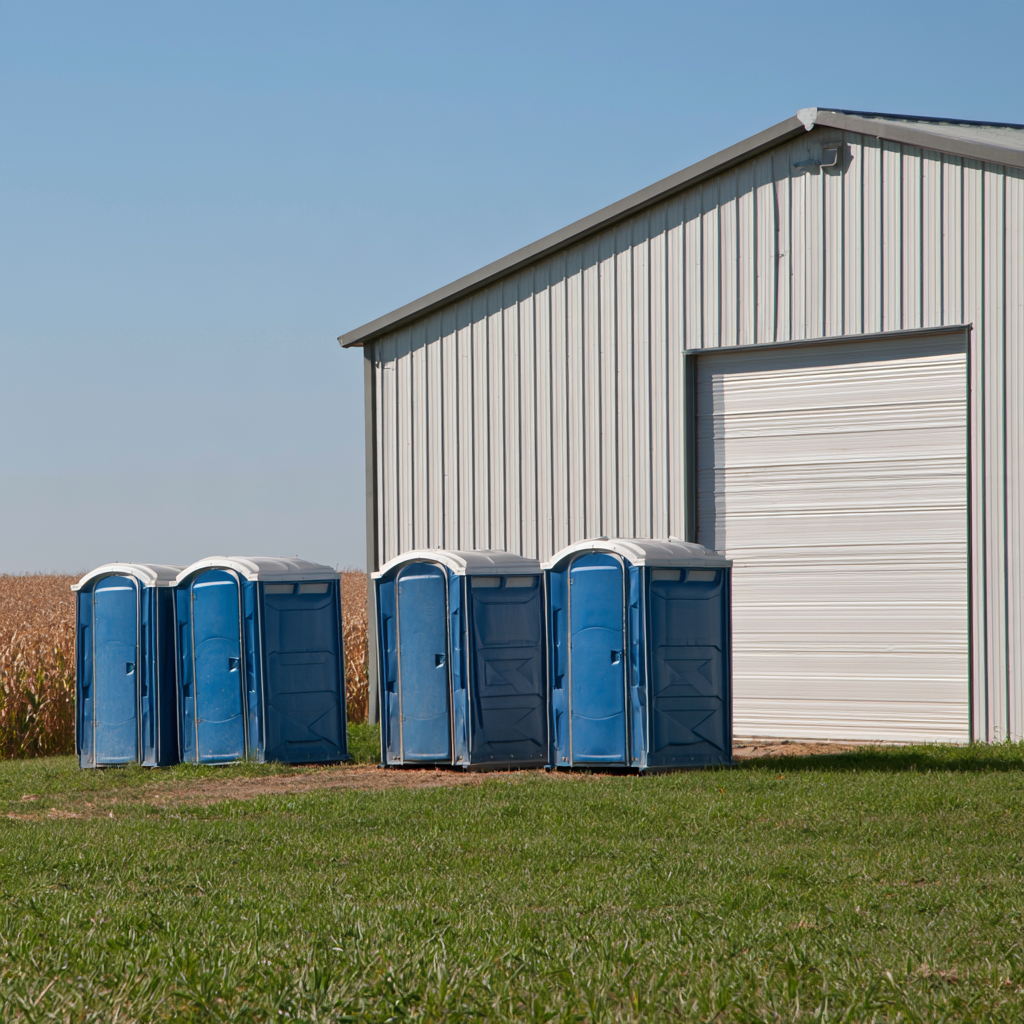
Planning for Harvest Season Labor Surges
Harvest season creates the sharpest labor spikes in agriculture. An operation that employs 10 full-time workers year-round might bring on 80 seasonal pickers during a six-week harvest window — and the unit count requirement jumps accordingly.
Plan your porta potty rental for harvest operations well in advance. Equipment availability tightens in late summer and fall as construction and event demand peaks alongside agricultural demand. Booking two to four weeks ahead of harvest start gives you the best chance of securing the unit types and quantities you need.
Confirm unit count based on peak crew size, not average. OSHA’s standard is based on the number of workers present on any given day, so if your largest single-day crew is 60 workers, you need three toilet facilities and three handwashing stations on site — even if most days run smaller.
Long-term rental structures, typically billed in 28-day cycles, work well for operations that run four to eight weeks. The fixed-cycle billing makes it easy to plan costs around the harvest window and adjust if the operation runs long.
Vineyards, Orchards, and Agritourism: The Dual-Use Challenge
Farm operations that serve the public face a different set of requirements than worker-only operations. A vineyard that runs harvest festivals, a u-pick orchard, or a farm-to-table dinner series needs to plan for two distinct audiences at once: the workers running the event and the guests attending it.
For the worker side, standard units and handwashing stations near the production and staging areas cover compliance. For guests, the calculus changes. Our guide to how to choose portable toilets for events covers the event-specific factors in detail, but a few agriculture-specific notes apply:
- Guest-facing units should be positioned away from active work areas and livestock
- Deluxe units with built-in sinks or deluxe flushing units are a better fit for paying visitors than standard construction-grade units
- Decorative screening or lattice around portable toilets is common at agritourism events and helps them blend into the setting
- Alcohol-serving events require more units per guest than non-alcohol events, as beverage consumption increases restroom usage frequency
Plan the worker and guest facility needs separately, then combine them into a single rental order.
Agricultural Porta Potty Expertise
Farms, vineyards, orchards, and harvest operations each come with their own sanitation challenges — remote locations, moving crews, seasonal surges, and the dual demands of worker compliance and guest experience. Getting the unit count, type, and placement right requires a plan that accounts for all of it.
Our team at Prime Dumpster has coordinated portable restroom rentals for agricultural operations across the country, from small family farms to multi-site commercial harvests. Contact our team for expert guidance on agricultural porta potty rental, including unit selection for field conditions, OSHA-compliant sanitation setups, and flexible scheduling built around your harvest calendar.
If you are looking for How Much to Rent a Porta Potty for a Day, Click Here
Recent Posts


Follow Us
Have any questions?
+1 844 853 3867
Give us a call today so we can help you find the right waste & sanitation solution for
your project!
Contact Us