
Mon - Sat 7:00 am to 7:00 pm
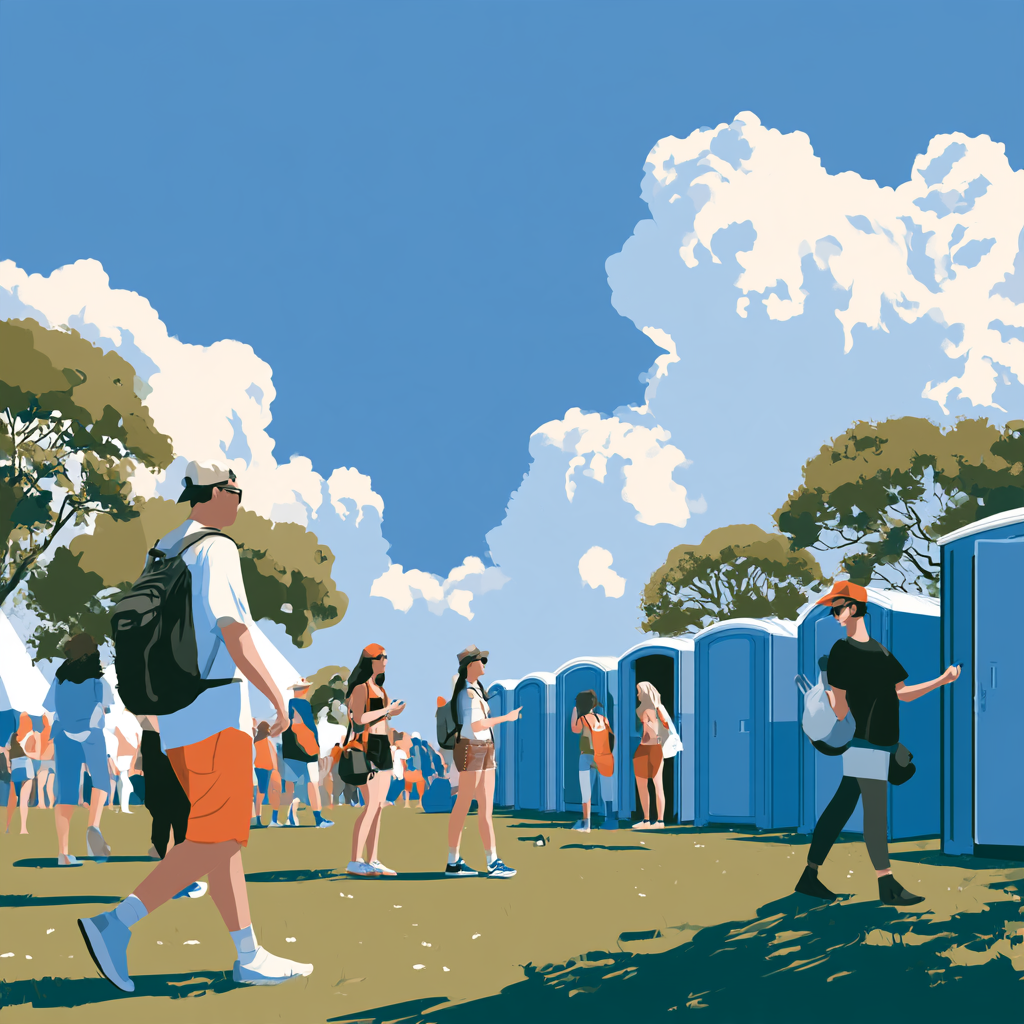
How to Choose Portable Toilets for Events
The restroom setup at an event shapes the guest experience more than most organizers expect. Long lines, poorly placed units, or the wrong type of facility can turn an otherwise well-planned occasion into a frustrating one. Getting portable toilets for events right means thinking through guest count, event duration, unit types, placement, and timing before the first truck arrives.
Prime Dumpster coordinates portable restroom rentals for events of every size and type, from backyard weddings to multi-day festivals to large-scale corporate gatherings. This guide covers how to choose the right units, how many you need, how placement and logistics work, and what the rental process looks like from booking through pickup.
Fast Facts: Portable Toilets for Events
“The two mistakes we see most often with event rentals are underestimating the unit count and waiting too long to book,” the Prime Dumpster Pro said. “Both are easy to avoid with a little planning. Get your guest estimate, factor in alcohol service, and book at least two to four weeks out. For large events or peak summer dates, six to eight weeks is safer.”
- Standard ratio: Plan for one unit per 50 to 75 guests at a 4-hour event without alcohol
- Alcohol adjustment: Increase to one unit per 15 to 25 guests when alcohol is served, as beverage consumption significantly increases restroom usage
- ADA inclusion: Include at least one ADA-accessible unit at any public-facing event; many permit applications require it
- Service scheduling: Events longer than 4 hours should include a mid-event service check; multi-day events need daily servicing
- Booking window: Reserve units 2 to 4 weeks ahead for standard events, 6 to 8 weeks for large gatherings or peak-season dates
Your Prime Dumpster account manager can help you dial in the exact count and unit mix based on your event details.
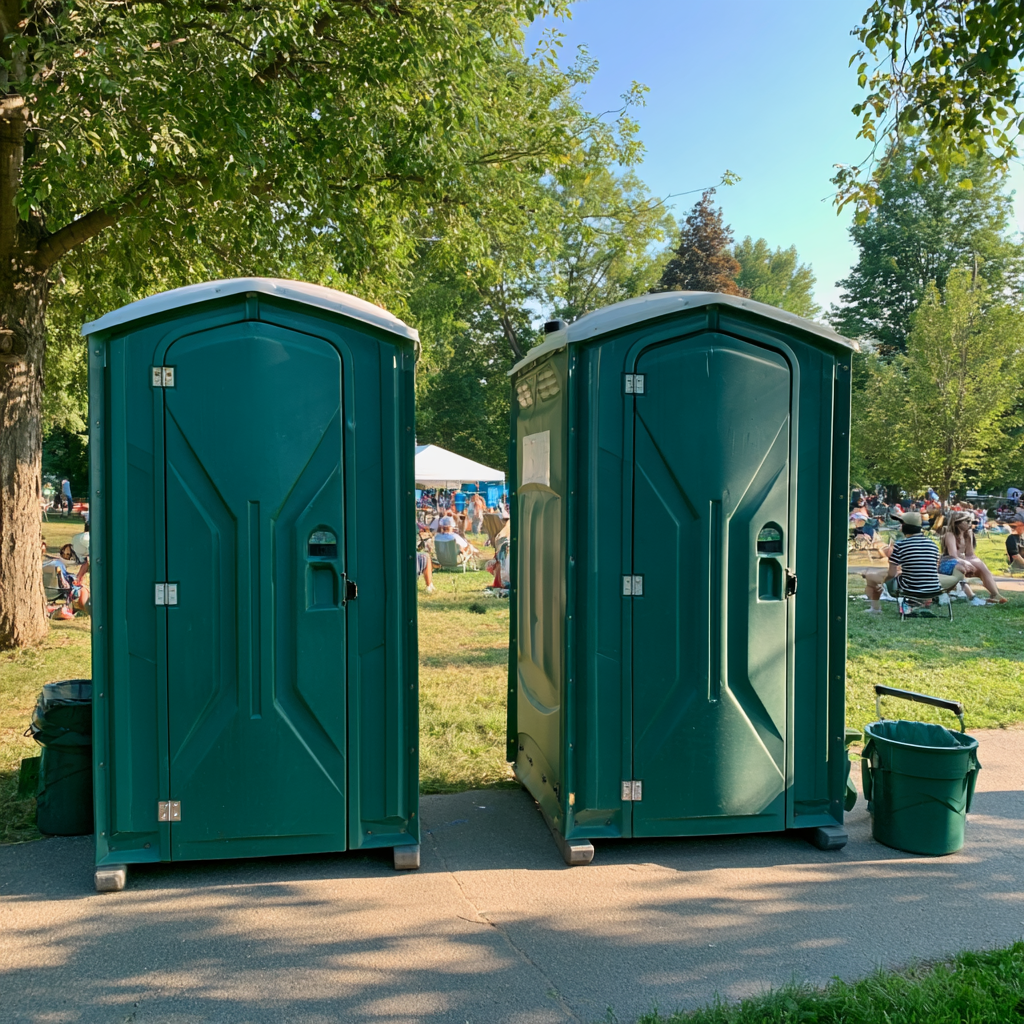
Portable Toilet Types for Events
The right unit depends on the event’s tone, the audience, and how long guests will be on site. A standard unit works for a casual outdoor fundraiser, but a seated wedding dinner calls for something more refined.
| Unit Type | What It Includes | Best For |
| Standard Porta Potty | Toilet, urinal, toilet paper, hand sanitizer. Compact and durable. | Community events, 5Ks, volunteer days, casual outdoor gatherings. |
| Deluxe with Sink | Built-in handwashing station with soap, running water, and mirror. | Events with food service, fundraisers, school events. |
| Deluxe Flushing | Foot-pedal flush system with fresh water. Reduced odor. | Weddings, corporate events, upscale outdoor parties. |
| ADA-Accessible | Wider door, interior grab bars, wheelchair-accessible floor space. | Any public event. Often required by permit or ADA compliance guidelines. |
| Handwashing Station | Standalone freshwater unit with soap and paper towels. | Food festivals, catered events, health department compliance. |
| Restroom Trailer | Multiple stalls, climate control, running water, lighting, mirrors. | Large weddings, VIP areas, galas, and any event where the restroom experience needs to match the occasion. |
Your Prime Dumpster account manager can recommend the right combination of unit types and quantities based on your guest count, event format, and budget. Our porta-potty resource hub is also an excellent source of information.
How Many Portable Toilets Do You Need?
The number of portable toilets an event needs depends on guest count, event duration, and whether alcohol is being served.
Getting the count right is one of the most consequential decisions in event restroom planning. Too few units means long lines and overwhelmed facilities. Too many means unnecessary cost. The goal is the right number for your peak usage window, not an average across the entire event.
Three variables drive the calculation:
- Guest count is the baseline. One unit per 50 to 75 guests for a standard 4-hour event is the starting point.
- Duration matters because longer events mean more total uses per guest. Events over 6 hours should plan for roughly double the baseline ratio.
- Alcohol service is the biggest multiplier. Beverage consumption increases restroom frequency significantly, and the standard recommendation shifts to one unit per 15 to 25 guests when alcohol is served.
“The unit count question comes up on almost every call, and the answer is always the same: plan for your peak, not your average,” the Prime Dumpster Pro said. “If your biggest hour is right after dinner service with an open bar, that’s the number you plan around. One extra unit costs a fraction of the rental, but running short during that peak hour is something your guests will remember.”
Matching the Unit to the Event Type
Different events create different restroom demands, and the right unit type, count, and placement strategy varies with each one.
Weddings
Weddings place a premium on guest comfort and aesthetics. Attendees expect a restroom experience that doesn’t feel out of place alongside a formal dinner, a dance floor, and a photographer. Standard construction-grade units rarely meet that standard.
Deluxe flushing units or restroom trailers are the most common choice for weddings. Trailers with climate control, mirrors, and running water create an experience closer to an indoor restroom. For smaller weddings, a pair of deluxe units with sinks can cover the need at a lower cost while still providing a polished guest experience.
Sporting Events
Sporting events bring large crowds, concentrated peak usage during halftime and intermissions, and a wide range of attendees including families and guests with accessibility needs. Restroom planning needs to account for surges, not just averages.
Standard units in higher quantities are the practical choice for most sporting events, distributed across multiple locations near entrances, concessions, and seating areas. Adding ADA-accessible units at each restroom cluster ensures accessibility. Events with tailgating or beer service should plan for the higher alcohol-service ratio.
Food Festivals
Food-focused events create a dual restroom and hygiene challenge. Guests need restroom access, and local health departments often require handwashing facilities near food preparation and serving areas as a condition of the event permit.
Plan for a higher unit count at food festivals than at a comparable non-food event, since eating and drinking both increase restroom frequency. Pair every two to three portable toilets with a handwashing station, and position hygiene stations where they’re visible to guests leaving food vendor areas.
Winter Festivals
Cold weather changes the restroom equation. Guests are bundled in heavier clothing, which means more time per use and longer lines at the same unit count. Freezing temperatures can also affect the units themselves if they aren’t properly maintained.
Winter festival organizers should increase the unit count by roughly 15 to 20 percent compared to a warm-weather event of the same size. Place units in sheltered areas when possible, and confirm with your provider that cold-weather servicing protocols are in place to prevent freezing in holding tanks and handwashing stations.
Film Production
On-location film and television shoots often take place far from permanent facilities, with crews of 50 to 200 people working 10- to 14-hour days. The restroom setup needs to serve a long work day without disrupting shooting schedules or on-set activity.
Standard units positioned near base camp handle most crew needs. Productions with talent trailers or VIP areas often add a deluxe or flushing unit for principal cast and directors. Service scheduling should align with crew breaks to minimize disruption during active shooting.
Construction
Construction sites operate under OSHA requirements that mandate one toilet facility per 20 workers. Unlike events, construction restroom planning is driven by regulation rather than guest experience, and the unit type is almost always a standard portable toilet.
Placement should keep units within reasonable walking distance of the active work zone. For projects with multiple floors or large footprints, distribute units across the site rather than clustering them in one spot. Long-term construction rentals are billed in 28-day cycles with weekly servicing included.
Learn more in our guide How to Choose Portable Toilets for Construction.
Emergencies and Disaster Relief
When permanent facilities are damaged or unavailable, emergency portable restroom rentals provide essential sanitation for affected communities. Speed of deployment is the primary concern, followed by unit count and servicing logistics for extended durations.
Emergency situations often require rapid scaling as the scope of the need becomes clear. Work with a provider that can deliver initial units within 24 to 48 hours and add capacity as conditions develop. Service frequency should increase for high-use emergency deployments.
Placement and Access Planning
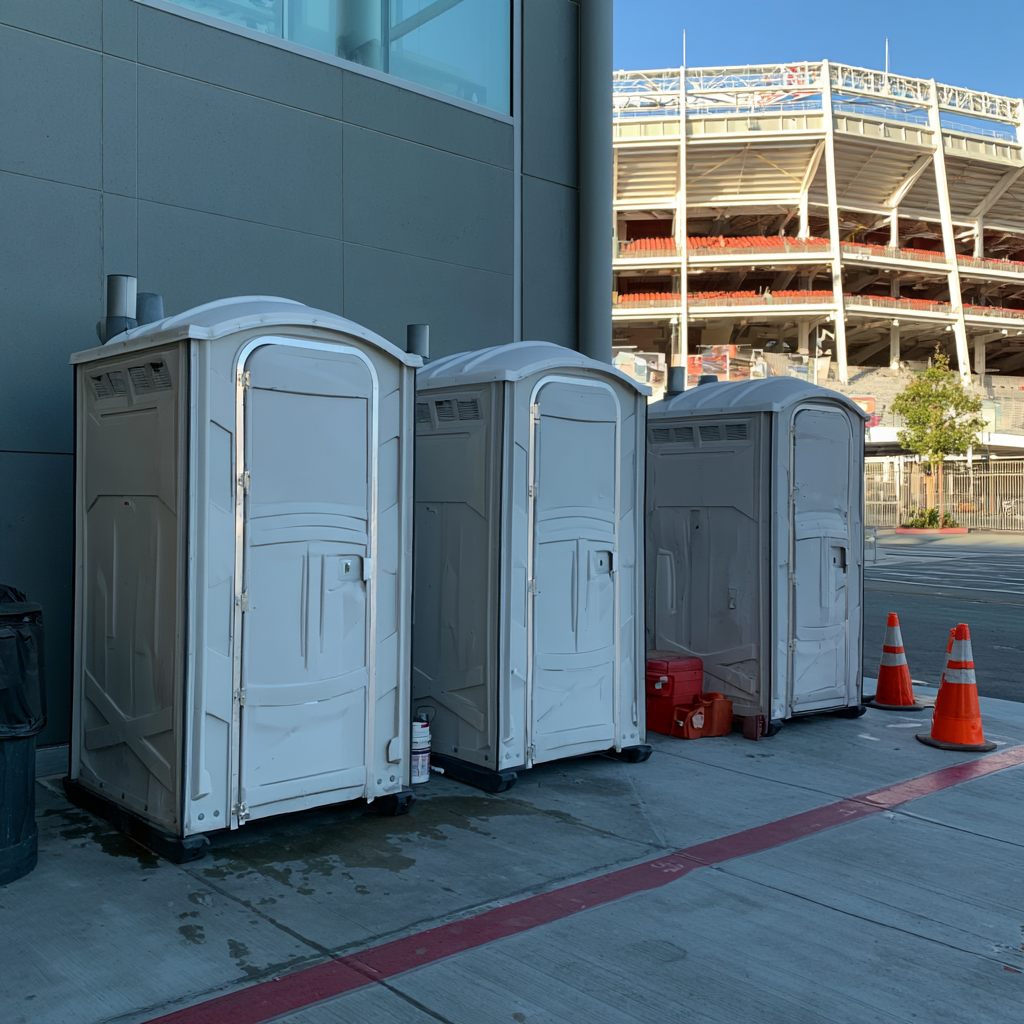
Strategic placement keeps restrooms convenient for guests, accessible for service trucks, and far enough from food and gathering areas to manage odor.
Placement is where logistics meets guest experience. A poorly placed unit creates two problems at once: guests can’t find it or won’t use it, and the service crew can’t reach it for pump-outs and restocking.
The starting point for event placement is identifying where guests naturally congregate and where the service truck will enter. Position units close enough to high-traffic areas that guests don’t have to search, but far enough from food service and seating that odor isn’t a factor.
“We tell event planners to think about placement from two directions at the same time,” the Prime Dumpster Pro said. “Start from the guest side and ask where people will be standing, eating, and gathering. Then start from the service side and ask where the truck can get in and out without crossing through the event. The right spot is where those two answers overlap.”
A few placement fundamentals that apply to most event types:
- Place units on flat, stable ground with a clear path at least 10 feet wide for the service truck
- Face unit doors away from food service areas, stages, and main gathering zones
- Distribute units across the venue rather than clustering them in one spot, especially for events over 200 guests
- Add directional signage and lighting for evening events so guests can find the restrooms without difficulty
Plan for ADA-accessible units to be on the most level, most accessible path at the venue, not tucked into a far corner of the restroom cluster. For more help, the ADA’s Planning Guide for Making Temporary Events Accessible to People with Disabilities.
Booking Timeline: How Far in Advance Should You Reserve?
Event organizers should book portable restrooms 2 to 4 weeks in advance for standard events and 6 to 8 weeks ahead for large events or peak-season dates.
Portable restroom inventory is shared across events, construction, and emergency deployments. During peak season, which runs roughly from May through October in most markets, demand can outstrip supply quickly, especially for specialty units like restroom trailers and ADA-accessible models.
Booking early does more than secure inventory. It gives you time to adjust if your guest count changes, your venue layout shifts, or your permit application requires a specific restroom configuration. Last-minute bookings often mean fewer unit type options and less flexibility on delivery timing.
“We’ve had organizers call the week of a large outdoor wedding in July looking for a restroom trailer, and there’s simply nothing available,” the Prime Dumpster Pro said. “The earlier you lock it in, the more options you have. Two months out for a big summer event is the sweet spot.”
What Does an Event Porta Potty Rental Cost?
Event porta potty rental costs range from $199 to $349 for a standard unit on a weekend rental, with upgraded units and add-ons increasing the total based on event size and needs.
The cost of renting portable toilets for events depends on the unit type, quantity, rental duration, and your location. Most event rentals are billed as a flat rate covering delivery, the rental period, and pickup.
Standard pricing ranges for common unit types:
- Standard porta potty: $199 to $349
- Deluxe with sink: $300 to $400
- Deluxe flushing: $300 to $400
- ADA-accessible: $200 to $300
- Handwashing station: $150 to $250
- Restroom trailer: $1,500+
Several factors influence your final cost beyond the base unit price. Delivery distance, rush or same-day delivery fees, additional service visits for multi-day events, and seasonal demand all play a role. Your account manager can provide a complete quote that includes everything so there are no surprises on the invoice.
For a complete walkthrough of the rental process from booking through pickup, see our complete guide to renting a porta potty.
Permits and Local Regulations
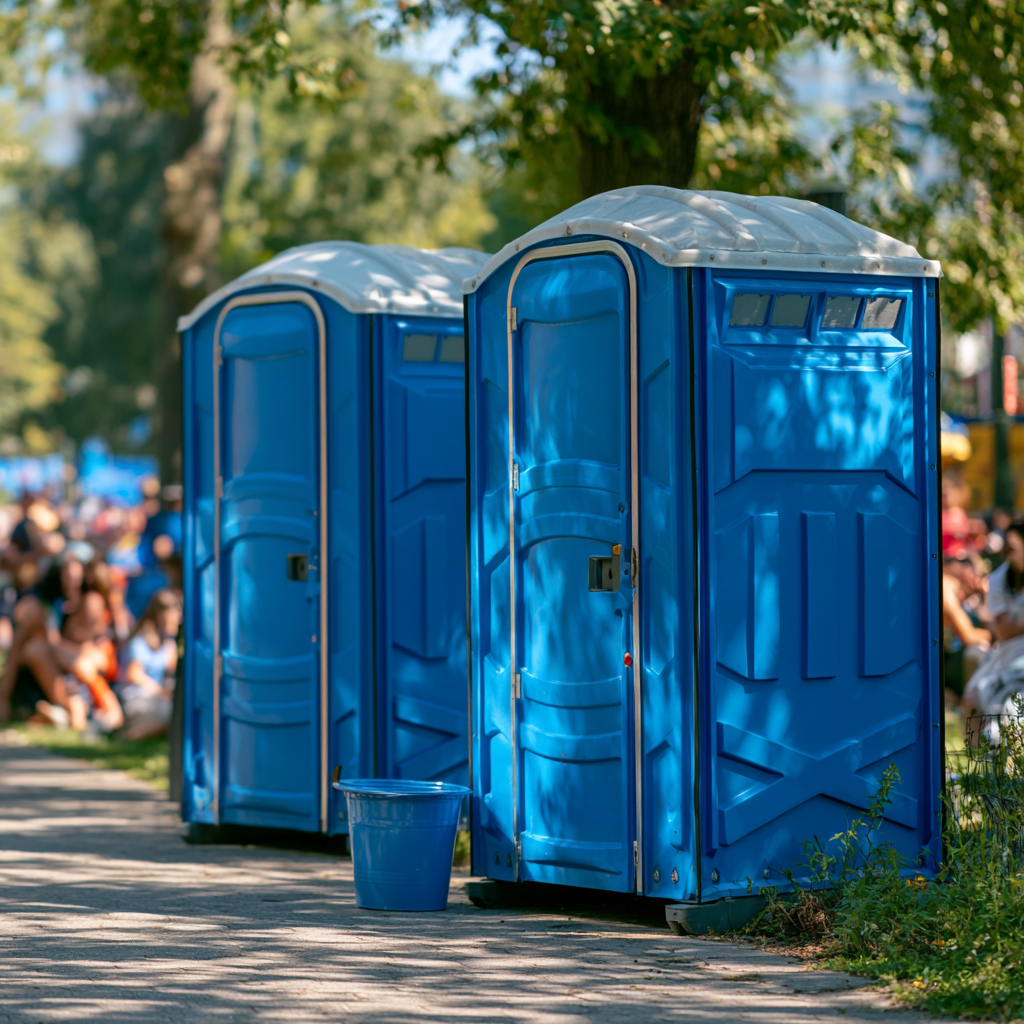
Many municipalities and public venues require a restroom and sanitation plan as part of the event permit application, including the number and type of portable toilets on site.
If your event is on public property, in a park, or at a venue that requires a special event permit, expect the application to include questions about restroom facilities. Common requirements include a minimum number of units based on expected attendance, a specified number of ADA-accessible units, and a waste management plan.
Regulations vary by jurisdiction. Some cities specify a unit-to-guest ratio. Others leave it to the organizer but require proof of a service contract with a licensed portable sanitation provider.
“Most event planners know they need a permit, but they don’t always realize the permit will ask about restrooms,” the Prime Dumpster Pro said. “We help with that part of the application regularly. Once we know your guest count and venue, we can provide the restroom section of the plan for you.”
Check with your local parks department, health department, or venue manager early in the planning process. Permit applications often require 30 or more days of lead time, and restroom planning should be finalized before you submit.
Portable Toilets for Every Event
Choosing the right portable toilets for events comes down to matching the unit type, count, and placement to your specific audience and occasion. Whether it’s a wedding that calls for restroom trailers or a community festival that needs a dozen standard units with handwashing stations, the fundamentals are the same: plan for your peak usage, book early, place strategically, and confirm your permit requirements. For game days and tournaments, see How to Choose Portable Toilets for Sporting Events.
Contact our team at Prime Dumpster for help selecting the right portable restroom setup for your next event. We’ll help you choose the units, confirm the count, coordinate delivery and servicing, and make sure the restroom side of your event runs as smoothly as everything else.
If you are looking for Porta Potty Safety for Kids: Tips for Parents, Click Here
Recent Posts


Follow Us
Have any questions?
+1 844 853 3867
Give us a call today so we can help you find the right waste & sanitation solution for
your project!
Contact Us