Mon - Sat 7:00 am to 7:00 pm
REQUEST A QUOTE
UNLOCK THE BEST DEALS FOR YOUR DUMPSTER AND PORTA POTTY RENTAL NEEDS!
Mon - Sat 7:00 am to 7:00 pm
Home Areas We Service Porta Potty Rental in Missouri
Areas We Service
At Prime Dumpster, we provide porta potty rentals across 38 Missouri cities, from St. Louis and St. Charles County to Kansas City, Columbia, Springfield, and Joplin. We deliver to construction sites, home remodels, church picnics, weddings, float trips, and other events, and we help with emergency needs when a flood or tornado leaves a building without working restrooms. Let us know what you have in mind, and we'll suggest the units and cleaning plan that make sense.
The price you pay rests on a handful of choices. Unit count, unit style, rental length, and how often the tanks get pumped carry the most weight. The distance to your site and how easily our truck can reach the drop spot also count.
Here you'll find average prices, a simple way to figure out how many units to order, the offices that handle permits in Missouri, and the state's rules for food stands and portable toilet waste.
cities served in
7
unit types available
3 days
standard rental period
The prices below reflect average ranges per unit. Your account manager will confirm the rental period, service schedule, and delivery details during your free, custom quote.
| Unit Type | Average Price Range | Best For |
|---|---|---|
| Standard Porta Potty | $199–$349 | Construction sites, small events, backyard projects |
| ADA-Compliant Porta Potty | $200–$300 | Public events and job sites that need an accessible unit |
| Deluxe Flushing Porta Potty | $300–$400 | Weddings, parties, and guest-facing events |
| Deluxe Porta Potty with Sink | $300–$400 | Events where guests need a sink inside the unit |
| Solar Porta Potty | $500–$600 | Remote sites and off-grid events |
| Handwashing Station | $150–$250 | Food areas, job sites, and events |
| Restroom Trailer | From $1,500 | Weddings, corporate events, and long-term sites |
Each rental price covers bringing the units out, cleaning them on a schedule, and hauling them away when you're done. Here's what makes one quote higher than another. - Rental length: Parties and festivals usually fall under a three-day weekend rate, so one busy Saturday costs close to what a full weekend does. Building jobs are billed in 28-day blocks that repeat until the work wraps up. - Number of units: Your total climbs with each unit you add. A careful headcount helps you avoid both long lines and units that barely get used. - Service visits: A service visit means emptying the tank, wiping down the inside, and refilling paper and hand sanitizer. More people or more days usually means more visits and a higher bill. - Delivery distance and site access: Units bound for a flat, open lot drop quickly. A river campground at the bottom of a steep hill, or a backyard behind a narrow side gate, takes more effort. - Unit type and add-ons: Standard units are the budget pick. Flushing units, units with a sink, solar units, and restroom trailers cost more, and handwashing stations are an added line.
Missouri adds two things to think about: - Local health rules for food: In Missouri, the local health department handles food stands at events, and it may add rules beyond the state's guidelines. If you're hosting food vendors, ask early whether they'll need handwashing stations from you. - Rural drives: MoDOT looks after one of the largest state road systems in the country, and many of our Missouri jobs sit on long rural routes. A lake house or farm site far from a treatment plant can cost more per service visit than a site in a metro area.
Your Prime Dumpster account manager can talk you through each of these and build a quote around your dates, guest count, and address.
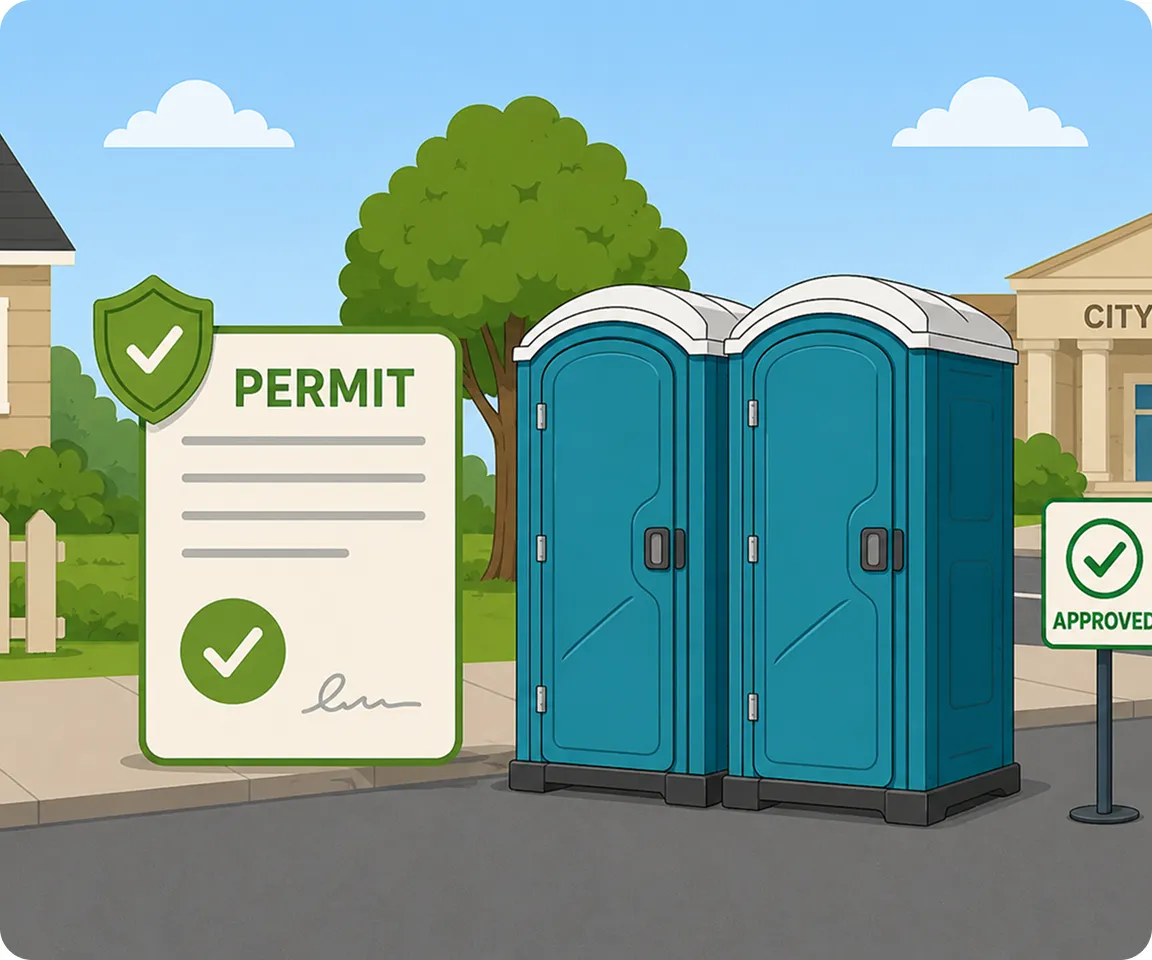
Units on private property, like a backyard, a pasture, or a fenced job site, don't usually need a permit. Putting a unit on public property is different. A street, a sidewalk, a park, or a highway shoulder calls for permission from the government in charge of that land.
Missouri has no single statewide permit for portable toilets. Which office you contact depends on the location:
Because a city street can meet a state route at the same corner, the exact spot decides which office you call. Your account manager can help you find the right contact before we set a delivery date.
Think about how many people will use the units and how long they'll be there. These rules of thumb help: - Events: Plan 1 unit per 50 guests for an event that runs about four hours. If there's a bar or a beer tent, raise the count by 15 to 20 percent. - Construction sites: Federal worker-safety rules set a minimum of 1 toilet for up to 20 workers. Once a crew passes 20, the rule becomes 1 toilet and 1 urinal for every 40 workers. - Accessible units: A public event needs at least 1 accessible unit, and about 1 for every 20 units overall. - Emergencies: For relief crews after a flood or storm, plan 1 unit per 10 workers.
Humid summer days, events that stretch into the evening, and crowds that eat and drink will all fill tanks faster. Plug your numbers into our porta potty calculator, then have your account manager look them over.
The Missouri rules that shape a rental mostly come down to access for guests, clean hands at food stands, and safe disposal of waste. - Accessible units: Federal accessibility rules cover every Missouri event open to the public. Where portable toilets are grouped together, the ADA standards call for 5 percent of the units in each group to be accessible, and at least one per group. Units set out only for a construction crew are exempt from that rule. - Food stands and handwashing: The Department of Health and Senior Services defines a temporary food stand as one that runs for no more than 14 days in a row at a single event. Its guidelines for food vendors call for a hand sink with running water, soap, paper towels, and a wastebasket. A simple setup with a water jug, a spigot, and a bucket for used water is allowed. The guidelines also remind vendors to wash up after using the restroom, so a handwashing station close to the food area makes that easy. - Where the waste goes: Missouri's health rules for sewage systems count waste pumped from toilets and privies as hauled sewage. Those rules send it to a city sewage treatment plant that can take it, or to a septic cleaning business that disposes of it properly. That means the waste from your units never goes on the ground or into a creek. - Job sites: Federal worker-safety rules require toilets at every construction site, with the minimum based on crew size. Put units where workers can reach them quickly, away from equipment paths.
If your plans include a public event, food vendors, or a long building project, your Prime Dumpster account manager can check what applies and set up your units to fit.
locations served across
With just one call or text, our team coordinates the services you need through our network of vetted local hauling partners, saving you valuable time and resources. Whether you’re overseeing a construction project, handling commercial waste, managing government contracts, or organizing large-scale events, Prime Dumpster delivers the expertise and reliability you need to keep operations running smoothly.
A standard porta potty averages $199–$349 per unit, while an ADA-compliant unit averages $200–$300. Deluxe flushing units and deluxe units with a sink fall in the $300–$400 range, and restroom trailers start at $1,500. Your unit count, rental length, and service plan shape the final price, which your account manager confirms in a free quote.
Figure on 1 unit per 50 guests for an event lasting about four hours. Serving alcohol? Add 15 to 20 percent more units. Plan extra units or an added cleaning visit for all-day events and hot weather, and include at least one accessible unit if the public is invited.
Usually not for private property. MoDOT requires a permit for work on its highway right-of-way, and a city street, sidewalk, or park needs local approval. Festivals and street events often need a city event permit as well. Your account manager can help you figure out which office to call.
Most rentals come with a weekly service visit. The crew empties the tank, cleans the unit, and restocks paper and sanitizer each time. Big crowds, large crews, and Missouri's summer heat can mean more visits are needed. Your account manager sets up a schedule that matches how busy your units will be.
If the public will use your units, you should have one. Federal accessibility standards call for about 5 percent of each group of units to be accessible, and never fewer than one per group. Units reserved for a construction crew are exempt, though many contractors add one. Your account manager can help you pick.
A job site usually needs only a few days' notice, and delivery often happens within 24 to 48 hours. Spring and fall weekends are busy with weddings and festivals, so book those several weeks early. If your event needs a street closure or food vendors, contact the city and local health department well ahead.

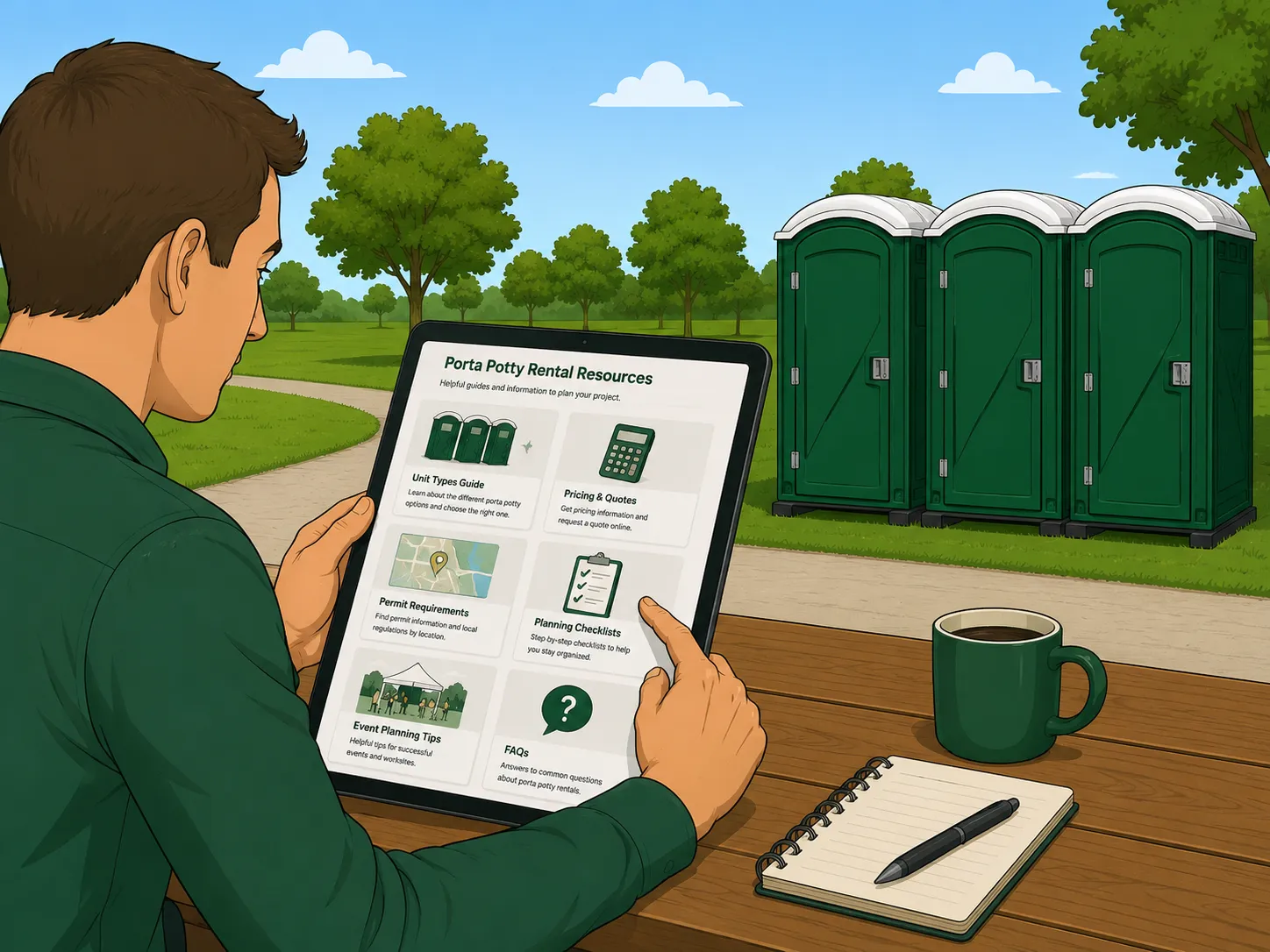
Find all porta potty rental resources in one place, from pricing and unit types to permits and planning guides.

Learn more details about porta potty rental pricing, including easy tips to save money.

Permit requirements can vary by project and location. Learn more about porta potty permits, regulations, and planning requirements.
Pair your Porta Potty rental with other services in your area
Give us a call today so we can help you find the right waste & sanitation solution for your project!