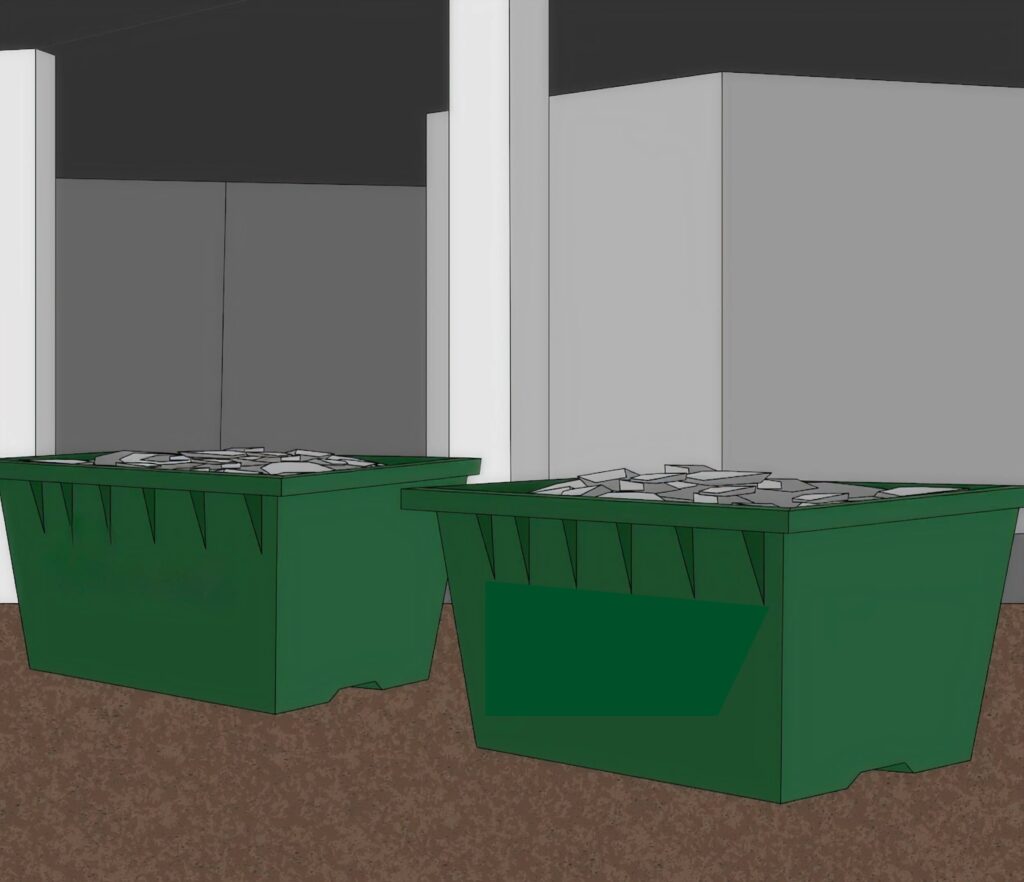
Lumber, drywall, plaster, lath, roofing, flooring, carpet, cabinets, fixtures, shelving, furniture and general cleanout debris are all ordinary roll-off material.
Iowa's own land-disposal bans are the hard limits here, and they are statewide. Yard waste, baled solid waste, lead-acid batteries and waste tires are barred from land disposal. Whole tires need cutting to eighteen inches or under before a sanitary landfill will take them. Each has a separate route, and a Waterloo garage cleanout will usually turn up at least one.
The general exclusions apply too. Liquids, paint and solvents, fuel, motor oil, antifreeze, pressurized cylinders and asbestos stay out of a Waterloo container. Asbestos is a serious consideration in this city given how much of the housing predates 1960. It appears in pipe lagging, floor tile and its adhesive, cement board siding and textured ceilings, and it needs a licensed abatement contractor before demolition starts.
On the industrial side there are two further items worth naming at booking. Fluorescent tubes come out of a plant or warehouse cleanout in quantity and need a lamp recycling route. And any drum or container that held a process chemical needs handling as hazardous material rather than as scrap, however empty it looks.
Electronics are their own stream too, which matters on a Waterloo office clearance where the furniture and the hardware come out of one room.
Tell your account manager what the building is and roughly when it went up, and the separate routes get arranged alongside the container.