
Mon - Sat 7:00 am to 7:00 pm

Where Can You Place a Dumpster on a Construction Site in Dallas?
Construction site logistics in Dallas demand strategic planning for waste container positioning affecting everything from delivery truck access to city compliance across neighborhoods. Smart dumpster placement on construction sites in Dallas prevents workflow disruptions, avoids permit violations, and keeps crews productive whether you’re managing downtown high-rises, residential renovations in Lakewood, or commercial builds in the Design District.
Prime Dumpster coordinates waste removal for construction projects throughout the Dallas metro area. Our guide covers placement strategies for different Dallas neighborhoods, container sizing that matches site constraints, safety considerations for crew access, and local regulations affecting everything from street corner clearances to HOA restrictions across the metroplex.
Fast Facts: Dumpster Placement on Dallas Construction Sites
We asked our Prime Dumpster Pros about the essential placement decisions construction managers face when renting dumpsters in Dallas.
Where should I place a dumpster on my Dallas construction site?
“Position containers on stable, level ground like concrete or asphalt surfaces where delivery trucks have clear access with adequate turning radius and overhead clearance. Keep units within 50 feet of active work areas so crews don’t waste time hauling debris across large sites, but maintain enough distance from equipment paths to prevent workflow bottlenecks. Always verify you’re maintaining the required 10-foot buffer from street corners per Dallas regulations and that placement doesn’t block emergency vehicle access routes.”
How do I choose the right dumpster size for my Dallas project?
“A 20-yard dumpster handles most residential renovations and fits tight urban spaces, while 30-yard containers work for whole-house remodels and commercial projects. Major demolition and new construction require 40-yard dumpsters, but verify your site has adequate space for delivery truck maneuvering before committing to larger units. Material density matters as much as volume since concrete and brick reach weight limits before filling containers, often requiring smaller dedicated units for heavy debris.”
What factors affect dumpster rental pricing on Dallas construction sites?
“Container size forms your base cost, but delivery distance across the sprawling Dallas metro area significantly impacts final pricing with Far North Dallas and suburban locations costing more than downtown sites. Weight overages trigger per-ton fees when you exceed included tonnage allowances, making accurate debris estimation critical for budget control. Rental duration beyond standard periods, permit fees for street placement, and seasonal demand during peak spring and fall construction months all affect your total investment.”
What construction materials can I put in Dallas dumpsters?
“Standard building materials including dimensional lumber, drywall, insulation, roofing shingles, metal framing, windows, doors, and flooring all belong in construction dumpsters along with concrete, brick, and masonry within weight limits. Prohibited items include paint, solvents, chemicals, asbestos, electronics, appliances with refrigerants, batteries, tires, and propane tanks requiring separate disposal through specialized facilities.”
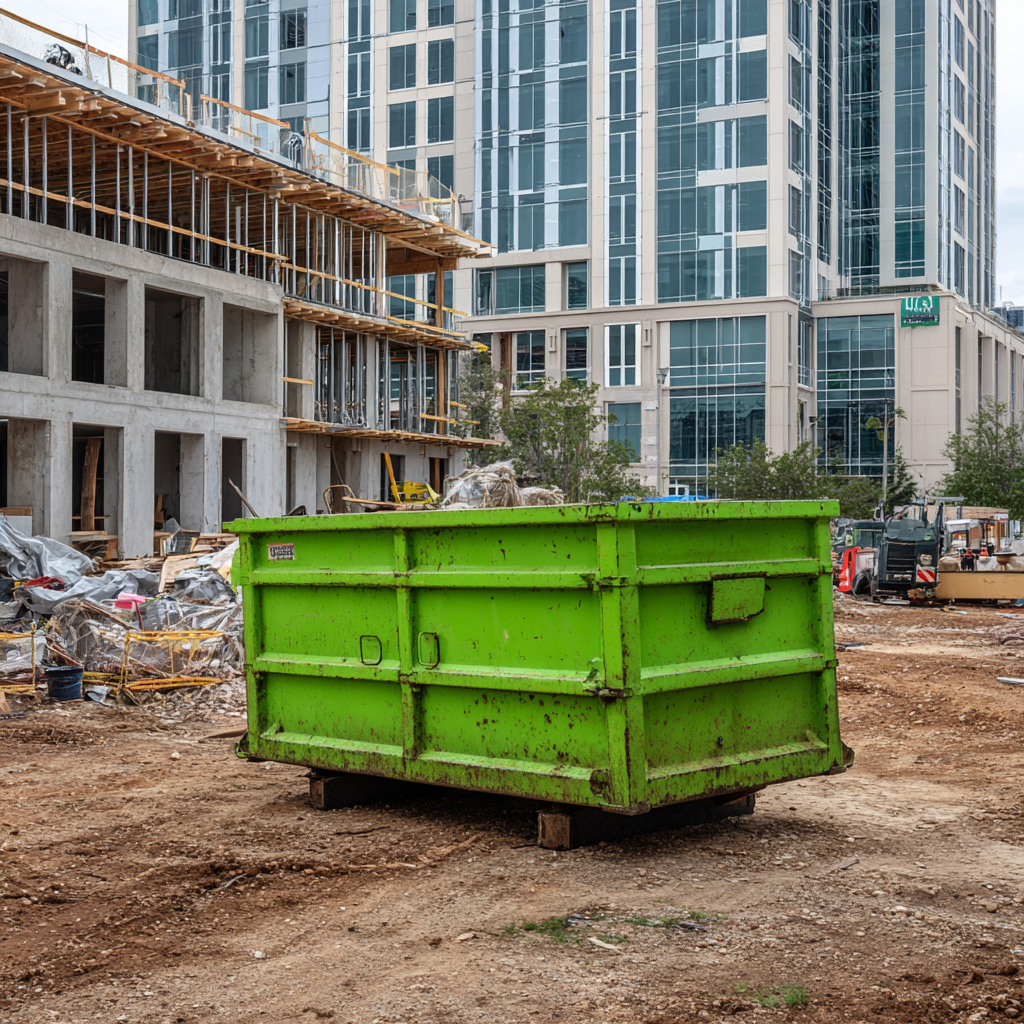
Dumpster Placement Basics
Before the first load of debris hits the bin, think about where it sits. For pros, this isn’t just about finding an empty spot. It’s a core logistics move that impacts your whole operation.
Placement Considerations for Jobsite Managers
Your first move is checking truck access. Delivery vehicles need a clear path with enough overhead clearance to drop the unit. Stable ground is non-negotiable. Avoid soft dirt or fresh grading that can cause sinking under a heavy load.
Keep the container out of the main flow. You don’t want it blocking equipment or material deliveries. Think about your crew’s daily loading pattern. A spot too far from the action wastes valuable time.
Local Safety and Accessibility Factors
Always mark a safety zone around the unit. Account for the swing radius of excavators or forklifts during loading. Good sight lines are crucial, especially in busy urban zones where visibility is already tight.
Plan for your entire rental period. Your needs during framing will differ from the finish phase. A good location at the start might need to change as the project evolves.
- Ensure the delivery truck has ample turning room.
- Distribute weight evenly inside the container to prevent stress.
- Pick a spot on your property that’s convenient but not in the way.
If you have any questions, ask your rental provider as early as possible.
Tips for Dumpster Placement on Construction Sites in Dallas
Getting your container location right in the Big D means understanding the local character of each area.
What’s perfect for a sprawling lot in Far North Dallas will cause chaos in the tight lanes of Oak Cliff.
Importance of Following Local Regulations
Dallas has clear rules about dumpsters to keep things safe and tidy. You must keep a 10-foot buffer from street corners.
In residential zones, noisy work and hauling are typically limited to between 7 a.m. and 8 p.m. Stick to these city regulations to avoid fines and keep neighbors happy.
Integrating Site-Specific Clues from Dallas Neighborhoods
Every part of town has its own vibe and hidden rules. Your placement strategy must adapt.
Historic districts have strict oversight, while industrial zones offer more leeway. Always look for the local clues before you set your container down.
| Neighborhood | Primary Consideration | Smart Placement Tip |
| Deep Ellum | Pedestrian Traffic & Historic Rules | Place off main walking paths. Coordinate with historic preservation guidelines. |
| Uptown / Victory Park | Dense Residential Complaints | Minimize noise during early mornings and evenings. Never block resident parking access. |
| Medical District | Emergency Vehicle Access | Ensure a clear, unimpeded route for ambulances and fire trucks at all times. |
| Highland Park / University Park | Strict Aesthetic Codes | Even on private property, expect tighter rules on visibility and screening. |
| East Dallas (e.g., Lakewood) | Narrow Street Access | Work with your provider to find a spot that allows for pickup without blocking the road. |
Learning these nuances is a must for any construction professional in the region.
Adapting Strategies to Various Construction Site Types and Sizes
The type of site you’re working on dictates your waste management strategy from the ground up.
Your approach must flex to fit the environment. A sprawling lot is not a cramped city block.
Outdoor vs. Urban/Residential Site Considerations
Open commercial zones can handle bigger equipment. You often have room for a 30-yard container.
Residential areas need a lighter touch. Smaller 10- or 15-yard units protect driveways and keep streets clear.
Always match the container size to the project scale and local rules.
Managing Space Constraints on Tight City Lots
Every square foot counts on an urban infill job. You juggle the container with material staging and crew access.
Think vertically. Stack materials wisely to preserve a clear path to the debris unit.
Coordinate pickup times to avoid blocking the only access point for hours.
| Site Type | Primary Challenge | Smart Strategy |
| Residential Renovation | Narrow streets, curb appeal | Use a 10-15 yard dumpster. Place it fully on the driveway. |
| Commercial Build | High debris volume | Position a 20-30 yard unit near the main work area for efficiency. |
| Urban Infill Project | Extremely limited space | Schedule just-in-time debris removal. Never let the container overflow. |
| Suburban New Construction | Neighbor relations | Place larger dumpsters away from property lines to reduce noise and visual impact. |
These tailored strategies keep your project moving smoothly, no matter the location.
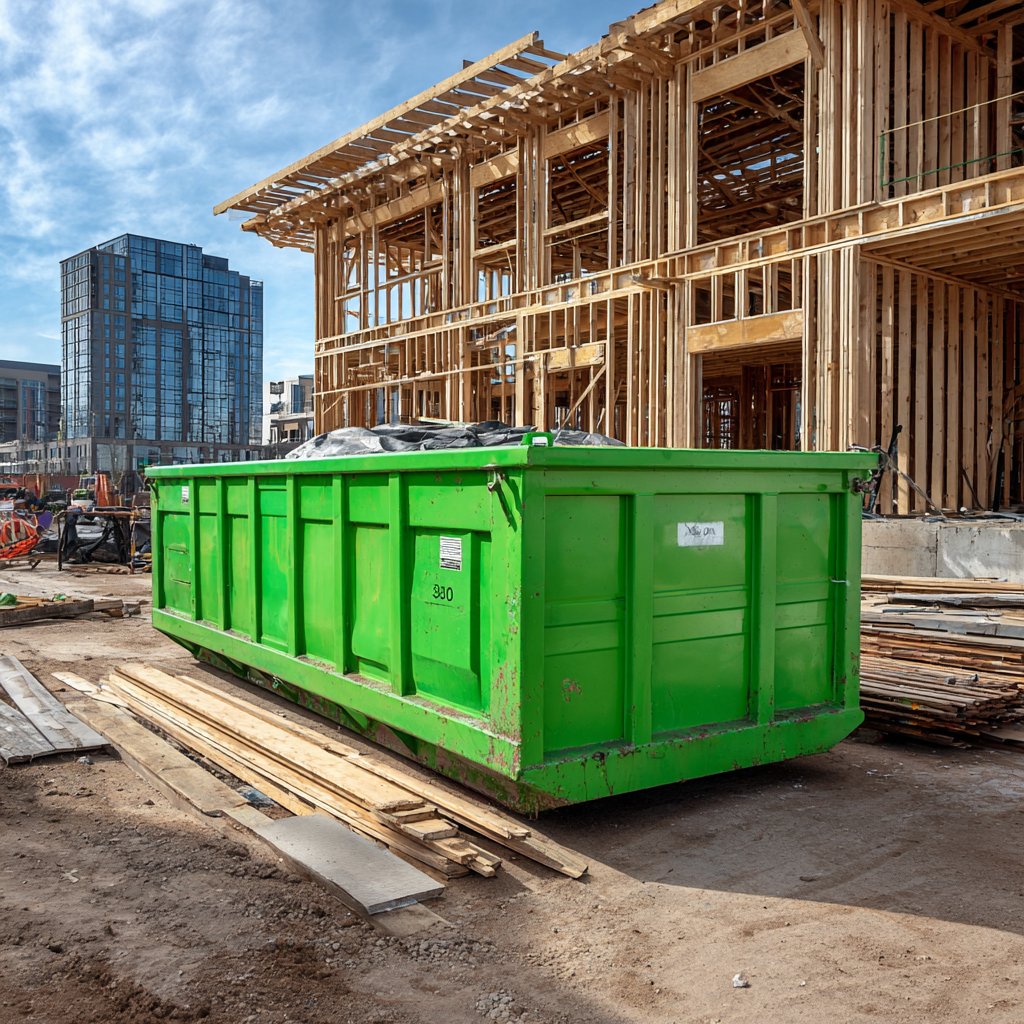
Optimizing Dumpster Sizes: 10, 15, 20, 30, & 40 Yard Options
The size of the dumpster you rent directly impacts your site’s workflow and accessibility. Too small and you make extra trips, too big and you waste space and money.
Selecting the Right Size for the Job
A 10-yard unit is your go-to for small interior projects. It fits tight spaces and handles manageable debris loads.
Step up to a 15-yard model for residential additions. It offers more capacity without clogging a narrow driveway.
For steady commercial waste streams, the 20-yard dumpster hits a sweet spot. It balances volume with a reasonable footprint.
Major renovations or roofing jobs often need a 30-yard container. Just make sure you have the room for it on your lot.
The 40-yard giant is for heavy demolition. It swallows massive debris loads but demands serious planning for its spot.
Balancing Capacity and Accessibility
Bigger bins need more clearance for delivery trucks. Watch for overhead lines and tight turns.
Weight distribution is critical, especially with heavy materials like concrete. Load it evenly to avoid hazards.
Rental costs scale with size. Picking a bin that’s too small leads to costly extra hauls.
The perfect container is useless if removal trucks can’t reach it. Always factor in access during your planning.
| Size (Yards) | Best For | Placement Note |
| 10-Yard Dumpster | Small Reno / Interior Demo | Fits driveways; minimal street impact. |
| 15-Yard Dumpster | Residential Additions | Good capacity for neighborhood jobs. |
| 20-Yard Dumpster | Medium Commercial Projects | Efficient for steady waste; needs clear access. |
| 30-Yard Dumpster | Major Renovations / Roofing | Requires ample, stable ground space. |
| 40-Yard Dumpster | Large-Scale Demolition | Demands major site planning for delivery and pickup. |
Your Dallas Construction Placement Partner
Every Dallas neighborhood from Deep Ellum to Highland Park presents unique placement challenges requiring local knowledge of permit requirements, street access constraints, and community regulations.
Construction managers who plan container positioning around delivery truck access, crew workflow patterns, and neighborhood-specific codes avoid the delays and fines that derail project timelines. Contact our Prime Dumpster team for guidance on dumpster placement on construction sites in Dallas that keeps your project compliant and efficient across all phases of construction.
If you are looking for Dumpster Pads: What They Are, Benefits, Use Tips, and More, Click Here
Recent Posts


Follow Us
Have any questions?
+1 844 853 3867
Give us a call today so we can help you find the right waste & sanitation solution for
your project!
Contact Us