
Mon - Sat 7:00 am to 7:00 pm

Q&A with the Prime Dumpster Pros: Dumpster Rental in Oklahoma City
“Oklahoma City covers a lot of ground in every sense of the phrase,” says the Prime Dumpster Pro. “The construction pace, the oil and gas sector, tornado recovery cycles, and a growing event scene all create rental needs that are specific to this market.”
We put these questions to the Prime Dumpster Pros to get straight answers about renting roll-off containers in OKC. Prime Dumpster coordinates dumpster rentals across the Oklahoma City metro for construction projects, industrial work, events, and residential use, and this dumpster rental FAQ for Oklahoma City pulls from that experience directly.

Construction and Demolition Dumpster Rental in Oklahoma City
Oklahoma City has been one of the more active construction markets in the Southern Plains for the past decade, with new development, commercial expansion, and demolition activity running across the metro simultaneously. These questions address what contractors and project managers need to know before arranging container service on OKC job sites.
What size dumpster do I need for a construction project in Oklahoma City?
“Project type and debris composition are the two things to nail down first. Most new residential builds start with a 40-yard container on a rotation schedule, while commercial tenant improvement work typically fits within a 30-yard unit depending on the scope.
“Concrete, masonry, and heavy structural debris are a separate conversation entirely. Those materials go into a dedicated 10-yard dumpster no matter what else the project generates. Weight limits cap out fast with heavy debris, and combining it with lighter materials in a larger container just means hitting that ceiling earlier and paying the difference.”
How do I manage containers across multiple active demolition sites?
“The most common mistake is treating each site as its own independent rental decision. That produces overlapping rental windows, containers sitting idle between phases, and a lot of last-minute calls that limit your options on size and scheduling.
“Mapping out container needs across all active sites at the beginning of each month and coordinating pickups around project phases gives you a cleaner picture of what’s needed and when. Running everything through one provider also creates consistency in scheduling and tends to produce better overall pricing than handling each site separately.”
Do construction sites in OKC need permits for dumpster placement?
“Private property placement, meaning a job site lot, a private driveway, or a commercial parking area where the container stays fully within the boundaries, generally doesn’t require a city permit. The permit question comes up when the container needs to go on a public street or sidewalk.
“Oklahoma City requires a right-of-way permit for any container placed in the public right-of-way, and that permit needs to be arranged before delivery, not after. Projects in surrounding communities like Edmond, Yukon, or Moore fall under those cities’ own permit processes, so confirming jurisdiction before booking is always the right first step.”
How does Oklahoma City’s growth affect container availability for contractors?
“The metro has been in a sustained construction cycle for a while now, and that keeps baseline demand for containers higher than most contractors expect when they’re used to slower markets. Availability doesn’t disappear, but it does tighten during peak building season, which runs roughly from March through October here.
“Contractors managing ongoing project pipelines do better establishing a standing relationship with a single provider than arranging each rental independently. It creates more predictability on scheduling and tends to mean faster turnaround when a container is needed on short notice.”

Dumpster Rental for Public Events in Oklahoma City
Oklahoma City’s event calendar runs year-round, from festivals along the Oklahoma River and downtown gathering spaces to large stadium events and community-scale neighborhood programs. These questions cover what event coordinators and venue managers need to know about container logistics in this market.
What size dumpster do I need for a large outdoor event in OKC?
“Attendance and food service volume are the two factors that drive container sizing for events. A community-scale gathering with a few hundred people typically fits within a 20-yard container. Larger festivals with vendor corridors and multi-zone foot traffic call for multiple 30 or 40-yard units spread across the site rather than one large container in a central spot.
“Putting a single container in one location and expecting it to serve an entire event rarely works. Waste concentrates at vendor rows, concession areas, and main entry and exit points, and that’s where containers need to be.”
How far in advance should I book containers for a major Oklahoma City event?
“Fixed-date events should have containers reserved three to four weeks out at minimum. OKC’s event calendar is busy enough that availability does tighten, particularly in spring and fall when outdoor conditions draw more activity and construction demand is also running high.
“Recurring annual events benefit from building the container reservation into the planning calendar the same way a venue or permit application would be. Treating it as an afterthought almost always means fewer options on size and less flexibility on delivery timing.”
Do event dumpsters require permits at OKC venues and public spaces?
“It depends entirely on where the container lands. Private venue property, a privately owned parking lot, or a contained event space where the container stays off the public right-of-way generally doesn’t trigger a permit requirement.
“Public parks, plazas, and any placement that touches a city street or sidewalk is a different matter. Oklahoma City manages public right-of-way permits through the city’s permitting office, and those applications need to be submitted ahead of the event date. Leaving that step until the week of an event creates real risk of a delayed or denied permit that affects your entire setup.”
How do I manage waste removal during a multi-day event?
“End-of-event removal is the wrong model for anything running longer than a single day. High-traffic zones fill containers faster than most organizers anticipate, and an overflowing container creates both a sanitation problem and a guest experience issue that’s hard to recover from mid-event.
“Scheduling mid-event pickups or container swaps at the busiest waste generation points keeps the site clean throughout. Mapping those locations before the event opens, rather than identifying them after the first container fills, gives the logistics team a clear plan to execute rather than a problem to react to.”
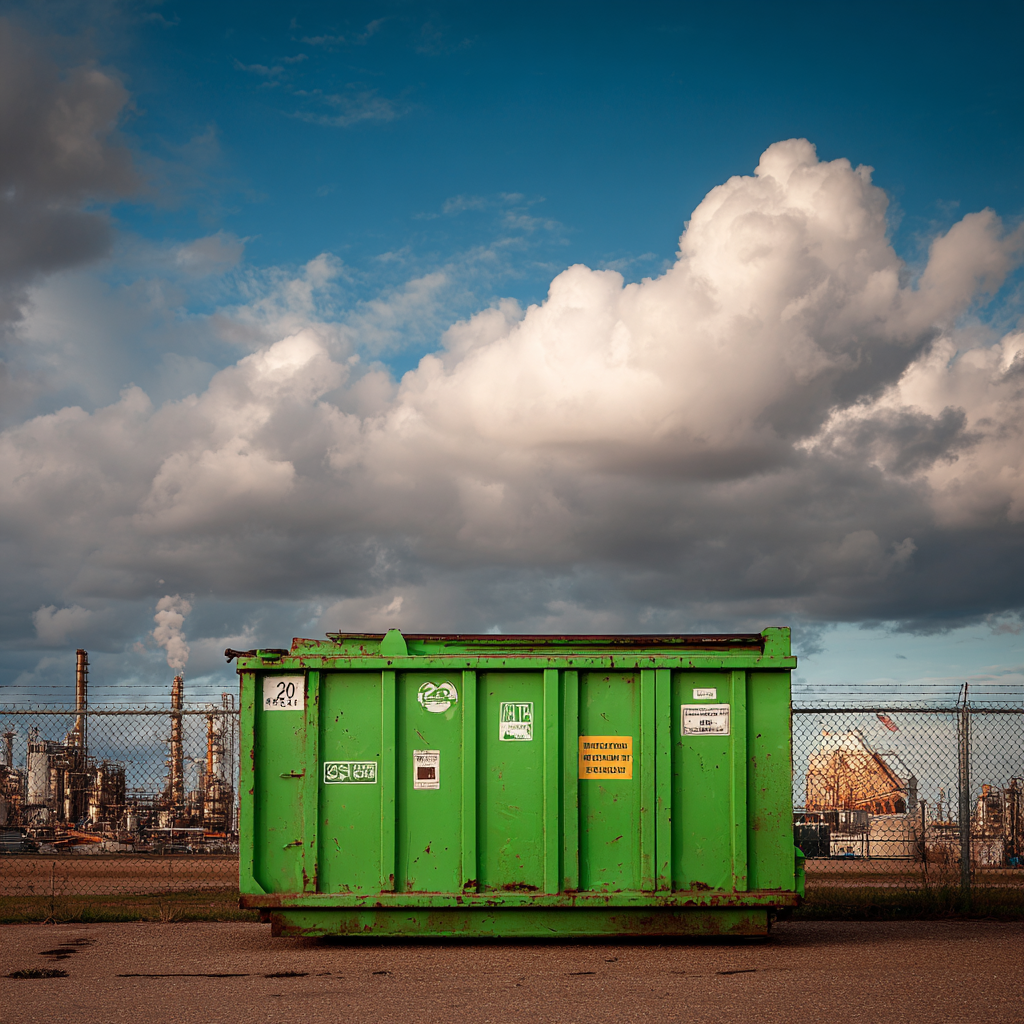
Oil and Gas Dumpster Rental in Oklahoma City
Oklahoma City sits at the center of one of the most active oil and gas producing regions in the country, and the waste management demands tied to that industry are distinct from any other sector. These questions address what facility managers and industrial contractors need to know before arranging container service on energy sector job sites.
What types of oil and gas projects in OKC typically require roll-off dumpsters?
“Facility maintenance, equipment refresh cycles, and construction tied to new or expanding operations all generate non-hazardous solid waste that a standard roll-off container handles well. Packaging from replacement parts, insulation removed during maintenance work, structural materials from facility upgrades, and general construction debris from well pad and infrastructure projects are all common examples.
“Turnaround and shutdown projects are among the highest-volume scenarios. They compress a large amount of debris output into a narrow window, which means container sizing and rotation planning have to happen during the project planning phase rather than once work is already underway.”
How do safety and placement requirements differ on oil and gas job sites?
“Most energy sector facilities in the OKC area operate under safety protocols that govern every piece of equipment on site, and roll-off containers fall under those rules. Exclusion zones, active process areas, and lay-down area assignments all determine where a container can and can’t go on a given facility.
“Getting placement approved through the facility’s safety and operations team before booking is the step that prevents delivery-day problems. A container dropped in the wrong location on an active production site creates both a safety issue and a project delay that’s harder to fix after the fact than before it.”
What materials can and can’t go into a dumpster on an oil and gas site?
“Non-hazardous construction and maintenance debris is fair game for a standard container. That covers items like metal packaging, lumber, insulation, drywall, and general facility waste generated during maintenance or construction phases.
“Anything classified as hazardous under federal or Oklahoma state guidelines stays out entirely. Liquid waste, hydrocarbon-contaminated material, chemical containers, and regulated substances all require separate handling through licensed disposal channels. Identifying and separating those materials before container delivery is a compliance requirement, not a suggestion.”
How should contractors plan container logistics for an OKC facility turnaround?
“Lead time is the most critical factor. Turnarounds at Oklahoma City-area facilities draw on a limited pool of available containers, and booking three to four weeks ahead of the scheduled start date is the baseline for securing the right sizes on a workable timeline.
“On larger turnarounds generating multiple debris streams simultaneously, dedicated containers for different material types keep weight limits manageable and reduce the overage fees that accumulate when heavy and light debris get mixed. Mapping that container plan against the project’s phase schedule before work begins is what separates a smooth turnaround from one where waste removal becomes the bottleneck.”
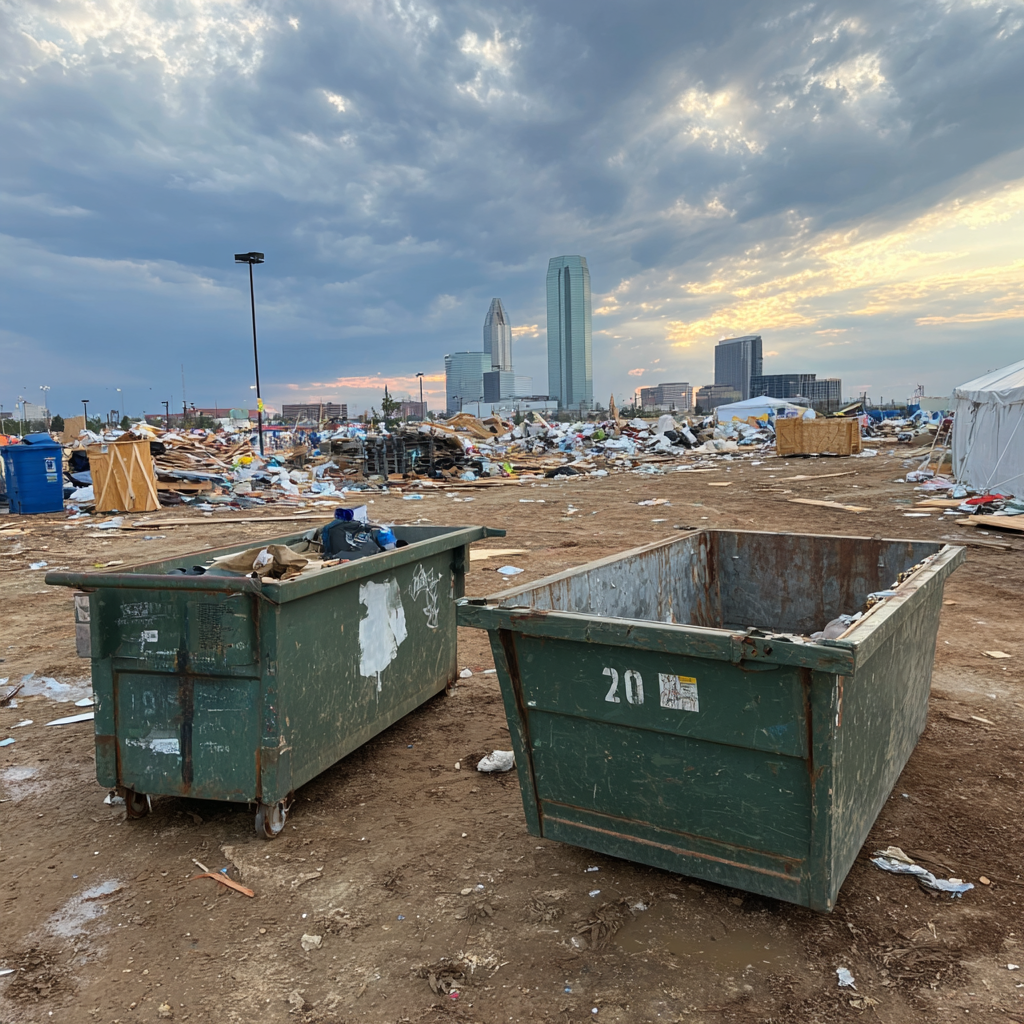
Emergency and Disaster Recovery Dumpster Rental
Oklahoma sits in one of the most tornado-prone regions in the world, and the Oklahoma City metro has experienced some of the most severe storms on record. These questions address container logistics for the recovery scenarios that follow major weather events across the area.
How does tornado season affect dumpster rental demand in Oklahoma City?
“Demand for roll-off containers across the metro can double or triple within 24 hours of a significant tornado event. Properties across multiple zip codes need containers at the same time, and that compressed surge exhausts available inventory faster than most people realize when they’re in the middle of a recovery situation.
“Homeowners and contractors who have an established provider relationship before storm season reaches peak activity consistently get faster access to containers after an event than those calling cold. Building that connection ahead of April and May, which historically see the highest tornado activity in central Oklahoma, is a practical step that pays off when it matters most.”
What size container do I need for tornado or storm debris removal?
“Residential tornado damage typically calls for a 30 or 40-yard dumpster for general structural debris, roofing materials, and damaged contents. If the project involves concrete foundation work or masonry removal tied to the damage, a dedicated 10-yard unit handles those materials separately.
“Storm debris is often heavier than it looks, particularly when materials have absorbed water. Sizing based on weight as well as volume prevents hitting the weight limit on a container that still has visual capacity remaining, which is a common source of unexpected overage fees during recovery projects.”
How quickly can containers be deployed after a major weather event in OKC?
“Under normal conditions, next-day and sometimes same-day delivery is achievable across the Oklahoma City metro. After a significant tornado or severe storm event, those timelines extend as demand surges and available containers get allocated quickly to the first requests in the queue.
“Calling as early in the recovery window as possible, even before the full scope of the cleanup is clear, secures a place in the delivery schedule. Waiting until the project is fully scoped and ready to begin often means waiting longer for a container than the cleanup itself requires.”
What types of storm debris can and can’t go into a standard roll-off container?
“Most tornado and storm-related debris goes into a standard container without issue. Roofing materials, structural framing, drywall, insulation, damaged furniture and household contents, fencing, siding, and general cleanout material are all acceptable.
“The exceptions are materials that require separate handling regardless of how they ended up as debris. Propane tanks, paint cans, motor oil, batteries, asbestos-containing materials found in older structures, and any substance classified as hazardous all need to be set aside for specialized disposal rather than loaded into the container. Older Oklahoma homes in particular may contain materials that require identification before demolition or debris removal begins.”
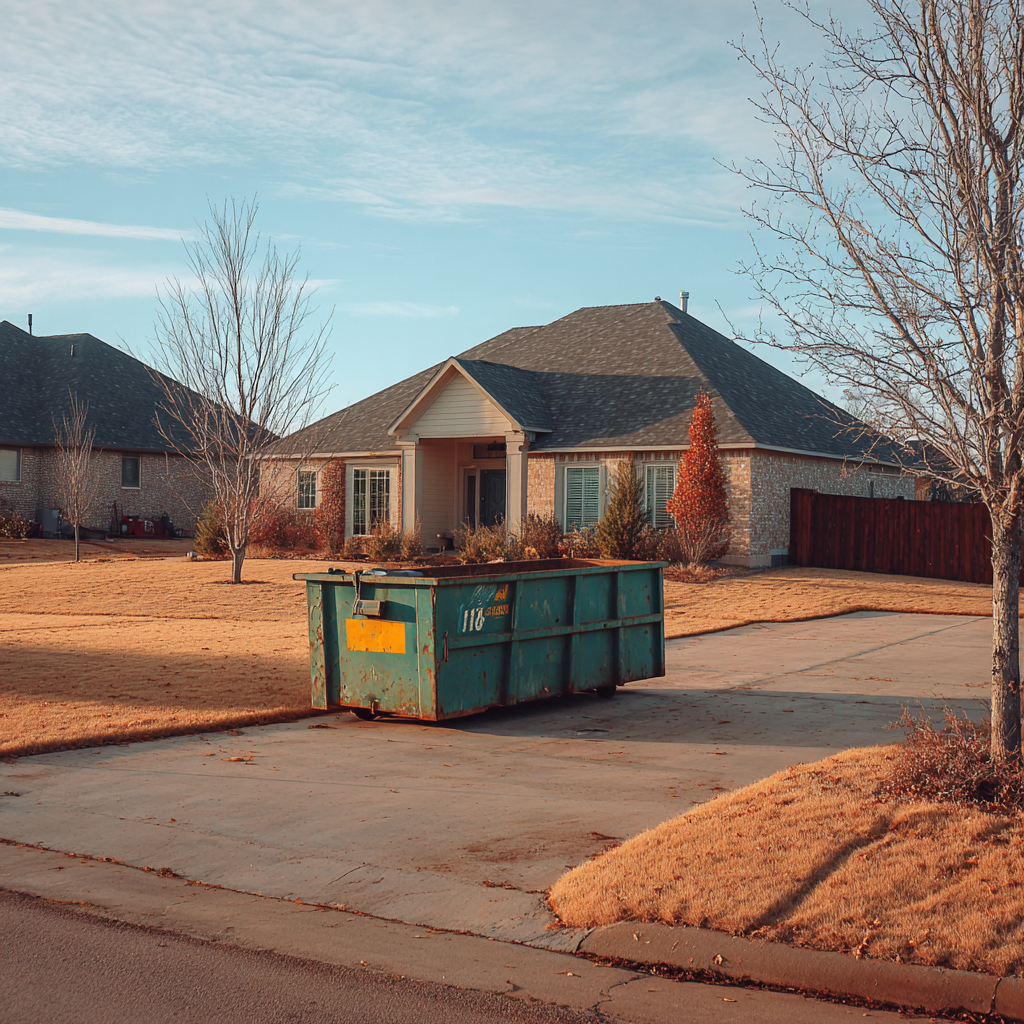
Home Renovation and Construction Dumpster Rental in OKC
Oklahoma City’s residential market spans a wide range from historic neighborhoods near downtown to newer master-planned development on the metro’s outer edges. These questions address what homeowners and residential contractors need to know before renting a container for a home project in the OKC area.
What size dumpster do I need for a home renovation in Oklahoma City?
“The project type narrows down the size faster than square footage alone. A kitchen or bathroom remodel fits comfortably in a 15-yard container. Multi-room renovations, roofing tear-offs, and full interior updates generally warrant a 20-yard unit.
“Any renovation that touches concrete, brick, or masonry needs a dedicated 10-yard dumpster for those materials regardless of what else the project generates. Mixing heavy materials into a larger container doesn’t expand the weight limit. It just means reaching that limit before the container is visually full.”
Do I need a permit to place a dumpster at my OKC home?
“A container that stays entirely on your driveway or private property generally doesn’t require a city permit in Oklahoma City. Once the container extends onto the street or public sidewalk, the city’s right-of-way permitting process comes into play.
“Permit requirements across the OKC metro vary depending on which jurisdiction covers the property address. Edmond, Yukon, Midwest City, and other surrounding communities each handle right-of-way permits through their own processes. Confirming which entity covers your specific address before booking is the step that prevents a permitting problem from delaying delivery.”
How do HOA rules affect dumpster placement in Oklahoma City neighborhoods?
“Planned communities and HOA-governed neighborhoods across the OKC metro often carry their own placement rules that go beyond what the city requires. Approved placement zones, rental duration caps, and requirements for container screening are all common across established HOA communities in areas like Edmond and western Oklahoma City.
“Getting written confirmation from the HOA before scheduling delivery is worth the extra step. Restrictions that surface after the container arrives are much harder to resolve than ones identified during the planning phase.”
What can and can’t I throw in a residential dumpster in Oklahoma?
“Standard household renovation debris goes into a roll-off container without issue. Drywall, lumber, flooring, roofing shingles, furniture, fixtures, and general cleanout material are all accepted in a standard rental.
“Oklahoma regulations prohibit certain categories from standard waste streams. Tires, batteries, electronics, appliances containing refrigerants, paint, and any liquid or hazardous waste require disposal outside of a standard container. Sorting those items before loading avoids fees that appear after the container is already picked up and processed.”
Check out our Guide to Dumpster Rental in Oklahoma City for additional tips.
Get Answers to Your Oklahoma City Dumpster Rental Questions
From oil and gas turnarounds near the energy corridor to tornado recovery across the metro and home renovations in established OKC neighborhoods, this dumpster rental FAQ for Oklahoma City covers the scenarios that come up most often in this market. Every project type has its own set of logistics, and getting those details sorted before booking makes the entire process run more smoothly. Contact our team to get a quote and talk through the specifics of your Oklahoma City project.
If you are looking for Prime Dumpster Quick Guide: Dumpster Rental in Cape Girardeau, MO, Click Here
Recent Posts


Follow Us
Have any questions?
+1 844 853 3867
Give us a call today so we can help you find the right waste & sanitation solution for
your project!
Contact Us