
Mon - Sat 7:00 am to 7:00 pm
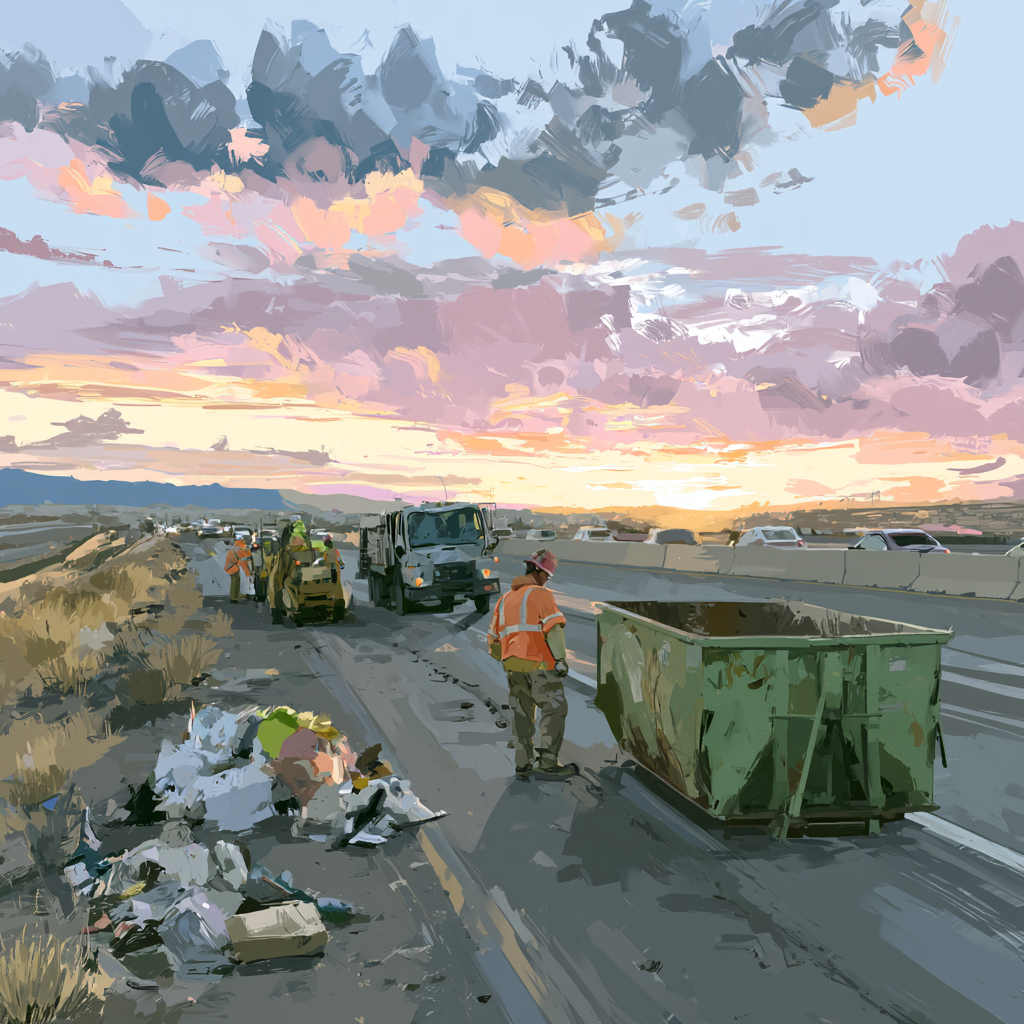
Prime Dumpster Quick Guide: Dumpster Rental for Albuquerque, New Mexico Road Construction
Road construction projects in Albuquerque generate some of the heaviest and most demanding debris loads of any project type, from broken asphalt and concrete to excavated soil, gravel, and mixed construction material. Managing that waste efficiently requires careful container selection, precise placement planning, and a provider who understands the logistics of working alongside active roadways and municipal infrastructure.
At Prime Dumpster, we’ve supported waste management needs across more than 43,000 projects in 30 industries, including infrastructure and road construction work. These jobs demand reliable scheduling, correct container sizing, and flexible swap-out coordination.
In the following quick guide, we’ll cover what road construction crews and project managers need to know before they rent a dumpster in Albuquerque for a road project.
What Does the Expert Say?
“Road construction dumpster rental is one of the scenarios where debris type drives every other decision, because the weight density of asphalt and concrete is high enough that even a partially filled container can hit its limit,” says the Prime Dumpster Pro. “Crews that plan their container rotation around material type from the first day of work avoid the delays and overage charges that come from mixing heavy and light debris in the same bin. Getting that separation right upfront is what keeps a road project on schedule.”
Learn even more tips and answers from our team: Q&A with the Prime Dumpster Pros: Dumpster Rental in Albuquerque, New Mexico
What Goes Into a Road Construction Dumpster?
Local road construction projects produce a range of debris types, and understanding which materials can go into which containers is the most important operational detail for any crew working on Albuquerque’s streets and infrastructure.
Asphalt, concrete, and masonry are the dominant heavy materials on most road projects, and those materials can only go into a 10-yard dumpster due to transport weight limits. Large volumes of heavy material will require multiple 10-yard containers staged and swapped in sequence rather than a single larger bin.
Lighter road construction debris, including signage, fencing, wood forms, general mixed waste from site work, and non-heavy construction material, can go into larger containers. Separating light and heavy debris streams from the start of the project prevents weight overages and keeps the container rotation running smoothly throughout the job.
Prohibited materials include hazardous substances, liquid waste, and any regulated environmental material that may be encountered during excavation or pavement removal. Those materials must be handled through separate licensed disposal channels and should never be loaded into a standard roll-off container.
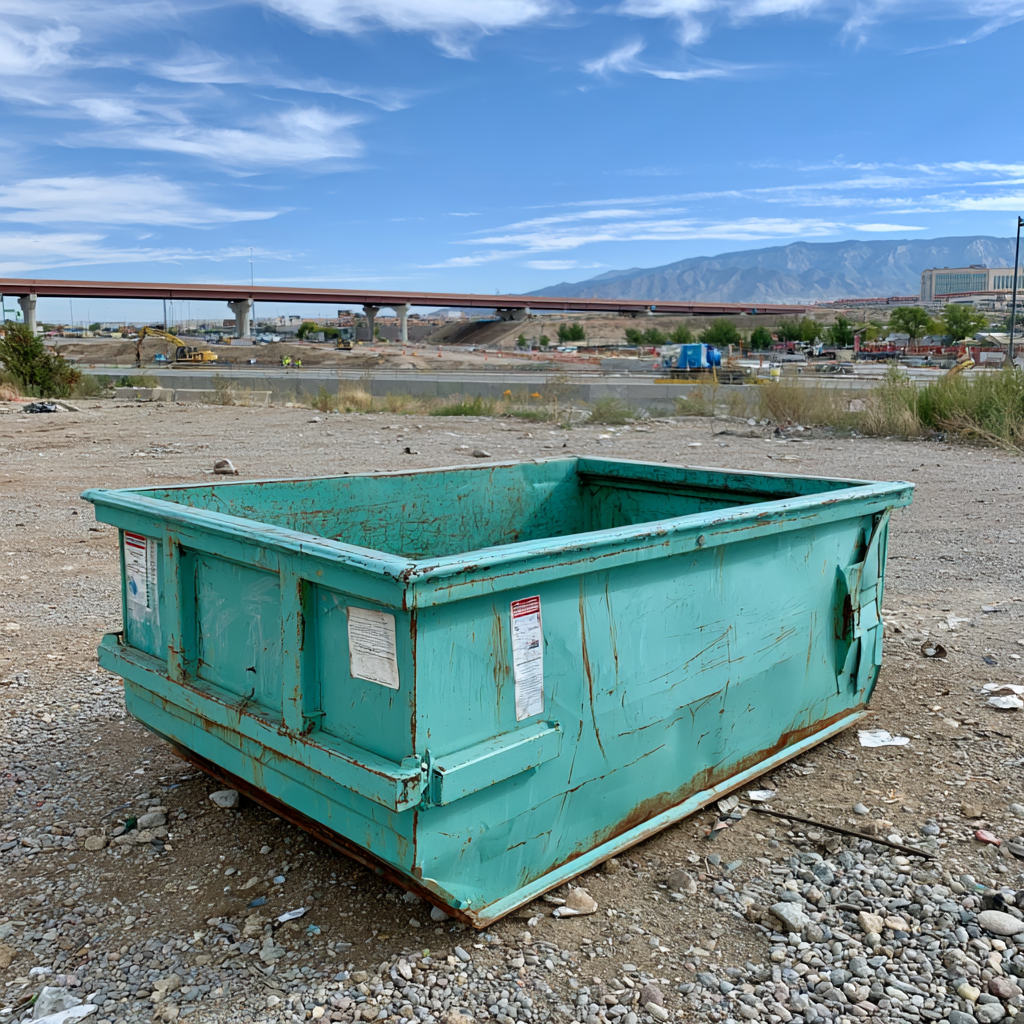
Choosing the Right Container for Road Construction
Most road construction projects require more than one container size running simultaneously, with dedicated 10-yard bins handling heavy material and larger containers managing the lighter debris streams generated across the broader work zone.
| Size | Approximate Dimensions | Common Road Construction Uses |
| 10-Yard Dumpster | 12′ × 8′ × 3.5′ | Asphalt removal, concrete debris, masonry and curbing material |
| 15-Yard Dumpster | 16′ × 7.5′ × 4.5′ | Mixed light construction debris, signage and fencing removal, small excavation waste |
| 20-Yard Dumpster | 22′ × 7.5′ × 4.5′ | Mid-sized road project debris, mixed non-heavy material, site cleanup |
| 30-Yard Dumpster | 22′ × 8′ × 6′ | Large road project cleanups, mixed light debris from extended work zones |
| 40-Yard Dumpster | 22–24′ × 8′ × 8′ | Major infrastructure projects, high-volume mixed light debris, long-duration site work |
Confirming the full debris breakdown with your provider before booking ensures the container mix is structured correctly from the start rather than adjusted mid-project.
Placement and Logistics on Active Road Sites
Placing a dumpster on or adjacent to an active roadway in Albuquerque introduces logistical considerations that standard residential and commercial placements do not face. Right-of-way permits from the City of Albuquerque are required for any container placed on a public street, and those permits should be secured well before the scheduled delivery date.
Traffic control requirements on active road construction sites affect where a container can be positioned and how delivery trucks access and exit the placement area. Coordinating container placement with the site’s traffic control plan before delivery prevents conflicts between waste management logistics and active construction operations.
Swap-out scheduling is especially important on road projects where debris accumulates in high volumes across multiple phases of work. Planning container rotation around project phases rather than waiting for a bin to fill keeps the site clear and avoids the operational disruptions that come with an unplanned full container in an active work zone.
Surface conditions on road construction sites vary significantly depending on the phase of work. Confirming that the container placement area can support a loaded bin and that the delivery truck has a stable, unobstructed approach prevents access complications on sites where the ground surface is actively being removed or reconstructed.
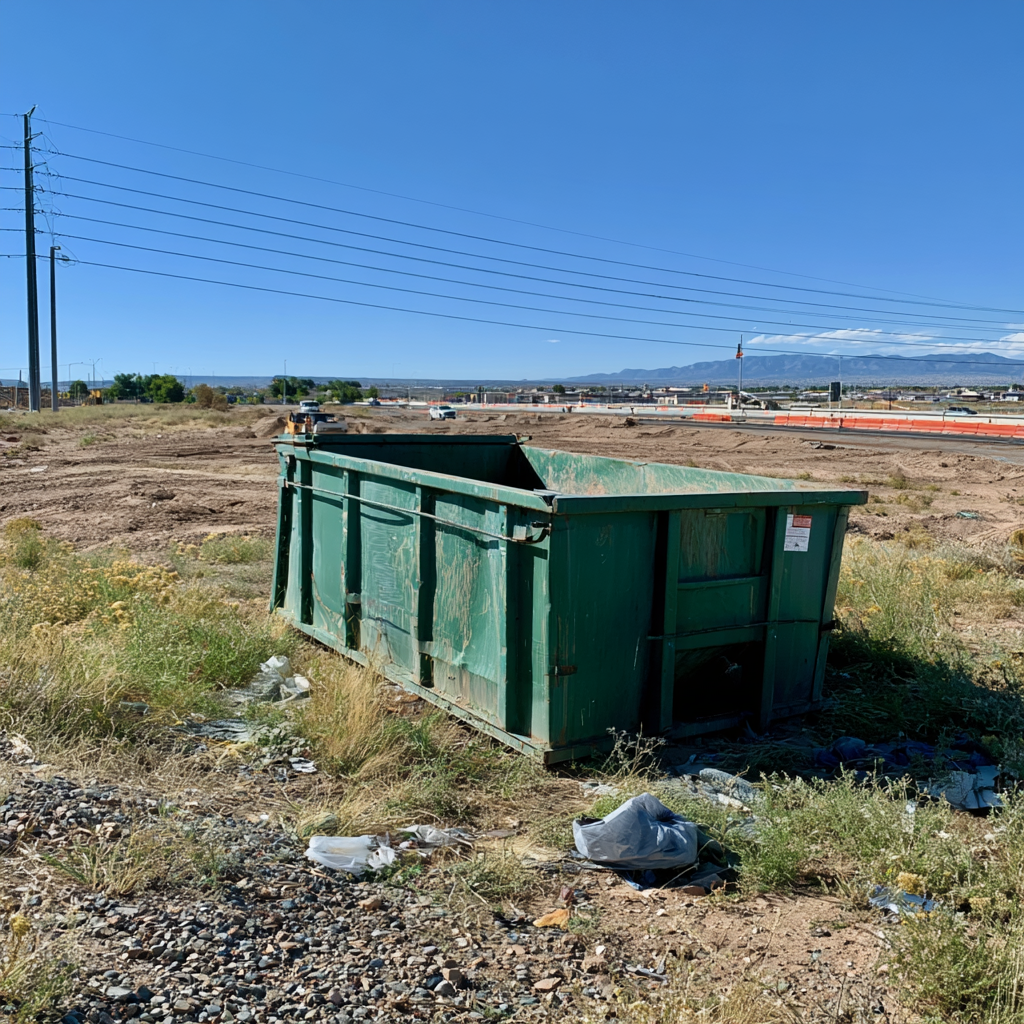
Do’s and Don’ts for Road Construction Teams
Road construction sites involve more variables than most dumpster rental scenarios, and a clear division of responsibilities between the crew and the provider keeps the waste management side of the project running without interruption.
What road construction crews should do:
- Separate heavy materials like asphalt and concrete into dedicated 10-yard containers from the first day of work
- Confirm right-of-way permit requirements before scheduling container delivery on public streets
- Coordinating permit documentation for right-of-way placements
- Coordinate delivery and swap-out windows with the site traffic control plan
- Plan container rotation around project phases rather than reacting to full bins
- Confirm that the placement surface can support a loaded container before delivery
Handling these details before the first container arrives prevents the mid-project complications that are hardest to resolve on an active roadway site.
What to leave to the provider:
- Determining the correct container capacity and weight allowances for heavy debris loads
- Scheduling swap-outs and pickup windows that align with project timelines
- Handling disposal of excavated material and construction debris in compliance with local and state requirements
A provider with experience in road construction waste management handles these responsibilities so the crew can stay focused on the work.
Road Construction Dumpster Rental Expertise
Dumpster rental for road construction in Albuquerque, New Mexico requires a level of planning and coordination that goes well beyond a standard residential or commercial rental. Container selection, debris separation, placement logistics, and permit requirements all come together to determine how smoothly waste management supports the broader project timeline.
Contact our team for dumpster rental support for road construction in Albuquerque, New Mexico, including container sizing guidance, right-of-way permit coordination, and flexible swap-out scheduling for projects of any scale and duration.
If you are looking for How to Find Cheap Dumpster Rentals in Albuquerque, New Mexico, Click Here
Recent Posts


Follow Us
Have any questions?
+1 844 853 3867
Give us a call today so we can help you find the right waste & sanitation solution for
your project!
Contact Us