
Mon - Sat 7:00 am to 7:00 pm

10 Dumpster Rental Tips for Fort Worth, TX
“Fort Worth covers a wide range of project types, from aerospace facility maintenance and warehouse construction to historic Stockyards renovation and suburban home remodels,” says the Prime Dumpster Pro. “Each comes with its own container logistics, and the tips that apply to one don’t always apply to another.”
Fort Worth’s economy spans some of the most diverse industries in North Texas, and that diversity creates dumpster rental scenarios that require more than a one-size-fits-all approach. Whether the project is a healthcare campus renovation, a logistics facility buildout, or a residential cleanout in a Tarrant County suburb, getting the details right before booking makes the entire process more predictable.
Prime Dumpster coordinates roll-off dumpster rentals across Fort Worth and Tarrant County for construction projects, industrial facilities, commercial work, and residential rentals. These dumpster rental tips for Fort Worth cover the decisions that matter most across every major project type in this market.
Fast Facts: Dumpster Rental in Fort Worth, TX
Fort Worth, Texas, dumpster rental is available across all five standard roll-off sizes for projects ranging from single-room residential cleanouts to large-scale industrial maintenance work. Here’s a look at general price ranges and common uses.
| Size | Price Range | Common Uses |
| 10-Yard Dumpster | $399–$499 | Concrete, brick, small cleanouts, heavy debris |
| 15-Yard Dumpster | $449–$569 | Bathroom remodels, garage cleanouts, light renovation debris |
| 20-Yard Dumpster | $499–$649 | Roofing, multi-room renovations, estate cleanouts |
| 30-Yard Dumpster | $599–$799 | Large renovations, commercial construction, industrial maintenance |
| 40-Yard Dumpster | $699–$899 | Major demolition, large commercial buildouts, new construction |
Prices reflect general estimates for standard rentals. Actual costs vary based on debris type, weight, rental duration, placement location, and demand across the Fort Worth metro and Tarrant County.
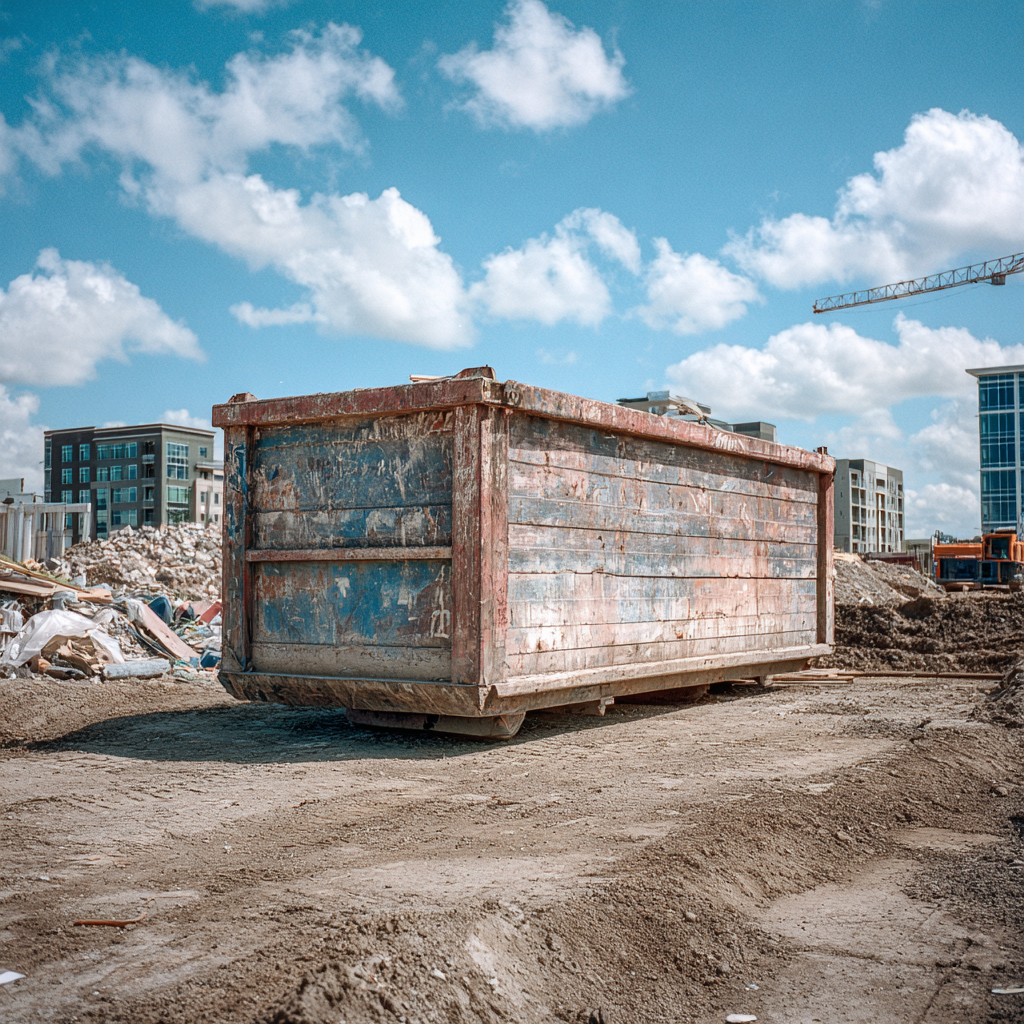
General Dumpster Rental Tips for Fort Worth
These five tips apply across every project type in the Fort Worth market and cover the decisions that most directly affect cost, scheduling, and compliance.
1. Know What You’re Paying For
A base rental quote covers the container, a standard rental period, weight allowance, delivery, and pickup, but not every provider bundles those components the same way. Fuel surcharges, environmental fees, and disposal costs are sometimes itemized separately and can add meaningfully to the number on the initial quote.
Ask specifically what the quote includes before confirming a booking. A provider that clearly accounts for all cost components upfront makes comparison shopping straightforward.
2. Choose the Right Container Size
Debris type drives the sizing decision as much as volume, and the two don’t always lead to the same container. A project generating a mix of light renovation debris needs a different unit than one producing concrete, brick, or heavy structural material.
Any project involving concrete, masonry, or asphalt requires a dedicated 10-yard dumpster for those materials regardless of overall project scale. Mixing heavy debris into a larger container doesn’t change the weight limit. It just means hitting that limit before the container appears full and paying overage fees that the right sizing decision would have prevented.
3. Understand Fort Worth Permit Requirements
Containers placed entirely on private property in Fort Worth, including driveways and private job site lots, generally do not require a city permit. Street, sidewalk, or alley placement that obstructs vehicular or pedestrian traffic requires a permit from the City of Fort Worth’s Transportation and Public Works Department.
Note that containers cannot be placed on grass or circular driveways in Fort Worth even on private property. Confirming the placement surface and location before booking prevents a delivery that can’t legally be completed as planned.
4. Prepare Your Site Before Delivery
Clearing the placement zone of vehicles, equipment, and loose materials before the truck arrives is the renter’s responsibility, and it directly affects whether the drop-off goes smoothly. The driver needs approximately 60 feet of straight, unobstructed access and at least 20 feet of vertical clearance for overhead obstacles.
Protective boards under the container prevent surface damage on driveways and softer surfaces. Having the exact placement location decided before calling eliminates back-and-forth on delivery day and ensures the container lands precisely where the project needs it.
5. Plan Your Pickup Timing
Extension fees accumulate quickly when a container sits beyond the base rental period, and those charges are easier to avoid than to dispute after the fact. Building a realistic project timeline into the rental period from the start, and confirming the daily extension rate before booking, keeps costs predictable when schedules shift.
Calling for pickup when the container is nearly full rather than waiting for a set end date also maximizes the value of each rental day. An overloaded container that extends above the fill line cannot be legally transported and requires debris removal before pickup can proceed.
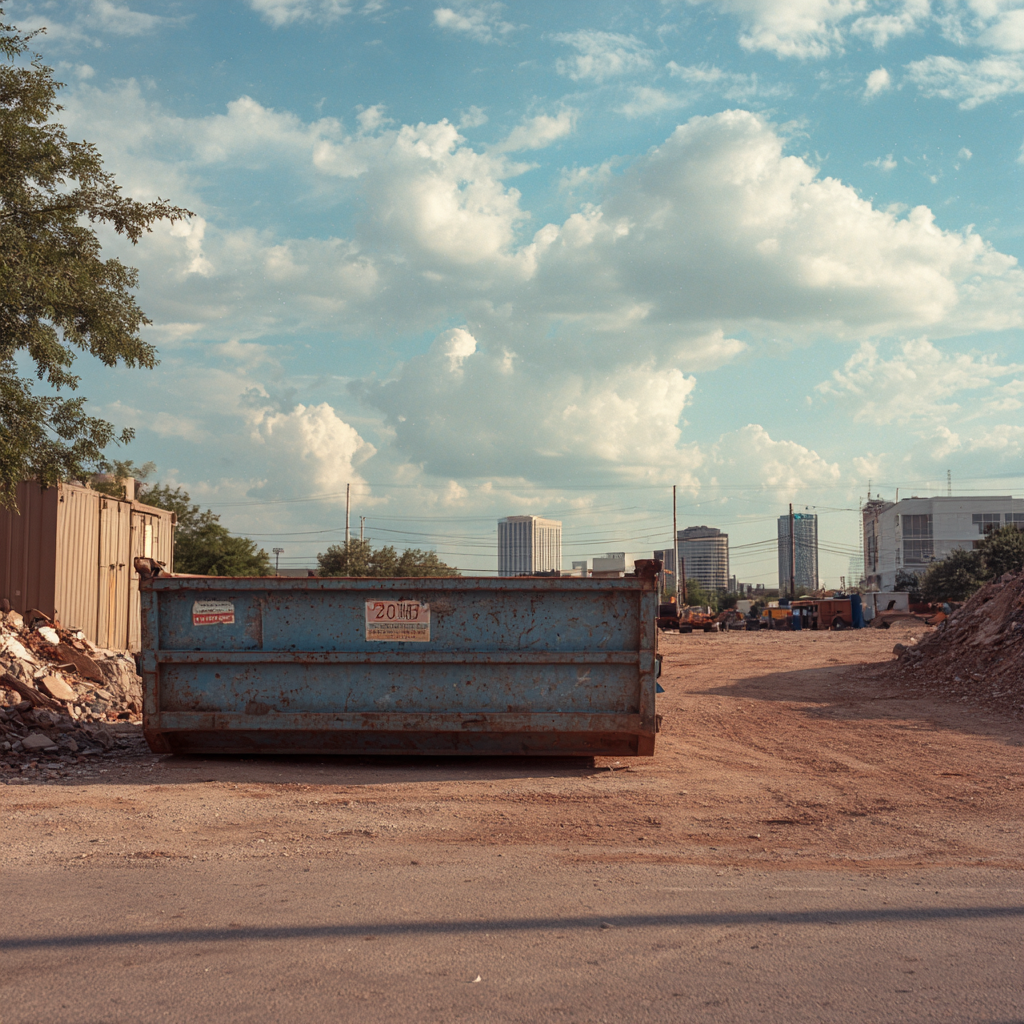
Industry-Specific Dumpster Rental Tips for Fort Worth
Fort Worth’s industry mix creates rental scenarios that go beyond standard residential and commercial considerations. These five tips address what matters most in the sectors that drive the most container demand across Tarrant County.
6. Construction: Coordinate Containers Around Project Phases
Fort Worth’s active residential and commercial construction corridors, including development along Alliance Corridor, Chisholm Trail Parkway, and the near Southside, generate debris across overlapping phases that require more planning than a single-phase residential job. Contractors managing multiple active sites face the highest risk of idle rental days and last-minute bookings that limit size options during peak periods.
Mapping container needs against project phases at the start of each month and coordinating all site rentals through a single provider reduces scheduling conflicts and keeps pricing consistent across the full project portfolio.
7. Aerospace: Managing Waste on Regulated Facilities
Fort Worth’s aerospace sector, anchored by major defense and aviation manufacturing operations in the Alliance and NAS Fort Worth corridors, generates construction and maintenance waste on active facilities where safety protocols govern all staged equipment including roll-off containers. Exclusion zones, active production areas, and designated lay-down zones all restrict where a container can be placed on a regulated site.
Getting placement approved through the facility’s safety and operations team before booking is the step that prevents delivery-day complications on aerospace job sites. Non-hazardous construction and maintenance debris goes into a standard container, while any regulated material requires separate handling through licensed disposal channels entirely outside the rental.
8. Warehousing and Logistics: Scheduling Around Operations
North Fort Worth and the Alliance Corridor have seen sustained warehouse and distribution center construction as logistics demand across North Texas has grown, and these large-footprint projects generate high debris volumes across extended timelines. Active freight operations, loading dock schedules, and equipment staging areas all restrict where containers can go and when delivery trucks can safely access the site.
Coordinating container delivery and pickup around freight traffic windows and shift transitions keeps the rental from becoming an obstacle to ongoing operations during active build phases. A 40-yard container on a planned rotation schedule handles most large warehouse construction scopes without requiring reactive mid-project arrangements.
9. Healthcare: Placement on Active Medical Campuses
Fort Worth’s major healthcare systems, including JPS Health Network and Cook Children’s Medical Center, operate active campuses where renovation and construction work must proceed without disrupting patient care, emergency access, or infection control requirements. Patient circulation routes, ambulance bays, and clinical facility entrances all restrict where debris can be staged during active project phases.
Coordinating placement details with the facility’s operations team before delivery day is essential on any healthcare campus project. A container positioned without accounting for those constraints creates compliance issues that affect patient care and project timelines simultaneously.
10. Residential: Getting the Most Out of a Home Rental
Fort Worth’s residential market spans everything from historic Fairmount bungalows near downtown to newer master-planned communities in Keller, Mansfield, and Burleson, and each presents different placement and access considerations. Older neighborhoods feature mature trees, narrower driveways, and streets that limit delivery truck maneuverability in ways that newer suburban streets don’t.
Confirming overhead clearance, driveway surface conditions, and HOA placement rules before booking prevents the complications that surface on delivery day. Texas regulations also prohibit tires, batteries, electronics, and hazardous materials from standard containers, and sorting those items out before loading prevents disposal surcharges that appear on the final invoice after the container is already gone.
Get the Right Container for Your Fort Worth Project
Fort Worth’s diverse project mix rewards renters who treat container logistics as part of the project plan rather than a detail to sort out on delivery day. These dumpster rental tips for Fort Worth TX apply whether the job is a single-room residential cleanout or a multi-phase industrial construction project across Tarrant County. Contact our team to get a quote tailored to your project type, timeline, and placement needs.
If you are looking for Dumpster Rental Prices in Richmond, VA: What to Expect and How to Plan, Click Here
Recent Posts


Follow Us
Have any questions?
+1 844 853 3867
Give us a call today so we can help you find the right waste & sanitation solution for
your project!
Contact Us