
Mon - Sat 7:00 am to 7:00 pm

Dumpster Rentals for Events: Complete Guide for All Types
The last guest heads home, the music stops, and the real work begins. Whether you hosted 40 people in a backyard or thousands at a fairground, the trash doesn’t clean itself up. Plates, cups, boxes, linens, and decorations pile up fast, and standard trash cans will fill up long before the night is over.
A rented dumpster turns that mess into a single pickup. At Prime Dumpster, we arrange dumpster rentals for events of every size across the country. This guide covers which events need a dumpster, how to choose a size, where to place it, when to book, what it costs, and how to keep recyclables out of the landfill. Start with the quick reference below.
Fast Facts: Event Dumpster Rentals at a Glance
Here’s a rundown of typical dumpster use at common event types.
| Event Type | Common Starting Point | Planning Note |
| Private party or family gathering | One 10-yard dumpster | Fits most driveways and handles light, bulky trash |
| Wedding reception | One 20-yard dumpster | Vendor packaging and decor add up during breakdown |
| Corporate event or trade show | One or more 20-yard or 30-yard dumpsters | Booth materials, pallets, and cardboard take up space quickly |
| Sporting event | Multiple 20-yard to 40-yard dumpsters | Plan for concession areas and parking lots |
| Concert or festival | Multiple dumpsters placed by zone | Multi-day events often need swap-outs |
These are starting points, not rules. Guest count, food service, and event length decide the final plan, and the sections below explain how each one changes the math.
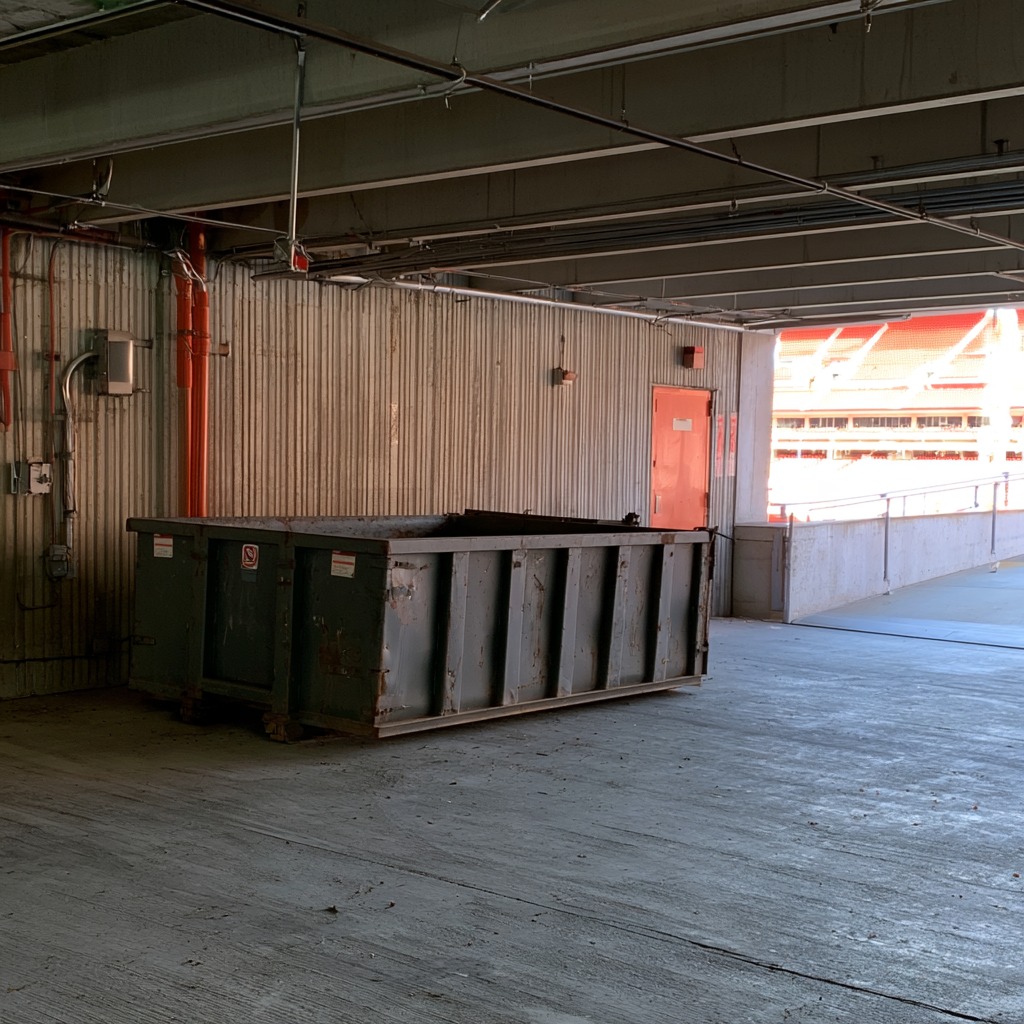
Which Events Need a Dumpster Rental?
Any event that produces more trash than standard bins can hold benefits from a rented dumpster. Catering, decorations, vendor packaging, and setup materials fill cans quickly. A roll-off dumpster gives staff and vendors one place to put it all.
Sporting Events
Games, tournaments, and race days generate concession trash, cups, and parking lot debris in short, heavy bursts. Halftime and the final whistle are the busiest moments. Learn more about planning dumpsters for sporting events from youth leagues to stadiums.
Weddings
Receptions leave behind catering waste, floral arrangements, linens, and vendor packaging. Most of it arrives at once, during breakdown. Planners can find sizing and placement tips in this guide to wedding dumpster rentals.
Private Parties
Graduation parties, milestone birthdays, family reunions, and holiday gatherings create more trash than most hosts expect. A small container in the driveway keeps the yard clear for guests. Here’s more on renting dumpsters for private parties.
Concerts
Concert crowds produce cups, food containers, and merchandise packaging. Stage setup and breakdown add cable wraps, crates, and cardboard behind the scenes. Get the details on dumpsters for concerts at venues of every size.
Festivals
Festivals combine vendor rows, crowds, and sometimes camping areas over several days. Each zone generates its own kind of waste. This guide to festival dumpster rentals covers container counts and service schedules.
Corporate Events
Conferences, trade shows, company picnics, and product launches generate booth materials, catering waste, and stacks of cardboard. Breakdown often happens on a tight venue deadline. Read more about dumpsters for corporate events.
Film Shoots
Productions create set construction debris, catering waste, and discarded props, sometimes at a new location every few days. Here’s how renting a dumpster for a film shoot works.
Short-term projects outside the event world follow the same approach. Home builds and remodels rely on dumpsters for residential construction to keep job sites clear on a set schedule.
Most events that serve food, involve vendors, or require setup and breakdown generate enough trash to justify a rented dumpster.
Choosing a Dumpster Size for Your Event
Event trash is bulky but light. Cups, plates, boxes, linens, and decor take up space long before they reach a weight limit, so volume usually decides the size. Guest count, food service style, and the number of vendors matter most.
| Dumpster Size | Weight Limit | Price Range | Common Event Uses |
| 10-yard dumpster | Up to 2 tons | 399–499 | Backyard parties, small gatherings, tight spaces |
| 15-yard dumpster | Up to 3 tons | 449–569 | Larger private parties, small weddings |
| 20-yard dumpster | Up to 3 tons | 499–649 | Weddings, corporate events, community events |
| 30-yard dumpster | Up to 4 tons | 599–799 | Large receptions, trade shows, festival zones |
| 40-yard dumpster | Up to 5 tons | 699–899 | Sporting events, multi-day festivals, large breakdowns |
Spread-out venues often work better with several smaller containers than one large one. Placing a dumpster near each food area or vendor row shortens the walk for staff and keeps bags off the ground.
“Most organizers size for the middle of the event, and that’s a mistake,” the Prime Dumpster Pro said. “Breakdown is when the container fills fastest. Vendors, florists, and rental crews all pack up at once, so plan your capacity around the end of the night.”
Some events include light construction, such as building a stage or removing an old patio. Concrete, brick, masonry, and asphalt can only go in a 10-yard dumpster, so keep those materials out of larger event containers.
For guest-count examples and weight estimates, see this breakdown of choosing the right size dumpster for your event. Exact dimensions for each container are listed on the dumpster sizes page.
Size your event dumpster to guest count and food service, and use several smaller containers when the venue is spread out.
How Much Trash Will Your Event Produce?
No single formula fits every event. Two gatherings with the same guest count can produce very different amounts of trash. A few factors make the biggest difference:
- Food service style: Buffets, food trucks, and disposable serviceware create more trash than plated meals with reusable dishes.
- Event length: A four-hour reception and a three-day festival are different jobs, even with the same crowd.
- Vendors and exhibitors: Every booth brings packaging, and most of it gets thrown out during breakdown.
- Setup and breakdown: Crates, pallets, signage, and decor often outweigh what guests leave behind.
- Weather: Rain soaks cardboard and paper, which adds weight to outdoor event trash.
Start with your guest count, then adjust up for each factor that applies. When in doubt, plan for a little extra capacity, since running out of space mid-event costs more than a slightly larger container.
Guest count sets the baseline, but food service, event length, vendors, and breakdown debris determine how much trash an event actually produces.
Where to Place a Dumpster at Your Event
Placement affects safety, the guest experience, and how easily the hauler can deliver, swap, or remove the container. A good spot checks several boxes:
- Firm, level ground, such as pavement or compacted gravel
- Clear truck access for delivery and pickup, including overhead room away from branches and power lines
- Distance from entrances, emergency exits, fire lanes, and hydrants
- Close enough to food and vendor areas that staff don’t carry bags across the venue
- Out of main photo areas and guest sightlines
Placement on public property, such as a street or city park, often requires a permit. Requirements vary by city, so check with the local permitting office or the venue well before delivery day. Many cities publish guidance on planning for waste at public and private events, including permit and recycling requirements for larger gatherings.
Place an event dumpster on firm ground with clear truck access, away from exits and guest areas, and confirm any permit needs in advance.
Booking Timeline and Seasonal Demand
Spring, summer, and early fall bring weddings, graduations, festivals, and tournaments. Container demand rises during those months, and availability varies by location. Peak-season weekends are the hardest dates to fill on short notice.
“Book as soon as you have a date and a rough headcount,” the Prime Dumpster Pro said. “It’s easy to adjust a reservation. It’s a lot harder to find a container the week of a holiday weekend.”
Timing the rental around your event schedule keeps the container out of the way until it’s needed.
| Timing | What to Plan |
| Before the event | Delivery the day before or the morning of setup, depending on venue rules |
| During the event | Swap-outs for multi-day events or high-volume days |
| After the event | Pickup once vendor load-out and breakdown are complete |
Multi-day events need a little more coordination. Confirm swap-out windows with the hauler ahead of time so a full container doesn’t sit on site during the busiest stretch.
Book event dumpsters early for spring, summer, and fall dates, and schedule delivery before setup and pickup after breakdown.
What Does an Event Dumpster Rental Cost?
Event dumpster rentals typically range from $399 to $499 for a 10-yard dumpster to $699 to $899 for a 40-yard dumpster. However, those are general price ranges, with the final price ranges dependent on a few factors:
- Container size
- Rental length
- Total weight, since overages add fees
- Location and local disposal rates
- Permits for public property placement
- Extra swap-outs for multi-day events
Getting the size right is the easiest way to control cost. A container that’s too small can mean an extra haul, while one that’s too large means paying for space you don’t use. Current price ranges and fee details are on the dumpster rental pricing page.
Event dumpster costs depend mainly on size, rental length, weight, and location, with permits and swap-outs adding to the total.
Recycling and Waste Sorting at Events
Much of what events throw away can be recycled, including cans, bottles, and cardboard. The challenge is keeping those materials clean and separate while crowds move quickly. Guidance on reducing waste at special events points to the same starting place every time: plan ahead, before the first vendor arrives.
Simple steps make sorting easier for guests and staff. Pair every recycling bin with a trash bin so guests never have to choose between walking and sorting. Use clear signs with pictures of what belongs in each container. Tell vendors in advance where cardboard and food waste should go.
Recycling rules vary by area. Some local programs accept materials others don’t, so ask the hauler what’s accepted before setting up stations. A separate container for cardboard from vendor breakdown is often the easiest win.
Plan recycling before the event, pair recycling and trash bins, and confirm local rules with the hauler.
Do’s and Don’ts for Event Dumpster Rentals
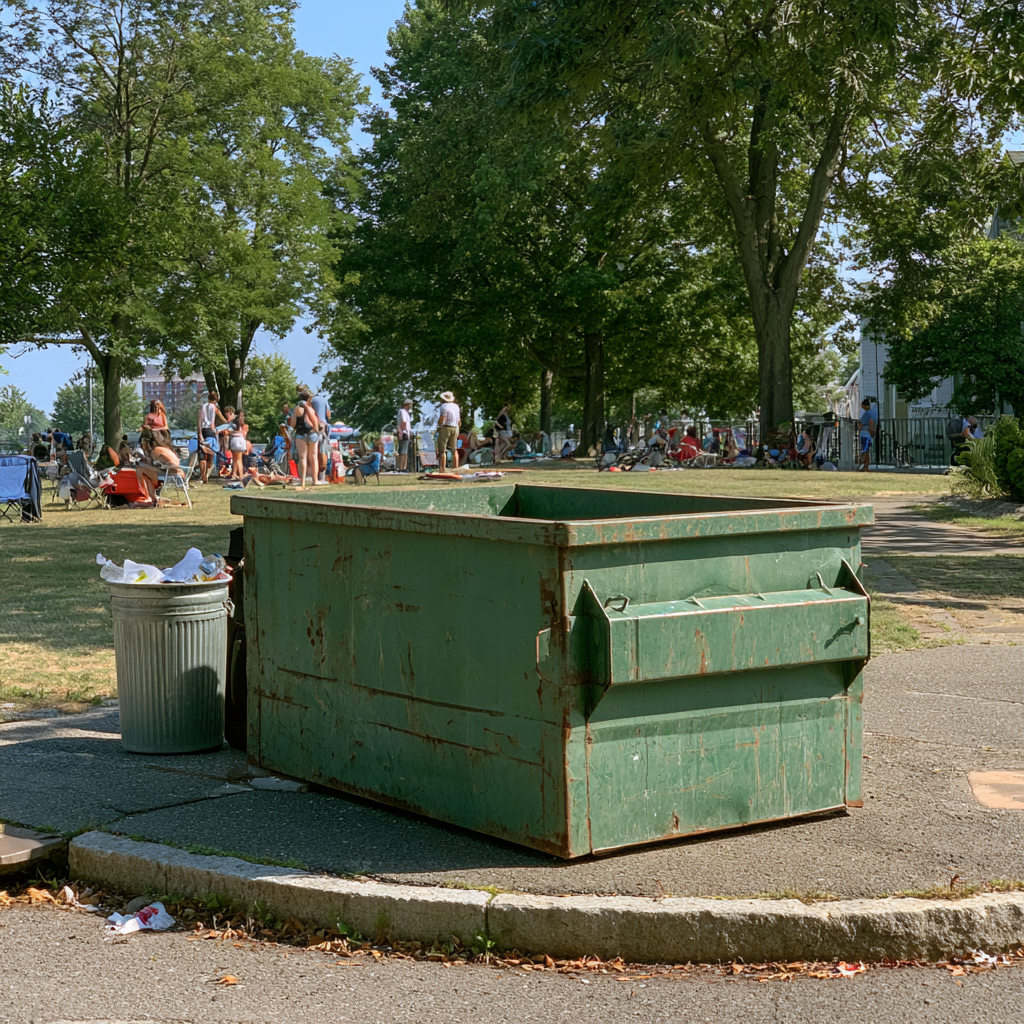
A few habits separate smooth event cleanups from stressful ones. Here’s what to do:
- Book early for peak-season dates
- Confirm delivery access and placement rules with the venue
- Tell vendors where the dumpster is and what goes in it
- Schedule pickup after breakdown is fully complete
And here’s what to avoid:
- Waiting for a final headcount before reserving a container
- Blocking emergency exits, fire lanes, or hydrants
- Tossing hazardous items like propane tanks, batteries, or paint
- Filling trash above the top edge of the container
Following these basics keeps the site safe, the venue happy, and pickup on schedule.

Event Dumpster Rental FAQs
We asked the Prime Dumpster Pros for their answers to the most common questions we hear about dumpster rentals for events.
What size dumpster do I need for an event?
The right size depends mostly on guest count and food service. Small private gatherings usually fit in a 10-yard dumpster, while weddings and corporate events often need a 20-yard dumpster. Large festivals and sporting events typically use several containers placed by zone.
How far in advance should I book an event dumpster?
Book as soon as you know your date and an approximate headcount. Spring, summer, and fall weekends are the busiest, and availability varies by location. Reserving early gives you the best chance of getting the size and delivery window you want.
Do I need a permit for a dumpster at my event?
A permit is usually required only when the dumpster sits on public property, such as a street, sidewalk, or city park. Private property and most venue lots don’t need one, though venues may have their own placement rules. Check with your city and venue before delivery.
Can I keep a dumpster for a multi-day event?
Yes, multi-day rentals are common for festivals, tournaments, and conferences. For high-volume events, schedule swap-outs so a full container is replaced with an empty one before trash starts to pile up.
Can recycling go in the same dumpster as trash?
Recycling and trash shouldn’t go in the same dumpster if you want the recyclables recovered. Mixed loads are typically handled as trash. Ask about a separate container for recyclables or cardboard, since options vary by location.
Plan a Cleaner Event With Prime Dumpster
A successful event plans for cleanup from the start. Choosing the right size, placing the container where trucks and staff can reach it, booking early, and setting up recycling stations keep your venue clean from setup to final pickup.
At Prime Dumpster, we arrange dumpster rentals for weddings, parties, festivals, sporting events, and everything in between, with availability that varies by location. Tell us your date, guest count, and venue, and we’ll help you build the right plan. Contact our team to get started.
If you are looking for Renting a Dumpster for Film Production: 5 Benefits, Click Here
Recent Posts


Follow Us
Have any questions?
+1 844 853 3867
Give us a call today so we can help you find the right waste & sanitation solution for
your project!
Contact Us