
Mon - Sat 7:00 am to 7:00 pm
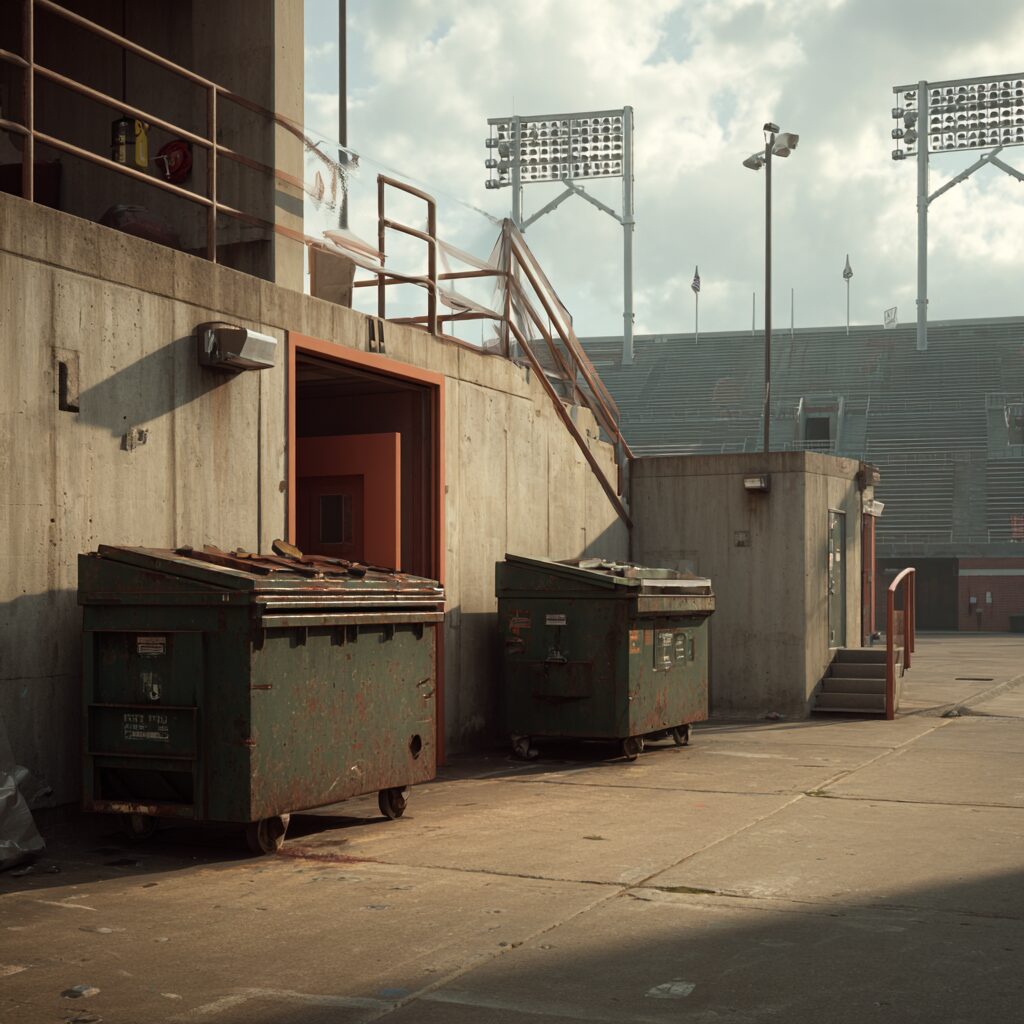
Your Rockin’ Guide to Renting Eco Friendly Dumpsters for Concert Venues
A sold-out show can leave behind more trash in three hours than a typical public venue generates in a week. Beverage cups, food containers, promotional materials, and merchandise packaging pile up fast, and the cleanup window between the final encore and the next event is often measured in hours, not days. Venue operators face real pressure, from municipalities, from attendees, and from their own bottom line, to handle that volume responsibly.
Eco-friendly dumpsters for concert venues solve this problem by matching container size and placement to the specific waste patterns of live events. At Prime Dumpster, we work with venues and event organizers to plan waste solutions that keep cleanup fast, keep recyclables out of the landfill, and keep costs under control.
Fast Facts: Dumpster Sizing for Concert Venues
“The biggest mistake venues make is sizing containers for an average night instead of a sold-out one,” the Prime Dumpster Pro said. “Waste volume at a concert doesn’t scale evenly. A packed house on a Saturday can generate two or three times the trash of a quieter weeknight show, and your container plan needs to account for that peak.”
| Venue Type | Recommended Size | Typical Debris |
| 10-Yard Dumpster | Intimate venues, acoustic shows | Food packaging, napkins, limited beverage containers |
| 15-Yard Dumpster | Club shows, small theaters | Drink containers, promotional materials, merchandise packaging |
| 20-Yard Dumpster | Amphitheaters, mid-size venues | Food waste, plastic cups, signage, decorative materials |
| 30-Yard Dumpster | Large arenas, festival stages | Beverage volume, catering waste, vendor packaging |
| 40-Yard Dumpster | Stadium concerts, major festivals | High volume of all waste types, stage materials |
Your Prime Dumpster account manager can help you determine the right container mix based on venue capacity, event frequency, and expected attendance. Tell us your project needs and we’ll help develop a custom solution!
For a broader look at sustainable event waste planning beyond concerts, see our guide to eco-friendly dumpster rentals for special events.

Why Concert Venues Need a Waste Plan
Large concert venues face compressed cleanup windows, high waste volume per attendee, and growing municipal requirements to divert waste from landfills.
A concert compresses days’ worth of typical foot traffic and consumption into a single evening. That concentration creates a cleanup challenge that most standard waste setups aren’t built to handle. Overflowing containers create safety hazards, attract pests, and leave venues scrambling before the next event’s load-in.
Municipalities are also paying closer attention to event waste. Many cities now require venues and event organizers to document recycling rates and divert a set percentage of waste from landfills as a condition of their event permits. The EPA and National Park Service’s guide to waste management at special events outlines a framework that many municipal programs draw from, covering pre-event planning, day-of collection strategy, and post-event reporting.
“Venues that plan their waste strategy months in advance, the same way they plan security or parking, are the ones that don’t end up scrambling on show night,” the Prime Dumpster Pro said. “It’s not complicated. It just has to be intentional.”
Matching Container Size to Your Venue
Sizing containers correctly for a concert venue depends on expected attendance, event duration, and the balance between capacity and space for sorting materials.
Estimating the right container size starts with a realistic attendance number, ideally based on your venue’s actual sellout capacity rather than an average night. Longer shows and multi-act bills generate more waste per attendee than a single short set, since extended time on-site means more food and beverage consumption.
A few principles guide effective sizing:
- Base your container plan on peak attendance nights, not typical turnout
- Longer events and multi-band bills need larger capacity or more frequent servicing than a quick single-act show
- Multiple smaller containers placed strategically often outperform one oversized container, since they encourage on-site sorting and reduce the distance staff have to carry full bags
- Leave buffer capacity rather than sizing to the exact estimated volume, since underestimating means overflow during the busiest part of the night
Roll-off containers with an open-top design are the standard choice for concert cleanup. Their design allows crews to load waste quickly during a tight turnaround window, which matters most at venues running back-to-back events.
Placement and Service Access at Concert Venues
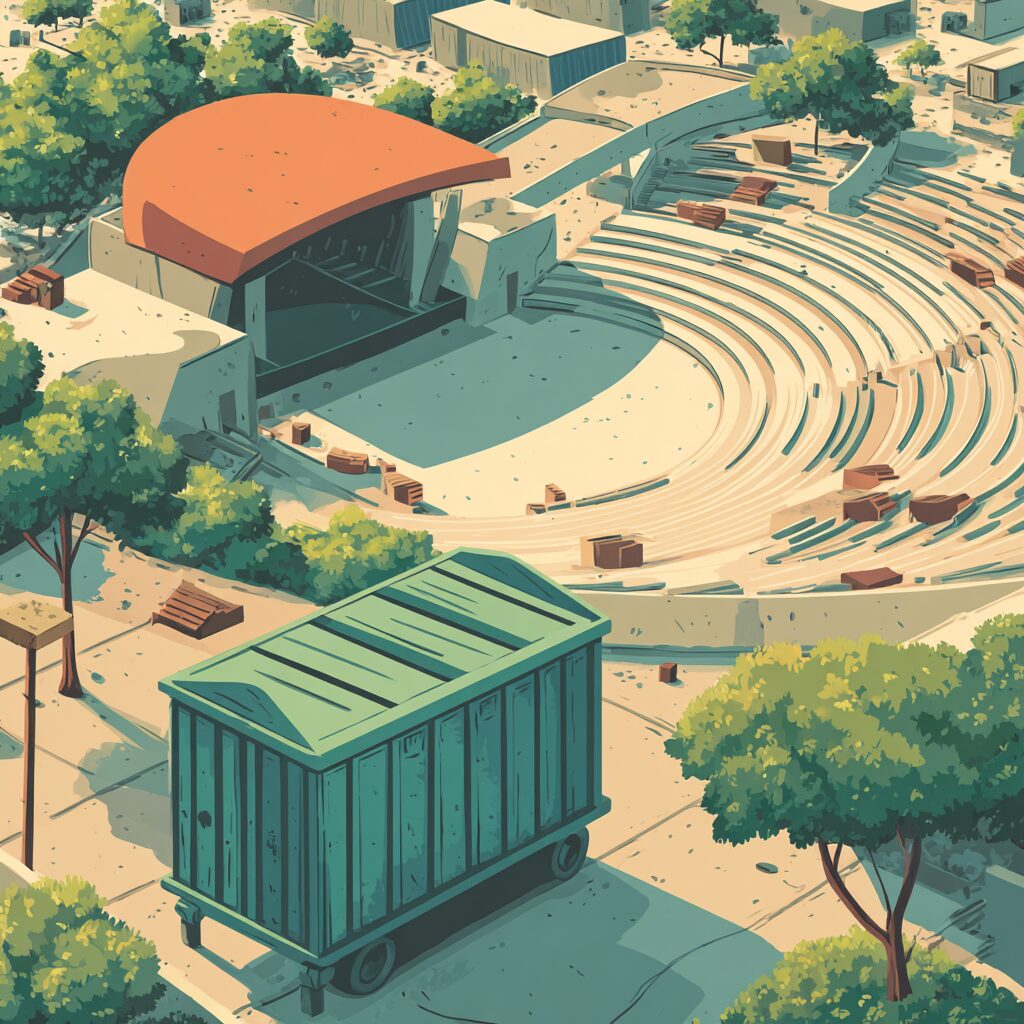
Position containers near high-traffic waste sources like concessions and exits while keeping clear access for service trucks to load and haul.
Where containers sit affects both how efficiently your crew can use them and how quickly the venue can turn over after the show. Place containers close to concession stands, beverage service areas, and main exit points, where the bulk of waste accumulates. Avoid placing them where they’ll be visible from premium seating, VIP areas, or main entry points.
Service truck access matters just as much as crowd-facing placement. A container that’s easy for staff to fill but difficult for a truck to reach creates a bottleneck at exactly the moment when fast turnaround matters most.
“We always walk the load-in and load-out route with a venue before finalizing placement,” the Prime Dumpster Pro said. “If a service truck has to navigate around parked vehicles, tight turns, or low clearance to reach the container, that adds time to a process that’s already working against the clock.”
Recycling and Material Separation
Dedicated containers for recyclables and general waste, sorted on-site, produce cleaner material streams and higher recycling facility acceptance rates.
Concert waste includes a high volume of recyclable material, primarily aluminum cans, plastic cups, and cardboard from merchandise and food packaging. Sorting that material on-site rather than after collection significantly improves the odds it actually gets recycled rather than rejected for contamination.
The EPA’s guidance on sustainable materials management emphasizes that clean, separated waste streams are essential for materials to be successfully diverted from landfills. Setting up dedicated recycling containers alongside general waste containers, clearly labeled and positioned together, makes sorting easier for both attendees and cleanup crews.
A few practical steps improve separation results:
- Place recycling and general waste containers side by side rather than in separate locations
- Use clear signage indicating what belongs in each container
- Brief cleanup staff on sorting expectations before doors open
- Consider a dedicated container for cardboard from vendor and merchandise breakdown
Venues that build sorting into their standard operating procedure see meaningfully better recycling outcomes than those that sort waste after the fact.
Multi-Day Festivals and Phased Cleanup
Multi-day festivals require daily servicing, scaled container counts across the event footprint, and coordination with vendors and camping areas.
Festivals spanning multiple days introduce challenges a single-night concert doesn’t face. Waste accumulates continuously rather than in one concentrated burst, and containers need daily servicing to avoid overflow before the event ends.
Camping areas at multi-day festivals generate their own waste stream, separate from the main stage and concession areas, and typically need dedicated containers positioned within the camping footprint rather than relying on attendees to carry trash to the main grounds. Vendor rows also benefit from smaller, more frequently serviced containers placed between stalls rather than centralized bins that require longer carries.
“Festivals are really a series of smaller waste zones that all need their own plan,” the Prime Dumpster Pro said. “Camping, vendor areas, and the main stage all generate different volumes and types of waste, and treating them as one big undifferentiated pile is how you end up with overflow on day two.”
Cost Considerations for Concert Venue Waste Management
Right-sizing containers, scheduling pickups efficiently, and separating recyclables all contribute to lower overall disposal costs for concert venues.
Waste management costs for concert venues are driven by three factors: container size and count, pickup frequency, and how much of the waste stream is recycled versus landfilled. Getting the sizing right the first time avoids the added cost of an emergency pickup mid-event or an overflow situation that requires extra labor to manage.
Bulk arrangements for venues that host events regularly typically offer better per-event pricing than one-off rentals, since a consistent partnership allows for predictable scheduling and container availability. Recycling can also reduce costs where local haulers offer lower rates for sorted materials compared to mixed waste, though this varies by market and hauler.
Your Prime Dumpster account manager can walk through container sizing, scheduling, and recycling options to build a cost-effective plan for your venue’s specific event calendar.
Sustainable Cleanup for Every Show
Eco-friendly dumpsters for concert venues come down to matching the right container size and placement to your venue’s actual waste patterns, planning ahead of peak nights, and building material separation into your standard cleanup process. Whether you’re running a single-night show or a multi-day festival, the fundamentals stay the same: plan for your busiest night, place containers strategically, and keep recyclables out of the landfill.
Contact our team at Prime Dumpster to build a waste management plan for your venue. We’ll help you select the right containers, set up an efficient service schedule, and support your sustainability goals from load-in to load-out.
If you are looking for Eco-Friendly Dumpsters for Weddings, Click Here
Recent Posts


Follow Us
Have any questions?
+1 844 853 3867
Give us a call today so we can help you find the right waste & sanitation solution for
your project!
Contact Us