
Mon - Sat 7:00 am to 7:00 pm

Will a Dumpster Damage My Driveway? How to Protect It
A roll-off dumpster makes a big project much easier. It also puts a lot of weight on one small patch of your driveway for days or weeks at a time.
A dumpster can damage your driveway, but a few simple steps prevent most problems. Plywood under the container, a flat and solid spot, and even loading are the three main elements to success.
At Prime Dumpster, we arrange dumpster rentals for homeowners and contractors across the country. This guide covers what causes driveway damage and how to prep before delivery. It also explains how to load your dumpster so your driveway looks the same after pickup as it did before.
Fast Facts: Protecting Your Driveway During a Dumpster Rental
“A loaded dumpster puts serious weight on a narrow strip of pavement,” says the Prime Dumpster Pro. “Plywood and smart placement handle most of what homeowners worry about, as long as they’re in place before the truck arrives.”
These four steps matter most:
- Plywood under the rails: Thick boards spread the container’s weight over a wider area of pavement.
- A flat, solid spot: Level concrete or asphalt holds up better than a slope or soft ground.
- A pre-delivery check: Photos of existing cracks and weak spots help you protect them and document their condition.
- Shade in hot weather: Asphalt softens in the heat, so shaded placement lowers the risk of dents.
Many of these steps work best together. The sections below explain each one.
What Causes Driveway Damage During a Dumpster Rental?
Most driveway damage comes from weight concentrated in one place. Roll-off dumpsters sit on steel rails and rollers instead of a flat base. As the container fills, that weight presses down on a few narrow strips of pavement.
Delivery and pickup add risk too. The truck tilts its bed and slides the container on and off, which can scrape or gouge the surface. Leaks and heat-softened asphalt can cause slower damage over the rental period.
Watch for these signs of trouble during and after your rental:
- New cracks running along or near the rails
- Dents or depressions where the rollers sit
- Scrape marks from drop-off or pickup
- Stains from liquids leaking out of the container
Catching problems early keeps repairs small. If you do see damage, here’s a helpful overview of repairing a cracked or sunken driveway.
Prep Your Driveway Before Delivery
Good prep starts a day or two before the dumpster arrives. A few minutes spent checking and clearing your driveway makes delivery smoother and protects the surface.
| Step | Why It Matters |
| Inspect the surface | Shows existing cracks and weak spots that need extra protection |
| Photograph the driveway | Documents its condition before the rental starts |
| Clear the area | Gives the driver room to place the container safely |
| Note slopes or soft spots | Lets the rental company plan the best placement |
Pick the flattest, most solid section of your driveway. Steer clear of edges and spots that already show cracking.
If your driveway isn’t a good fit, street placement may work instead. Many cities require a permit for that, so check the local dumpster placement laws before you book.
Put Plywood Under the Dumpster
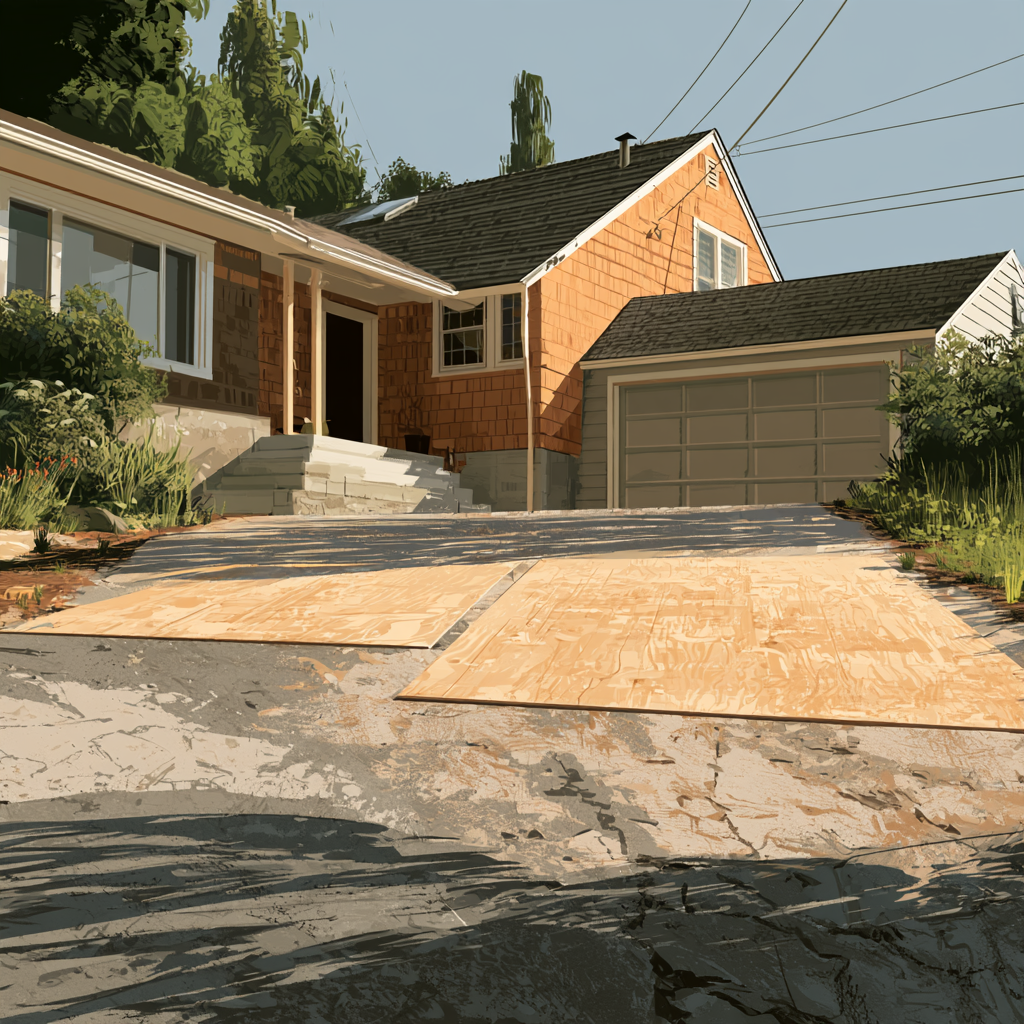
Plywood under a dumpster is the simplest way to protect your driveway. The boards spread the container’s weight across a wider area, so less pressure lands on any single strip of pavement.
Use thick sheets, at least ¾-inch, and lay them where the rails will rest. Cover the full contact area so no part of the rails touches bare pavement. Ask the rental company whether the driver can position boards at delivery, since availability varies by location.
“Lay the boards out before the truck shows up, and stand by to point out where you want the container,” says the Prime Dumpster Pro. “Drivers can line up the rails much more easily when the plywood is already in place.”
Keep the Container From Shifting
A dumpster on a slight incline can creep as it fills. Chocks or wheel stops placed at each end of the rails help hold it in place. Ask the driver before you add them so they don’t interfere with drop-off or pickup.
Never stack cinder blocks under the corners to raise the container. Blocks can crack or slip under a heavy load, and an uneven container is harder to load and haul safely.
Watch for Leaks and Stains
Liquids that drain out of a dumpster can stain or wear down your driveway. Rainwater, wet debris and residue from construction materials are the usual culprits.
Check the container for rust holes or damage when it arrives. For wet loads, lay a tarp or heavy plastic sheet under the container before delivery. Over time, standing water and runoff can wear down paved surfaces, so keeping the area dry protects your driveway long after pickup.
Plan for Hot Weather
Heat makes asphalt softer and easier to dent. A dumpster sitting in direct summer sun puts more strain on the surface than the same container on a cool day.
If you can, place the dumpster in a shaded section of your driveway. In hot climates, extra plywood offers added protection for asphalt driveways during long rentals.
Choose the Right Size and Estimate Your Debris Weight
The right dumpster size keeps your dumpster from being overloaded. Heavy debris adds weight fast, so match the container to both the volume and the type of material you’re tossing.
| Dumpster Size | Approximate Dimensions | Approximate Weight Capacity | Common Uses |
| 10-Yard Dumpster | 12′ × 8′ × 4.5′ | Up to 2 tons | Concrete disposal, small remodels, residential cleanouts |
| 15-Yard Dumpster | 16′ × 8′ × 4.5′ | Up to 3 tons | Kitchen and bath remodels, garage cleanouts, landscaping |
| 20-Yard Dumpster | 22′ × 8′ × 4.5′ | Up to 3 tons | Multi-room renovations, roofing, estate cleanouts |
| 30-Yard Dumpster | 22′ × 8′ × 6′ | Up to 4 tons | Full home renovations, commercial construction, large events |
| 40-Yard Dumpster | 22′ × 8′ × 7-8′ | Up to 5 tons | Commercial demolition, industrial projects, major build-outs |
Concrete, brick, masonry and asphalt can only go in a 10-yard dumpster. For projects with a lot of heavy debris, multiple 10-yard dumpsters are usually a better fit than one large container.
Estimating weight before you book helps you choose the right size. Our concrete weight calculator gives you a quick estimate for slabs, patios and walkways.
Load the Dumpster Evenly
Even loading protects both your driveway and the container. A load piled at one end pushes extra pressure onto one section of pavement and can make pickup harder.
Follow these loading habits throughout your rental:
- Place the heaviest items on the floor first.
- Spread heavy debris across the full length of the container.
- Use the walk-in door, if your dumpster has one, to place items toward the back.
- Keep all debris below the top of the walls.
Balanced loads are also safer to haul. A level, evenly filled container comes off your driveway more smoothly at pickup.

Frequently Asked Questions
We asked our team for help answering the most common questions we hear about placing dumpsters on driveways.
Is the Rental Company Responsible for Driveway Damage?
Responsibility for driveway damage depends on your rental agreement. Many agreements place it on the renter, so read the terms before delivery. Plywood and careful placement are your best protection either way.
Can You Put a Dumpster on an Asphalt Driveway?
Yes, in many cases you can put a dumpster on an asphalt driveway with the right precautions. Asphalt is softer than concrete, especially in hot weather. Use plywood under the rails and choose a shaded spot when possible.
How Thick Should Plywood Under a Dumpster Be?
Plywood under a dumpster should be at least ¾-inch thick. Thinner sheets can crack or bend under a loaded container. Make sure the boards cover the full area where the rails will rest.
Can I Put a Dumpster on the Street Instead of My Driveway?
You can often put a dumpster on the street instead of your driveway, but many cities require a permit. Rules vary by location. Check with your city or the rental company before scheduling delivery.
Rent a Dumpster Without Damaging Your Driveway
Protecting your driveway comes down to prep, placement and smart loading. Plywood, a flat spot and an even load prevent most damage before it starts.
At Prime Dumpster, we arrange roll-off rentals for homes and jobsites nationwide, and availability varies by location. Need help choosing a size or planning placement? Contact our team.
If you are looking for Residential Dumpster Security, Click Here
Recent Posts


Follow Us
Have any questions?
+1 844 853 3867
Give us a call today so we can help you find the right waste & sanitation solution for
your project!
Contact Us