
Mon - Sat 7:00 am to 7:00 pm
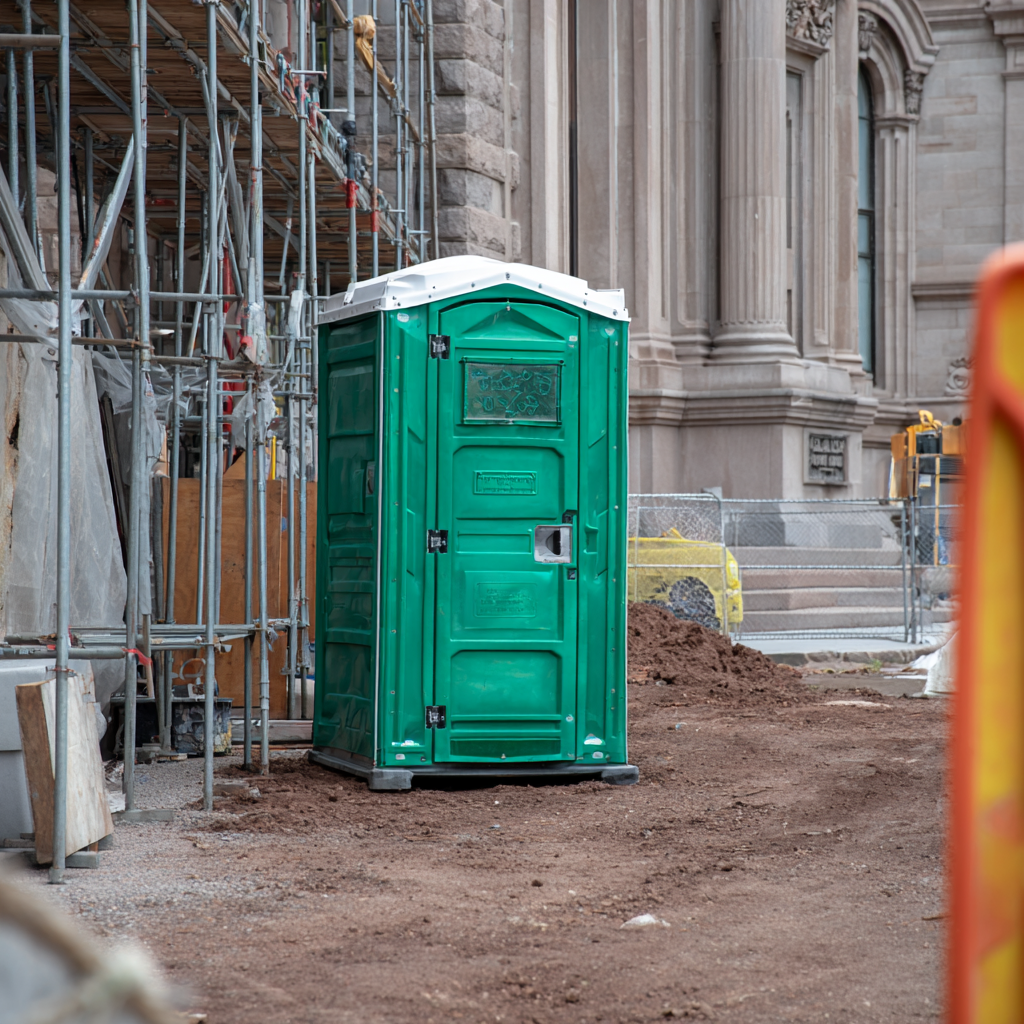
Construction Porta Potty Requirements in Houston, TX
Houston construction sites face immediate sanitation compliance challenges affecting crew productivity and project timelines across one of America’s busiest building markets. Meeting construction porta potty requirements means understanding OSHA worker ratios, positioning units for efficient crew access, and maintaining service schedules that function through Gulf Coast heat and humidity from the Energy Corridor to downtown high-rises.
Prime Dumpster coordinates portable restroom solutions for construction projects throughout the Houston metro area. We’ve created the following guide covering federal regulations, placement strategies, maintenance protocols, and specialized solutions. You’ll learn how to manage sanitation compliance across residential builds, commercial renovations, and industrial developments throughout Harris County.
Fast Facts: Construction Porta Potty Requirements
Our Prime Dumpster Pros answer the most common questions construction managers and contractors ask about ensuring compliance when renting portable toilets in Houston.
How many porta potties does OSHA require for construction sites in Texas?
“OSHA mandates one toilet facility for every 20 workers as the baseline requirement under 29 CFR 1926.51, with larger sites needing additional units based on crew size. Sites with 21-200 workers need one toilet seat and one urinal per 40 employees, while projects exceeding 200 workers follow a ratio of one seat and urinal per 50 workers.”
Where should porta potties be positioned on Houston construction sites?
“Position units within 200 feet of active work areas so crews don’t waste productive time walking across large sites during breaks. Place facilities on level, stable ground away from heavy equipment paths but close enough that workers can access them quickly without disrupting workflow or creating safety hazards.”
How often do construction porta potties need servicing in Houston’s climate?
“Weekly service represents the minimum standard for most Houston construction sites, but Gulf Coast heat and humidity often require twice-weekly maintenance during summer months from May through September. High-traffic sites with crews exceeding 50 workers need more frequent service to maintain sanitary conditions and prevent the complaints that affect crew morale and productivity.”

🏗️ Maintaining a safe and clean jobsite requires more than porta potty. Our guide to dumpster rentals for construction sites in Houston is an excellent resource that jobsite managers and contractors will want to read. 🏗️
Construction Porta Potty Requirements in Houston, TX
Did you know that inadequate restroom facilities can actually shut down your entire operation? It’s true—norovirus and E. coli outbreaks spread fast when sanitation standards slip.
Clean facilities show respect for your team’s basic needs. Workers perform better when their health and comfort are prioritized.
Disease outbreaks can halt projects for days. Proper sanitation prevents this disruption and keeps everyone productive.
Navigating Local Regulations and OSHA Standards
OSHA sets clear ratios for facilities. For 20 or fewer workers, one toilet suffices. Larger sites need more units based on crew size.
Many companies follow stricter ANSI guidelines. These voluntary standards recommend more frequent servicing and better ratios.
OSHA violations carry heavy fines—up to $16,550 per incident. Separate facilities for different genders are mandatory under current rules.
| Number of Workers | OSHA Minimum Requirement | ANSI Recommended Standard |
| 1-20 | 1 toilet facility | 2-3 toilet facilities |
| 21-200 | 1 toilet + 1 urinal per 40 workers | 1 facility per 10 workers |
| 200+ | 1 toilet + 1 urinal per 50 workers | 1 facility per 15 workers (with weekly service) |
Following these guidelines protects your investment and your team. It’s smarter business to exceed minimums rather than risk penalties.
Planning and Positioning Porta Potties on Your Construction Site
Think of your job site’s portable toilets like chess pieces – their placement determines whether you win or lose the productivity game. Poor positioning costs more than just convenience.
Workers waste approximately 12 minutes daily searching for facilities. That adds up to 50 hours of lost productivity monthly for a 25-person crew.
Site Layout Considerations and Worker Accessibility
Position units where foot traffic naturally flows. Place them near break areas and along main pathways.
One highway crew cut bathroom-related downtime by 40%. They relocated units weekly as work zones shifted using mobile trailers.
Follow the 2-minute walk rule. No worker should need more than two minutes to reach facilities from their work area.
| Site Type | Placement Strategy | Unit Ratio | Special Considerations |
| High-Rise Projects | Every 5 floors plus rooftop | 1 unit per 15 workers | Compact models with castor wheels for elevator shafts |
| Ground-Level Sites | Central hub plus perimeter | 1 unit per 10 workers | GPS-tracked trailers for large areas |
| Tight Spaces | Along main pathways | Based on traffic flow | Narrow-profile models for confined areas |
Optimizing Unit Placement for Maximum Productivity
Ensure clear pathways without obstruction from materials or equipment. Units must be secured properly on stable ground.
Monitor usage patterns and adjust placement based on actual worker needs. Modern solutions like GPS tracking help manage large sites effectively.
Proper positioning respects your team’s time while maintaining essential access. It’s a simple strategy with significant returns.
Ensuring Compliance with Construction Site Sanitation Regulations
What separates compliant jobsites in Harris County from penalized ones often comes down to understanding the fine print in sanitation rules. It’s not just about renting the right mix of porta potties – it’s about meeting specific physical and operational standards.
OSHA’s baseline requirement states that “lavatories shall be made available in all places of employment.” But what does that really mean for your setup?
Adhering to OSHA and ANSI Guidelines
Your facilities need self-closing doors and surfaces that clean easily. Proper ventilation controls odors and maintains health standards. Don’t overlook adequate internal space either.
ADA compliance isn’t optional when renting porta potties for your Houston jobsite. At least one unit must accommodate workers with disabilities. This means wider doors, grab bars, and enough room for wheelchair maneuvering.
Hand-washing stations require hot or cold running water, soap, and towels. Position them immediately adjacent to toilet facilities – not as an afterthought.
ANSI standards accept various facility types – mobile trailers, prefabricated structures, or skid-mounted units all work. The key is functional adequacy.
Privacy matters too. Lockable doors ensure worker dignity and prevent unauthorized access. Adequate lighting supports safe use during early or late shifts.
Keep thorough documentation: service records, disposal receipts, employee counts, and facility inventories. This paperwork proves your compliance during inspections.

Maintenance and Service Best Practices for Porta Potty Units
High-traffic sites need service every one to two days. Smaller projects can often manage with a few visits per week.
Professional crews use vacuum trucks to empty tanks. They then transport the waste to licensed treatment facilities.
Technicians follow a detailed checklist. They refill toilet paper and hand sanitizer. They also disinfect all surfaces, especially door handles and seats.
| Site Activity Level | Recommended Service Frequency | Critical Supplies to Check |
| High-Traffic | Every 1-2 days | Toilet paper, hand sanitizer, soap |
| Moderate Use | 2-3 times per week | Hand sanitizer, toilet paper |
| Low-Traffic | Weekly | All supplies and structural integrity |
Scheduling Off-Hours Servicing to Minimize Disruption
Schedule service for Tuesday and Thursday mornings. This provides fresh facilities for midweek work pushes.
It avoids the chaos of Monday mornings and the wind-down of Fridays. A site supervisor should check supply levels daily at shift changes.
One contractor cut sick days by 30 percent after upgrading to heated hand-washing stations. Smart maintenance is a wise investment.

Implementing Specialized Solutions for Houston Construction Sites
Your project’s unique characteristics demand equally unique sanitation strategies that evolve with your timeline. We see too many managers default to basic units when specialized options could save time and money.
The right approach considers everything from crew size to weather conditions. Smart planning prevents wasted budget and frustrated teams.
Adapting to Project Size and Unique Site Needs
Start with the fundamental sizing formula. A typical site with 50 workers needs five standard units plus one ADA-compliant model. This provides a practical baseline for calculating your specific needs.
Small residential remodels with under five workers manage fine with single compact units. Highway crews with 50+ workers often benefit from multi-station trailer setups.
High-rise projects require reinforced designs that crane-hoist to upper floors. These specialized units secure safely without blocking crane paths.
| Solution Type | Best For | Key Features | Worker Capacity |
| Compact Single Units | Small residential projects | Space-saving, easy placement | 1-5 workers |
| Multi-Station Trailers | Highway crews, large sites | Multiple stalls, integrated facilities | 50+ workers |
| High-Rise Reinforced | Vertical construction | Crane-hoistable, secure mounting | Per floor basis |
| Towed Combination Units | Evolving work zones | Mobile, ADA/handwash integrated | 15-30 workers |
Towable units offer flexibility as work zones shift throughout your timeline. Some models combine handwashing stations and ADA-compliant stalls in single packages.
Consider climate-controlled options for extreme weather conditions. Narrow-profile models solve access challenges during building phases.
Matching rental solutions to actual site needs prevents both budget waste and compliance issues. The right number of properly equipped units keeps teams productive and projects on track.
Your Houston Construction Sanitation Partner
Successfully managing construction porta potty requirements starts with accurate worker-to-unit ratio calculations, strategic placement within 200 feet of active work areas, and regular maintenance schedules adapted to Houston’s climate. Prime Dumpster arranges standard construction porta potties, ADA-compliant units, and specialized facilities for construction sites throughout the Houston metro area. Contact our team to discuss your project requirements and coordinate sanitation solutions that keep your crew productive and your site compliant.
If you are looking for Q&A with the Prime Dumpster Pros: Construction Porta Potty Requirements in Paragould, Arkansas, Click Here
Recent Posts


Have any questions?
+1 844 853 3867
Give us a call today so we can help you find the right waste & sanitation solution for
your project!
Contact Us