
Mon - Sat 7:00 am to 7:00 pm
Planning Guide to Porta Potties for Infrastructure Projects in 2026
Planning porta potties for infrastructure projects in 2026 requires navigating a rapidly evolving market. Your road construction, bridge repair, or utility installation project needs reliable sanitation solutions that can handle extended timelines, changing crew sizes, and often challenging remote locations—all while meeting stricter health and safety regulation.
At Prime Dumpster, we’ve created this comprehensive planning guide to help you secure the right portable sanitation solutions before the market gets competitive. Our nationwide experience coordinating facilities for major infrastructure projects reveals what’s changing for 2026. Let’s take a look!
Fast Facts: Infrastructure Project Porta Potty Planning
“Infrastructure projects require porta potty strategies that scale with changing crew sizes and weather conditions over months or years of construction, not just a few days,” says a Prime Dumpster Pro.
- Phase-Based Planning: Start with standard units during site prep then upgrade to flushable models or trailers when full crews arrive, saving on rental costs over the project lifecycle.
- Winter Preparation: Order heated tanks and insulated systems before October to avoid emergency surcharges when temperatures drop and standard units become unusable.
- Smart Monitoring: Choose units with digital sensors that track usage and automatically schedule service, preventing overflow issues that can shut down work sites.
- Remote Site Solutions: Select self-contained units with larger waste capacities for locations where service trucks can’t easily access, reducing service interruptions by 40%.
- Compliance Documentation: Maintain digital service logs and waste disposal records from day one since federal infrastructure projects require detailed sanitation audits throughout construction.
Understanding these infrastructure-specific requirements ensures your porta potty planning supports productivity rather than creating bottlenecks as your infrastructure project progresses through 2026.
2026 Infrastructure Project Trends
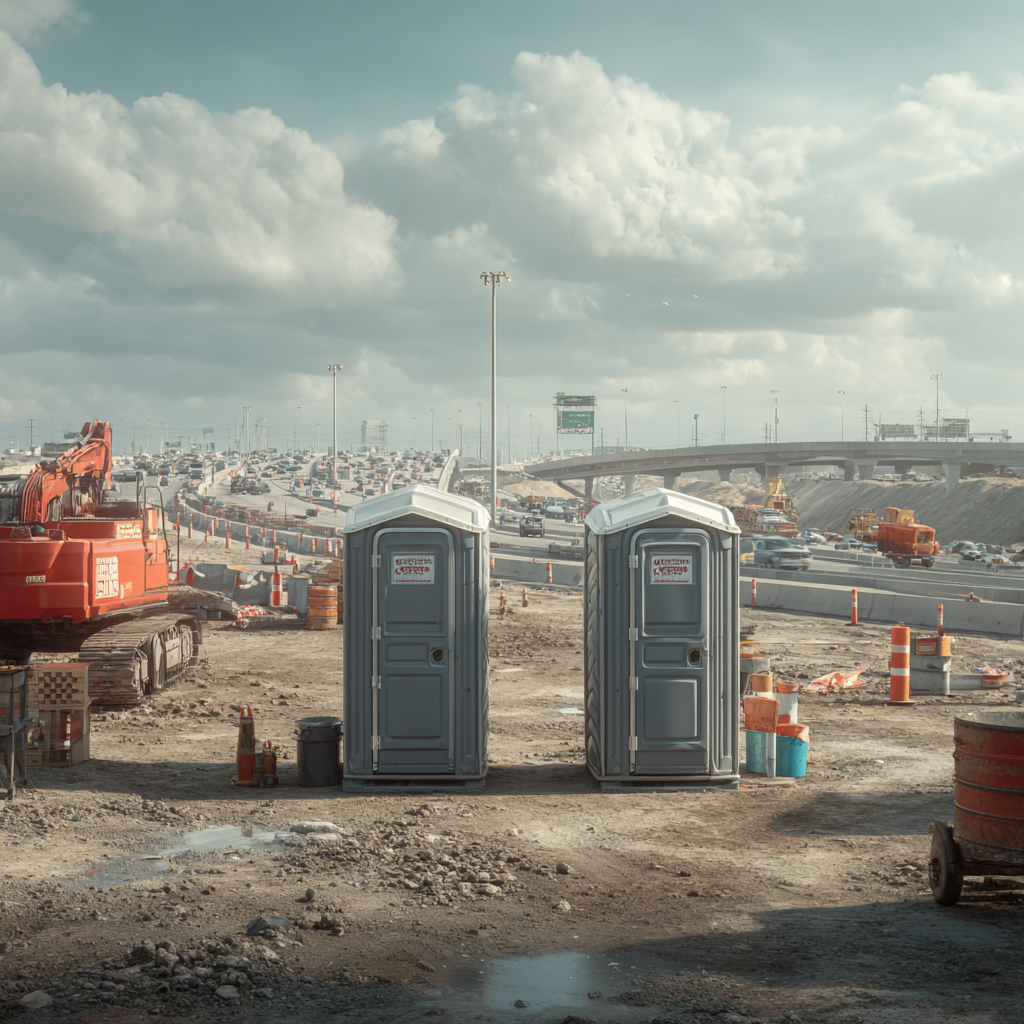
The construction landscape is shifting dramatically as we approach the new year. Industry growth means larger, longer-duration work that demands smarter planning from the start. Here’s a look at what makes infrastructure projects different from other industries that use porta potties.
Evolving Construction Needs
Today’s building sector features bigger crews and extended timelines. Multiple shifts become common on major job sites. This creates new demands for temporary facilities that can handle heavy use.
Urban work presents special challenges. Dense populations mean stricter health standards and limited space. Remote locations struggle with utility access, requiring self-sufficient solutions.
| Construction Trend | Scale Impact | Sanitation Implication |
| Larger Crew Sizes | 50+ workers per site | More units needed, strategic placement |
| Extended Timelines | Months to years duration | Durable equipment, regular maintenance |
| Urban Locations | High population density | Enhanced hygiene, ADA compliance |
| Multiple Shifts | 24/7 operations | Increased capacity, frequent servicing |
Implications for Sanitation Planning
These trends show that temporary facilities can’t be an afterthought. They must integrate into initial site designs. Early booking becomes essential as competition grows.
The emphasis now extends beyond basic needs. Handwashing stations and accessibility features matter as much as the units themselves. Proper planning ensures worker satisfaction and regulatory compliance.
Optimizing Rental Strategies for Porta Potties for Infrastructure Projects in 2026
Choosing the right portable sanitation setup can make or break crew morale on long-term builds. Your selection process requires balancing budget constraints with worker needs and regulatory requirements.
Let’s examine the main unit options available for your planning needs.
Comparing Standard, Flushable, and Accessible Models
Standard portable toilets remain the most common choice for basic sanitation needs. These affordable units work well for smaller crews and shorter projects.
Flushable models are gaining popularity for extended operations. They offer a more comfortable experience that workers appreciate during months-long assignments.
ADA compliant units are essential for any sizable crew. These accessible toilets ensure everyone has proper facilities regardless of mobility.
Integrated sink systems promote better hygiene practices. This feature becomes crucial when projects span multiple seasons.
Restroom trailers provide premium comfort for large-scale operations. They work particularly well for projects with significant crew sizes.
Matching your portable toilet selection to project phases creates smart savings. Start with standard options during initial site work.
Then upgrade to flushable or trailer units during peak construction periods. This approach maximizes both comfort and cost efficiency.
Adapting to Seasonal and Environmental Challenges
Freezing conditions demand more than just standard portable restroom arrangements. Year-round operations require smart planning that anticipates weather changes before they become problems.
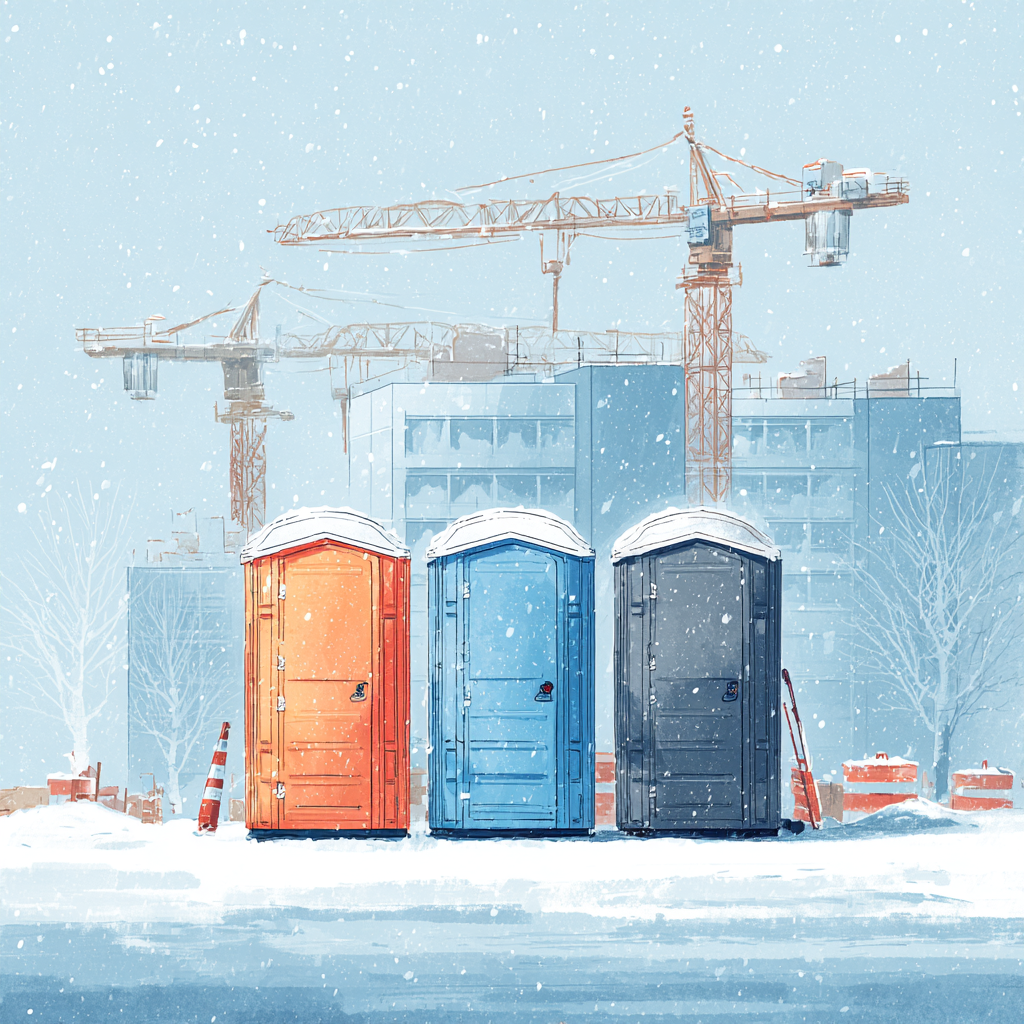
Think about Colorado construction sites that operate through harsh winters. Basic facilities simply won’t cut it when temperatures drop below zero.
Preparing for Cold Weather Conditions
Winter brings unique challenges to any work site. Water lines freeze, doors become difficult to operate, and workers avoid uncomfortable facilities.
Heated tanks and insulated systems prevent freezing and downtime. These features ensure your toilets remain functional throughout cold spells.
Many construction projects span multiple seasons. You’ll need rental agreements that transition from summer to winter configurations.
| Weather Condition | Standard Unit Issues | Recommended Solution |
| Below Freezing Temperatures | Frozen water lines, unusable facilities | Heated tanks, insulated systems |
| Snow and Ice | Access problems, service delays | Self-contained trailers, larger capacities |
| Summer Heat | Odor issues, ventilation problems | Enhanced air circulation, frequent servicing |
| Seasonal Transitions | Inadequate preparation, retrofit costs | Flexible rental packages, pre-planned upgrades |
Remote locations face amplified challenges. Service vehicles struggle with snow and ice access. Self-contained options with larger capacities work better here.
Construction restroom trailers provide winter-ready performance. They offer warm interiors, running water, and clean stalls that improve daily conditions for crews.
Discuss winterization packages with providers before your project begins. This avoids costly disruptions when seasonal weather hits.
Overview of Portable Sanitation Options for Diverse Project Needs
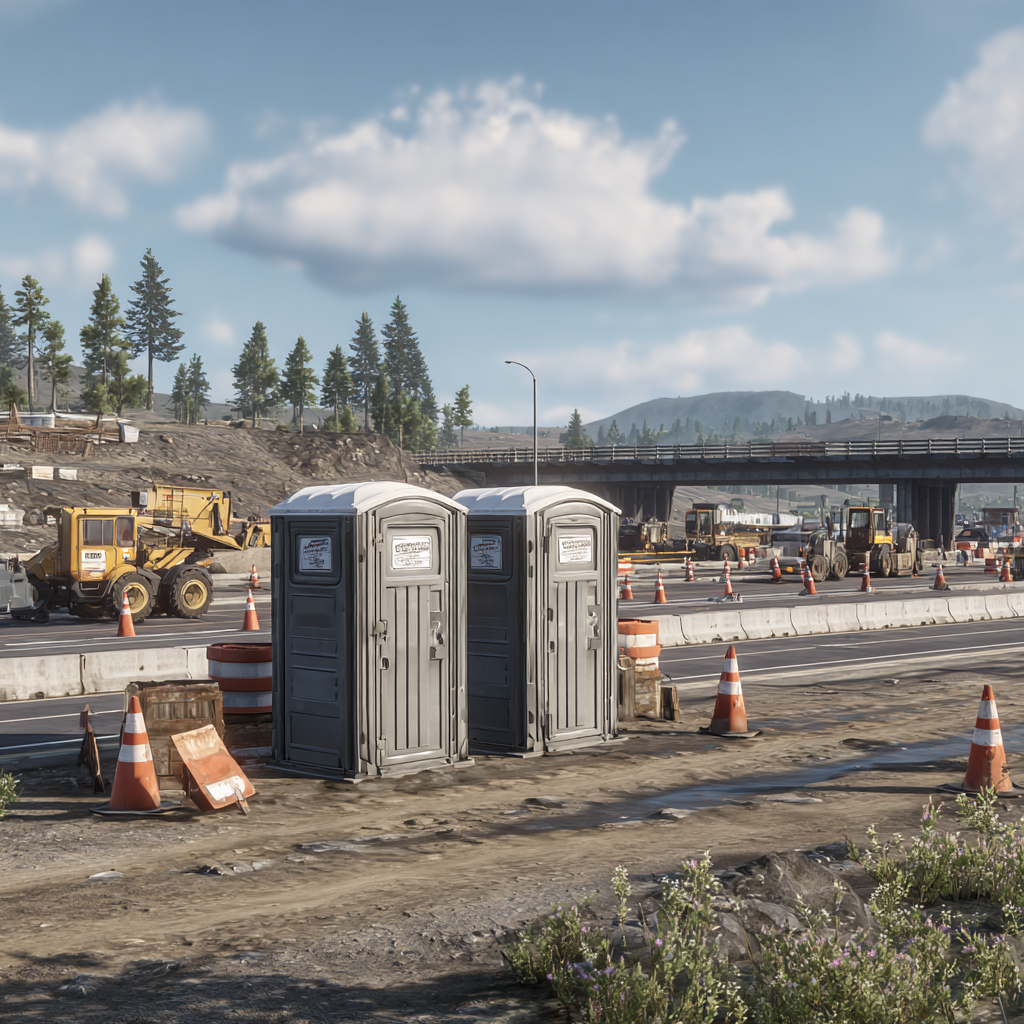
Your construction site’s sanitation setup deserves as much attention as your equipment and materials. Different work scenarios call for specific restroom solutions that match your crew size and timeline.
We’ll explore how to choose between modern trailers and basic units. You’ll also learn about accessibility requirements that keep your site compliant.
Restroom Trailers vs. Traditional Units
Restroom trailers offer a premium experience for larger crews. These mobile facilities provide running water, climate control, and multiple stalls.
Traditional portable restrooms work well for short-term projects. They’re cost-effective for smaller teams working on quick repairs.
| Feature | Restroom Trailers | Traditional Units | Best For |
| Comfort Level | High (climate controlled) | Basic | Long-term projects |
| Crew Capacity | 15+ workers | Small teams | Project scale |
| Water Access | Running water sinks | Hand sanitizer only | Hygiene needs |
| Cost Efficiency | Better value long-term | Budget friendly short-term | Project duration |
| Setup Requirements | More space needed | Compact placement | Site layout |
Integrating Porta Potty Solutions into Infrastructure Planning
The final piece of your sanitation strategy involves seamless integration with your overall construction timeline. Getting this right means your crew never faces facility shortages or service disruptions.
Think about portable toilet rental as part of your initial site preparation. Booking units before ground-breaking prevents last-minute scrambling when your team arrives.
Coordinating Setup, Service Logistics, and Long-Term Support
Setup logistics require careful coordination with your rental provider. Delivery timing must align with site access points and equipment movements.
- Heavy trucks need clear paths to place restroom trailers or standard units. Your planning should account for these logistics from day one.
- Monthly rental structures make financial sense for extended operations. Understanding pricing factors helps budget accurately for your specific needs.
- Service logistics become critical on active construction zones. Coordinate maintenance visits around crew schedules and equipment movements.
- Power and water requirements need advance planning. Most job sites have temporary utilities, but remote locations may need generators.
- Your team’s experience depends on proper facility placement and maintenance. Units placed too far from work areas create accessibility problems.
Build flexibility into your agreements for weather delays or timeline changes. This ensures continuous support without service gaps or penalties.
Final Insights for Successful 2026 Infrastructure Projects
Successfully planning porta potties for infrastructure projects in 2026 means thinking beyond basic units to consider smart technology, seasonal adaptations, and customized solutions that match your specific crew needs and project phases. The right portable sanitation strategy keeps your workers productive, ensures regulatory compliance, and demonstrates your commitment to providing quality working conditions throughout every stage of construction.
Ready to secure reliable porta potty solutions for your 2026 infrastructure projects? Contact our team to discuss your timeline, crew requirements, and site-specific challenges—we’ll develop a comprehensive sanitation plan that scales with your project and keeps your team comfortable from day one through final completion.
If you are looking for Renting Porta Potties for Sporting Events in 2026: Pro Planning Tips, Click Here
Recent Posts


Follow Us
Have any questions?
+1 844 853 3867
Give us a call today so we can help you find the right waste & sanitation solution for
your project!
Contact Us