
Mon - Sat 7:00 am to 7:00 pm
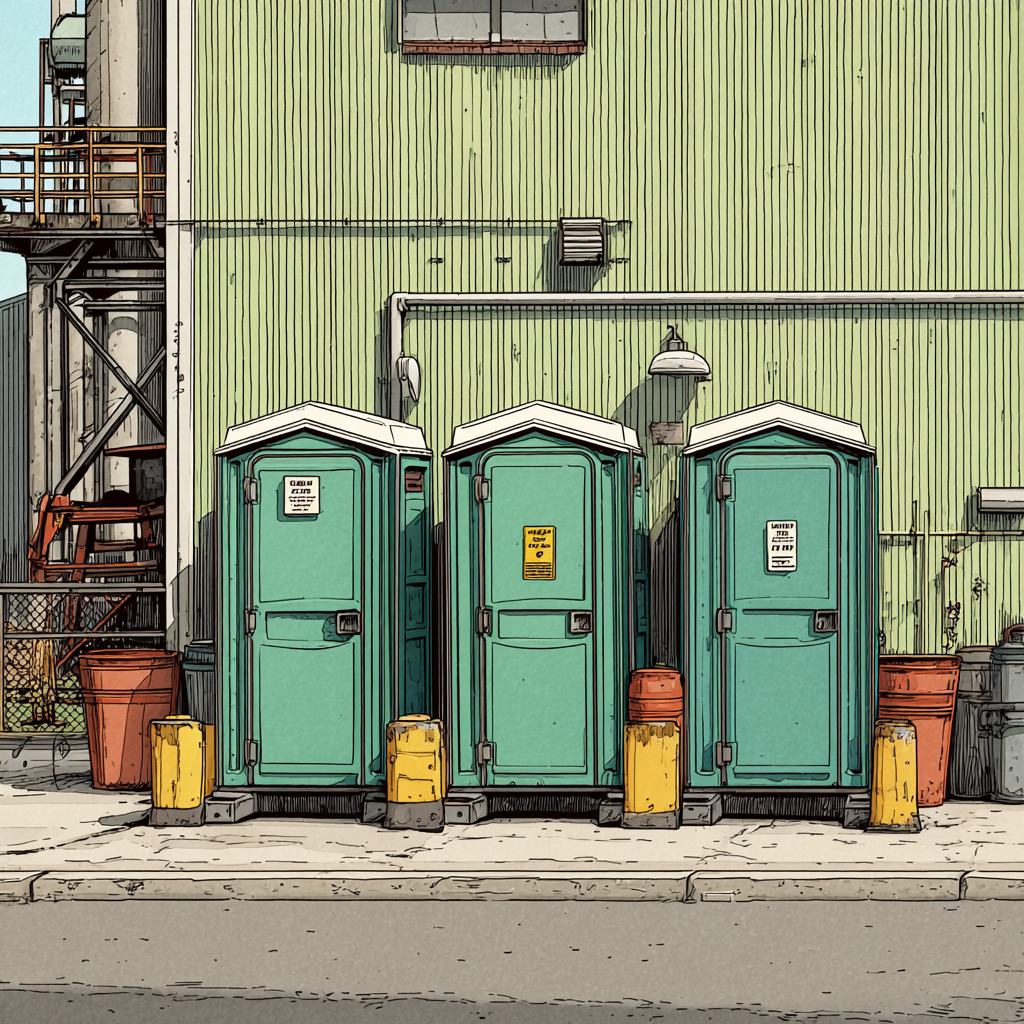
Porta Potty Rentals for Disaster Relief in 2026
When hurricanes slam into Gulf Coast communities or wildfires force mass evacuations across Western states, one critical need emerges within hours: basic sanitation for thousands of displaced people. Strategic porta potty rentals for disaster relief in 2026 can’t wait until emergency declarations are signed—they require pre-positioned inventory, rapid deployment protocols, and provider relationships established months before disasters strike.
Effective porta potty rentals for disaster relief in 2026 demand understanding regional threat patterns, specialized equipment requirements, and coordination challenges unique to emergency response. Our guide from Prime Dumpster breaks down deployment strategies for hurricanes, tornadoes, floods, and wildfires. Learn unit selection, response timelines, and best practices that prevent sanitation crises from compounding already devastating situations.
Fast Facts: Porta Potty Rentals for Disaster Relief in 2026
“Disaster relief porta potty planning looks completely different for hurricanes versus tornadoes because you’ve got 72 hours warning to pre-position units before a hurricane hits, but maybe 15 minutes before a tornado strikes and destroys every permanent restroom in town,” says a Prime Dumpster Pro.
“Success requires understanding your needs while taking steps early to secure your rentals. Simple prep steps today can pay off big-time later on if an emergency response is needed.”
- Hurricane preparation requires pre-positioning porta potties and restroom trailers 48-72 hours before landfall: Secure units in staging areas outside the projected impact zone but close enough for rapid post-storm deployment, because once hurricanes hit Gulf and Atlantic coastal regions, road access becomes impossible and units positioned too close get destroyed by storm surge and flooding.
- Tornado response demands immediate deployment capabilities with construction-grade portable toilets delivered within hours: Establish priority agreements with providers near Tornado Alley states like Oklahoma, Kansas, and Missouri who can mobilize units from multiple distribution points, because tornado damage concentrates in small areas where existing infrastructure gets completely destroyed with zero advance warning.
- Flood relief requires specialized units that function when traditional sewage systems fail across river valleys: Deploy flood-resistant portable toilets with elevated bases and sealed systems that prevent contamination when standing water surrounds shelter sites, and coordinate helicopter or boat delivery capabilities for areas where road access remains blocked for days or weeks.
- Wildfire evacuations need quick shelter setup with porta potties positioned at evacuation centers before residents arrive: Work with Western state providers who understand that wildfire displacements can last months as communities rebuild, requiring durable units with hand-washing stations that serve extended operations at schools, fairgrounds, and temporary housing sites throughout California, Oregon, and Washington.
- Earthquake response demands portable sanitation that deploys immediately when urban sewage infrastructure collapses across entire metropolitan areas: Prioritize relationships with providers maintaining inventory near seismically active zones like California who can deliver thousands of units within 24 hours, because earthquake damage creates instant sanitation needs for hundreds of thousands of people when underground pipes rupture citywide.
Disasters require a response unlike any other situation. Understanding these disaster-specific requirements ensures your relief operations maintain proper sanitation from day one through extended recovery periods.
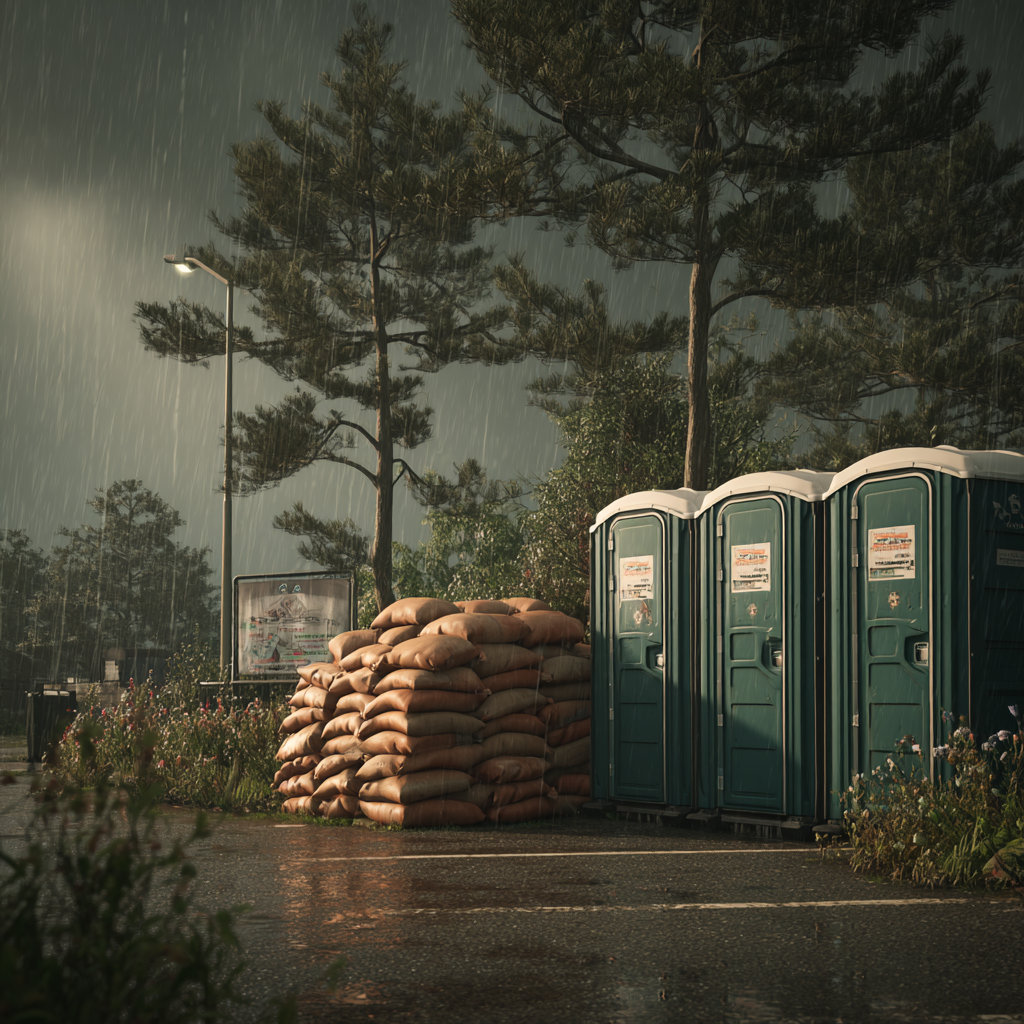
Emergency Porta Potty Planning for U.S. Natural Disasters
Across America’s diverse landscape, different natural disasters demand unique portable sanitation strategies. Each region faces specific challenges that require tailored emergency response planning.
Addressing Tornadoes, Hurricanes, Flooding, and Fires
Hurricanes along the Gulf and Atlantic coasts need pre-positioned portable toilets before storms hit. Restroom trailers serve as permanent solutions for extended shelter operations in Florida, Louisiana, and Texas.
Tornado-prone areas like Oklahoma and Kansas require rapid deployment capabilities. These emergencies strike with minimal warning, destroying existing sanitation infrastructure quickly.
Flooding affects river valleys nationwide, from the Mississippi basin to California. Portable restrooms must function when traditional sewage systems fail.
Wildfire evacuations in Western states create sudden shelter needs. Services must deploy quickly to evacuation centers and temporary housing sites.
| Disaster Type | Primary Regions | Timing Needs | Recommended Solutions |
| Hurricanes | Gulf Coast, Atlantic Seaboard | Pre-position before landfall | Restroom trailers for extended use |
| Tornadoes | Midwest, Southern states | Immediate deployment | Standard portable toilets |
| Flooding | River valleys nationwide | Rapid response | Flood-resistant units |
| Wildfires | Western states | Quick setup at shelters | Units with hand wash stations |
Integrating Porta Potties into Shelter Strategies
Effective shelter planning means calculating proper ratios. Typically, you need one portable toilet per 10 people for events lasting several days.
Restroom trailers work well in schools and community centers. They provide running water and climate control that maintains dignity during difficult times.
Always include hand washing stations with your portable restroom order. This reduces disease transmission when many people share confined spaces.
Coordination between emergency teams and sanitation services before disasters ensures quick delivery. Proper facilities prevent public health crises from developing.
Regional Disaster Trends and Preparedness in 2026
America’s geography creates distinct emergency hotspots that demand specialized sanitation planning.
High-Risk Areas and Their Specific Needs
Coastal regions from Texas to North Carolina face annual hurricane seasons. Emergency coordinators need advance agreements with portable toilet services for peak storm periods.
The Gulf Coast experiences intense hurricane activity. Louisiana, Mississippi, and Alabama require sanitation solutions that withstand flooding and extreme heat.
Tornado Alley states need construction-grade portable toilets delivered on short notice. These emergencies destroy infrastructure instantly.
| Region | Primary Threats | Special Requirements | Response Time |
| Gulf Coast | Hurricanes, Flooding | Flood-resistant units, heat tolerance | Pre-position before storms |
| Tornado Alley | Tornadoes | Construction-grade toilets, rapid delivery | Immediate deployment |
| Western States | Wildfires, Earthquakes | Extended operation capacity | Quick shelter setup |
| River Valleys | Seasonal Flooding | Boat/helicopter delivery capability | Rapid response needed |
| Northeast/Midwest | Winter Storms | Heated restroom trailers | Pre-winter preparation |
Earthquake-prone California faces unique challenges when sewage systems fail. Portable sanitation needs become immediate across urban and rural areas.
Western wildfire zones require specialized planning since evacuations happen quickly. Relief operations may last months for displaced residents.
High-risk areas should establish year-round relationships with experienced sanitation teams. This ensures priority access during competing emergencies.
Variety of Portable Sanitation Units for Every Emergency
Emergency planners need to understand the full spectrum of portable restroom options available. Different crisis situations demand specific sanitation solutions to maintain public health and dignity.
Standard, Deluxe with Sinks, and Flushable Options
Standard portable toilets serve as reliable workhorses for general population needs. They provide cost-effective sanitation for emergency responders and mass shelters.
Deluxe units with built-in sinks offer superior hygiene for medical areas and food distribution sites. These options help prevent disease transmission among vulnerable groups.
Flushable portable toilet choices create a more familiar experience for trauma victims. Their sealed systems minimize odors in crowded shelter environments.
Handicap, ADA Accessible, Towable, Crane, and Solar Units
ADA-compliant portable restrooms aren’t optional extras—they’re legal requirements. These units feature wider doors and grab bars for wheelchair access.
Towable restroom trailers provide multiple stalls with running water and climate control. They offer comfort for extended displacement situations.
Crane units solve logistical challenges when ground access is blocked. Helicopters can position these specially designed toilets in isolated locations.
Solar-powered options work where electrical infrastructure fails. They run lighting and ventilation using photovoltaic panels.
Swift Deployment Strategies for Rapid Emergency Response
The clock starts ticking the moment an emergency declaration is made for sanitation deployment. You need providers who can deliver portable toilets within hours, not days. This prevents sanitation crises from developing at shelter sites.
Establish pre-disaster contracts with experienced sanitation services now. This eliminates procurement delays that slow response times. Your portable restroom deployment should happen simultaneously with shelter activation.
National providers with multiple locations can mobilize units from various distribution points. They ensure large-scale emergencies receive adequate solutions within the critical first 24 hours. Mobile command centers coordinate logistics in real time using satellite communications.
| Deployment Strategy | Response Time | Best For | Key Equipment |
| Pre-positioning | Immediate | Hurricane/Wildfire seasons | Restroom trailers, towable units |
| Rapid Response | Within hours | Tornadoes, sudden emergencies | Standard portable toilets |
| Priority Agreements | Guaranteed 24-hour | High-risk regions | All unit types with hand stations |
| Technology-Enabled | Real-time adjustment | Evolving disaster situations | Mobile command centers |
Deployment times depend on distance from provider locations and road conditions. Specialized equipment like crane units may require custom transport arrangements.
Call providers before peak seasons to discuss rapid deployment capabilities. Understand their local inventory and guaranteed response times for emergency situations. Your relief sites should get first access to available portable restrooms.
Optimizing Emergency Coordination and Logistics
Getting the right people on the line before an emergency strikes is half the battle in sanitation logistics. Your coordination with a service provider directly impacts the speed and effectiveness of your entire relief effort.
We need to focus on building partnerships that can withstand the pressure of a real crisis.
Service Providers and Response Time Considerations
Start by vetting providers who hold federal contracts and meet FEMA standards. These companies understand the complex procurement rules and command structures of large-scale emergency response.
Their experience with agencies like the Red Cross is invaluable. Geographic coverage is another major factor.
| Provider Type | Best For | Typical Response Time | Coordination Advantage |
| National Network (140+ areas) | Large-scale, multi-state events | Within hours from multiple locations | Single point of contact, tech platforms |
| Regional Specialist | Localized incidents, known terrain | Very fast for specific zones | Deep local knowledge, flexible scheduling |
Map your high-risk areas against provider locations. Establishing a relationship with a nearby national company gives you the best of both worlds: local speed and national resources.
Talk about service frequency during your planning calls. High-traffic shelter sites might need daily maintenance, while other areas can manage with service every few days.
Accurate information is your best tool. Give your provider real-time updates on population counts and site conditions. This allows them to scale the number of portable restrooms up or down as needs change.
Remember, restroom trailers and ADA-compliant units need more space and careful placement. Discuss site access routes early to avoid delivery delays.
Ask potential providers about their dedicated account teams for relief operations. A single, experienced point of contact simplifies communication tremendously when every minute counts.
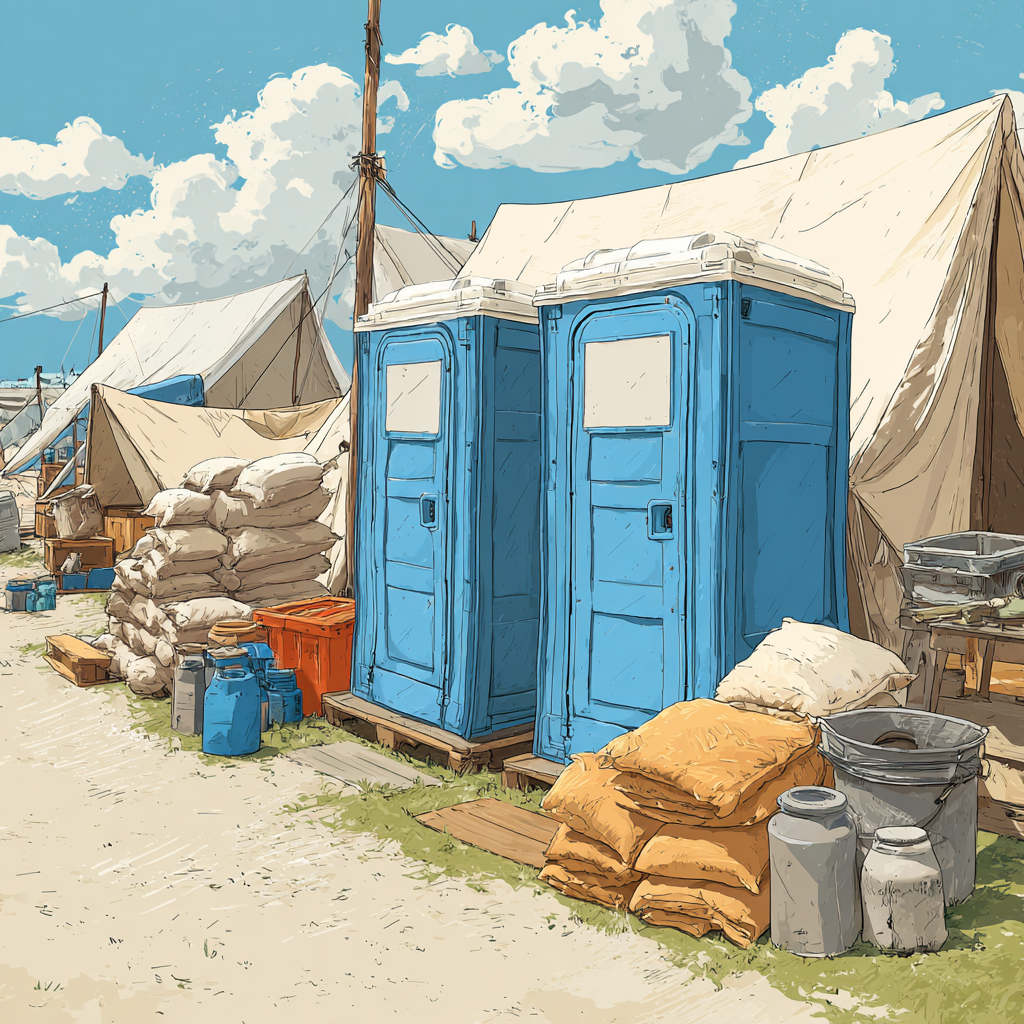
Porta Potty Rentals for Disaster Relief in 2026: Best Practices
The real test of any emergency plan comes when relief operations stretch from days into weeks. Your sanitation strategy must evolve from immediate response to sustainable management.
Long-Term Planning and Maintenance Strategies
Establish framework agreements now for 2026. This locks in capacity commitments before emergencies create resource competition.
Maintenance goes beyond simple waste removal. Schedule thorough sanitization and supply restocking for extended operations.
Hand washing stations need particular attention. They run out of water faster than waste tanks fill up.
Integrating Technology and Mobile Command Centers
Mobile apps let your team request service and track response in real time. Technology transforms reactive scrambling into proactive management.
Mobile command centers use satellite communications when local infrastructure fails. They coordinate portable restroom delivery regardless of cell tower damage.
Solar-powered units maintain lighting without electrical grids. Some advanced options even provide device charging stations.
Restroom trailers with climate control protect vulnerable populations during temperature extremes. This comfort significantly impacts mental health during traumatic times.
Preparing Your Emergency Sanitation Strategy
Planning porta potty rentals for disaster relief in 2026 means establishing framework agreements now, before emergencies create resource competition and inventory shortages.
Ready to develop porta potty rentals for disaster relief in 2026 strategies? Prime Dumpster provides emergency response expertise, rapid deployment capabilities, and specialized equipment, including ADA-compliant units, climate-controlled trailers, and solar-powered options for infrastructure-compromised areas. Contact us to discuss pre-disaster planning and more custom solutions.
If you are looking for Planning Guide Porta Potty Rentals for Colleges in 2026, Click Here
Recent Posts


Follow Us
Have any questions?
+1 844 853 3867
Give us a call today so we can help you find the right waste & sanitation solution for
your project!
Contact Us