
Mon - Sat 7:00 am to 7:00 pm
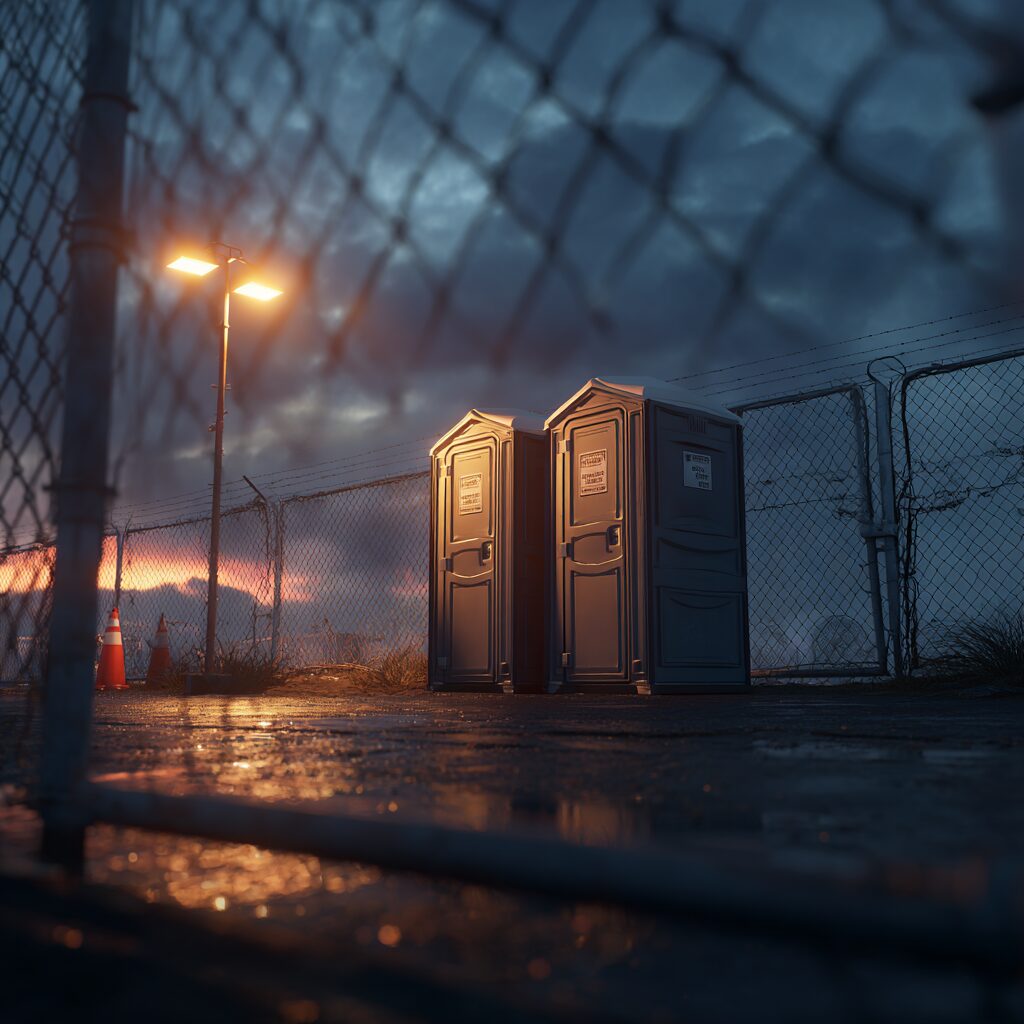
Porta Potty Security Systems: Locks, Cameras, and Deterrents
Unsecured portable restrooms on job sites and at events are vulnerable to vandalism, theft, tipping, and unauthorized use. Porta potty security systems address these risks through a combination of locks, surveillance, physical barriers, and deterrent strategies tailored to the environment.
At Prime Dumpster, we work with construction managers, event planners, and facility operators to keep portable restrooms secure and functional throughout the rental period.
Our guide covers locks, cameras, physical deterrents, anchoring, and maintenance-based protection for portable restrooms across different environments and unit types.
Fast Facts: Porta Potty Security Systems
“Most porta potty security problems come down to placement and visibility,” says the Prime Dumpster Pro. “A unit that’s well-lit, positioned near active areas, and visibly maintained is far less likely to be vandalized or tampered with than one tucked away in a dark corner of a site. The security system starts with where you put the unit.”
- Porta potty security systems include locks, surveillance cameras, physical barriers, anchoring systems, and deterrent strategies that work together to prevent theft, vandalism, and unauthorized access
- Construction sites face the highest rates of porta potty vandalism and damage due to extended unattended periods, remote locations, and heavy equipment proximity
- Events require a different approach that balances security with accessibility and aesthetics, particularly for upscale or private functions
- Anchoring and weighted bases serve dual purposes, protecting against both weather-related tipping and intentional displacement
- Regular maintenance and randomized service schedules are among the most effective passive deterrents, since well-maintained units are targeted less frequently than neglected ones
Your Prime Dumpster account manager can help you assess the security needs for your specific site and recommend the right combination of protection strategies before delivery. Our porta potty resource hub also contains a wide range of helpful information.
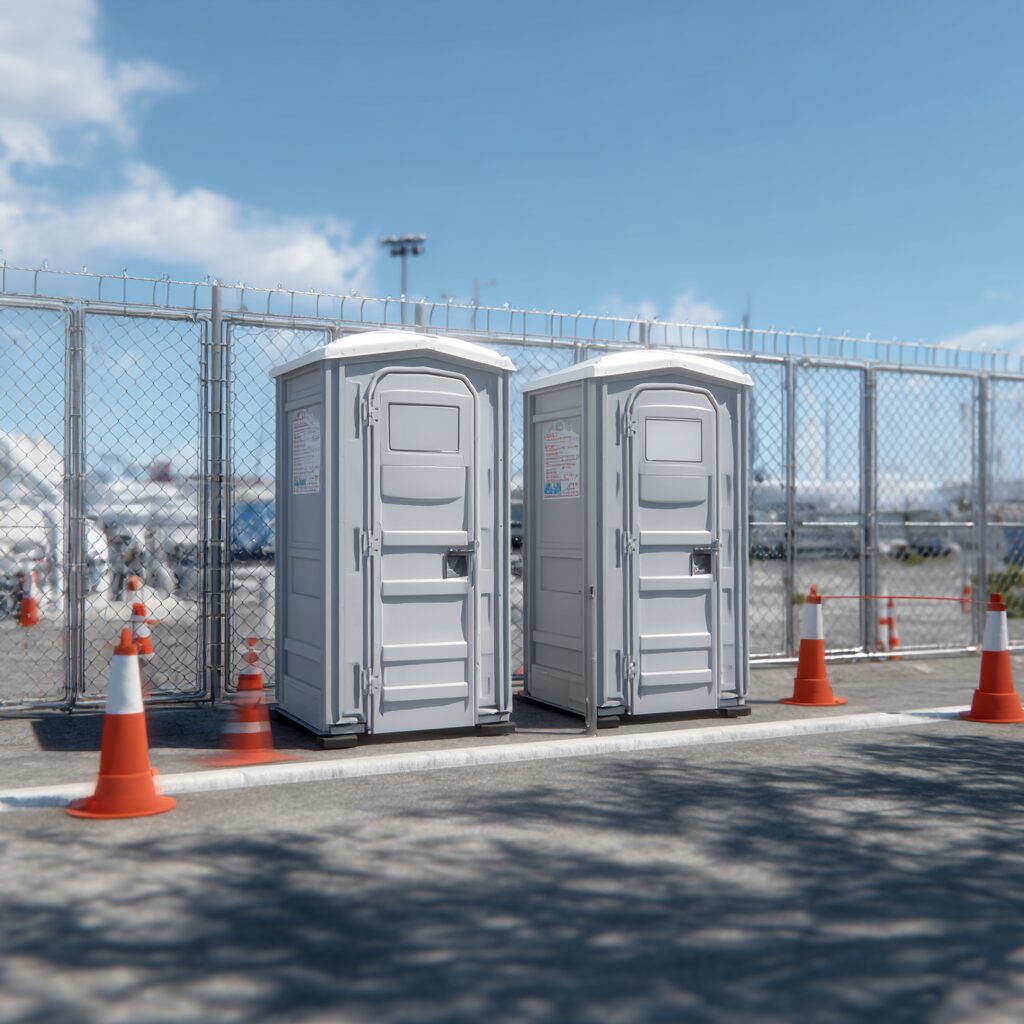
Porta Potty Security by Location Type
Different environments create different risks for portable restrooms. The security approach that works on a six-month highway construction project won’t match what a weekend wedding needs, and urban sites face different threats than rural or remote locations.
Construction zones and industrial work areas present the toughest security challenges. Units sit unattended overnight and on weekends, heavy equipment creates collision risks, and remote job sites may lack lighting or line-of-sight from occupied areas. GPS trackers, steel cable locks, and temporary fencing around unit clusters are standard measures for long-duration construction projects.
Event spaces require security that doesn’t interfere with the guest experience. Music festivals deal with after-hours access and crowd-related damage, while corporate events and weddings need discreet monitoring that blends with the setting. Temporary fencing, well-lit pathways, and staff presence near restroom areas handle most event security needs without creating a heavy-handed atmosphere.
| Location Type | Primary Risks | Recommended Security |
| Construction sites | Vandalism, theft, equipment collision | Steel cable locks, GPS trackers, temporary fencing |
| Music festivals | Crowd damage, after-hours access | Motion-activated lighting, temporary fencing, staff patrols |
| Corporate events | Accidental misuse, unauthorized access | Discreet signage, keypad entry for premium units |
| Remote or rural sites | Extended unattended periods, weather | Heavy-duty anchoring, weighted bases, solar-powered cameras |
Porta potty security needs vary significantly by location type, with construction sites requiring the most robust physical protection and events requiring security that balances access with deterrence.
Lock Mechanisms for Portable Restrooms
The locking system is the most basic and most important component of porta potty security. The right lock keeps unauthorized users out, provides privacy for authorized users, and withstands the environmental conditions of the deployment site.
Standard single-stall units typically use an interior twist-latch that flips an exterior occupied indicator. This system works well for supervised events and active job sites where the primary concern is privacy rather than after-hours security. For overnight or unattended periods, an exterior padlock hasp or combination lock adds a second layer of protection that prevents unauthorized entry entirely.
Upgraded and specialty units require more robust hardware. The type of unit determines the appropriate lock system.
| Unit Type | Lock Considerations | Best Security Approach |
| Standard Single-Stall | Basic interior latch with occupied indicator | Exterior padlock hasp for after-hours lockdown |
| Deluxe with Sink | Running water system adds value and vulnerability | Lockable water valves, combination lock on exterior |
| Deluxe Flushing Unit | Complex plumbing makes unit a higher-value target | Tamper-proof flush handles, steel hasp lock |
| ADA-Compliant Unit | Lever handles required for accessibility compliance | Lever-style hardware with secure closure mechanism |
| Restroom Trailer | Multiple stalls, premium finishes, plumbing systems | Keypad entry, deadbolts, wheel locks |
Lock maintenance matters as much as lock selection:
- Test every lock mechanism during the delivery inspection before the rental period begins
- Clean lock mechanisms weekly on outdoor units to prevent dirt and debris from causing failures
- Lubricate hinges and latch hardware monthly, increasing frequency in dusty or wet environments
- Track wear patterns on high-use units and replace hardware proactively before it fails
Lock mechanisms range from basic interior latches for supervised settings to heavy-duty exterior padlocks and keypad systems for unattended or high-value portable restroom installations.
Camera Placement and Surveillance
Surveillance cameras serve as both a deterrent and a documentation tool. The presence of visible cameras discourages vandalism and tampering, and recorded footage provides evidence when incidents do occur.
Camera placement requires careful attention to privacy. Cameras should monitor the approaches and exterior of portable restrooms, never interior spaces. Angling devices downward to capture identifying information without recording private activity is the standard practice. Visible signage notifying users of surveillance is both a legal requirement in most jurisdictions and a deterrent in its own right.
“Cameras work best when people know they’re being watched,” says the Prime Dumpster Pro. “A visible camera with a clear sign does more to prevent problems than a hidden one that only catches them after the fact. The goal is deterrence, not just documentation.”
| Camera Type | Key Features | Best For |
| Weatherproof dome | Night vision, wide-angle rotation | Construction sites, multi-day festivals |
| Wireless solar-powered | No wiring required, motion-triggered alerts | Remote locations, temporary events |
| Discreet compact | Low-profile design, Wi-Fi enabled | Corporate events, private functions |
For remote or off-grid sites, solar-powered wireless cameras eliminate the need for electrical infrastructure. These units pair with smartphone apps that send motion-triggered alerts, allowing site managers to monitor activity without being physically present. However, camera footage is only useful if someone reviews it. Pairing automated alerts with scheduled staff patrols during peak hours provides the most complete coverage.
Surveillance cameras positioned to monitor exterior approaches and accompanied by visible signage serve as effective deterrents while providing documentation when porta potty security incidents occur.
Physical Deterrents and Barriers
Physical deterrents create layers of protection that make portable restrooms harder to vandalize, tip, or access without authorization. The most effective approach combines multiple strategies rather than relying on any single measure. For a deeper look at preventing porta potty vandalism specifically, that guide covers targeted anti-vandalism techniques in detail.
Positioning is the first line of defense. Units placed near food vendors, staff stations, or other actively occupied areas benefit from natural surveillance. People nearby discourage mischief without any hardware required. Well-lit pathways to and around portable restrooms extend this natural deterrent into evening hours, and solar-powered path lights handle this on sites without electrical access.
Temporary fencing around unit clusters controls access points and creates a defined perimeter. This approach is especially effective at multi-day events and construction sites where units are left unattended overnight. Fencing channels foot traffic through designated entry points, making unauthorized access more visible and more difficult.
Additional physical deterrent measures:
- Sandbags or concrete blocks at the base of each unit to prevent tipping in wind or from intentional force
- Steel tie-downs and cable anchoring for units in exposed locations or coastal environments
- Plywood or gravel pads underneath units on soft ground to prevent sinking and improve stability
- Anti-graffiti coatings on unit exteriors to reduce the impact and incentive for surface vandalism
Physical deterrents including strategic positioning, lighting, temporary fencing, and weighted bases create multiple layers of porta potty security that reduce vandalism and unauthorized access.
Anchoring and Stability Systems
Anchoring systems serve a dual purpose in porta potty security: they protect against weather-related tipping and prevent intentional displacement or theft. A unit that’s properly anchored is significantly harder to vandalize, move, or tip over.
Standard ground stakes work for most short-term deployments on firm soil. For longer-duration projects, heavy-duty ratchet straps secured to ground anchors or adjacent structures provide stronger hold. In areas prone to high winds or severe weather, hurricane-grade strapping and concrete ballast weights are the appropriate standard.
Ground conditions affect anchoring strategy. Rocky terrain may require weighted bases rather than driven stakes. Soft or muddy ground calls for wider footprint solutions like plywood platforms with perimeter anchoring. Paved surfaces, common at events and urban sites, limit options to weighted bases and strap-to-structure connections since stakes can’t be driven.
Weight distribution matters for stability regardless of anchoring method. Units with solar panels or elevated features are top-heavy and need additional base weight to compensate. Sandbags placed evenly around the base provide consistent counterweight without requiring specialized equipment.
Anchoring systems protect portable restrooms from both weather-related tipping and intentional displacement, with the appropriate method depending on ground conditions, wind exposure, and rental duration.
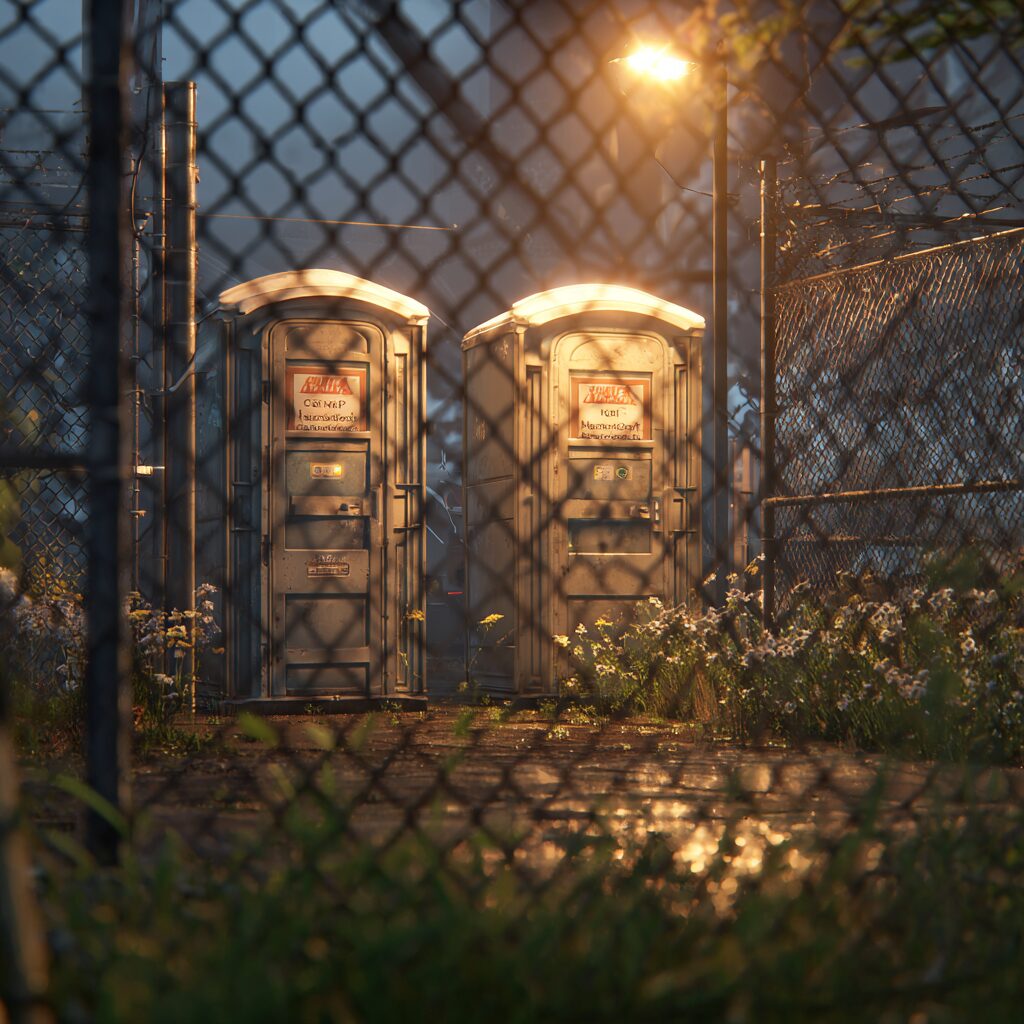
Securing Restroom Trailers and High-End Units
Restroom trailers and premium portable facilities represent a higher investment and contain more vulnerable components than standard units. Climate control systems, flush mechanisms, vanity mirrors, and finished interiors all require protection beyond what a basic padlock provides.
Entry control is the primary concern. Keypad or combination locks on trailer doors prevent unauthorized access without requiring key distribution. Deadbolt mechanisms on individual stall doors within a trailer add a second layer. For events with VIP or restricted areas, access control can be coordinated with event credentialing systems.
“High-end units attract more attention, which cuts both ways,” says the Prime Dumpster Pro. “They’re more visible and more desirable as targets, but they’re also more likely to be positioned in well-trafficked areas with natural oversight. The key is making sure the security matches the investment, meaning reinforced doors, quality locks, and positioning near staff or security presence.”
Trailers need wheel locks or chocks when parked, especially on any grade. Reinforced doors with concealed hinges resist forced entry better than standard hardware. Tinted windows protect interior finishes from UV damage while also preventing passersby from assessing contents. For multi-day deployments, remote sensor systems that alert managers to door openings, temperature changes, or power interruptions provide monitoring without requiring on-site presence.
Restroom trailers and premium portable facilities require enhanced security, including keypad entry, wheel locks, reinforced hardware, and remote monitoring to protect their higher-value components and finishes.
Maintenance as a Security Strategy
Regular maintenance is one of the most effective and most overlooked components of porta potty security. Well-maintained units are targeted less frequently than neglected ones, and consistent service visits create a pattern of human presence that discourages opportunistic vandalism.
Service technicians do more than restock supplies during each visit. They test locks, inspect camera systems, verify anchoring integrity, and identify signs of tampering or attempted break-in. Documenting every inspection creates a service record that’s valuable for insurance claims and liability disputes.
Randomizing service schedules adds a layer of unpredictability that enhances the deterrent effect. When potential vandals can’t predict when staff will arrive, the perceived risk of being caught increases. This tactic is especially effective on construction sites where units sit unattended for extended periods.
Maintenance-based security checklist:
- Test all lock mechanisms and latch hardware during every service visit
- Inspect anchoring systems and tighten or replace components showing wear
- Check camera positioning and verify recording or alert functionality
- Clean and lubricate all moving parts to prevent environmental wear from creating security vulnerabilities
- Document all inspections with date stamps for accountability and insurance purposes
Regular, documented maintenance serves as a passive porta potty security system by keeping units in visibly good condition, creating unpredictable human presence, and catching signs of tampering before they escalate.
Protect Your Portable Restrooms With the Right Security Plan
Porta potty security systems work best as layered combinations of locks, surveillance, physical deterrents, anchoring, and maintenance, not as any single solution. The right mix depends on the location, duration, unit type, and risk profile of the specific deployment. Construction sites, events, and remote locations each call for a different emphasis, and the security plan should be established before units arrive on site.
Prime Dumpster works with site managers, event planners, and facility operators to match the right portable restroom configuration to each project’s needs, including the security considerations that keep units safe and functional throughout the rental. Your dedicated account manager can help assess site-specific risks and recommend the right approach before delivery.
Contact our team to discuss your portable restroom security needs and get a quote for your project.
If you are looking for How to Use Weights for Porta Potty Stability, Click Here
Recent Posts


Follow Us
Have any questions?
+1 844 853 3867
Give us a call today so we can help you find the right waste & sanitation solution for
your project!
Contact Us