
Mon - Sat 7:00 am to 7:00 pm

Local Expert Guide to Dumpster Permits in Los Angeles, CA
Navigating rented dumpster permits in Los Angeles, CA, requires understanding where your container sits and what type of project you’re managing. From downtown to the Valley, permit requirements vary dramatically, but failure to comply can result in fines or even project shutdown.
Prime Dumpster helps construction professionals, event organizers, and homeowners throughout the LA metro area secure appropriate permits and coordinate compliant container placement. The following guide covers permit requirements for construction projects, special events, residential renovations, and private property placement. You’ll learn how to navigate the city’s EPIC-LA online system and other methods to meet municipal code standards.
Fast Facts: Dumpster Permits in Los Angeles
“Los Angeles dumpster permits depend entirely on where you place the container—keep it on your private property and you typically skip the paperwork, but the moment it touches a public street or sidewalk, you’ll almost certainly need official authorization,” says the Prime Dumpster Pro. “The city’s permit process protects public safety and traffic flow, so understanding the rules before delivery prevents costly delays and compliance headaches.”
- StreetsLA (Bureau of Street Services) issues permits for dumpsters, roll-off containers, and storage units placed in the public right-of-way within city limits
- Unincorporated LA County areas typically require permits through LA County Public Works Land Development Division
- Permit costs vary depending on location, container size, and rental duration, with most authorizations valid up to seven days
- Applications should be submitted at least one week before your scheduled delivery to allow time for city review and invoice payment
- All permitted containers must be placed at least five feet from building openings and never block fire hydrants, driveways, or emergency access points
When you rent a dumpster in Los Angeles, knowing these key permit facts keeps your project on track and compliant. If your project is in California, you can check local sizes, pricing and availability on our dumpster rental in California page.
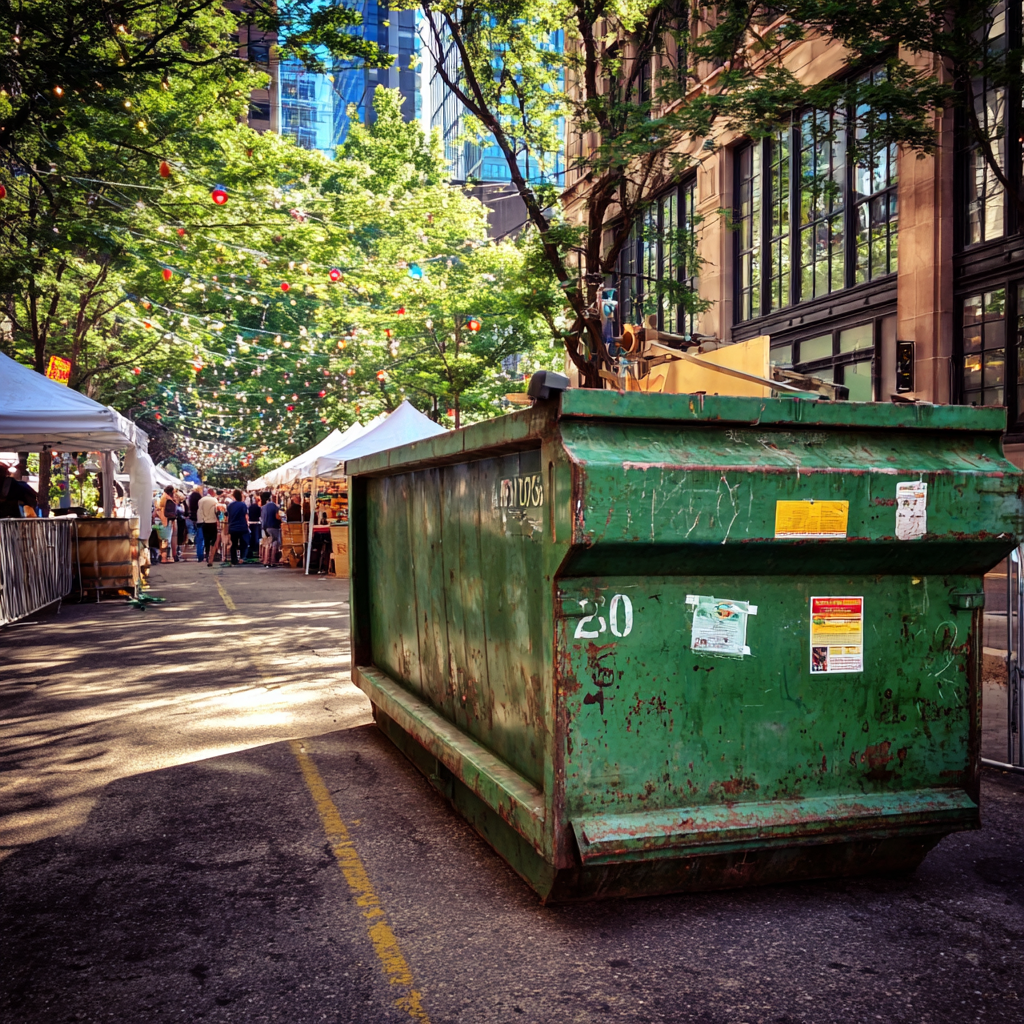
Dumpster Permit Los Angeles: What You Need to Know
Your first question should always be: will this bin go on my property or the public street? Place it on your driveway, yard, or private parking area, and you usually don’t need a permit (but always double-check for your specific situation).
The moment it needs to sit on a street or sidewalk, official authorization becomes mandatory. That’s the golden rule.
Major Factors for Your Container Authorization
Size matters a great deal for approval. Larger containers take up more curb space.
They need longer truck access for delivery. They also affect more neighbors, which city officials consider.
Container Sizes and Their Impact
Weight limits are just as crucial as volume. Heavy materials like concrete can overload a small bin fast.
Bulky, lightweight items like old furniture might fill a big one without weight issues. Knowing your debris type is essential.
Standard dumpster sizes available to rent are:
- 10-yard dumpsters: Ideal for a small bathroom redo or garage cleanout. Holds about 3 pickup truck loads.
- 15-yard dumpsters: Handles a kitchen renovation, holding roughly 6 truckloads.
- 20-yard dumpsters: Suits multi-room projects, fitting 6 to 8 loads of waste.
- 30-yard dumpsters: Accommodates whole-house cleanouts, with space for 9-10 loads.
- 40-yard dumpsters: Tackles major demolition, holding about 12 truckloads.
A 10-yard bin fits almost anywhere. A 40-yard container needs serious clearance and can face extra rules on narrow streets.
Most rentals last 7 to 10 days, which lines up well with standard permit lengths. You can extend it, but that means more fees and forms.
Permit Requirements for Construction Projects in Los Angeles
Navigating construction permits here starts with knowing the difference between Class A and Class B. The city uses this two-tier system to manage everything from a sidewalk fix in Westwood to a new bridge downtown.
Your project’s scale dictates which one you need. Getting it wrong can delay your entire timeline.
| Permit Class | Typical Projects | Scale & Notes |
| Class A | Sidewalk repairs, driveway approaches, gutter work | Smaller-scale, localized work on public right-of-way. |
| Class B | Bridge construction, storm drain installation, street lighting, grade changes | Major infrastructure projects requiring extensive planning and review. |
Class A vs. Class B Permits Explained
Think of Class A for fixes and Class B for builds. If your work touches the public right of way, from the Arts District to Century City, you need one of these construction permits.
This is in addition to any authorization for placing a container. It’s a layered process.
Site Access, Excavation, and Public Right of Way
Digging triggers a separate excavation permit. This is common for jobs needing a 20 or 30-yard bin for dirt and concrete debris.
You apply through the Bureau of Engineering, online or in person. Their EPIC-LA system will generate invoices during review.
Pay these invoices immediately. No payment means your application stops dead.
All projects must follow the city’s municipal code. Inspectors will check your setup.
Remember, construction here happens year-round. Plan your permits without expecting a seasonal break.
Dumpster Permits for Events and Temporary Setups
Outdoor gatherings, from festivals to market,s create unique challenges for trash removal.
Whether you’re running a concert at Grand Park or a weekend street fair, you need a plan for the debris.
Street and Sidewalk Placement Guidelines
Place a container on any public street or sidewalk, and you must have authorization.
This rule protects everyone’s safety and access.
| Event Type | Typical Location | Recommended Bin Size | Key Consideration |
| Street Fair | Hollywood Boulevard | 15-yard | Minimize curb space use |
| Concert/Festival | Santa Monica Pier | 30-yard | High volume, short duration |
| Farmers Market | Downtown Arts District | 10-yard | Easy removal post-event |
| Venue Setup | Private Lot Adjacent to Street | 20-yard | Coordinate with parking rules |
Apply through the city’s Public Works department using the EPIC-LA online system.
- You’ll need your exact bin size, specific dates, and placement details.
- Costs typically run from $20 to $150 for authorizations valid up to seven days.
- Follow strict placement rules. Keep the container five feet from building openings.
- Never block fire hydrants, driveways, or emergency exits. The ground must be flat and stable.
- Post your permit visibly on the bin itself. This shows your setup is legal.
- A valid street placement permit reserves that space. Parking enforcement will ticket or tow violators.
For recurring events, talk to local business improvement districts early. They can help smooth the process.
Dumpsters aren’t the only service you’ll need on-site during an event. Porta potties are also vital, and you can learn more in our guide to porta potties for events in Los Angeles.
Managing Dumpster Permits in Residential Areas
If your container stays on your own land, you can usually skip the city paperwork. This is the golden rule for homeowners.
When Permits Aren’t Necessary on Private Driveways
Place a bin entirely on your driveway, front yard, or side yard. You typically won’t need any authorization.
This applies from hillside homes in Los Feliz to beach bungalows in Manhattan Beach. It makes residential jobs simpler.
Size is your main concern. Most driveways fit a 10 or 15-yard bin easily. A 20-yard container often works but measure first.
Larger 30 or 40-yard units usually extend beyond a standard driveway. If your space is too small, the bin must go on the street.
Street placement immediately triggers permit rules, even on a quiet cul-de-sac.
Match your project to the right container size:
- Bathroom remodel: 10-yard bin
- Kitchen renovation: 15-yard container
- Whole-house cleanout: 20 or 30-yard option
- Major addition or demolition: 40-yard capacity
Protect your driveway surface with plywood. Ensure the truck has about 60 feet of straight access for delivery.
Even on private property, never block emergency exits or let the bin overhang a sidewalk.
Also, check homeowners’ association rules in areas like Beverly Hills or Brentwood. HOAs often have extra restrictions.
Dumpster Permits on Private Properties in Los Angeles
Private property placement is where you gain flexibility and control over your project. You typically skip city authorization when the bin sits on your driveway or yard.
Local Regulations and Neighborhood Considerations
But local rules about noise, placement timing, and duration still apply. These vary from Koreatown to San Pedro.
It’s also smart to inform neighbors about delivery. Those hydraulic lifts are noisy. Good relationships matter in close-knit communities.
Selecting the Right Container Size for Your Project
Match your job to the bin size. Here’s a quick guide:
- 10-yard: Holds ~3 pickup loads (2-3 tons). Suits small garage cleanouts, bathroom demolitions.
- 15-yard: Holds ~6 loads. Handles kitchen remodels, moderate debris.
- 20-yard: Holds 6-8 loads (3-4 tons). Works for multi-room renovations.
- 30-yard: Holds 9-10 loads (4-5 tons). Accommodates whole-house projects, estate cleanouts.
- 40-yard: Holds ~12 loads (5-6 tons). Tackles commercial-scale demolition.
Weight limits matter as much as volume. Roofing shingles are extremely heavy. Use a 10 or 20-yard bin to avoid violations.
Landscaping debris is bulky but light. It suits 15 or 20-yard containers.
Concrete or dirt requires special 10-yard heavy bins regardless of volume.
Commercial properties often have designated loading areas. Residential spots need careful measurement. Ensure a 30 or 40-yard bin won’t block access.
You control delivery and pickup timing on your land. No hard deadlines like street permits.
Navigating Permit Documentation and Local Regulations
Forget paper forms. The entire submission and review process happens online now.
We’ll guide you through the digital portal and the local rules you must follow.
Using EPIC-LA for Permit Applications
Jump into the EPIC-LA system. It’s the central hub for all applications in Los Angeles.
You’ll enter your bin size, exact street address, project dates, and contact info. Submit it for city staff review.
During review, the system generates an invoice for plan check fees. Your application stops until you pay it.
Check your account regularly to avoid delays. All required documents must be approved before final authorization.
Fees depend on location, duration, and container size.
Most authorizations are valid for up to seven days. Apply at least one week before you need the bin.
Meeting Los Angeles Municipal Code Standards
The municipal code sets the rules for public safety and traffic flow. Every permitted container must comply.
Place your bin at least five feet from building doors. Never block fire hydrants, driveways, or emergency exits.
You must post the permit visibly on the container itself. Parking enforcement and fire marshals will check.
Different city departments may get involved. A placement near a bus stop needs transit authority review.
Locations in historic districts like Olvera Street require preservation office input. Sites near schools trigger extra safety checks.
Following these steps keeps your construction project or event running smoothly.
Your Los Angeles Permit and Rental Partner
Securing proper rented dumpster permits in Los Angeles, CA starts with determining your container’s placement location and matching your project type to city requirements from Class A construction work to temporary event setups.
Professionals who apply through EPIC-LA early, select appropriately sized containers, and follow municipal placement standards avoid delays and maintain compliant operations through project completion.
Contact us to discuss your Los Angeles project requirements and coordinate permitted roll-off container solutions that keep your site organized, legal, and productive.
If you are looking for Q&A with the Prime Dumpster Pros: Rented Dumpster Sizes for Los Angeles, CA, Click Here
Recent Posts


Follow Us
Have any questions?
+1 844 853 3867
Give us a call today so we can help you find the right waste & sanitation solution for
your project!
Contact Us