
Mon - Sat 7:00 am to 7:00 pm

Dumpster Rental for Denver, CO, Apartment Complexes
Managing waste across an apartment complex requires a more deliberate approach than a standard residential rental, with tenant safety, parking access, and phased project timelines all factoring into how and when a container is placed.
Prime Dumpster coordinates dumpster rentals in Denver, CO, for apartment complexes and multifamily properties. This guide covers the scenarios that drive container demand at these properties, how to choose the right size, placement considerations specific to Denver apartment sites, and practical guidance for managing rentals across multiple units or project phases.
Fast Facts: Dumpster Rental for Denver Apartment Complexes
“Apartment complex rentals require more coordination than a typical residential job, but the process is straightforward once you know what to plan for,” says the Prime Dumpster Pro. “The facility managers who have the smoothest experience are the ones who think through placement and scheduling before the container arrives, not after.”
The table below outlines the standard container sizes available for dumpster rental in Denver, CO, with approximate dimensions and common apartment complex uses for each.
| Size | Approximate Dimensions | Common Apartment Complex Uses |
| 10-Yard Dumpster | 12′ × 8′ × 3.5′ | Single unit turnover, small cleanouts, targeted flooring or fixture removal |
| 15-Yard Dumpster | 16′ × 7.5′ × 4.5′ | Multi-unit turnover, mid-sized renovation debris, bulk item removal |
| 20-Yard Dumpster | 22′ × 7.5′ × 4.5′ | Common area renovation, kitchen and bathroom updates, roofing debris |
| 30-Yard Dumpster | 22′ × 8′ × 6′ | Large-scale unit renovation, property-wide cleanouts, FF&E removal |
| 40-Yard Dumpster | 22–24′ × 8′ × 8′ | Major renovation projects, full wing updates, large construction support |
Dimensions and availability vary by location and project conditions. Contact Prime Dumpster to confirm sizing and availability for your Denver apartment complex project.
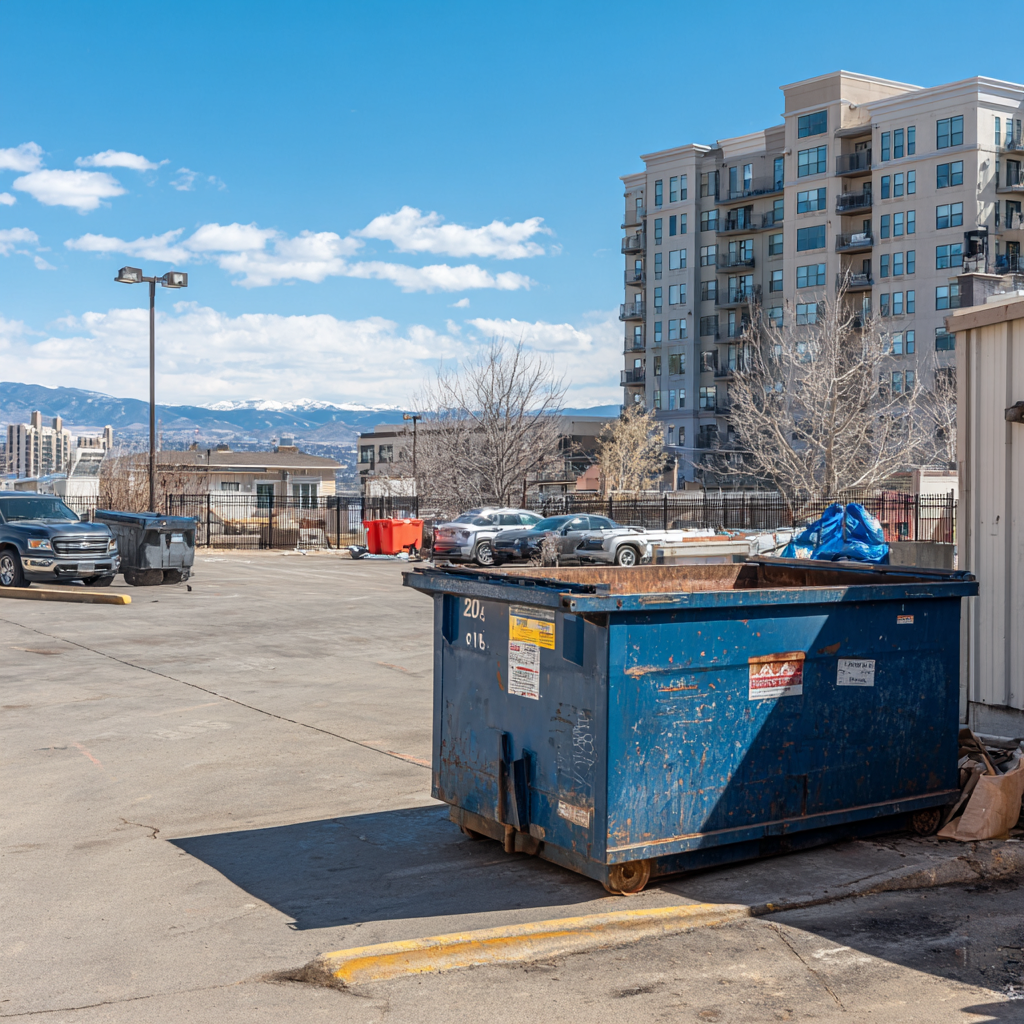
When Apartment Complexes Need a Roll-Off Dumpster
Apartment properties in Denver generate roll-off container demand on a more regular basis than many facility managers anticipate when they first take on a property. Several recurring scenarios make a dedicated container the most practical waste removal solution available.
Unit turnover
When a tenant moves out, the unit often requires more than a standard cleaning. Damaged flooring, worn fixtures, outdated appliances, and left-behind personal property all generate debris that standard trash service isn’t designed to handle.
Properties with high turnover rates cycle through these cleanouts frequently enough that some facility managers keep a standing rental arrangement rather than booking individually each time.
Bulk item and FF&E removal
Replacing furniture, appliances, or fixtures across multiple units at once generates volume that overwhelms standard waste pickup quickly.
A single container positioned centrally on the property gives crews a consistent drop point throughout the removal process.
Renovation and remodeling
Kitchen updates, bathroom remodels, flooring replacement, and accessibility modifications all produce construction debris that requires a roll-off container.
Denver’s competitive rental market pushes many property owners to renovate between tenants to justify higher rents, which compresses the timeline and makes efficient debris removal more important.
Eviction cleanouts
These projects are unpredictable by nature and often generate mixed debris including furniture, personal belongings, and damaged building materials. Having a container on site before the cleanout begins keeps the process moving without delays.
Property-wide cleanouts
Seasonal cleanouts of storage areas, utility rooms, landscaping debris, and accumulated common area waste are a recurring need at most larger complexes. A roll-off container sized to the volume of the cleanout handles these projects in a single rental period.
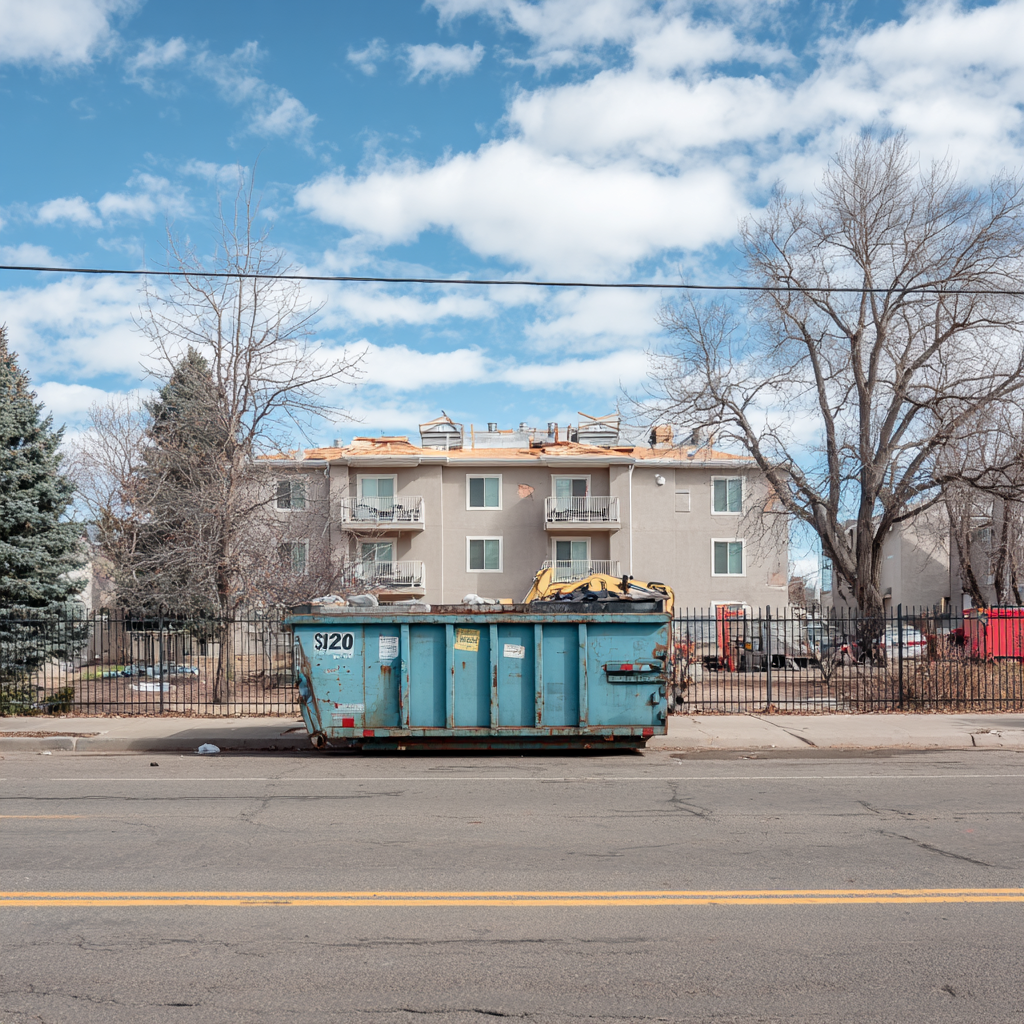
Do you need an apartment for another use, such as construction, events, or other scenarios? Learn more here: How to Find the Best Dumpster Rental in Denver, CO.
Placement Considerations for Denver Apartment Properties
Apartment complex properties present placement challenges that don’t exist on standard residential or commercial job sites. Active tenant traffic, shared parking areas, emergency access lanes, and landscaped common areas all constrain where a container can go and how it gets there.
Parking lot placement is the most common option at Denver apartment properties and works well when the container can be positioned in a section of the lot that doesn’t eliminate high-demand spaces or block traffic flow through the property.
Identifying a low-traffic corner of the lot or a section that can be temporarily cordoned off gives the delivery truck a clear approach and keeps the container out of the path of daily tenant activity.
Denver’s permit requirements follow the same general rule as the rest of the city: private property placement does not require a permit, while street or right-of-way placement does.
Most apartment complexes have enough on-site space to avoid street placement, but properties in denser Denver neighborhoods like Capitol Hill or Five Points may have limited lot space that pushes the container onto the street. In those cases, a permit through the City of Denver is required before delivery.
A few placement priorities worth addressing before delivery day:
- Confirm that the container location preserves clear access for emergency vehicles at all times.
- Avoid placement near building entrances, mail areas, or trash enclosures that see heavy daily foot traffic.
- Check that the delivery truck has adequate overhead clearance along the approach path, particularly near covered parking structures or mature trees.
Surface condition matters on apartment properties where landscaped areas and decorative paving are common. Placing the container on a hard, stable surface and using protective boards under the contact points prevents indentation damage to asphalt and protects any paved or finished surfaces from the weight of a loaded container.
Managing Rentals Across Multiple Units or Phases
Coordinating dumpster rentals across a multi-unit or multi-phase project is one of the more involved logistics tasks a facility manager handles. The key is treating the container as part of the project schedule rather than an afterthought arranged when debris has already accumulated.
Container swaps should be scheduled in advance rather than called in when the container is full. A full container sitting on a busy apartment property while waiting for pickup creates a safety concern and removes the disposal option for crews still actively working. Building swap triggers into the project plan — by phase, by unit count, or by estimated fill rate — keeps the rental from becoming a bottleneck.
Extended rentals make sense for longer renovation cycles where debris accumulates gradually across multiple units over several weeks. A single extended rental at a negotiated rate typically costs less than a series of short-term rentals booked individually. Discussing the full project timeline with your provider at the time of the first booking gives both parties the information needed to structure the rental period efficiently.
Scheduling deliveries and pickups around peak tenant activity periods reduces the disruption to residents and the friction with daily property operations. Early morning deliveries on weekdays, when most tenants have already left for work, minimize the conflict between truck access and tenant vehicle movement through the property.
Keeping Tenants and the Property Protected
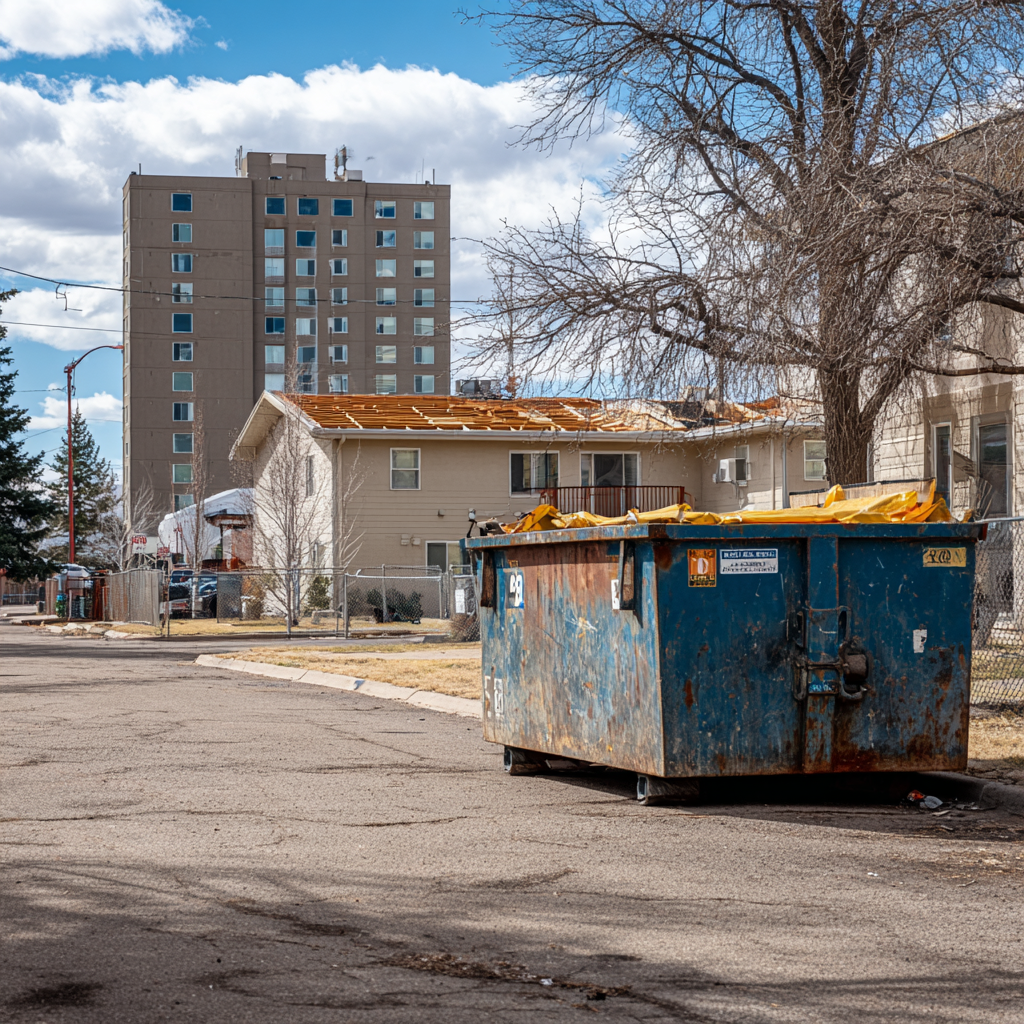
A roll-off container on an active apartment property introduces variables that don’t exist on a vacant job site, and a little communication and preparation goes a long way toward keeping the rental period problem-free.
- Notify tenants before delivery. A simple notice posted at building entrances and near the placement area a day or two before the container arrives prevents confusion, reduces complaints, and discourages unauthorized use from the start.
- Post clear signage on the container. A visible sign identifying the container as property management use only and prohibiting unauthorized dumping reduces the likelihood of tenants or outside parties adding their own debris to the load.
- Protect the placement surface. Placing plywood boards or rubber pads under the container’s contact points before delivery prevents indentation damage to asphalt and protects any finished or decorative paving near the placement area.
- Schedule pickup before the project is fully complete. Leaving a container in place longer than the project requires invites unauthorized use and adds daily extension fees to the final invoice. Building the pickup date into the project plan from the start keeps the rental period tight.
Tenants who understand why the container is there and how long it will be on the property are far less likely to cause problems with it.
Manage Your Denver Apartment Complex Waste With Confidence
Dumpster rental for Denver apartment complexes works best when placement, sizing, and scheduling are planned before the container arrives. Whether the project is a single unit turnover, a multi-phase renovation, or a property-wide cleanout, matching the right container to the job and coordinating the logistics around active tenant life keeps the work moving without disrupting the property.
Contact our team for a flat-rate quote and guidance on the right container size and rental structure for your Denver apartment complex project.
If you are looking for Are Dumpster Rentals in Atlanta, GA, Confusing? Myths vs. Facts, Click Here
Recent Posts


Follow Us
Have any questions?
+1 844 853 3867
Give us a call today so we can help you find the right waste & sanitation solution for
your project!
Contact Us