
Mon - Sat 7:00 am to 7:00 pm

Q&A with the Prime Dumpster Pros: Dumpster Rental in Columbus, Ohio
“Columbus has grown into one of the most economically diverse cities in the Midwest, and that diversity shows up in the dumpster rental questions we hear every week,” says the Prime Dumpster Pro. “Manufacturing facilities, construction sites, and event venues each come with their own logistics, and the answers aren’t always the same.”
Prime Dumpster coordinates roll-off dumpster rentals across the Columbus metro for construction projects, manufacturing facilities, events, and residential work. We sat down with our Pros to answer the most common questions about dumpster rental in Columbus, Ohio across every major project type in this market.

Manufacturing and Industrial Dumpster Rental in Columbus
Columbus is home to a broad manufacturing base spanning automotive parts, food processing, logistics, and defense-related production. These questions address what facility managers and industrial contractors need to know before arranging container service on Columbus manufacturing sites. If your project is in Columbus, you can see local sizes, pricing and permit details on our dumpster rental in Columbus, OH page.
What types of manufacturing projects in Columbus typically require a roll-off dumpster?
“Facility maintenance cycles, equipment replacement projects, and production floor reconfigurations are the most common drivers. Each generates non-hazardous solid waste that accumulates faster than standard waste pickup can handle.
“Packaging materials, metal components, insulation from HVAC and equipment systems, and general construction debris from facility updates all go into a standard roll-off container. The key is identifying what the project generates before booking so the container size and swap schedule match the actual output rather than a rough estimate.”
How do manufacturers manage container logistics during facility maintenance and equipment refresh cycles?
“The biggest shift most facilities make is moving from one-off rentals to scheduled rotation agreements. When maintenance happens on a predictable cycle, the container logistics should follow that same rhythm rather than being arranged from scratch each time.
“Tying the swap schedule to production windows, shift changes, or planned downtime keeps waste removal from interrupting active operations. Facilities that set this up in advance spend less time coordinating pickups and less money on last-minute rental arrangements when a maintenance window opens.”
What materials can and can’t go into a dumpster on a Columbus manufacturing site?
“Standard non-hazardous waste goes in without issue: packaging, lumber, drywall, insulation, metal scrap packaging, and general facility debris. The line gets drawn at anything classified as hazardous under Ohio EPA or federal guidelines.
“Liquid waste, chemical containers, hydrocarbon-contaminated materials, and regulated substances all require separate disposal outside of a standard rental. Identifying and separating those materials before the container arrives is a compliance requirement on any industrial job site in Ohio, and it’s not something to sort out after the container is already full.”
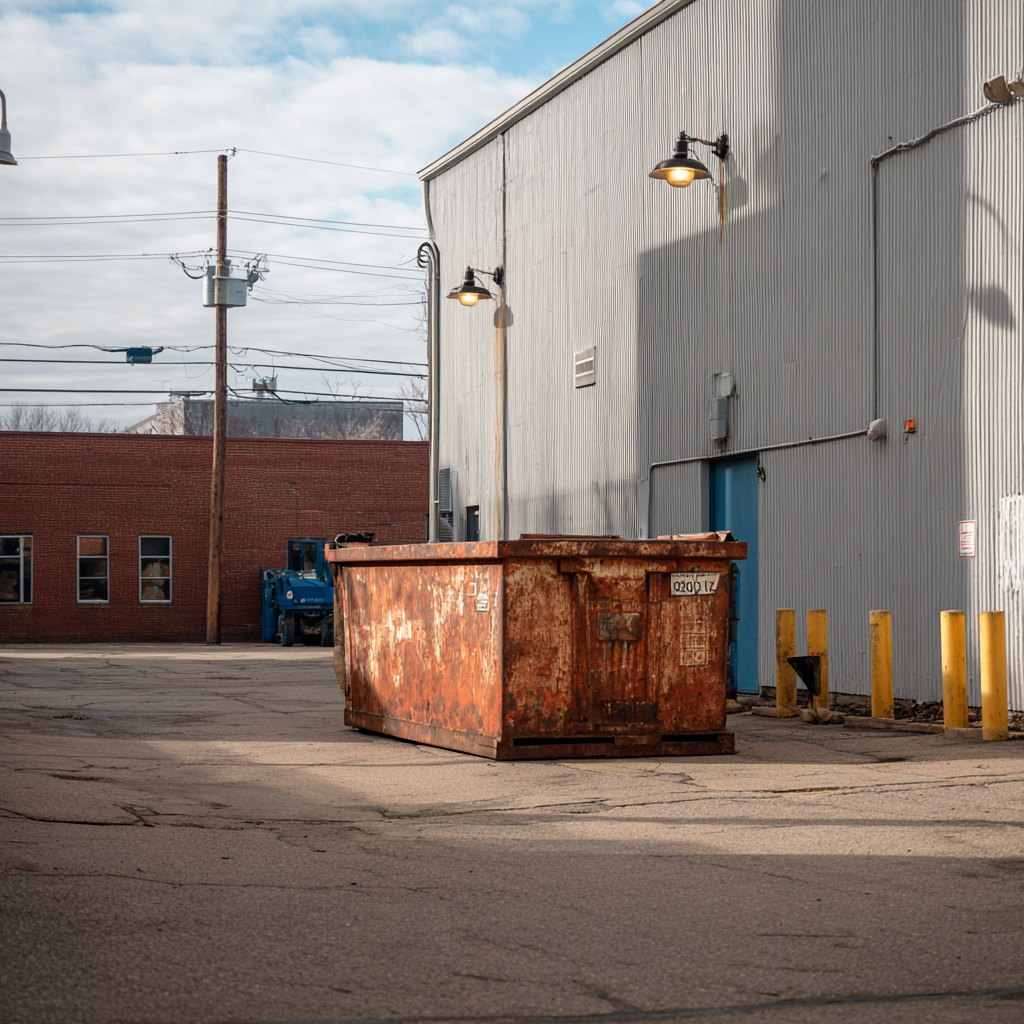
Dumpster Sizing for Columbus Projects
Choosing the right dumpster size affects both project cost and site logistics, and the decision comes down to more than just estimating how much debris a project will generate. These questions address the sizing considerations that come up most often across Columbus project types.
How do I choose the right dumpster size for a Columbus home renovation?
“Start with debris type, not just volume. A kitchen remodel and a concrete removal project can generate similar visual amounts of debris, but they require completely different containers because of the weight difference.
“For most single-room renovations, a 15 or 20-yard container covers the scope comfortably. Any project involving concrete, brick, or masonry needs a dedicated 10-yard unit for those materials regardless of what else is being removed. Mixing heavy debris into a larger container doesn’t raise the weight limit, it just means hitting that limit before the container looks full.”
What size container do I need for a large commercial construction project?
“Commercial builds typically start with a 30 or 40-yard container on a rotation schedule rather than a single unit. The rotation interval depends on how fast debris accumulates during active phases, and that pace varies significantly between framing, mechanical rough-in, and finish work.
“The rotation schedule is what matters most on a large commercial job. A container that sits idle between phases costs money without adding value, and one that fills faster than expected creates a bottleneck that slows the crew. Getting the swap frequency right from the start is worth more than the container size decision itself.”
When does a project require multiple containers instead of one large unit?
“Two situations almost always call for multiple containers. The first is any project generating both heavy materials and general construction debris simultaneously, where a dedicated 10-yard unit for concrete or masonry runs alongside a larger container for everything else.
“The second is large-scale projects where multiple work zones are generating debris at the same time and a single centrally located container requires too much hauling across the site. Positioning containers closer to active work zones reduces labor time and keeps the site cleaner between pickups.”
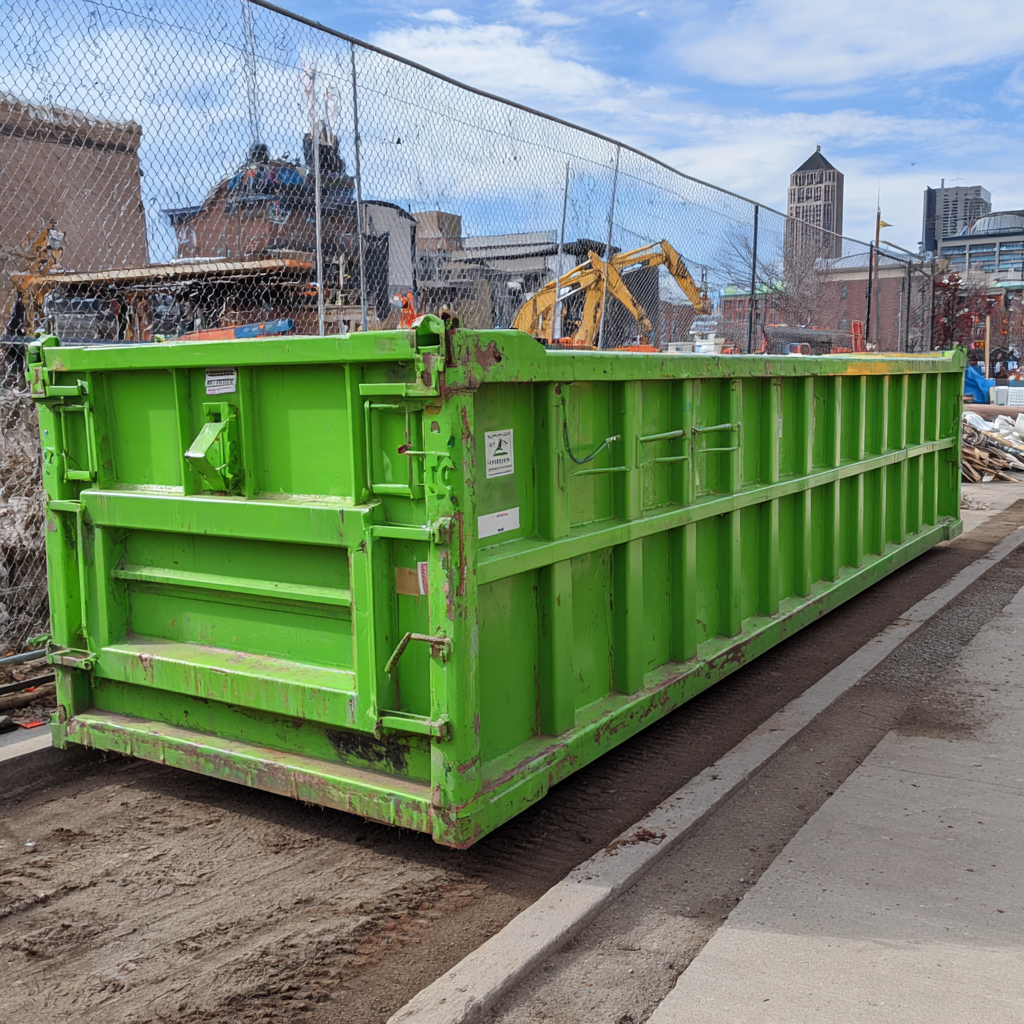
How to Save Money on Dumpster Rental in Columbus
Columbus renters and contractors who control their rental costs well share one common trait: they make key decisions before booking rather than after the container is already on site. These questions address where the money goes and how to keep more of it.
What are the most common sources of unexpected charges on a dumpster rental?
“Weight overages top the list. Renters underestimate how fast heavy materials hit the weight limit, and the per-ton overage rate gets applied after pickup when there’s no way to change what went into the container.
“Prohibited items are the second most common source of surprise charges. Ohio regulations restrict tires, electronics, appliances with refrigerants, and hazardous materials from standard containers. Those items get flagged at the processing facility and the fees come back on the final invoice. A few minutes of sorting before loading prevents both of those problems.”
How does booking timing affect dumpster rental pricing in Columbus?
“Columbus has a strong spring and fall construction season, and container demand across the metro tracks closely with that cycle. Booking during those windows means competing for available inventory, which reduces flexibility on size and scheduling and can push pricing higher.
“Projects with any flexibility on start dates save money by moving outside the peak window. For fixed-date projects, booking two to three weeks ahead is the most reliable way to get the right size at a predictable rate. Last-minute bookings during busy periods produce the worst combination of limited options and higher costs.”
What placement decisions can help lower the total cost of a rental?
“Keeping the container on private property is the single most straightforward cost reduction available. It eliminates the permit fee entirely, removes the administrative time that comes with a right-of-way application, and avoids the fines that come with unpermitted street placement.
“When street placement is unavoidable, applying for the permit well before the delivery date prevents rush processing situations. A permit secured in advance is always less expensive than the fines that come from skipping the process or missing the application window.”
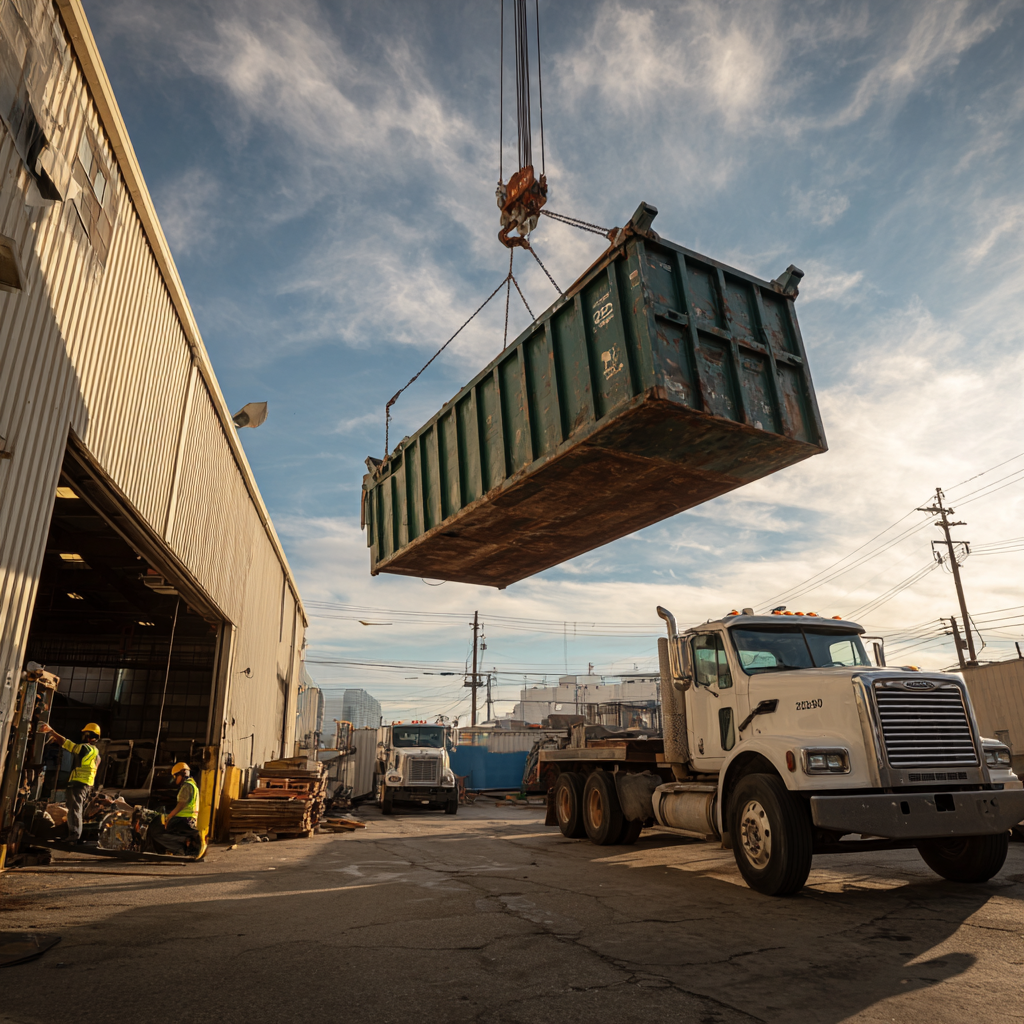
Construction Dumpster Rental in Columbus
Columbus has been in a sustained development cycle driven by data center construction, commercial expansion, and residential growth across the metro. These questions address what contractors and site managers need to know before arranging container service on Columbus job sites.
What should contractors know about managing containers across multiple active job sites in Columbus?
“The pattern that consistently costs contractors the most is managing each site as a separate rental decision. That produces overlapping rental periods, containers sitting idle between phases, and last-minute bookings that limit size options right when the project needs them most.
“Mapping out container needs across all active sites at the start of each month and coordinating through a single provider creates scheduling consistency and typically produces better pricing across the full portfolio than site-by-site arrangements. It also means one point of contact when timelines shift, which they always do.”
How does Columbus’s ongoing development boom affect container availability?
“The data center and commercial construction activity concentrated around the Columbus metro has kept baseline container demand elevated for several years. Availability hasn’t collapsed, but it’s tighter than contractors coming from slower markets tend to expect.
“The practical implication is that lead time matters more here than in markets with lower demand. Two weeks of lead time during active construction season gives a realistic buffer for securing the right size. Contractors managing recurring project pipelines do better establishing a provider relationship than arranging each rental from scratch.”
Do construction sites in Columbus need permits for dumpster placement?
“Private property placement on a job site lot, private driveway, or commercial parking area generally doesn’t require a city permit as long as the container stays fully within the property boundaries. The permit requirement applies when the container extends into the public right-of-way.
“Surrounding municipalities including Dublin, Westerville, and Grove City each handle right-of-way permits separately from the City of Columbus, so the jurisdiction question needs to be resolved before booking rather than assumed. Getting the permit from the wrong agency doesn’t satisfy the requirement and won’t prevent a fine if the container is inspected.”
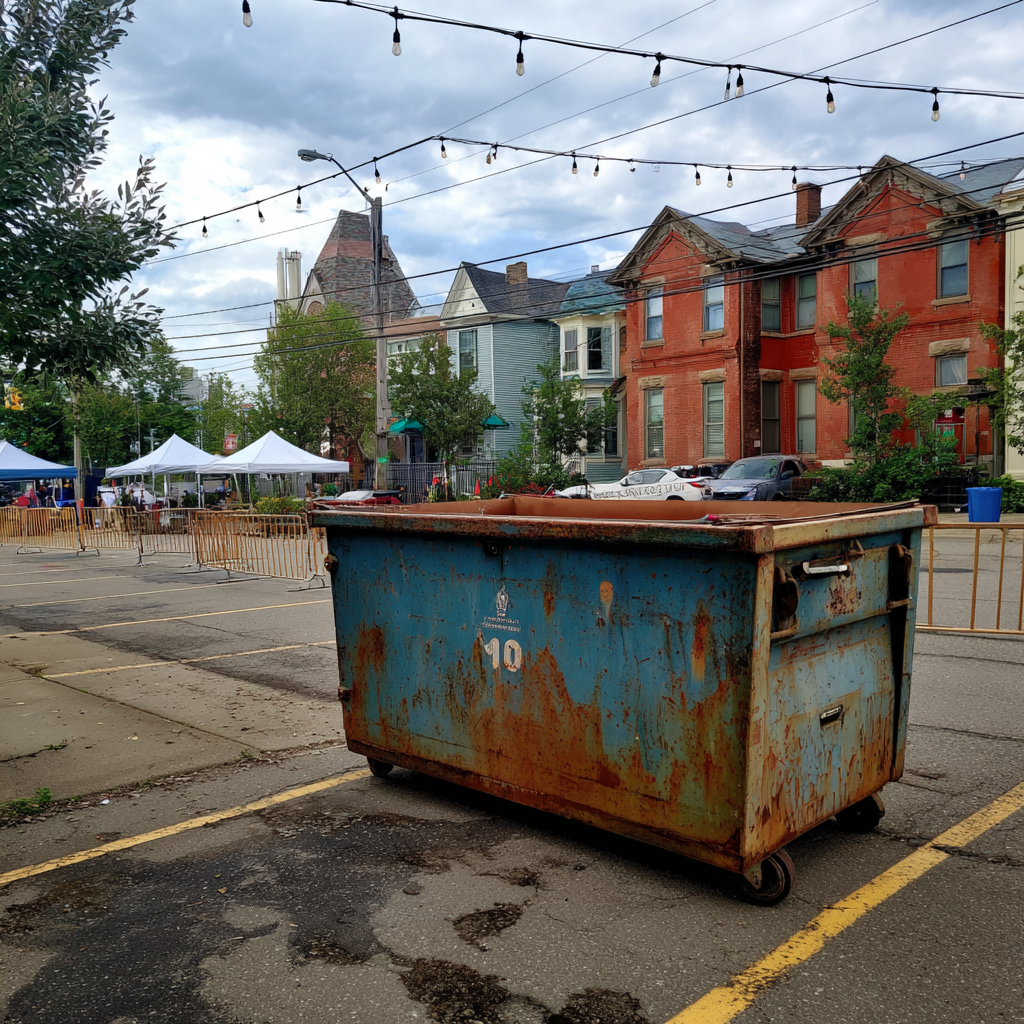
Dumpster Rental for Columbus Events
Columbus hosts a year-round event calendar that spans large outdoor festivals, stadium events, and community-scale gatherings across the metro. These questions address what event coordinators and venue managers need to know about container logistics in this market.
What size dumpster do I need for a large outdoor event in Columbus?
“Attendance and food service volume drive the sizing decision more than event type. A community-scale gathering in the hundreds typically fits within a 20-yard container. Multi-day festivals with vendor corridors and large crowds call for multiple 30 or 40-yard units staged across the site’s primary waste generation points rather than one large container in a central location.
“The distribution matters as much as the total capacity. Waste concentrates at concession areas, vendor rows, and main entry and exit points. Containers placed at those zones with scheduled mid-event pickups keep the site cleaner throughout than a single large unit serviced once at the end.”
How far in advance should event planners book containers for major Columbus events?
“Fixed-date events should have containers reserved three to four weeks out. Columbus has a busy spring and fall event calendar that overlaps with peak construction season, and both compete for the same container inventory across the metro.
“Recurring annual events benefit most from treating the container reservation like any other venue or vendor booking, locking it in during the planning phase rather than the execution phase. Leaving it until two weeks before the event during a busy season consistently produces fewer size options and less scheduling flexibility.”
Do Columbus events require a permit for dumpster placement?
“Public space placement almost always triggers a permit requirement. Any container placed on a Columbus city street, sidewalk, or public right-of-way requires an approved permit before delivery. Private venue property where the container stays fully within the boundaries typically doesn’t require one.
“Columbus event permits are managed through the City of Columbus permit portal, and processing times vary depending on the event scope and placement location. Building permit lead time into the event planning calendar well ahead of the event date is the only reliable way to ensure the container is approved, placed, and ready before the first attendee arrives.”
How do I manage waste removal during a multi-day event?
“Waiting for a single end-of-event removal is the wrong approach for anything running more than one day. High-traffic zones fill containers faster than most event coordinators anticipate, and an overflowing container creates sanitation and guest experience problems that are difficult to manage once they develop.
“Scheduling mid-event pickups or container swaps at the highest-volume waste generation points keeps the site clean throughout. Mapping those locations before the event opens and building the pickup schedule around them gives the logistics team a clear plan rather than a reaction to overflow.”
Get Answers to Your Columbus Dumpster Rental Questions
Columbus is a market where the details matter, from manufacturing facility compliance and construction site logistics to event permit requirements and cost control strategies. Dumpster rental in Columbus, Ohio, covers a wide enough range of project types that getting the right information before booking consistently produces better outcomes than figuring it out on delivery day. Contact our team to get a quote and talk through the specifics of your Columbus project.
If you are looking for Pro Tips for Booking a Dumpster Rental in Charlotte, NC, Click Here
Recent Posts


Follow Us
Have any questions?
+1 844 853 3867
Give us a call today so we can help you find the right waste & sanitation solution for
your project!
Contact Us