
Mon - Sat 7:00 am to 7:00 pm

Dumpster Rental in Denver During Winter: Tips and Strategies
Denver winters are unpredictable. A warm afternoon can turn into six inches of snow overnight, and freeze-thaw cycles can make driveways and job sites challenging to work around for days after a storm passes. Renting a dumpster during those conditions requires a different level of preparation than a summer project.
Prime Dumpster coordinates roll-off dumpster rentals across Denver and the surrounding metro area year-round, including during the winter months when placement and logistics require extra planning. We put together this guide to walk through the tips and strategies that make dumpster rental in Denver for winter projects go more smoothly from booking through pickup.
Fast Facts: Dumpster Rental in Denver During Winter
“Winter creates a variety of unique challenges for anyone renting a dumpster in Denver,” says the Prime Dumpster Pro. “A little upfront planning around placement, surface conditions, and timing makes a significant difference in how the rental goes.”
Here’s a quick look at how each standard dumpster size fits into common winter projects across the Denver area.
| Size | Common Winter Uses | Quick Winter Tip |
| 10-Yard Dumpster | Concrete removal, small interior cleanouts, heavy debris | Compact footprint fits most driveways; avoid placement on ice-covered surfaces without boards |
| 15-Yard Dumpster | Bathroom remodels, single-room renovations, garage cleanouts | Works well on private driveways in winter; confirm clearance before delivery |
| 20-Yard Dumpster | Roofing projects, multi-room renovations, estate cleanouts | Build extra rental days in for weather delays on larger winter projects |
| 30-Yard Dumpster | Large renovations, commercial construction, interior demolition | Confirm ground stability before delivery on freeze-thaw affected surfaces |
| 40-Yard Dumpster | Major demolition, large commercial buildouts, new construction | Coordinate rotation schedules around storm forecasts to avoid delays |
Prices and availability vary based on debris type, weight, rental duration, and placement location. Winter demand patterns across the Denver metro can affect both pricing and scheduling flexibility.
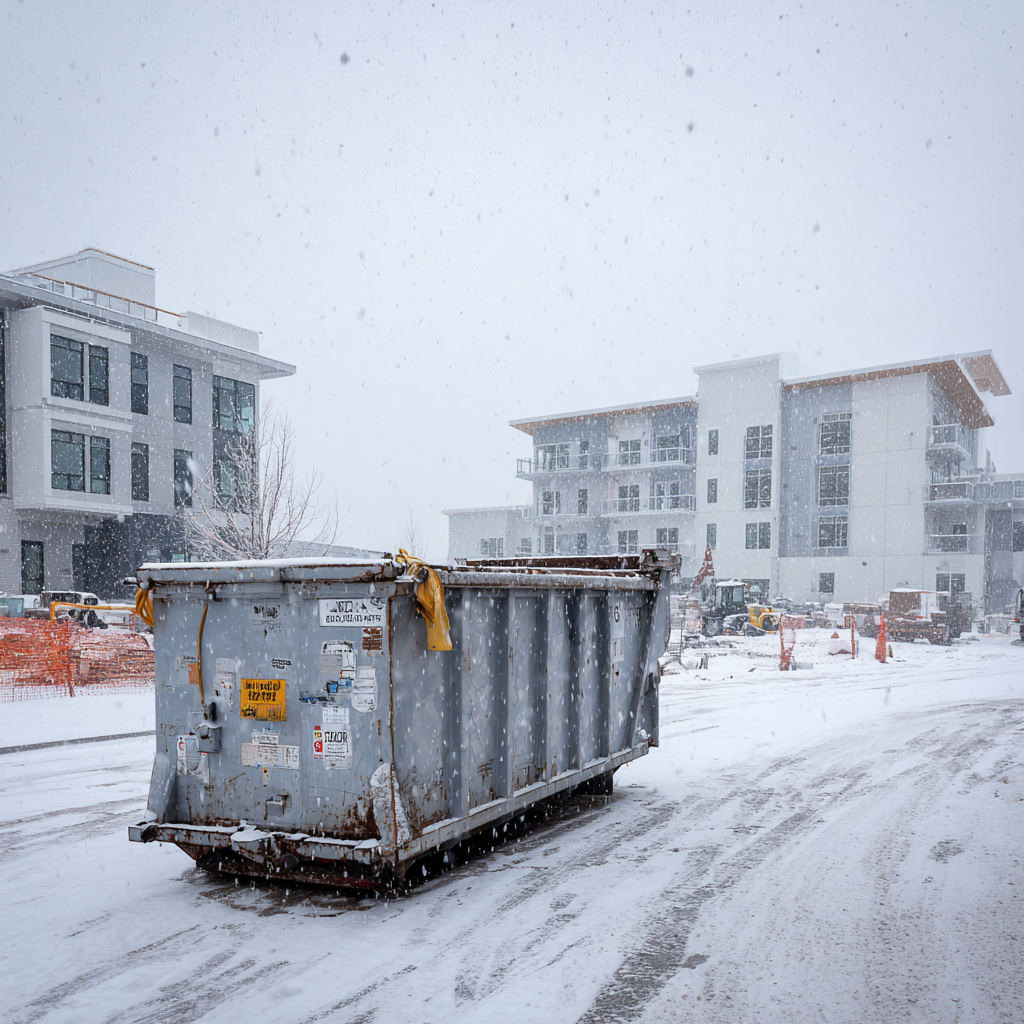
Why Winter Dumpster Rental in Denver Requires Extra Planning
Denver’s Front Range location produces a winter season that alternates between dry stretches and significant snowfall events. Temperatures can swing dramatically within a single day, creating surface conditions that change faster than most project timelines can accommodate.
Freeze-thaw cycles are one of the most persistent challenges. Ground that appears stable in the morning can shift by afternoon as temperatures rise, affecting both delivery truck access and container stability throughout a rental period. Planning for those changes rather than reacting to them keeps winter projects on track.
Short daylight hours during Denver’s winter months also compress the working window on projects that involve outdoor loading or debris staging. Fewer usable hours per day means debris accumulates more slowly, which affects how rental duration should be calculated for winter projects compared to summer timelines.
Tips for Winter Dumpster Rental in Denver
Planning ahead is what separates a smooth winter rental from one that creates avoidable complications at every stage of the project.
1. Prepare Your Placement Surface Before Delivery
A delivery truck dropping a loaded container onto an icy or snow-covered surface creates real problems. The container can shift during placement, and the truck itself may struggle to maneuver safely on slick pavement.
Clear snow and ice from the drop zone completely before the scheduled delivery time. Protective boards or plywood sheets under the container distribute weight across the surface and provide a stable base on ground that freeze-thaw cycles have softened or made uneven.
2. Choose the Right Placement Location for Winter Conditions
Private property placement is almost always the better option during winter. Keeping the container on a driveway or private lot eliminates the permit requirement and removes the risk of snow plow interference that comes with street placement.
Denver requires containers placed in the public right-of-way to be at least 20 feet from any corner, ramp, alley, or entrance and to have a minimum six-inch-wide strip of reflective tape placed vertically on each corner. Those requirements become harder to maintain when snow accumulation covers the container’s base and surrounding area. Driveway placement sidesteps those complications entirely while keeping the container accessible throughout the rental period.
3. Keep the Container Accessible During Your Rental
Snow accumulating around a container between loading sessions creates a barrier that slows down the project and can make safe loading difficult. A clear path from the work area to the container needs to be maintained throughout the rental period, not just on delivery day.
Keep a shovel nearby and clear the access path after each significant snowfall. Also watch for snow sliding off rooflines onto or around the container, which can happen quickly during Denver’s heavier storm events and block access faster than expected.
4. Plan Around Denver’s Snow Removal Operations
Denver’s ordinances prohibit pushing, plowing, or depositing snow onto public streets, alleys, or other rights-of-way. That rule affects how snow cleared from around a street-placed container can be managed. Snow piled against or around a permitted container can also create visibility and safety issues that draw enforcement attention.
Denver residents and property owners have 24 hours to remove snow and ice from sidewalks after a storm. A container placed near a sidewalk makes that obligation more complicated to fulfill. Factoring those requirements into the placement decision before delivery avoids a situation where the container creates a compliance problem during a storm event.
5. Adjust Your Rental Timeline for Winter Project Pace
Winter projects in Denver almost always take longer than the same project would in warmer months. Storm days, frozen ground, and reduced working hours all add time to project timelines that standard five to seven day rental periods don’t automatically account for.
Build buffer days into the rental period from the start rather than requesting extensions mid-project. Discussing extended rental terms before delivery produces better rates than scrambling for additional days once the project is already underway and the original rental period is running out.
6. Protect Heavy Materials From Freezing
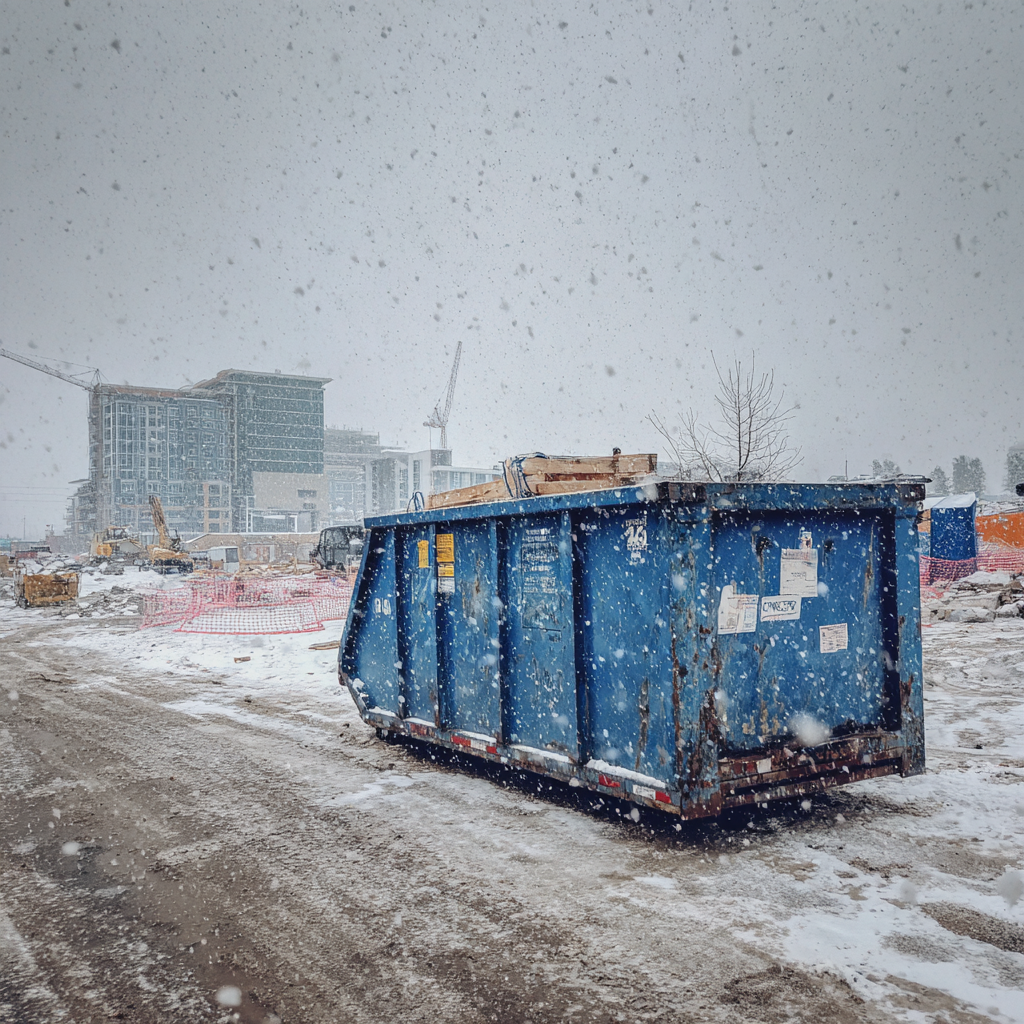
Certain debris types become significantly more difficult to handle after freezing. Wet drywall, saturated insulation, and concrete work all behave differently in freezing temperatures, and some materials can bond to container surfaces when temperatures drop far enough overnight.
Cover the container opening when possible during overnight freezes to limit moisture accumulation inside. For projects involving wet or saturated debris, loading and scheduling pickup before temperatures drop keeps materials manageable and prevents frozen loads that complicate the haul-away process.
7. Book Early to Account for Winter Availability
Denver’s winter construction slowdown reduces overall container demand, which generally means better availability than peak spring and fall seasons. However, that availability can shift quickly after significant storm events when cleanup and recovery work creates localized spikes in demand.
Booking a week or two ahead during winter is still worth doing, particularly for projects with fixed start dates that can’t accommodate a delayed delivery. Early booking also gives enough lead time to work through permit processing if street placement is necessary, since the City of Denver recommends allowing five business days for permit application processing.
Learn even more tips in How to Find the Best Dumpster Rental in Denver, CO.
Plan Your Denver Winter Dumpster Rental in Advance
Dumpster rental in Denver for winter projects requires more preparation than warm-weather rentals, but the process is straightforward when the right steps are taken before delivery day. Surface preparation, placement decisions, storm planning, and timeline adjustments all factor into a rental that runs smoothly regardless of what the weather does. Contact our team to get a quote and coordinate roll-off container service for your Denver winter project.
If you are looking for What is Waste Management?, Click Here
Recent Posts


Follow Us
Have any questions?
+1 844 853 3867
Give us a call today so we can help you find the right waste & sanitation solution for
your project!
Contact Us