
Mon - Sat 7:00 am to 7:00 pm

How to Clean a Roll Off Dumpster
A Practical Guide to Roll-Off Dumpster Cleaning
Cleaning a roll-off dumpster isn’t a task most people look forward to, but it’s more manageable than it sounds. With the right approach, a few basic tools, and a simple process, keeping a container clean and odor-free takes far less effort than dealing with pests, buildup, or a container nobody wants to use.
This guide from Prime Dumpster walks through how to clean a roll off dumpster during your rental, along with the safety equipment, cleaning products, and habits that keep the container and the area around it in good shape.
Fast Facts: How (and When) to Clean a Dumpster
Keeping a roll-off dumpster clean during a rental comes down to removing loose debris regularly, bagging food and organic waste, and checking with your provider before any deep cleaning or pressure washing.
Here’s a quick look at the essentials of using and maintaining your roll-off container:
- Regular cleanup helps prevent odors, pests, and unsafe conditions around the container.
- Basic safety gear includes chemical-resistant gloves, eye protection, waterproof clothing, and sturdy boots.
- A thorough cleaning follows three steps: debris removal, washing, and sanitizing.
- Degreasers and enzymatic cleaners work well on stubborn residue and odors.
- Projects with food waste or organic debris need more frequent attention than dry construction projects.
- Confirm before pressure washing a rented container, and keep wash water out of storm drains.
Now, let’s take a closer look at the cleaning process.

Step-by-Step Cleaning Process
A clean container is easier to use, less likely to attract pests, and more pleasant for everyone working nearby. A systematic approach makes the job faster and more thorough.
“Most of the mess builds up around the container, not inside it,” says the Prime Dumpster Pro. “A few minutes of daily cleanup keeps small problems from turning into a big cleaning job later.”
Initial Debris Removal
Start by removing loose debris and leftover waste. Wear protective gloves and use tools to:
- Scrape out stuck garbage
- Remove large waste particles
- Prepare the container for washing
If possible, clean the dumpster where you have access to running water, such as a hose.
Washing Techniques
Washing removes the grime and residue that debris removal leaves behind. If you plan to use a pressure washer on a rented container, check with your provider first. When washing, use the right settings to:
- Remove stubborn dirt and grime
- Loosen built-up residue
- Reach interior surfaces and corners
Always follow proper safety procedures and wear appropriate gear, since pressure washers can cause damage and injury. Direct wash water away from storm drains and waterways.
Sanitization Methods
After washing, apply a disinfectant to kill bacteria and neutralize odors. Follow these steps:
- Spray the disinfectant solution as directed on the label
- Allow the recommended contact time
- Rinse with clean water if the product calls for it
Following these steps leaves the container clean, safer to use, and less likely to develop odors.
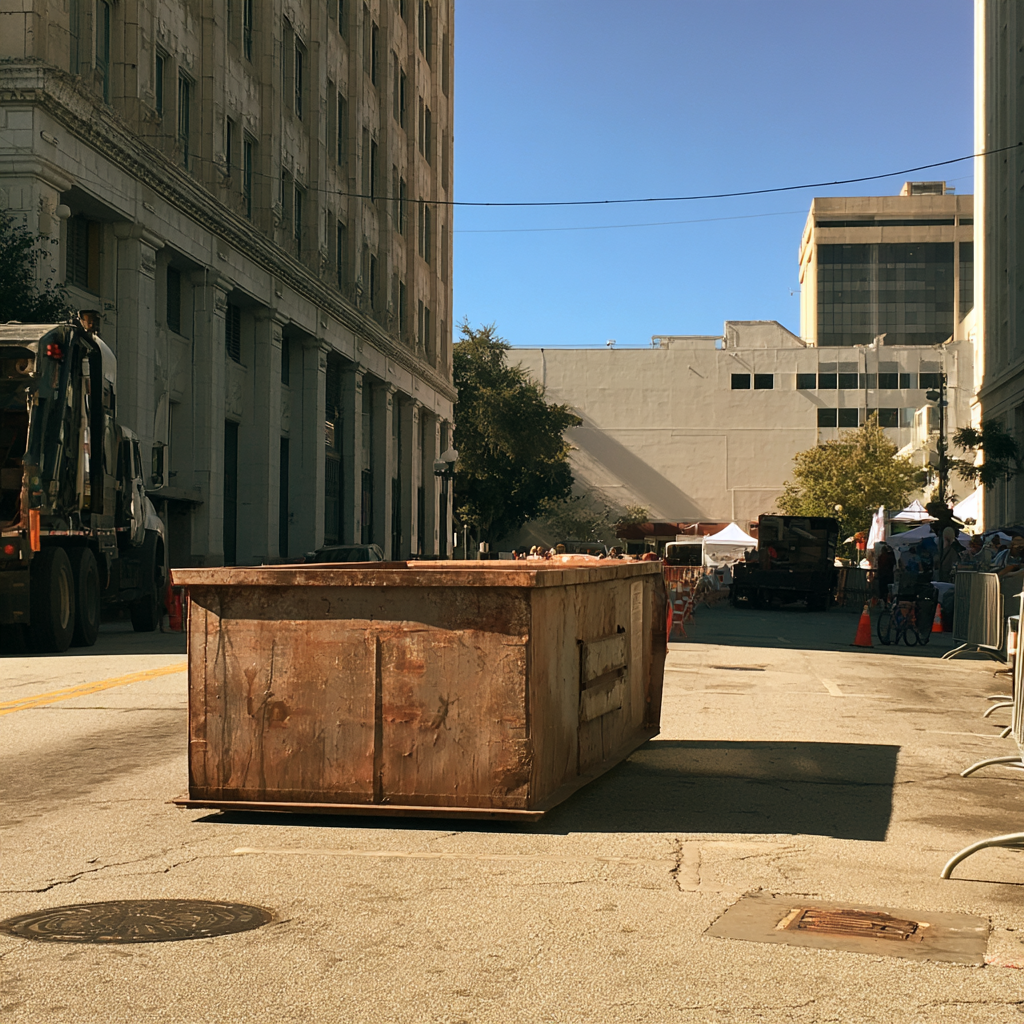
Regular Dumpster Maintenance Is Easy (and Helpful!)
Keeping a roll-off dumpster clean during a rental is about more than appearance. It supports a healthier work area, protects the surrounding environment, and helps your project run smoothly.
Ignoring upkeep can cause problems. Dirty containers attract bacteria and pests, and regular cleanup is the easiest way to avoid these issues and keep the workspace safer. New to them? What is a Roll-Off Dumpster? covers the basics.
Health and Safety Benefits
Clean containers help reduce health risks. Good maintenance habits can help prevent:
- Bacterial growth
- Infections from contaminated surfaces
- Exposure to harmful pathogens
- Slips and injuries from scattered debris
Workers, family members, and neighbors all benefit when the container and the area around it stay clean.
Prevention of Pest Infestations
Dumpsters that sit uncleaned for long periods attract pests. Rodents, flies, and other insects are drawn to food residue and organic waste, and a neglected container can turn into a persistent infestation problem.
A few consistent habits keep pests from taking hold. Removing loose debris promptly, bagging food waste before it goes in, and keeping the area around the container clean all disrupt the conditions pests need to settle in.
The payoff is a safer, more usable site. Fewer pests means fewer health risks, less exposure to bites or contamination, and a container that stays functional instead of becoming a hazard crews try to avoid.
Environmental Impact Considerations
Proper upkeep is both a health and an environmental responsibility. Clean containers reduce the risk of contamination, and careful washing keeps runoff out of storm drains.
Regular cleaning protects your immediate surroundings and supports more responsible waste management.
Essential Safety Equipment and Preparation
Cleaning a dumpster is hard work, and safety should be your top concern. OSHA’s personal protective equipment requirements call for protective gear wherever chemical, physical, or other hazards could cause injury.
Your safety kit should include:
- Chemical-resistant gloves
- Safety goggles or a face shield
- Waterproof protective clothing
- Steel-toed work boots
- A respirator, if the cleaning product label calls for one
Get your workspace ready before you start. Check the container for hazards like sharp objects, damage, or leftover liquids.
| Safety Equipment | Purpose | What to Look For |
| Chemical-Resistant Gloves | Protect hands from cleaning agents and sharp debris | Nitrile or neoprene gloves suited to the product you’re using |
| Protective Eyewear | Shield eyes from splashes and spray | Safety goggles or a face shield rated for impact and splash |
| Respirator | Prevent inhalation of fumes in poorly ventilated areas | A respirator matched to the product, as directed on its label |
Clear the area around the dumpster and make sure there’s good airflow. Keep people and pets away while you work.
Always read the labels and follow the instructions when choosing and using cleaning products. Different surfaces and residues call for different methods.
Professional Cleaning Solutions and Products
Choosing the right cleaning products starts with understanding the challenges of waste container cleaning. The right products tackle tough grime, bacteria, and persistent odors.
Look for these features when choosing products:
- Strong degreasing ability
- Eco-friendly formulas
- Fast-acting sanitizing properties
- Long-lasting odor control
- Safe for steel and other surface types
Cleaning products generally fall into three main categories:
- Alkaline-based degreasers
- Enzymatic cleaners
- Biodegradable sanitizing agents
For eco-friendly options, the EPA’s Safer Choice program labels products that meet its standards for safer chemical ingredients. For light odors, some people use simple household mixtures like white vinegar and hot water.
When picking products, weigh environmental impact, cleaning power, and safety. The best choices clean thoroughly without harming the container or the environment.
Addressing Common Cleaning Challenges
Keeping a container clean often means dealing with grime, stubborn stains, and strong odors. Removing odors from dumpsters usually takes more than simple surface cleaning.
Knowing what affects how dirty a dumpster gets helps you plan the right approach. Different types of waste create different cleaning challenges.
Factors Influencing Dumpster Cleanliness
Several factors determine how quickly a dumpster gets dirty and how much effort it takes to keep it clean.
Type of Waste Deposited
Some materials are far messier than others. Food waste, liquids, and organic debris create odor and residue quickly, while dry construction materials like wood or drywall leave a container much easier to maintain.
Frequency of Waste Disposal
How often the dumpster gets used affects how fast grime builds up. A container in constant daily use collects residue much faster than one used only occasionally.
Environmental Conditions
Weather plays a bigger role than most people expect. Heat speeds up odor and bacterial growth, while rain and humidity can wash debris into corners and create damp conditions that are harder to clean.
Duration Between Cleaning Cycles
The longer a dumpster goes without cleaning, the harder it is to restore. Waste that sits and dries or hardens takes much more effort to remove than debris that’s cleaned up regularly.
Dealing with Stubborn Stains
Removing odors often begins with tackling tough stains. Degreasers and targeted cleaning solutions work best. Washing combined with the right cleaning product can remove most stains.
Eliminating Persistent Odors
Effective odor removal goes beyond masking dumpster smells. Enzymatic cleaners break down the organic matter that causes odors, and thorough sanitizing helps remove the bacteria behind them.
Managing Heavy Residue
Heavy residue build-up isn’t always easy to notice at first.
| Residue Type | Recommended Treatment | Cleaning Difficulty |
| Food Waste | Enzymatic cleaners | Moderate |
| Construction Debris | Scraping and washing | High |
| Grease and Oils | Degreasers | Moderate to High |
Regular cleanup and targeted cleaning make a big difference. Removing odors takes patience, the right equipment, and a consistent approach.
Cleaning Needs by Project Type
How much cleaning a container needs depends more on what goes in it than on its size. Whether you’re using a 10-yard dumpster or a 40-yard dumpster, the type of debris shapes the work. You can compare dumpster sizes to find the right fit for your project.
| Project Type | Common Residue | Cleaning Focus |
| Home Cleanouts | Household items, food packaging, mixed debris | Bag food waste and clear loose debris around the container |
| Remodels and Renovations | Drywall dust, wood scraps, packaging | Sweep the perimeter and keep dust contained |
| Construction Projects | Concrete, lumber, roofing materials | Clear nails and sharp debris from the ground around the container |
| Yard and Landscaping Work | Branches, leaves, soil | Watch for damp, decaying material that can attract pests |
| Events and Commercial Use | Food waste, liquids, packaging | Bag waste and check for odors and spills more often |
Good maintenance during a rental includes a few basic steps:
- Checking the container and the area around it for damage or hazards
- Cleaning up regularly to prevent odor buildup
- Removing loose debris around the base
- Keeping liquids and food waste bagged
- Reporting any container damage right away
Tailoring your approach to your project and debris type keeps the container clean and the site safe.
Preventive Maintenance Strategies
Keeping a rented dumpster clean doesn’t have to be complicated. A few simple habits throughout your rental prevent most problems before they start.
Daily Tasks
These simple actions are quick to perform but can have a big impact on keeping your site and rented dumpster seen.
- Pick up loose debris around the container
- Bag food waste and organic materials before loading
- Check for visible leaks or spilled liquids
- Close and secure the door when you’re done loading
In many cases, staying consistent with these small steps prevents the need for additional cleaning.
Weekly Checks
If you’re renting for about a week or more, you might want to include a few more maintenance practices.
- Sweep or rake the area around the container
- Look for standing water or damp debris inside
- Check for any visible damage to the container
- Clear debris from around the rails and base
These are typically also simple steps, but they can have a big effect on keeping the area around your dumpster clean, safe, and pleasant.
Long-Term Rentals
For longer projects, ask about a container swap instead of a deep clean, which is often simpler.
These habits keep your dumpster clean, functional, and ready for the rest of your project.
Best Practices for Long-Term Dumpster Care
Pest control is a major part of keeping a container clean. Rodents, flies, and insects are drawn to decaying waste. To keep them away, bag food waste, clean up regularly, and limit exposed organic material. Natural deterrents like mint or citrus sprays can also help. Learn more in our Roll Off Dumpster Pest Control Tips.
Eco-friendly habits make a difference too. Use biodegradable cleaning products where possible, keep wash water out of storm drains, and check the container regularly for spills or damage.
Dumpster Rentals and Maintenance
Knowing how to clean a roll off dumpster turns an unpleasant task into a manageable routine. Regular cleanup, the right products, and good safety habits help keep your container and your site in good shape for the length of your project.
At Prime Dumpster, we’re ready to help with dumpster rentals, plus questions about cleaning and keeping your rented container in good condition. Contact our team for recommendations based on your project and location.
If you are looking for How to Open a Dumpster Door: Opening, Closing, and Locking Roll-Off Doors, Click Here
Recent Posts


Follow Us
Have any questions?
+1 844 853 3867
Give us a call today so we can help you find the right waste & sanitation solution for
your project!
Contact Us