
Mon - Sat 7:00 am to 7:00 pm
How to Remove a Deck
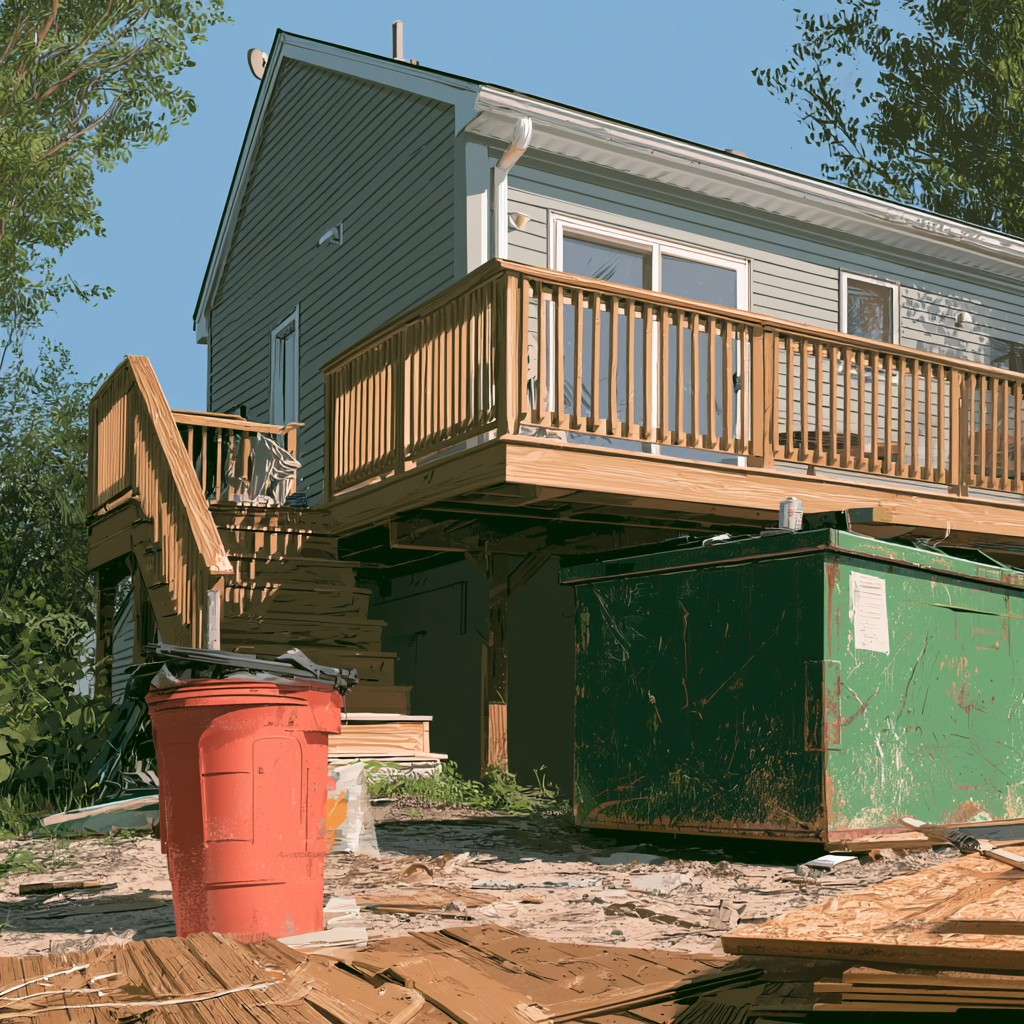
Removing a deck is a fairly straightforward project for most homeowners, whether you’re tearing out an old deck entirely or swapping out a few damaged boards. Knowing how to remove a deck the right way, top-down and in the correct order, makes the difference between a smooth weekend job and one that drags on. At Prime Dumpster, we help homeowners haul off the bulky wood and hardware a deck tear-out produces, so the demolition never stalls under a growing pile.
This guide covers the decision to tear it all down or just replace boards, the tools and safety steps you’ll need, both jobs step by step, and how to handle the debris.
Fast Facts: Removing Deck Debris
A quick look before the hammer comes out:
- Deck removal is a DIY-friendly project for most single-level residential decks, while elevated, attached, or oversized decks are safer to remove with a licensed contractor
- A deck removal timeline runs a weekend for a small ground-level deck and several days to a week for large or multi-level structures, with footing removal adding a day or more
- The tools needed to remove a deck include a pry bar, cat’s paw, reciprocating saw with wood and metal blades, drill or impact driver, hammer, sledgehammer, and full PPE
- The right dumpster size for a deck tear-out is a 10-yard or 15-yard roll-off dumpster for most residential decks, and a 20-yard container for larger structures
Deck debris is bulkier than it looks, so sizing the container matters. A Prime Dumpster account manager can right-size a dumpster for a wood-heavy load, hand you an upfront quote, and set delivery and pickup around your demo schedule.
If you’re looking for information on interior renovations, whole-home teardowns, or similar projects, you’ll want to read our home demolition guide.
Full Tear-Down or Partial Board Replacement?
The right approach depends on whether the framing underneath is still sound or the whole structure has reached the end of its life.
Not every deck problem calls for a full tear-down. The deciding factor is what’s underneath the boards. If the framing is solid and only the deck boards have gone soft, gray, or splintered, a partial replacement is faster and cheaper. If the joists are rotting, the ledger board is pulling away from the house, or the whole structure has visible sag, it’s time for the deck to come out.
Age and safety matter too. Decks built before current code often lack the fasteners and connections used today, and any sign of movement is worth taking seriously. When in doubt, err toward a full replacement, since patching a compromised structure rarely pays off.
Tools, Safety, and Prep
Deck removal calls for demolition tools, real PPE, and a call to 811 before you touch anything set in the ground.
Gather your gear before the first board comes up:
- Pry bar and cat’s paw
- Reciprocating saw with wood and metal blades
- Drill or impact driver for backing screws out
- Hammer and sledgehammer
- Heavy gloves, eye protection, dust mask or respirator, long sleeves, and steel-toed boots
The dust mask matters here. Pressure-treated lumber can release chemical dust when cut or sanded, so don’t skip the respirator or the eye protection.
Then prep the site. Clear the area under and around the deck, disconnect anything attached (railings, gates, low-voltage lighting), and move planters or grills well out of the way. Before you disturb any footing or dig near a post, call 811. The national Call Before You Dig service sends utility crews out to mark buried lines for free, and it protects you from cutting into a gas or electrical line that runs closer to the surface than you’d expect.
How to Remove Individual Deck Boards
The best way to remove deck boards is to back out the fasteners and pry each board free without splitting the joists underneath.
If the framing is sound, you’re only replacing the top. Start by finding the fasteners, since screws are the easiest to deal with. Back them out with a drill in reverse, and if the heads are stripped or rusted over, drill them through or cut them with a reciprocating saw.
With the fasteners out, slide a pry bar between the board and the joist near a fastener location, and lift with steady pressure so you don’t crack the joist. Move down the board and repeat until it lifts free. On old decks with nails, expect some persuasion: a cat’s paw dug in beside each nail head gives you a starting bite for the pry bar. That’s the trick for how to remove old deck boards without wrecking what’s underneath.
“The mistake people make is prying in the middle of the board where there’s no fastener,” said the Prime Dumpster Pro. “You just snap the board, and worse, you flex the joist. Work right at the screws or nails, every time.”
If your deck uses hidden fasteners, the best way to remove deck boards changes: you’ll need to lift the first board with a saw cut, then slide the rest sideways to clear the clips.
How to Remove a Whole Deck, Step by Step
A full deck removal works top-down: rails first, then boards, then joists, and finally the ledger board and posts.
Whole-deck tear-outs go in a set order, and following it makes the work faster and safer.
Start with the railings and any stairs. Rails carry structural fasteners into the deck frame, so they come off first with a drill and pry bar. Stairs unbolt from the deck and lift away as a unit.
Move to the deck boards next, using the same technique as a partial replacement, working across the surface board by board. Pulling the fasteners rather than cutting through the boards leaves your joists intact and easier to handle.
With the deck boards off, cut the joists into manageable pieces with a reciprocating saw and drop them into your dumpster as you go. This is where the pile grows fast, since a full deck’s worth of joists takes up more room than most people expect.
The ledger board is next, and it’s the piece to slow down for. Unbolt it carefully from the house rather than prying, since prying can tear siding or flashing. Once it’s off, seal or repair the wall where it attached before the weather gets to it.
Finally, remove the posts. Cut them at grade if you’re leaving the footings, or dig around each concrete footing to lift the whole thing out. Concrete footings are heavy, so plan on help or a hand truck for the ones you’re removing.
Cost and When to Call a Pro
Cost to remove a deck depends on size, height, materials, and whether you take out the footings, and a pro is worth it for large or elevated builds.
How much does it cost to remove a deck depends on a handful of factors: the square footage, whether the deck is one level or elevated, the type of materials (composite is heavier than wood), and how far you go with the footings. Doing it yourself trims labor cost to the price of tool rentals, a dumpster, and PPE.
Hire a pro when the deck is large, elevated more than a few feet off the ground, or attached to a second story. Structural removals at height carry real fall and collapse risks that aren’t worth the savings.
Hauling Deck Debris: Bulky Wood and Treated Lumber
A torn-out deck fills a dumpster by volume, and pressure-treated lumber has to go in the container rather than the burn pile or a wood-recycling stream.
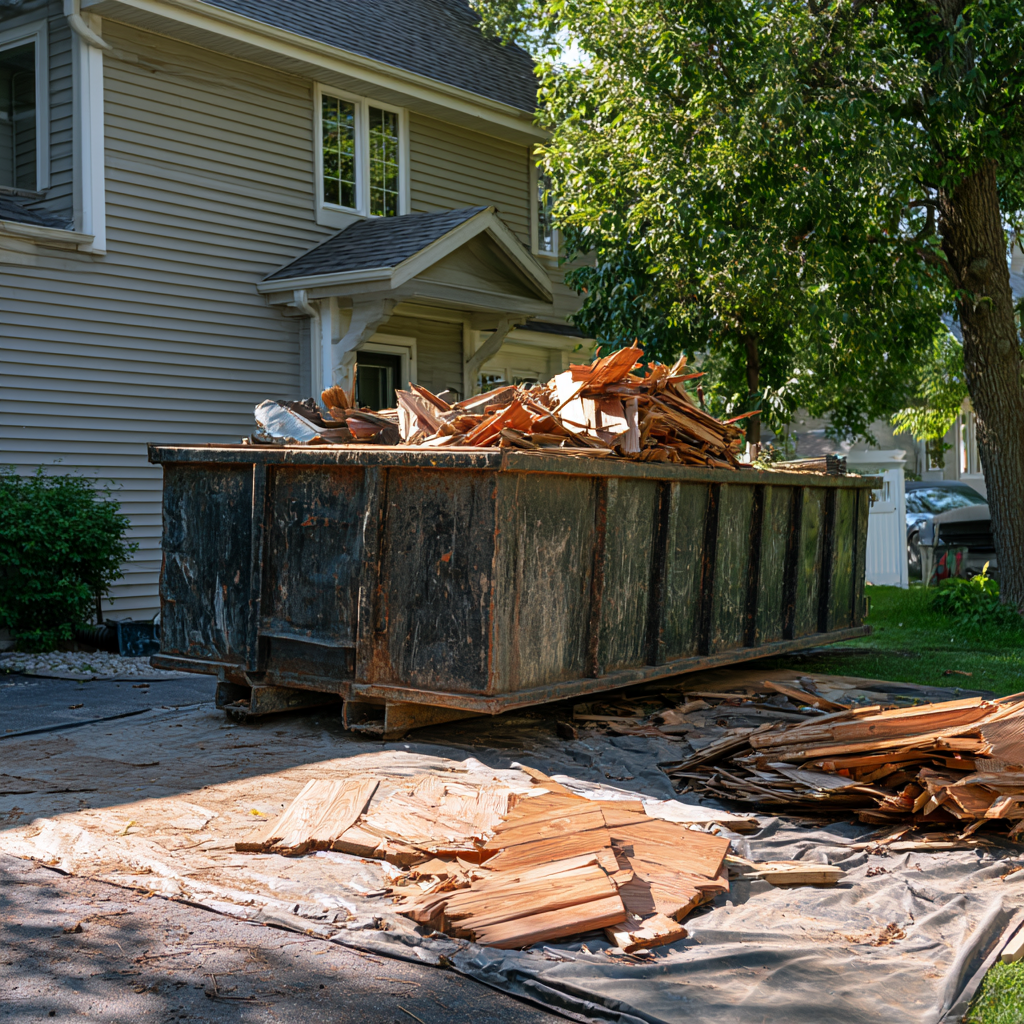
Deck debris fools people. It looks manageable on the ground, but a stack of joists and boards eats far more space than you’d guess once it’s loose. A roll-off dumpster parked next to the work zone keeps the pile from taking over the yard and lets you load as you cut.
Two disposal facts matter. First, pressure-treated lumber can’t be burned, since the chemicals used to preserve it release toxic fumes when heated. Second, treated wood isn’t accepted at most wood-recycling facilities, so it needs to go to a landfill. The EPA’s guide on reducing, reusing, and recycling construction and demolition materials covers the broader disposal picture and what can be salvaged if any of your framing is untreated.
“Small decks always trick people,” said the Prime Dumpster Pro. “A 12-by-12 looks like a couple pickup loads, and it’s really a container’s worth once it’s on the ground in pieces.”
| Size | Dimensions | Best For a Deck Tear-Out |
| 10-Yard Dumpster | 12′ × 8′ × 3.5′ | A small deck (up to ~150 sq ft) or partial board replacement |
| 15-Yard Dumpster | 16′ × 7.5′ × 4–5′ | A mid-size deck (150–300 sq ft) |
| 20-Yard Dumpster | 22′ × 7.5′ × 4.5′ | A large deck (300 sq ft and up) |
| 30-Yard Dumpster | 22′ × 8′ × 6′ | Large multi-level decks, or a deck bundled with other demo |
| 40-Yard Dumpster | 22–24′ × 8′ × 8′ | Rarely needed for a deck alone |
For most home decks, a 10 or 15-yard is the right pick, and the 20-yard fits a larger structure. Concrete footings should go in a 10-yard if you’re pulling them out, since concrete is dense and hits a weight limit quickly.
You can learn more about weight capacity, common uses, and other features in our Dumpster Rental Resource Page.
Frequently Asked Questions
Deck tear-outs typically take a weekend, pressure-treated wood can’t be burned, and permits are sometimes required for larger structures.
How long does it take to remove a deck?
A small ground-level deck can be done in a weekend. Larger, elevated, or attached decks run longer, and removing footings adds a day or more.
Can you burn pressure-treated wood?
No. The preservatives used in treated lumber release toxic fumes when burned, so it has to be disposed of, not burned.
What do you do with the concrete footings?
You can leave them in place, cut the posts flush at grade, or dig the footings out entirely. Removal is more work but gives you a clean yard for whatever comes next.
Do you need a permit to remove a deck?
Sometimes. Small ground-level decks often don’t need one, but larger, elevated, or attached structures may require a demolition permit. Check with your local building department.
Getting the Old Deck Out
Removing a deck is a satisfying project when it’s planned, and a frustrating one when it isn’t. Work top-down, respect the safety steps, and give the bulky debris a home before the first board comes up.
Prime Dumpster is here for the messy part. We offer flexible rental terms, upfront quotes with no surprises, and a team that’ll help you size the container for a wood-heavy load and walk you through the whole rental.
Ready to reclaim your yard? Contact our team for a fast quote and the right dumpster for the job.
If you are looking for How to Clean Out a Hoarder’s House, Click Here
Recent Posts


Follow Us
Have any questions?
+1 844 853 3867
Give us a call today so we can help you find the right waste & sanitation solution for
your project!
Contact Us