
Mon - Sat 7:00 am to 7:00 pm
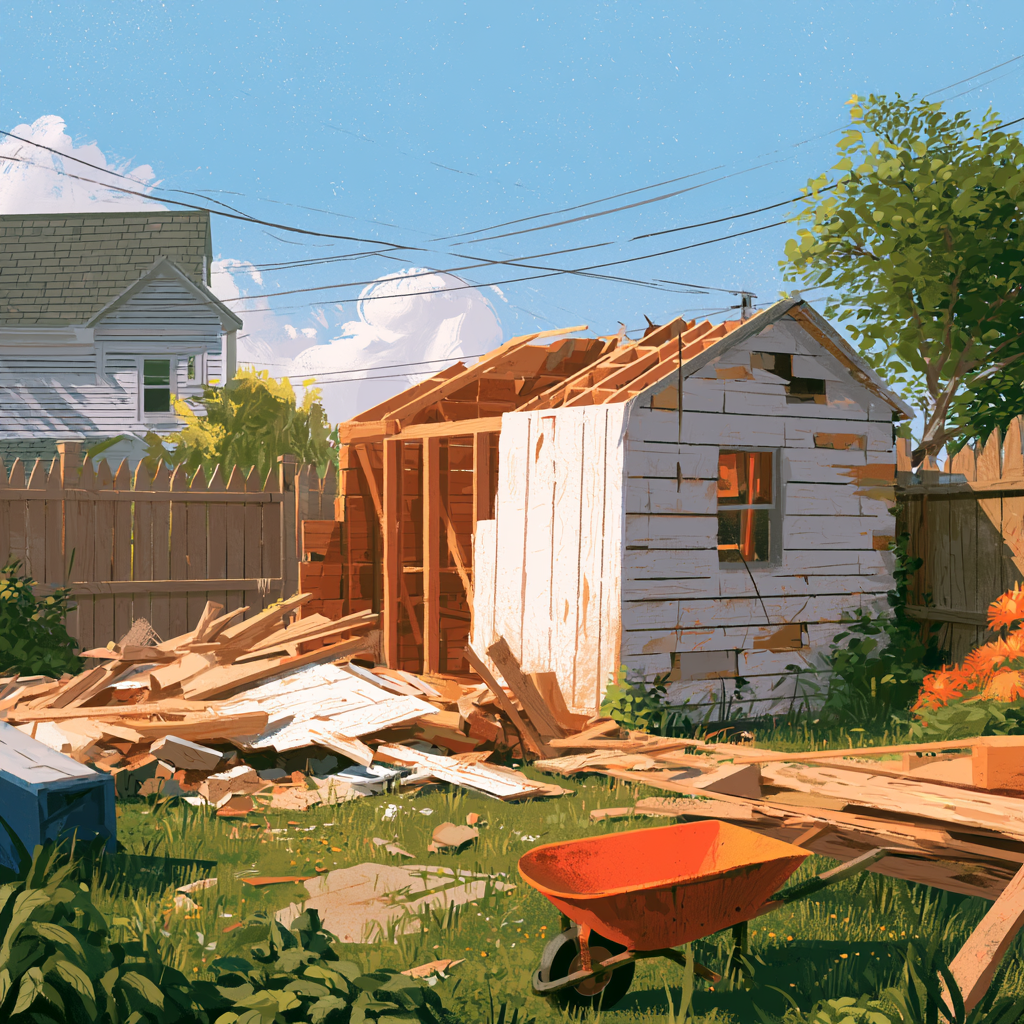
How to Remove a Shed
Learning how to remove a shed usually starts with the same question: is it worth taking apart yourself, or easier to have someone haul it away? Old sheds sag, leak, and get in the way of a yard you actually want to use, but removing one is more work than it looks. At Prime Dumpster, we help homeowners clear the wood, metal, and shingles from a torn-down shed, so disposing of debris never slows down your project.
This guide walks through your real options for removing a shed from a property, the cost of each, how to dismantle wood, metal, and plastic sheds, and how to deal with the foundation left behind.
Fast Facts: Removing a Shed on Your Property
Here’s a rundown of the basic shed removal process from start to finish:
- Shed removal is a DIY-friendly project for most residential sheds, since wood, metal, and resin sheds all dismantle with basic tools as long as the structure isn’t collapsing
- A shed removal timeline runs about a day for a small shed and a full weekend for a larger structure or one built on a concrete slab
- The tools needed to remove a shed include a pry bar, reciprocating saw, drill, hammer, tin snips for metal sheds, and full PPE
- The right dumpster size for a shed removal is a 10-yard roll-off dumpster for most sheds, and a 15-yard container for a larger structure or a shed paired with yard cleanup
Shed debris typically contains a mix of varied materials, and that affects the type of dumpster you’ll want to rent. A Prime Dumpster account manager will help match a dumpster to your specific project needs, provide a complete quote before booking, and remain available throughout the process if you have any questions or concerns.
If you’re looking for info on related projects, check out our Home Demolitions Guide, a hub covering whole home remodels, partial renovations, and more.
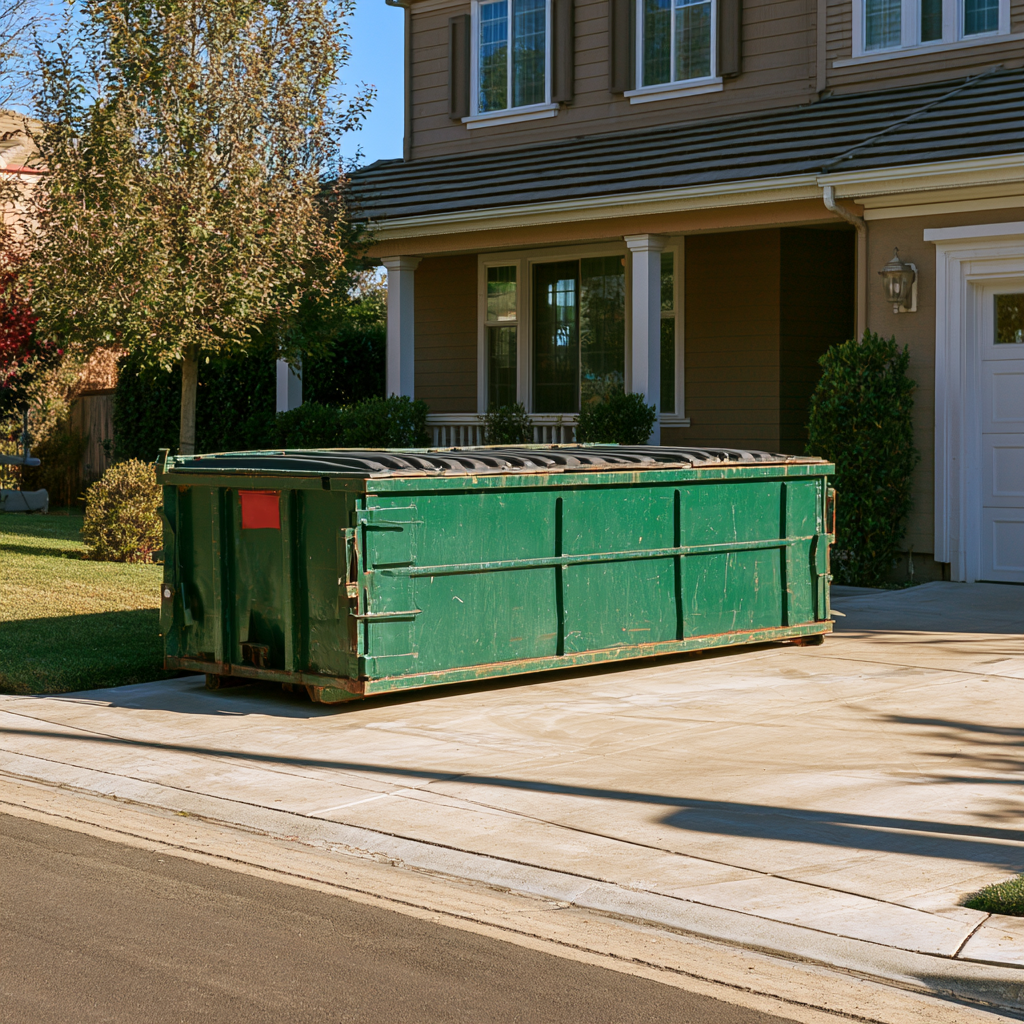
Should You Dismantle, Haul Away, or Sell It?
The right way to remove a shed depends on its condition and how much of the work you want to handle yourself.
Three real options sit in front of most homeowners. Each requires a different level of effort and time.
Dismantle it yourself. This is the DIY route, and the one where a rented dumpster does its best work. You take the shed apart in pieces, load the debris into a container in the driveway, and the whole thing’s gone in a day or two.
Hire a haul-away service. Junk removal crews and demolition services will do the whole job, from teardown to cleanup. It’s the most hands-off option and usually the priciest, but it’s the right call if the shed is unsafe to touch or too large for a DIY crew.
Sell it or give it away intact. If the shed is still sound, it might be worth listing on a local marketplace. Buyers looking for outbuildings will sometimes disassemble and haul one away themselves, which saves you both the labor and the disposal.
The honest catch: a rotted or collapsing shed usually can’t be sold or moved intact, which brings you back to dismantling or hire-out.
What It Costs to Remove a Shed
The cost to remove a shed depends on its size, material, foundation, and whether you tackle it yourself or hire out.
How much does it cost to remove a shed depends on a handful of factors, and DIY versus hire is the biggest lever. Doing it yourself costs mainly your time, tool rentals, and a dumpster. Hiring a haul-away or demolition service costs several times that, since you’re paying for labor, hauling, and disposal fees.
Beyond that, the cost to remove an old shed climbs with:
- Size: a large shed takes more time and generates more debris
- Material: metal panels and pressure-treated wood take special handling
- Foundation: a concrete slab that needs breaking up adds real cost
- Condition: a collapsing shed carries more risk and often more labor
- Access: a shed tucked behind a fence or up a slope slows the whole job
For how much to remove a shed on your own, the biggest single line item is usually the dumpster, and it’s still a fraction of a full-service quote.
Tools, Safety, and Prep
Shed removal calls for basic demolition tools, real PPE, and a call to 811 before disturbing anything set in the ground.
Gather your gear before the first panel comes off:
- Pry bar and cat’s paw
- Reciprocating saw with wood and metal blades
- Drill or impact driver
- Hammer and sledgehammer
- Tin snips for metal sheds
- Heavy gloves, eye protection, a dust mask or respirator, long sleeves, and steel-toed boots
Safety first. Metal panels have razor edges once they’re loose. Pressure-treated wood can release chemical dust when cut. Old sheds may have wasp nests or rotting wood that gives way under weight.
Then prep the site. Empty the shed completely and haul off anything you’re keeping. Disconnect any electrical service running to it, and cap the wires safely. Before you touch a foundation or dig near a post, call the national 811 Before You Dig service, which sends utility crews out to mark buried lines for free. Skipping that step is how homeowners cut into gas or electrical lines they didn’t know were there.
How to Dismantle a Shed by Type
Sheds come apart top-down, and the exact technique depends on whether you’re working with wood, metal, or plastic.
Wood, metal, and plastic sheds look similar from a distance but disassemble very differently. Working with the material’s natural sequence saves hours.
Wood Sheds
Wood sheds come apart in reverse of how they were built. Start by pulling any siding, which usually comes off with a pry bar and a drill for the fasteners. Next, take down the roof by unscrewing the sheathing and removing the rafters or trusses. Then unbolt the walls from the base and tip them out one at a time. Finally, pull up the floorboards and framing, and the shed is down to its foundation.
Metal Sheds
Metal sheds go together with screws and bolts, which means they can come apart the same way if you have patience. Reverse the assembly order: roof panels first, then the roof frame, then the walls in sections, then the floor frame if there is one. The panels have sharp edges once they’re loose, so wear thick gloves and lay panels flat as you remove them. Tin snips help with any panels that are bent or corroded past the point of unscrewing.
Plastic and Resin Sheds
Plastic and resin sheds are the easiest to take apart, since most were assembled like flat-pack furniture. Unscrew the panels in order, pop the roof pieces off, and disassemble the walls. Most of the parts can go straight into the dumpster, though some resin panels can be recycled if a local program accepts them.
“A shed is a small building, and top-down is the best way for it to come apart,” said the Prime Dumpster Pro. “The people who get hurt usually try to push a wall over sideways with the roof still on, and that’s exactly how a shed folds up on top of you.”
Dealing With the Foundation
Shed foundations range from a gravel pad to a concrete slab, and each calls for a different decision.
Once the shed is gone, the foundation stares back at you. What to do with it depends on the type.
Gravel and paver pads are the easiest. Scoop the gravel out with a shovel or leave it as a base for a new shed or a garden feature. Pavers lift out by hand and often get reused elsewhere.
Concrete slabs take more thought. Breaking one up is dense, heavy work, and the debris is dense enough that it needs a small dumpster to stay within a weight limit. Many homeowners choose to leave a slab in place, since it makes a ready base for a future outbuilding, a patio, or a garden bed. If the slab has to go, rent a jackhammer or breaker, or hire a demolition company.
Wood floors and posts set in concrete need to be cut off at grade or dug out. Cutting flush is faster; digging out gives you a truly clean yard.
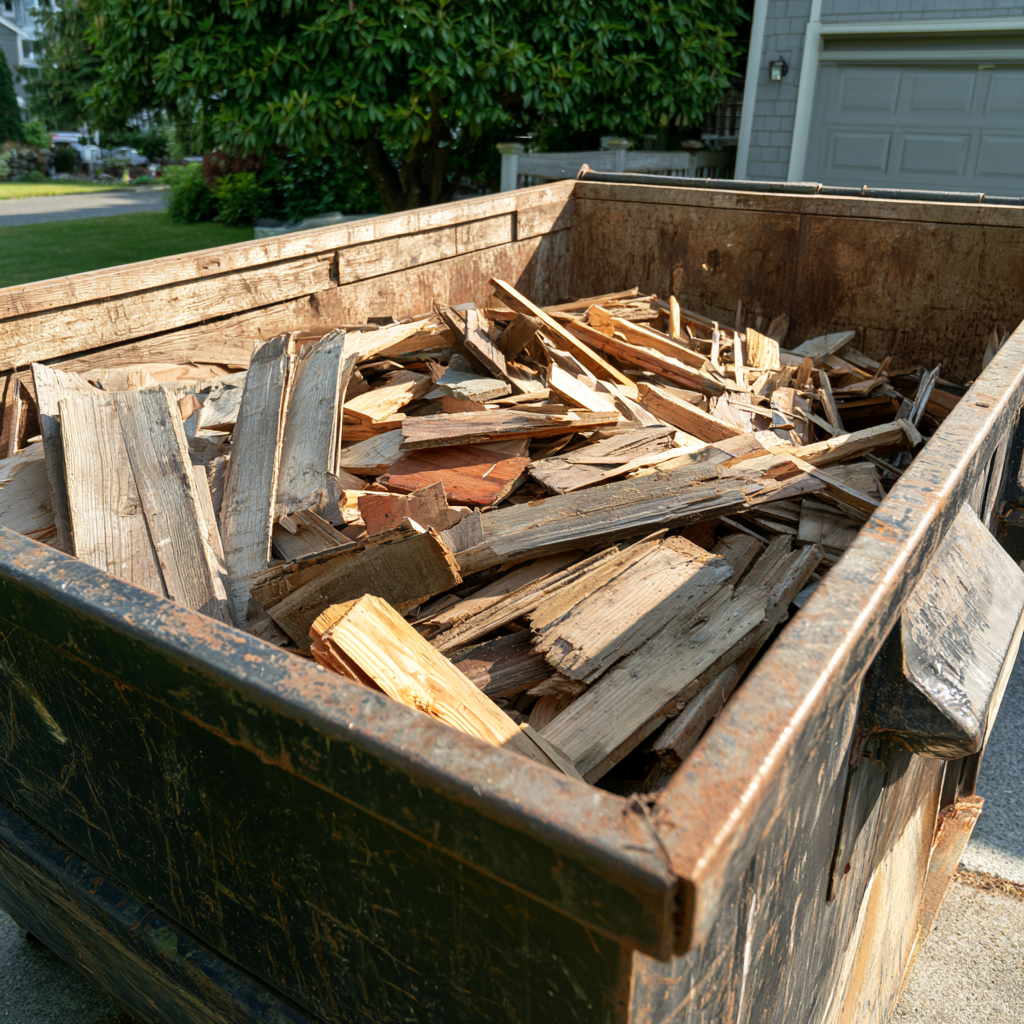
Hauling the Debris: Mixed Materials in One Load
Shed debris is a mix of wood, metal, roofing, and sometimes insulation, so one rented container is usually the practical answer.
A shed teardown throws off more variety than volume. In a single day, you can generate treated wood framing, metal panels or trim, asphalt shingles, sheathing, and sometimes fiberglass insulation. A roll-off dumpster parked in the driveway takes all of that in one spot instead of trying to sort each material into a separate bin or make multiple landfill trips.
Two disposal notes matter. Pressure-treated lumber can’t be burned, since the preservatives release toxic fumes when heated, and it usually can’t go through standard wood recycling either. The EPA’s guide on reducing, reusing, and recycling construction and demolition materials covers what has salvage value if any of your framing is untreated, and metal panels are often recyclable if a scrap yard is nearby.
“Sheds are the projects where a smaller dumpster wins,” said the Prime Dumpster Pro. “You don’t need the space, you need one place to put five different materials at once.”
| Size | Dimensions | Best For a Shed Removal |
| 10-Yard Dumpster | 12′ × 8′ × 3.5′ | The usual pick; a small to mid-size shed, or heavy concrete debris from a slab |
| 15-Yard Dumpster | 16′ × 7.5′ × 4–5′ | A larger shed or one paired with yard cleanup |
| 20-Yard Dumpster | 22′ × 7.5′ × 4.5′ | An oversized shed or a small outbuilding |
| 30-Yard Dumpster | 22′ × 8′ × 6′ | Rarely needed for a shed alone |
| 40-Yard Dumpster | 22–24′ × 8′ × 8′ | Rarely needed; better suited for large demolition |
For nearly every shed, a 10-yard is the right pick, and the 15-yard fits when you’re also clearing yard debris on the same day.
Never rented a dumpster to remove a shed? Check out our Dumpster Rental Resource Page, where we break the process down into four beginner-friendly steps.
Frequently Asked Questions
Shed removal usually takes a day or two, treated wood can’t be burned, and permits sometimes apply to larger structures.
How long does it take to remove a shed?
A small shed can come down in a day. A larger one, or a shed on a concrete slab, typically runs a weekend.
Do you need a permit to remove a shed?
Sometimes. Small storage sheds usually don’t need one, but larger outbuildings may require a demolition permit. Check with your local building department.
Can you burn old shed wood?
Not if it’s pressure-treated. The chemicals in treated lumber release toxic fumes when burned, so it has to be disposed of instead. Untreated wood is a different story and can be burned where local rules allow.
What do you do with a concrete slab foundation?
You can leave it as a base for a future project, or break it up and haul it away. Broken concrete is heavy, so it belongs in a 10-yard dumpster to stay within weight limits.
Wrapping Up the Old Shed
Taking down a shed is a straightforward weekend project when you plan for the debris. Pick the removal path that fits its condition, work top-down whether it’s wood, metal, or plastic, and give the mix of materials a single container to land in.
Prime Dumpster is here for the heavy part. We offer flexible rental terms, upfront quotes with no surprises, and a team that’ll help you size a container for a shed teardown and walk you through the whole rental.
Ready to reclaim that corner of the yard? Contact our team for a fast quote and the right dumpster for the job.
If you are looking for How to Remove a Deck, Click Here
Recent Posts


Follow Us
Have any questions?
+1 844 853 3867
Give us a call today so we can help you find the right waste & sanitation solution for
your project!
Contact Us