
Mon - Sat 7:00 am to 7:00 pm

Crane Unit Porta Potty Rentals in New York City: A Guide for High-Rise Construction
New York City’s skyline is always under construction, and the logistics of building at height create challenges that simply don’t exist on a standard ground-level job site. Sanitation is one of the most commonly overlooked planning challenges on high-rise projects, and getting it wrong means compliance violations, lost productivity, and frustrated crews.
Prime Dumpster put together this guide to crane unit porta potty rentals in New York City to help contractors, project managers, and site supervisors understand their options, their obligations, and how to plan a high-rise sanitation setup that holds up across the full length of a project. Whether the job is a new tower in Hudson Yards or a renovation in Midtown, the right units and the right plan make a measurable difference.
Fast Facts: Porta Potty Options for NYC High-Rise Projects
“High-rise construction in New York City requires a level of sanitation planning that goes well beyond what most ground-level job sites need,” says the Prime Dumpster Pro. “The unit type, the lift coordination, and the service schedule all have to work together from day one, or you end up with compliance problems and unhappy crews.”
The table below outlines the porta potty rental options most relevant to New York City high-rise and vertical construction projects.
| Unit Type | Best For |
| Standard Porta Potty | Ground-level staging areas, lower floor access points |
| Deluxe Porta Potty with Sink | Sites requiring handwashing at height, food service areas |
| Crane Lift Porta Potty | Upper floor placement on high-rise and vertical construction sites |
| Containment Tray | Environmentally sensitive placements, regulatory requirements |
Prices and availability will vary based on location, floor height, lift requirements, service frequency, and other factors.
If you’re renting porta potties, you might need roll-off dumpsters, too. Our Guide to Roll-ff Dumpsters for Businesses in New York is a great resource.
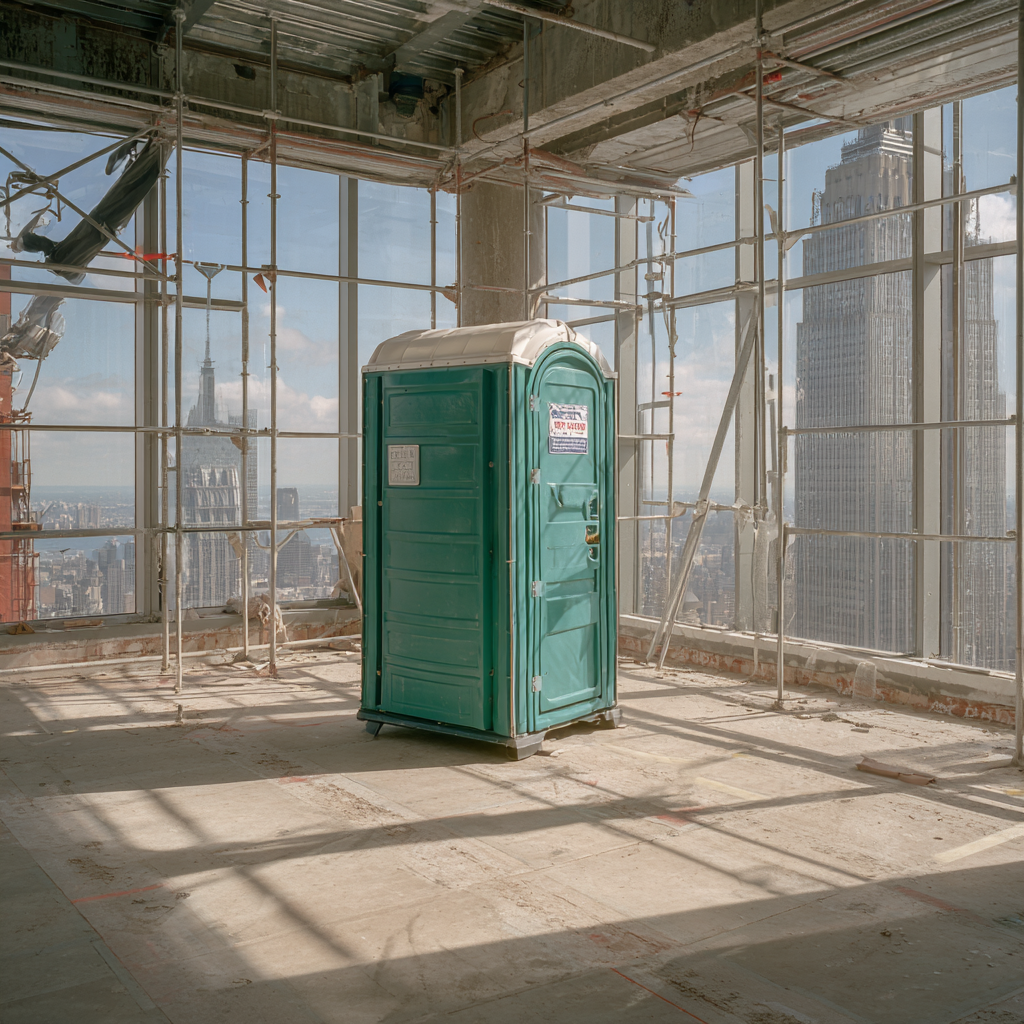
What Is a Crane Lift Porta Potty?
A crane unit porta potty is a portable toilet engineered specifically for vertical lifting and upper-floor placement on high-rise construction sites. Unlike standard units, crane lift models are built with reinforced frames, secure attachment points, and sealed waste tanks designed to handle the stresses of being hoisted by a crane to upper floors where conventional delivery is not possible.
Standard porta potties cannot be safely lifted by crane. The structural requirements are different, and attempting to lift a standard unit creates serious safety risks for everyone on site. Crane lift units are the correct tool for any high-rise placement where elevator or stair access is insufficient or unavailable for the crew’s sanitation needs.
“A crane unit looks similar to a standard porta potty from the outside, but the engineering is completely different,” says the Prime Dumpster Pro. “The attachment points, the tank sealing, and the frame reinforcement all have to meet specifications that a standard unit simply isn’t built to. Using the wrong unit at height is a safety issue, not just a logistics problem.”
Once positioned on an upper floor, crane lift units function the same as ground-level portable toilets and require the same servicing. The difference is that every service visit also requires crane coordination to lift the unit down, service it, and return it to its floor — a logistical factor that shapes the entire service schedule for the duration of the project.
NYC Building Department and OSHA Requirements
High-rise construction in New York City operates under layered regulatory oversight from both the NYC Department of Buildings and federal OSHA standards. Contractors working on vertical construction projects in the five boroughs must meet both sets of requirements, and sanitation planning is part of that compliance picture.
OSHA’s construction sanitation standard requires that toilets be accessible to workers within a reasonable time, with the agency generally treating 10 minutes as the benchmark for what counts as prompt access. On a high-rise job site where workers are operating 20, 30, or 40 floors above the ground, a single porta potty on the street level does not meet that standard. OSHA has specifically addressed the high-rise scenario, noting that whether ground-floor-only facilities meet the standard depends on whether workers can actually reach them when needed. Crane lift units placed on active work floors are the most practical way to meet that requirement on tall building projects.
The NYC DOB also requires safety training and registration for contractors performing certain types of construction work, and site supervisors are responsible for ensuring that all sanitation arrangements on their sites meet applicable code requirements. Reviewing both DOB and OSHA requirements before the project starts, rather than after a violation, keeps the project on track and avoids penalties that can affect timelines and budgets.
Planning Your Crane Unit Rental in NYC
Renting a crane unit porta potty in New York City requires more lead time than a standard ground-level porta potty arrangement. The unit itself, the crane coordination, the delivery logistics, and the ongoing service schedule all need to be in place before the first lift, and each of those pieces involves a different set of parties and timelines.
Street-level delivery in dense Manhattan or Brooklyn neighborhoods adds another layer of complexity. Delivery trucks need an access window, and in high-traffic urban areas that often means coordinating with the site’s traffic control plan and local DOT requirements. Identifying the delivery window, the crane pickup point, and the target floor before you book gives the provider what they need to plan the logistics correctly.
- Lead time of at least two weeks for crane unit availability on active NYC job sites
- Confirmed crane operator schedule before booking the first lift
- Clear street-level access window for initial delivery and ongoing service visits
Longer projects should also plan for how the unit count and floor placement will change as the project moves through phases. A project that starts with work concentrated on floors 10 through 15 may shift to floors 30 through 40 within a few months, and repositioning crane units between floors requires the same lift coordination as the initial placement.
Upper Floor Placement and Safety Considerations
Placing a crane lift unit on an upper floor of an active construction site requires attention to both the structural conditions of the floor and the wind exposure at height. Units need to sit on a stable, level surface with enough clearance around them for workers to access safely, and they need to be secured against wind movement, which increases significantly on upper floors of tall buildings.
Weight distribution is another factor. Crane lift units fully loaded with waste can be significantly heavier than an empty unit, and the floor section where the unit sits needs to be able to support that load at all times. Confirming the floor’s load-bearing capacity with the project’s structural engineer before placement is a standard precaution on high-rise sites.
“Upper floor placement should be treated as a safety decision, not just a logistics one,” says the Prime Dumpster Pro. “Wind exposure, floor load, and secure anchoring all need to be confirmed before a unit goes up. A unit that shifts or tips at height is a serious hazard for everyone working nearby.”
Positioning units away from open edges and active crane swing zones is equally important. The unit should be accessible to the crew without requiring workers to pass through hazardous areas, and it should not be positioned in any location where crane operations could create a risk of contact.
Servicing Crane Lift Units on Active Job Sites
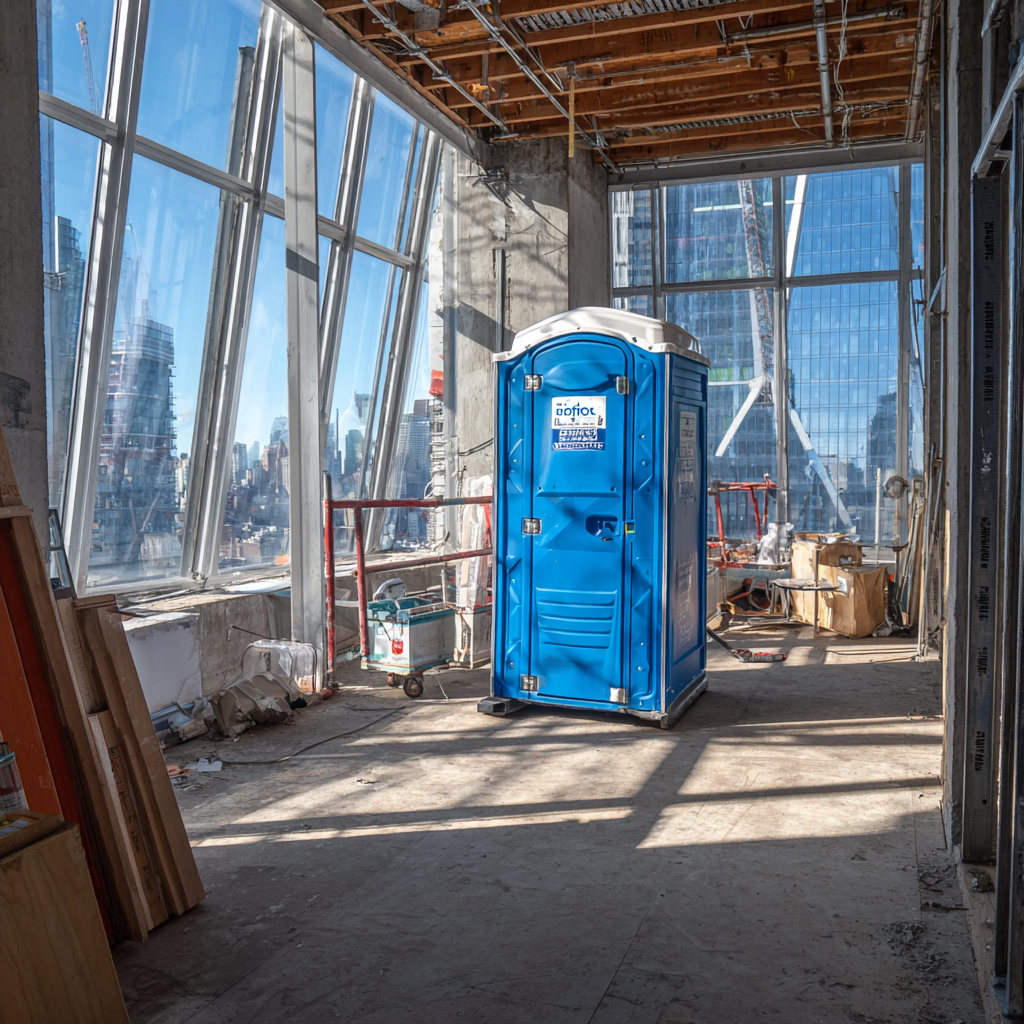
Servicing a crane lift unit on an upper floor is a more involved process than servicing a ground-level porta potty. Each visit requires the crane to lift the unit down to street level, where the service crew pumps the waste tank, cleans the interior, and restocks supplies before the unit is lifted back into position. That process takes longer than a standard service call and requires crane availability during the service window.
Building crane coordination into the service schedule from the start is essential. Service visits that aren’t planned around the crane operator’s schedule create delays, and a unit that can’t be serviced on time becomes a compliance and hygiene problem quickly on a busy high-rise crew. Weekly servicing works for many placements, but crews working long shifts or in warm weather may need more frequent visits.
For projects where the crane is not always available, some contractors plan for a rotating service approach where units are brought down during scheduled crane windows that serve multiple purposes. Discussing this approach with your provider before the project begins allows the service schedule to be built around the site’s actual crane availability rather than retrofitted to it mid-project.
Get Crane Unit Porta Potty Rentals Coordinated for Your NYC Project
High-rise construction in New York City demands a level of sanitation planning that goes well beyond a standard job site rental. From OSHA compliance at height to crane coordination and upper-floor safety, every part of the crane unit porta potty rental process requires advance planning and the right provider.
Prime Dumpster coordinates crane unit porta potty rentals in New York for high-rise and vertical construction projects, with service schedules and logistics built around the demands of active job sites in the five boroughs. Contact our team to get a quote tailored to your project, your floor plan, and your crane schedule.
If you are looking for Prime Dumpster Q&A: Porta Potty FAQ for McAllen, TX, Click Here
Recent Posts


Follow Us
Have any questions?
+1 844 853 3867
Give us a call today so we can help you find the right waste & sanitation solution for
your project!
Contact Us