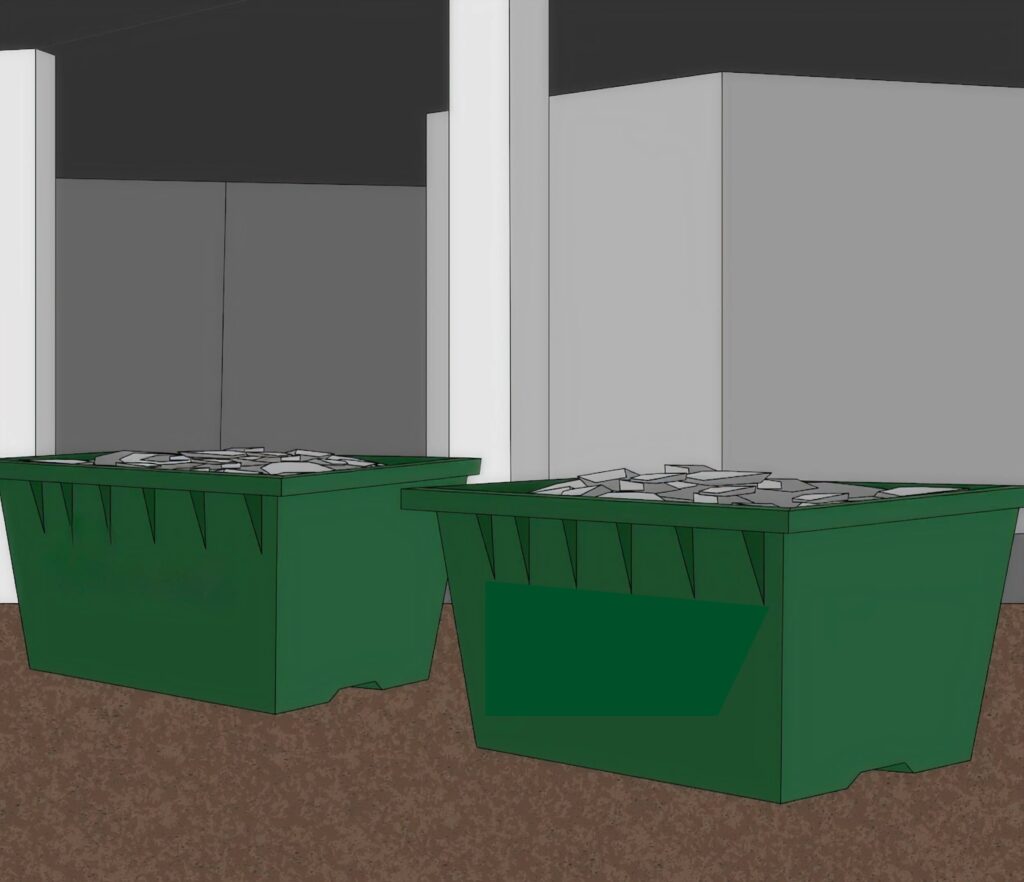
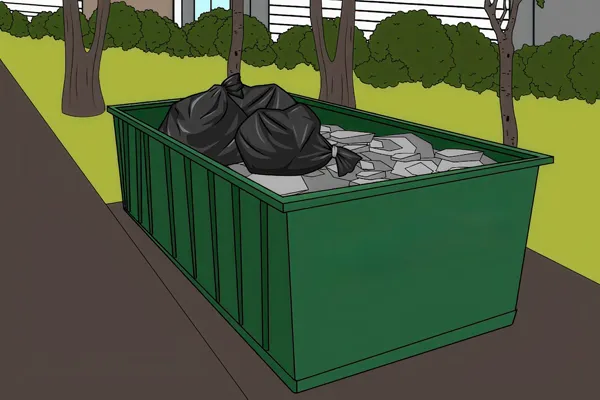
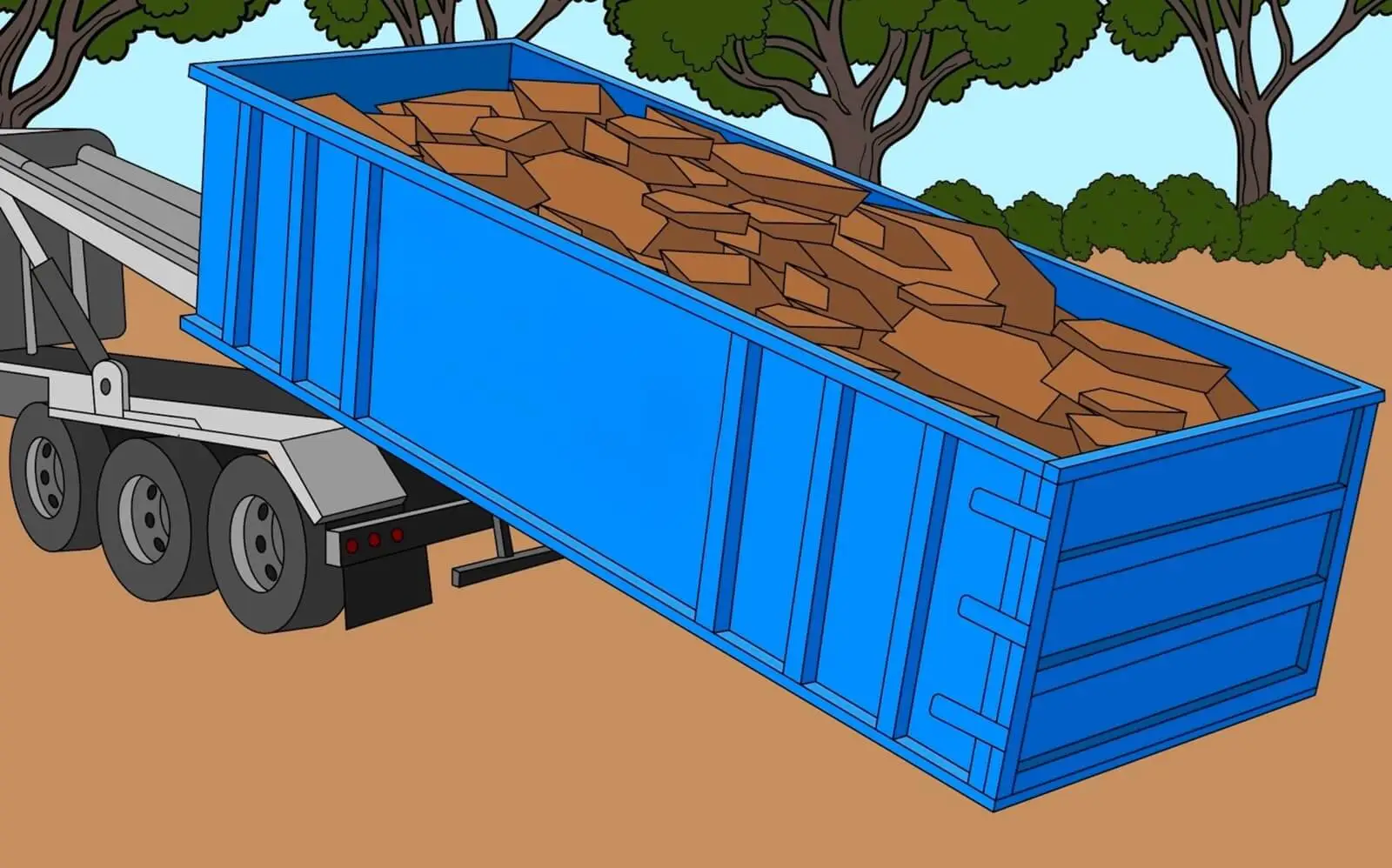
Standard renovation and cleanout debris is fine: lumber, plaster, drywall, siding, shingles, flooring, cabinets, doors, windows, furniture, carpet and cardboard all load without trouble, and clean brick, block and concrete belong in the smallest size.
What has to stay out is the hazardous list, and the City applies it to its own drop-off container in plain words, barring anything designated hazardous under state or federal law. For a rented container that means no paint, stains, solvents, thinners, fuel, motor oil, antifreeze, propane cylinders, pool chemicals, pesticides, asbestos-containing material, wet batteries or liquids of any kind.
The City's container also refuses several things people assume are ordinary debris, and the same logic applies to a rental: oils, tars, accelerants, and mechanical or automotive parts and equipment. Appliances and furniture are handled separately rather than mixed into a construction load as well.
Tires come out. They need a separate route and leaving them in can get a whole load repriced or refused.
Appliances holding refrigerant, so refrigerators, freezers, water coolers and air conditioning units, need the refrigerant recovered by a certified technician before disposal. That is a job to arrange ahead rather than a decision for loading day.
If an item is borderline, say a sealed drum, a partly used tin of deck stain or a cast iron tub, run it past your account manager before it goes in.