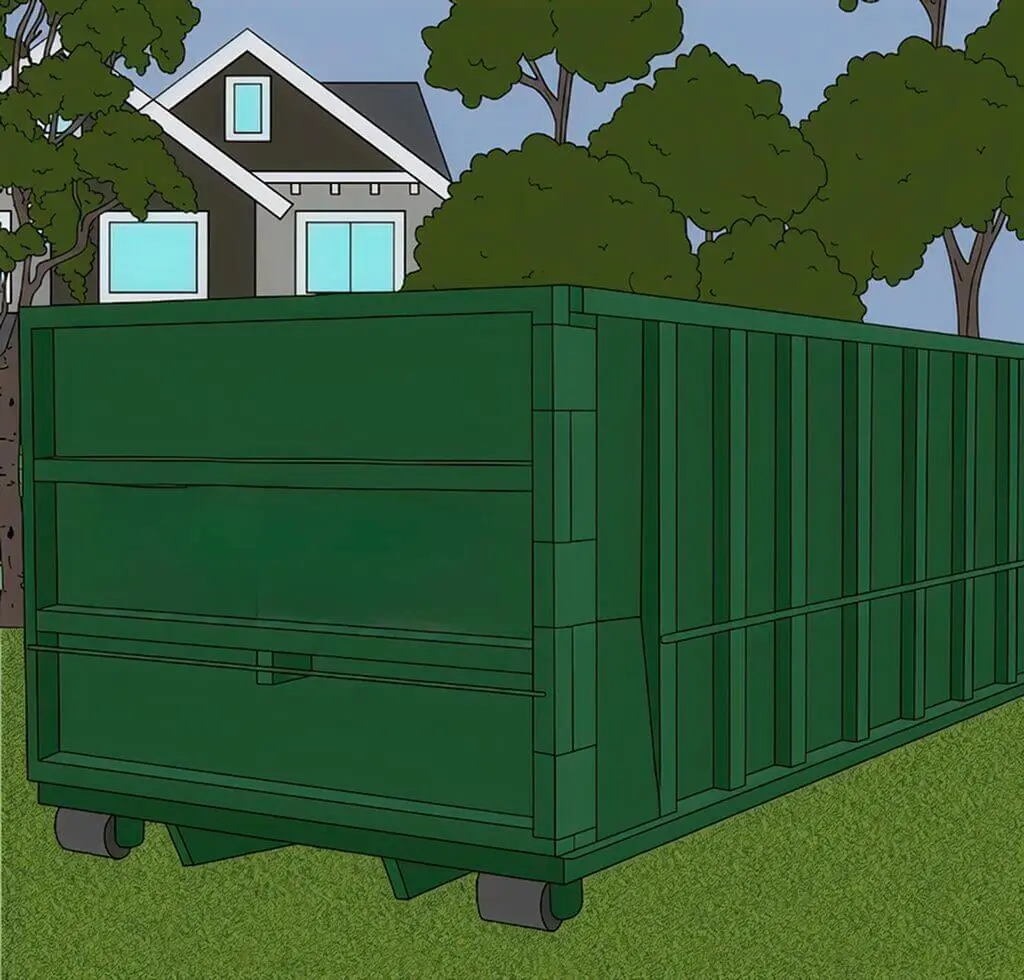
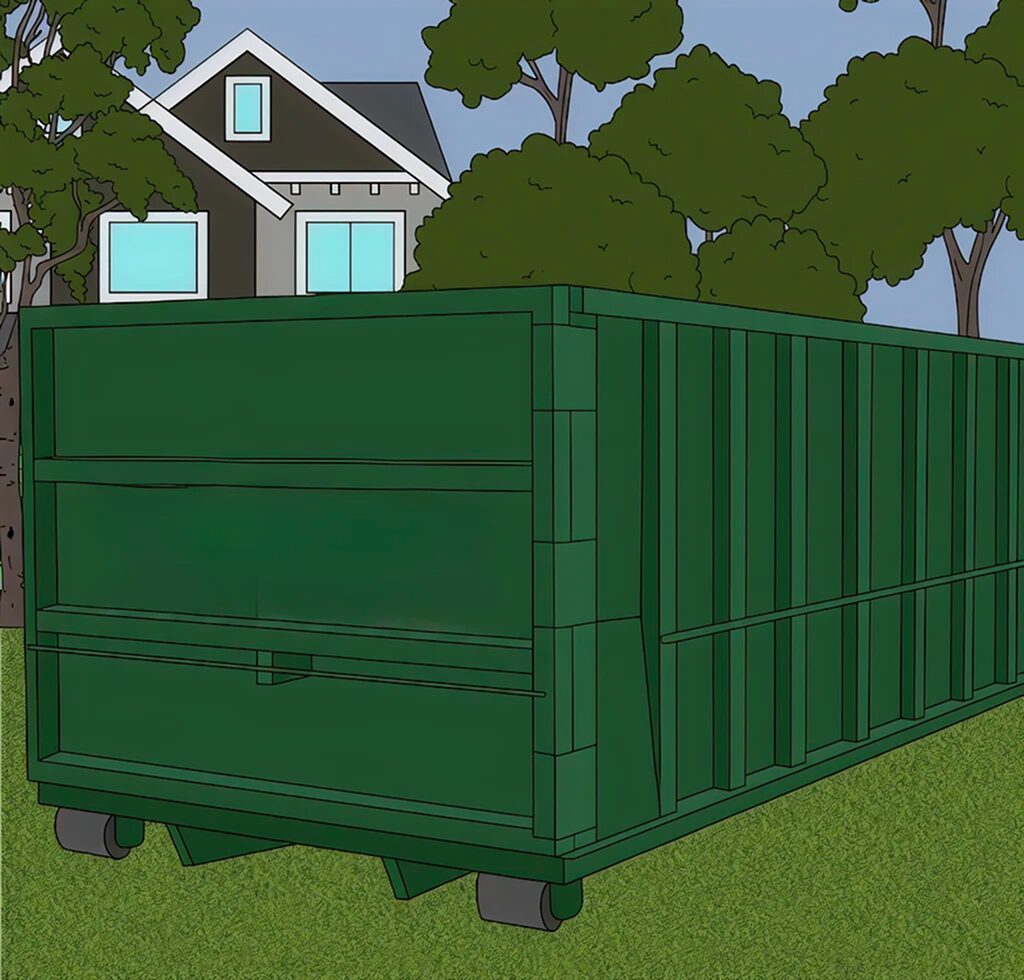
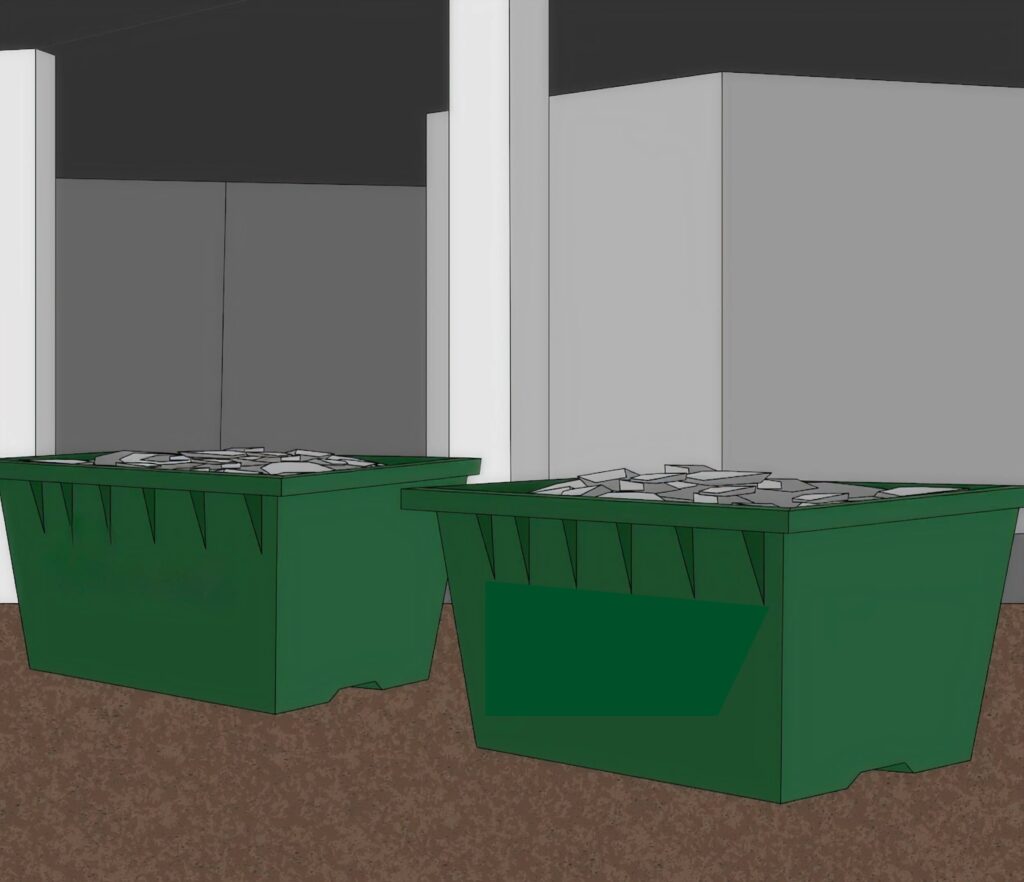
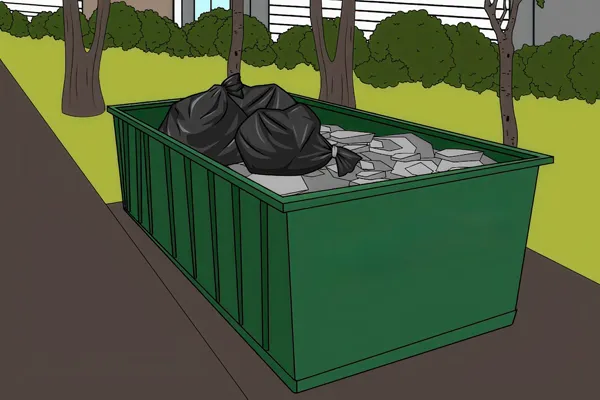
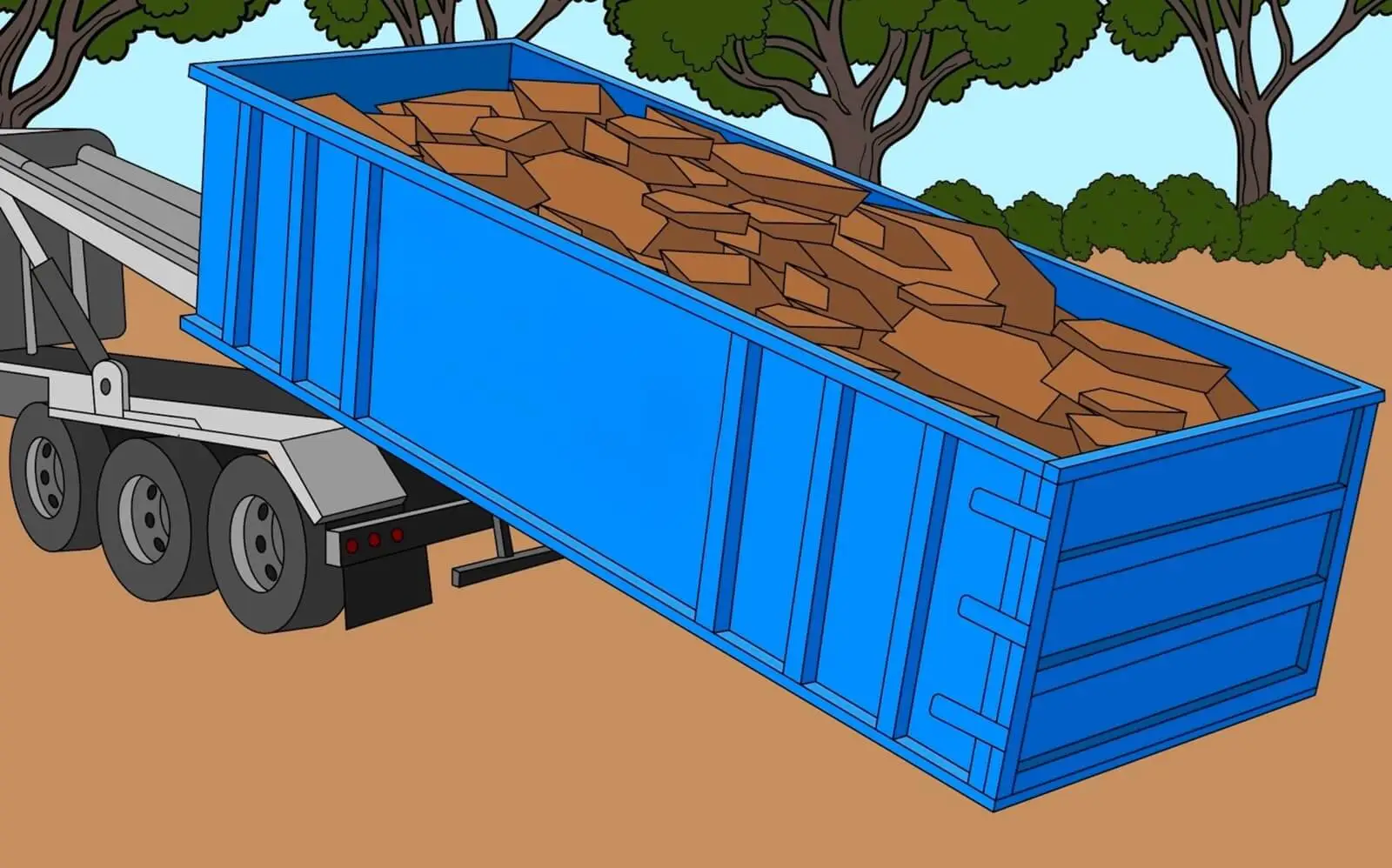
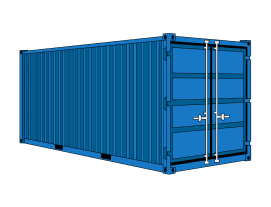
Lumber, drywall, plaster, brick, roofing, flooring, carpet, ceiling tile, cabinets, fixtures, office furniture, partitions, and general cleanout debris are all fine in a roll-off container.
Hazardous material stays out as a matter of course. Paint, solvents, fuel, motor oil, antifreeze, pool chemicals, pesticides, batteries, fluorescent lamps, and electronics all need their own route rather than a container. Liquids of any kind are refused, and so are propane tanks and other pressurized cylinders. Tires need separate handling.
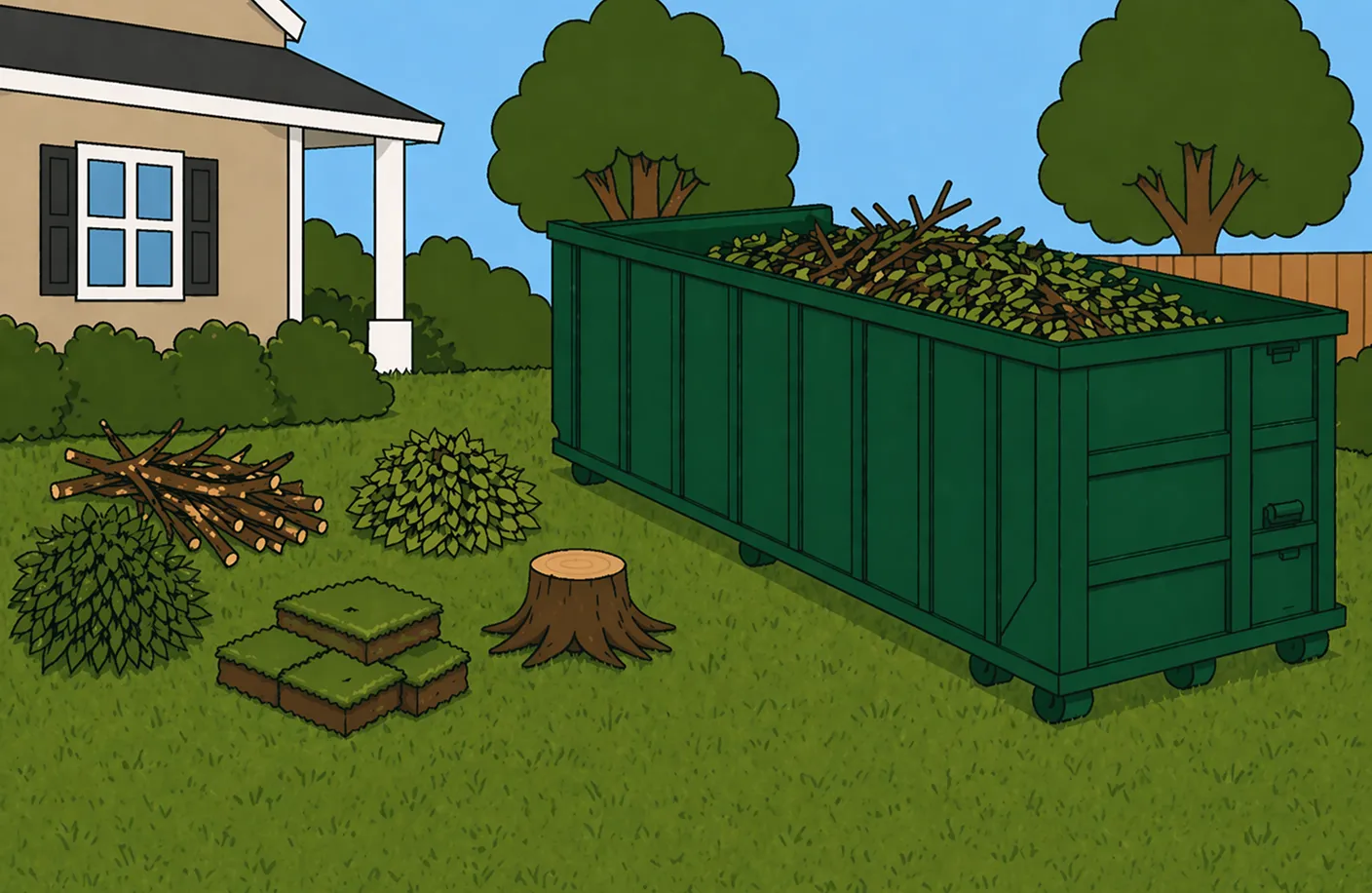
The limits that will actually affect a Troy job are the ones at the gate. The Troy transfer station does not take yard waste, which has to go to the authority's compost site in Rochester Hills instead, and none of the authority's facilities accept brush, branches, or woody tree material. A tree removal and a kitchen remodel therefore cannot share a container here.
The authority's drop-off center at 995 Coolidge handles household hazardous waste, electronics, paper shredding, and foam recycling, but it is worth being clear about what it is: appointment only, residents of the member communities only, with residency checked at the gate, and attendants who can only help lift items under 40 pounds. It is a residents' service rather than a construction destination, so contractor debris does not go there.
Asbestos deserves a sentence on its own. Troy's 1960s and 1970s housing and commercial stock is squarely in the era of asbestos floor tile, tile adhesive, and pipe lagging, and it needs a licensed abatement contractor rather than a container.
Tell your account manager what the job involves when you book and the separate route for anything on that list gets arranged with the container.