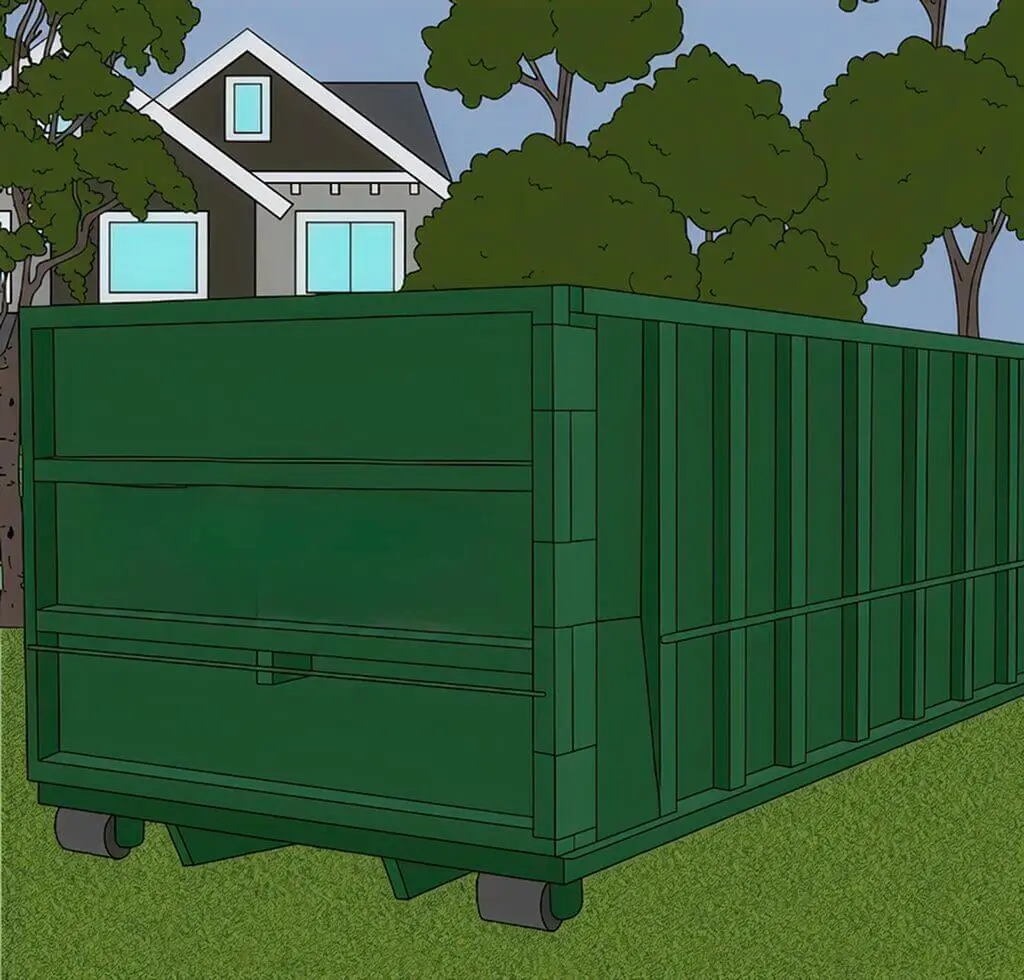
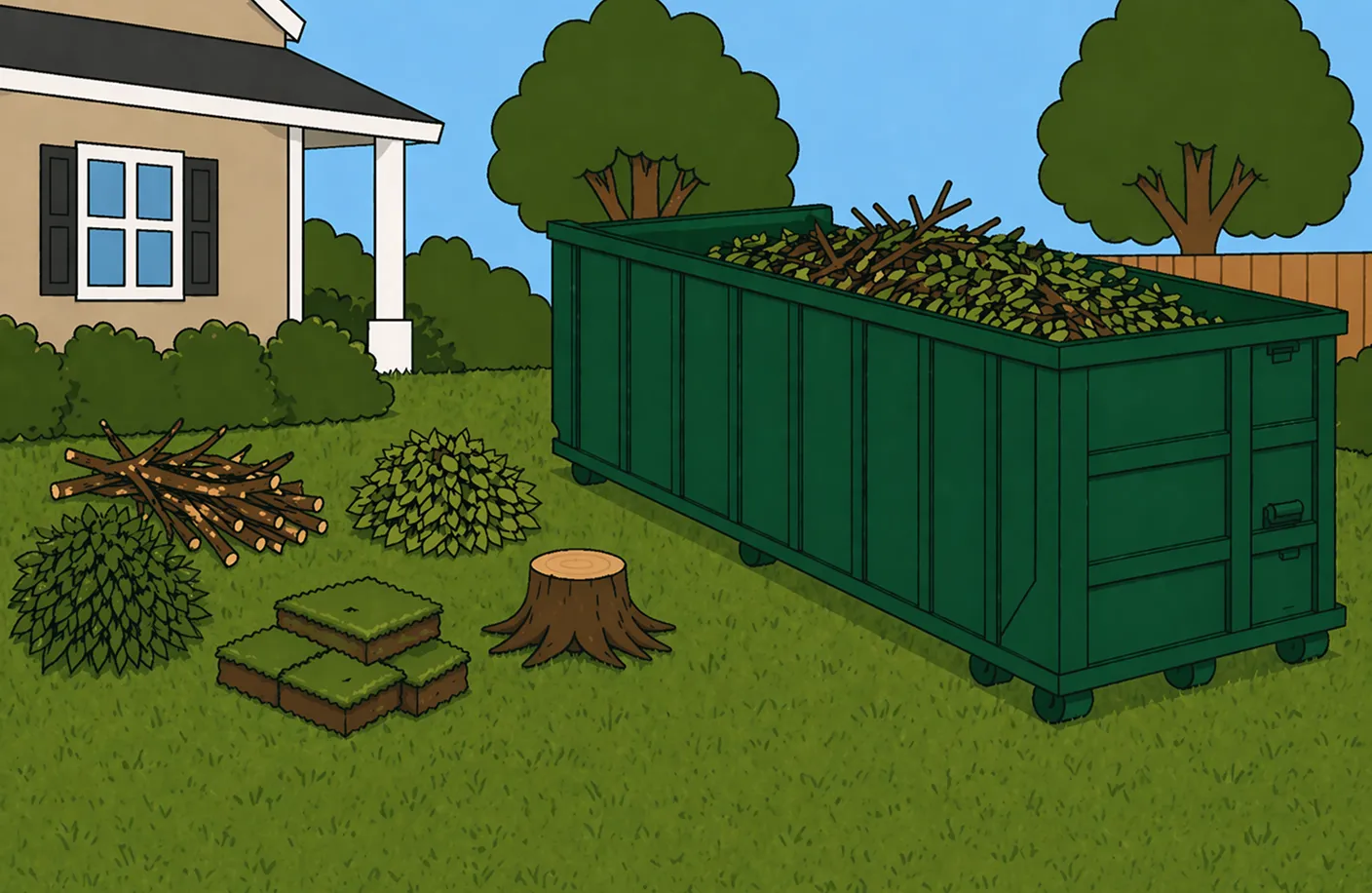
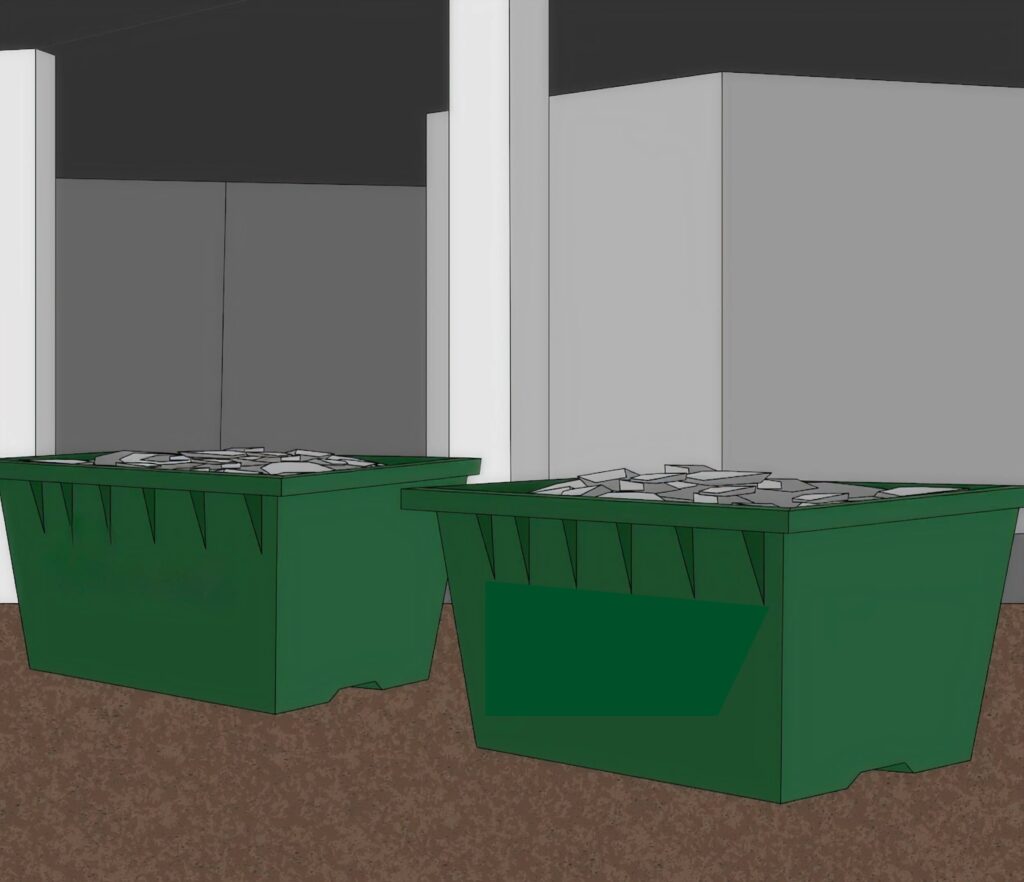
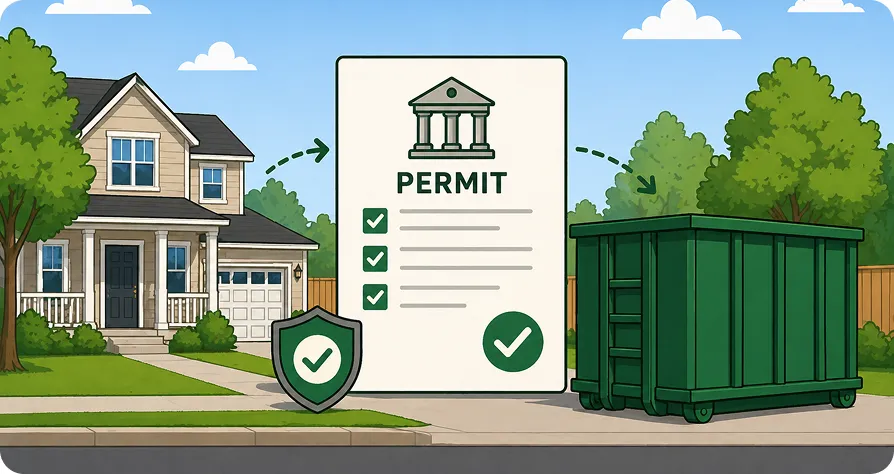
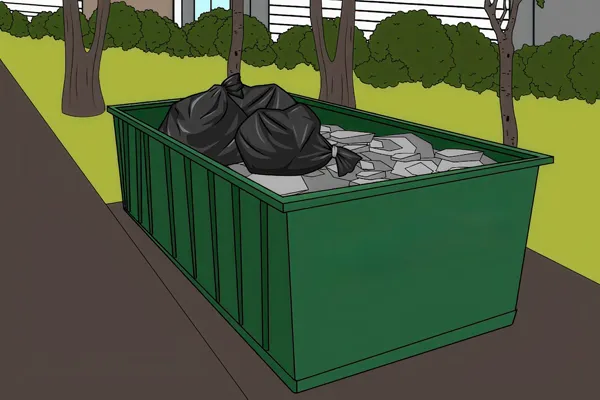
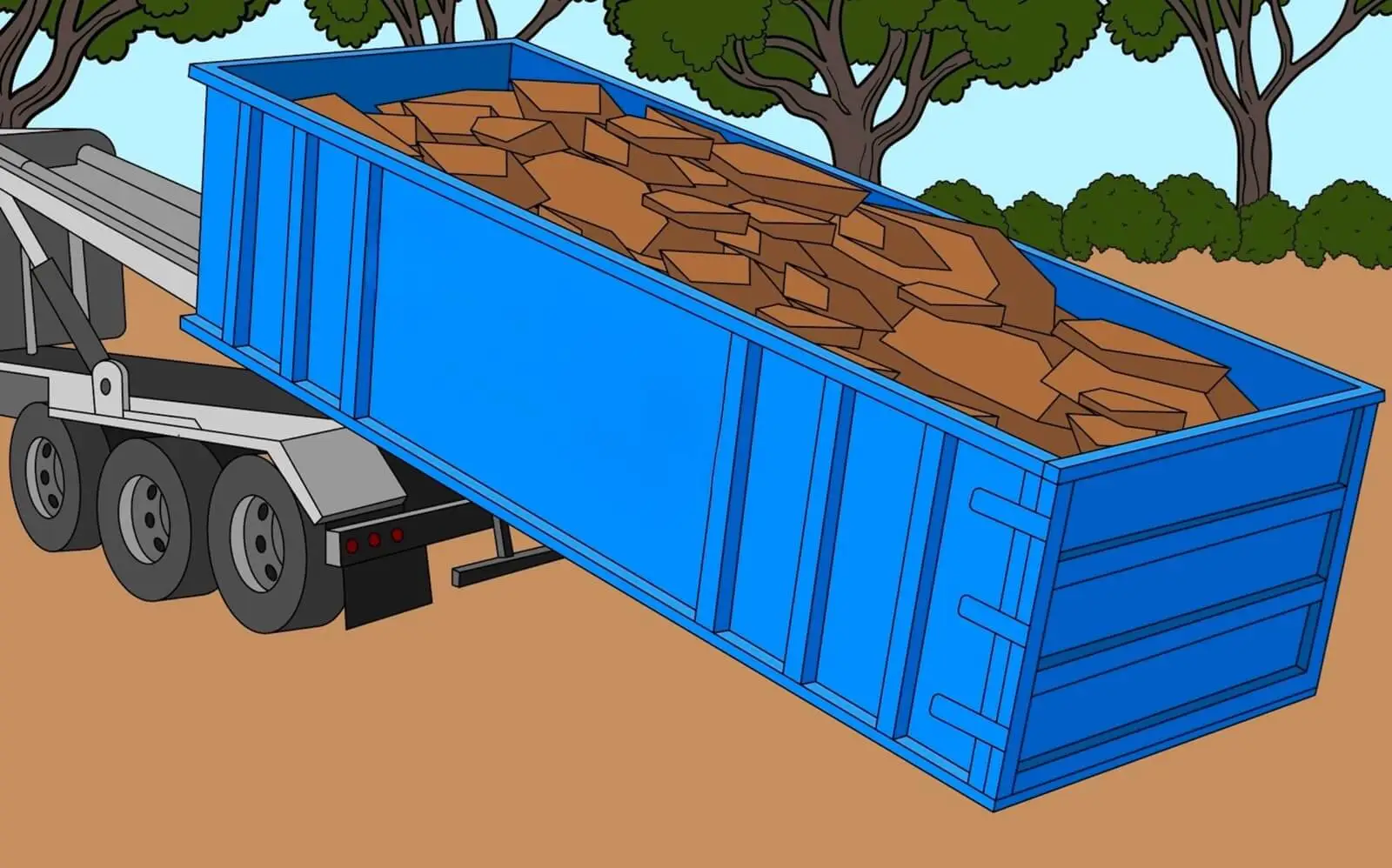
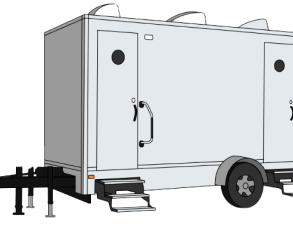
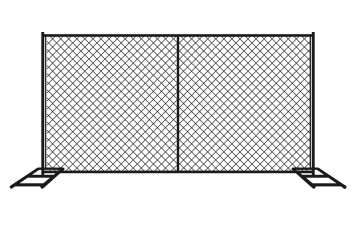
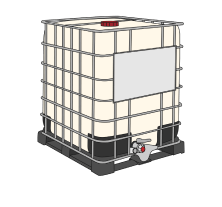
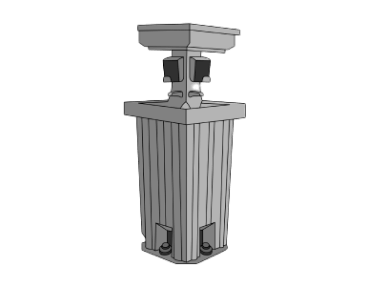
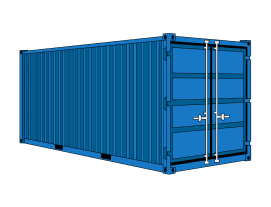
A container on private property, in a driveway or inside a fenced job site, is the normal arrangement in Taylor and that is how nearly every job here is served.
The licensing position is clear and it is wide. Taylor's litter article says no person shall collect, transport, deliver, dispose or remove any solid waste, yard waste or recyclable material generated within the city without first getting a license from the city. The license comes from the city clerk on application and payment of a fee set by council resolution. The only exception written into that rule is for lawn care services taking yard waste from a customer's premises.
Reading the whole of that chapter, there is no construction or demolition carve-out of any kind. The word construction appears fifteen times and never once as an exemption. The city's business licensing chapter, separately, licenses a long list of trades and names no waste activity at all. So the waste license sits in the litter article, and anyone bringing a container into Taylor needs to hold it. Your account manager confirms that is in order before anything is scheduled, which is the practical value of knowing it.
One definitional point is worth stating honestly rather than glossing. Taylor does not write its own meaning for solid waste. It adopts the Michigan state definition by reference. That reference is the reason the license is likely to reach construction debris as well as household waste, and the state text behind it is not something available to us on a route we are willing to rely on. So the position we state is the city's own: the license reaches any solid waste generated in the city, and lawn care is the only published exception. Anything turning on the state definition goes to the city.
Two placement rules apply and both are easy. A container goes at the street or at another location indicated by the director of public services, and it may not be set out for collection before six in the evening the night before. Empty containers come off the collection point by eight the same evening.
One commercial rule is sharper and worth raising early. For a commercial premises, the code says solid waste dumpsters shall, without exception, be placed on cement surfaces no smaller than five feet by eight feet per container, and that containers must be approved by the director of public works. That section sits among rules about the city's own commercial collection, so whether it reaches a temporary container on a job site is a question for the director rather than something we will assert. If your job is at a commercial address, it is the first thing to settle.