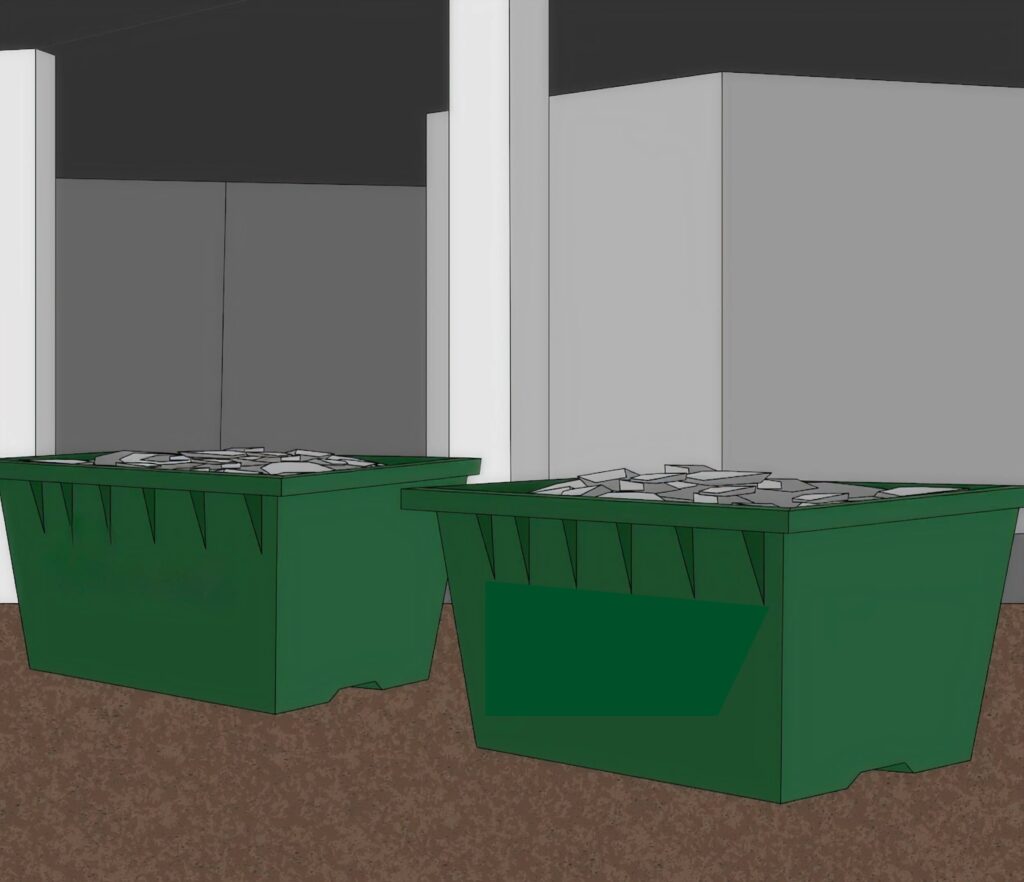
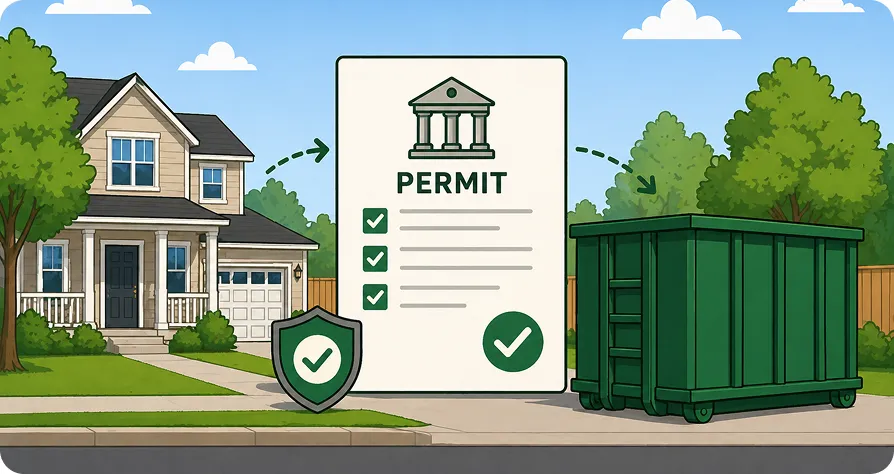
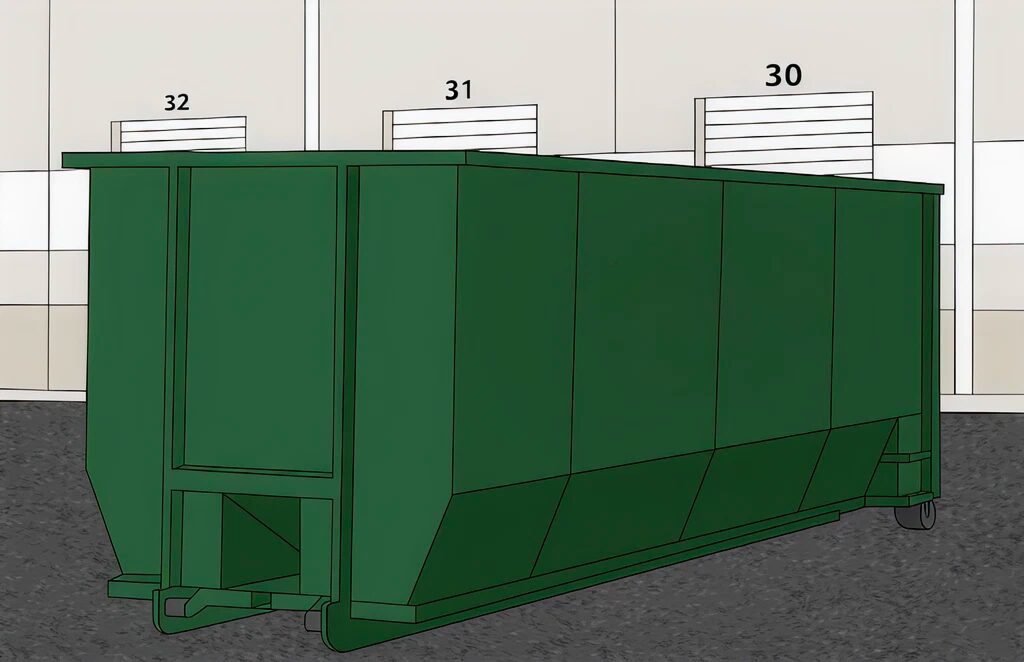
A container on private property, including a driveway or a construction lot, is the normal placement in Spring Hill and the one we recommend. Anything occupying a public street needs the city's authorization first.
Beyond that, the honest answer is better than a confident one. Spring Hill does not publish its municipal code through any service that answers an ordinary request, and the city's own website carries no dumpster rule, no container permit and no hauler roster. So no Spring Hill container permit, day limit, placement rule or street fee is stated here in either direction. Your account manager calls the city and settles the requirement for your address before the delivery date is fixed.
What the city does publish is useful in a different way, because it shows what its own service will not take. Spring Hill's bulky waste pickup runs by appointment for a charge, covers household items such as appliances, grills, small furniture and exercise equipment, and expressly will not collect concrete, bricks, roofing or dirt, along with batteries, tires, paint, chemicals, propane tanks, glass, household hazardous waste and antifreeze. That is the city naming the exact materials a renovation produces as outside its service. The same page notes bulky collection is not provided on private streets.
Routine collection is also narrow. The city states that sanitation crews will only take garbage that is bagged and placed in containers, and that they will not take barrels or brush, nor furniture or appliances on an ordinary round. For anything past a kitchen bag, a container is the designed answer.
Public Works is at 3893 Mahlon Moore Road and is open Monday through Friday, 7:00 a.m. to 3:30 p.m., with the director on 931-451-0244. City Hall is at 199 Town Center Parkway on 931-486-2252.
Tennessee regulates solid waste disposal at state level, and one point is worth knowing rather than quoting: the published copies of the state instrument do not agree with each other on their own adoption date, so no date for it is given below, and the counties' own current published terms are used instead.