
Mon - Sat 7:00 am to 7:00 pm
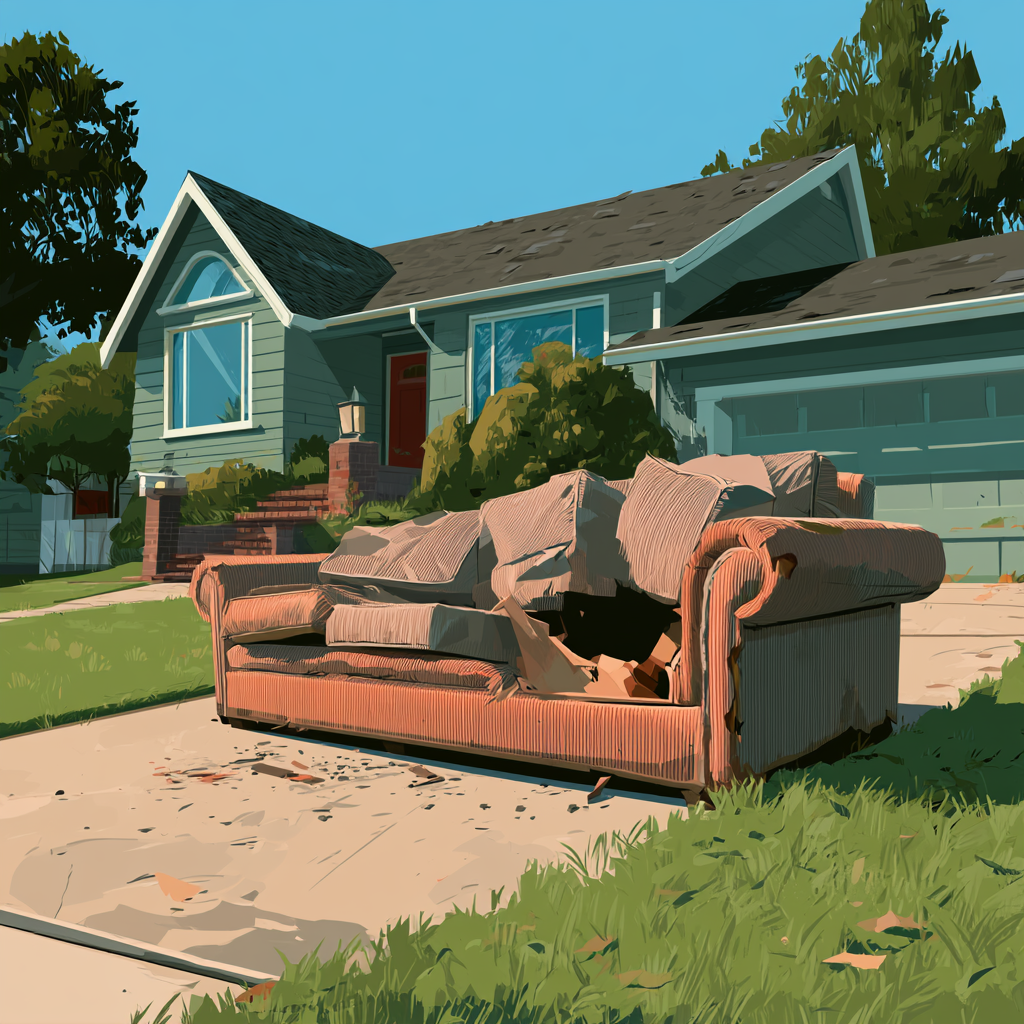
How to Get Rid of Furniture: 7 Ways to Dispose of Old Furniture
Figuring out how to get rid of furniture is one of those chores that sounds simple until you’re standing over a couch that won’t fit in your car. Old furniture is bulky, heavy, and usually off-limits for regular curbside trash, which leaves a lot of people unsure where to start. At Prime Dumpster, we make the furniture disposal part easy, whether you’re clearing one room or an entire house.
It pays to choose well, too. The EPA reports that more than 80% of discarded furniture ends up in a landfill, so a little planning can keep usable pieces in service and out of the dump. This guide covers seven ways to clear out old furniture and how to pick the one that fits your situation.
Fast Facts: 7 Ways to Get Rid of Home Furniture
Old furniture can go out plenty of ways, and the right one comes down to its condition, how much you’ve got, and the effort you want to put in. Here’s a quick rundown to help you find your fit.
| Method | Best For | Cost |
| Roll-off dumpster | Multiple or bulky pieces, whole-home cleanouts | Flat, upfront rate |
| Donate | Gently used, still-usable pieces | Free, often with pickup |
| Sell or give away online | Items in good shape | Free |
| Junk removal | Hands-off removal | Highest, by volume |
| Scrap metal | Metal frames and springs | Free or pays you |
| Landfill | A few items, if you have a truck | Low, per load or ton |
| Curbside | Small pieces | Free to low, varies by city |
When there’s a lot to clear at once, including during a whole home cleanout, a dumpster is usually the simplest answer. A Prime Dumpster account manager can match a roll-off to the size of your haul and your budget, hand you an upfront quote, and set the drop-off and pickup around your schedule, so you can work through the whole house at your own pace.
Donating and Selling Your Furniture
Furniture in good shape can be donated to national charities or sold on local marketplaces, keeping usable pieces out of the landfill and money in your pocket.
If a piece is still in decent condition, someone else can probably use it. National charities like Goodwill, the Salvation Army, and Habitat for Humanity’s ReStore accept many furniture donations, and some will even pick up larger items from your home. Call ahead first, since most won’t take anything stained, torn, or broken, and dropping off an item they can’t accept just passes the disposal problem to them. Donating is also the greener route, and the EPA points to reuse as one of the most effective ways to cut waste.
Selling works well when a piece has real value and you aren’t in a hurry. Craigslist, Facebook Marketplace, and OfferUp all reach local buyers who will usually haul the item away themselves. Post clear, well-lit photos, list the measurements, and be honest about any flaws. If speed matters more than money, price it low or list it free for whoever picks it up first.
“Most people overestimate how much a charity will actually take,” said the Prime Dumpster Pro. “Stained upholstery and broken frames get turned away, so the good stuff gets donated and the rest still needs a dumpster.”
Renting a Dumpster for Furniture
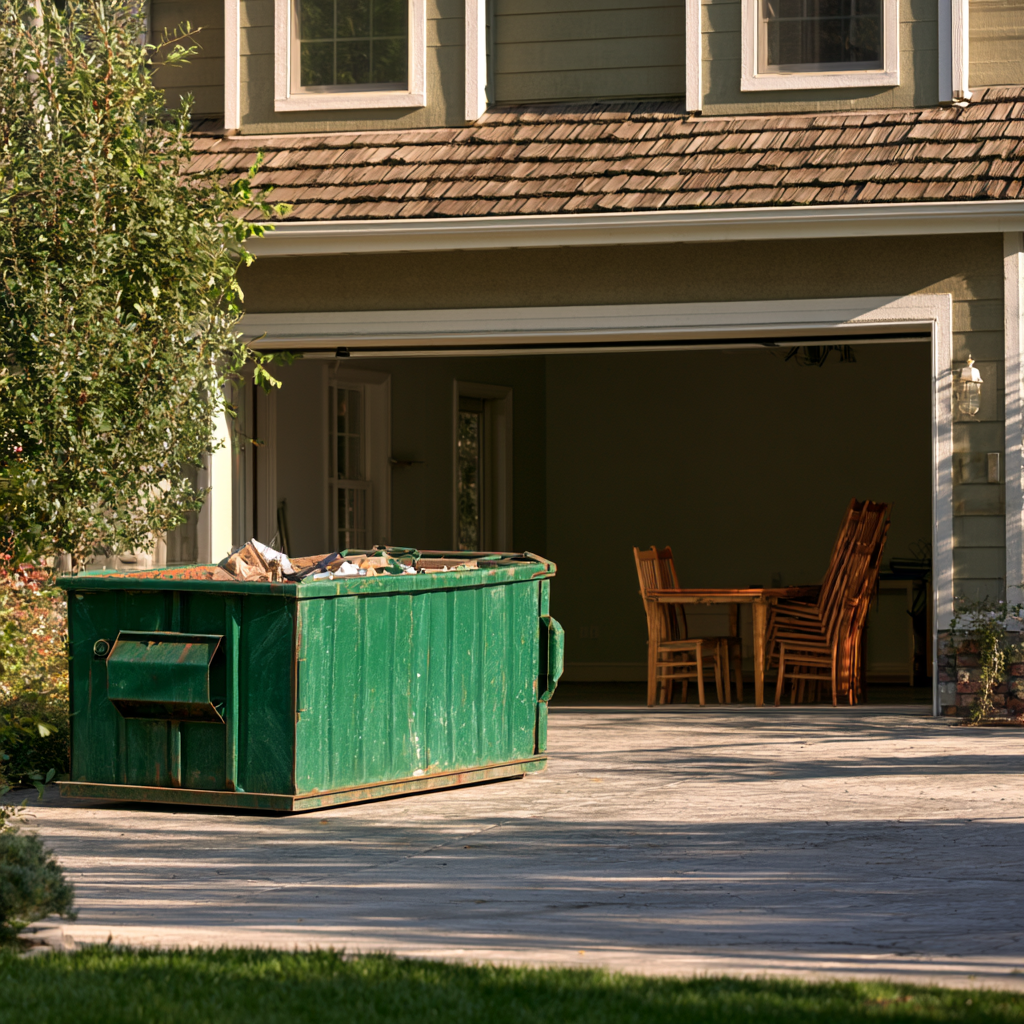
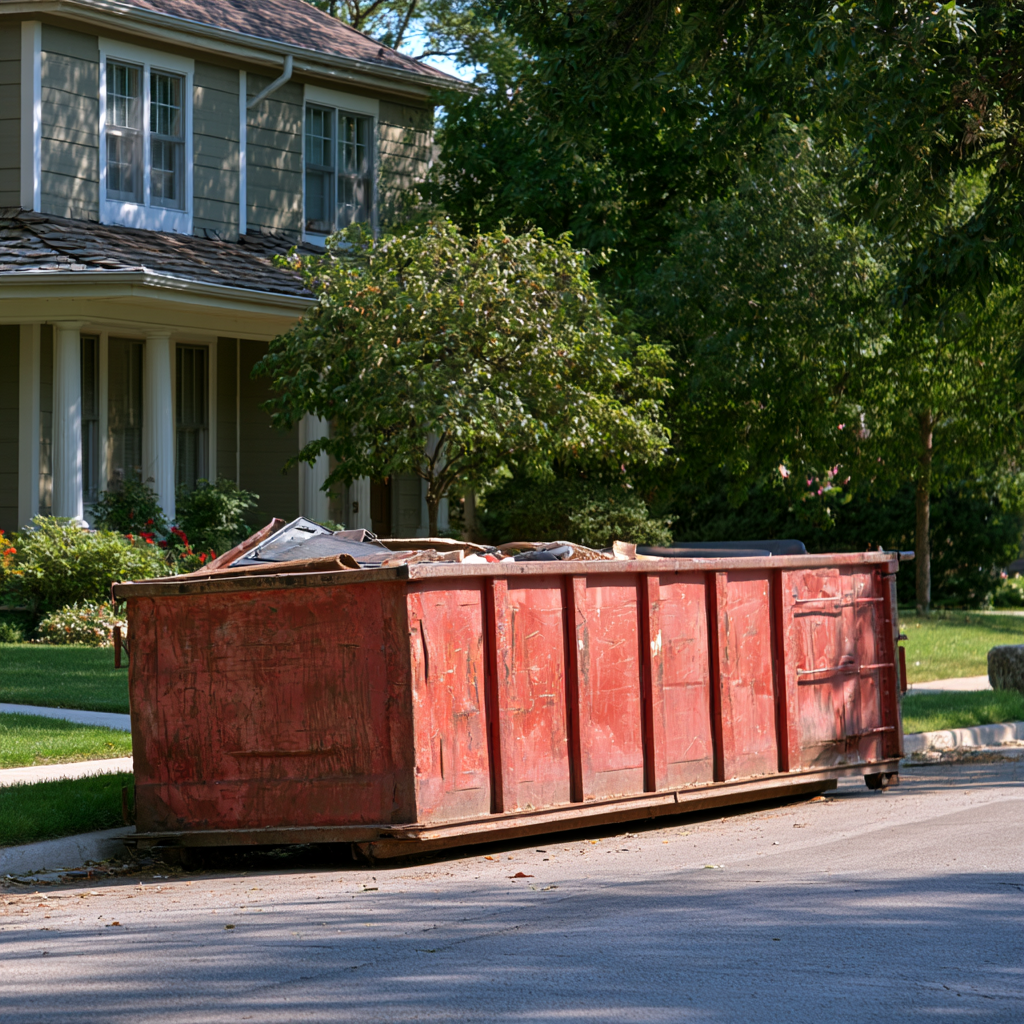
A rented roll-off dumpster is the fastest way to clear multiple or bulky pieces at once, handling everything curbside pickup won’t.
When you’re clearing out more than a piece or two, a dumpster does the heavy lifting on logistics. You get one central spot for everything, room for sofas and mattresses that curbside won’t take, and the freedom to work at your own pace over the rental period instead of making trip after trip to the landfill. For most homes, the container sits in the driveway, which usually doesn’t require a permit, and laying down plywood is a smart way to protect your driveway while you load.
Loading goes smoother with a plan. Put large, flat items like tabletops and mattresses down first to build a stable base, break down bed frames and shelving to save space, and keep everything below the rim so pickup goes off without a hitch. A roll-off dumpster rental is the one option built for volume, which is exactly what a house full of furniture creates.
“Furniture fills a dumpster by size, not weight, so people tend to under-order,” said the Prime Dumpster Pro. “A couch eats space fast, and it’s cheaper to size up once than to rent twice.”
What Size Dumpster Should I Rent to Throw Away Furniture?
The right dumpster size depends on how much you’re clearing. A few pieces need far less room than a full-house cleanout, and these three sizes cover almost every furniture job.
| Size | Dimensions | Best For |
| 10-Yard Dumpster | 12′ × 8′ × 3.5′ | A few pieces or a single-room cleanout |
| 15-Yard Dumpster | 16′ × 7.5′ × 4–5′ | Several rooms’ worth of furniture |
| 20-Yard Dumpster | 22′ × 7.5′ × 4.5′ | A whole-home cleanout or a big decluttering push |
| 30-Yard Dumpster | 22′ × 8′ × 6′ | Rarely needed for furniture alone; better when it’s paired with a renovation |
| 40-Yard Dumpster | 22–24′ × 8′ × 8′ | Rarely needed for furniture alone; suited to large mixed-debris or multi-property cleanouts |
For most furniture-only projects, a 10 or 15-yard is plenty, and the 20-yard earns its keep when you’re emptying an entire house. The 30 and 40-yard sizes only make sense when furniture is part of a much larger cleanout or renovation.
Other Ways to Get Rid of Furniture
Junk removal, scrap yards, the landfill, and curbside pickup each fit a certain situation, from a single chair to a metal bed frame.
Hire junk removal when you’d rather not lift a thing. A crew comes to your home, quotes the job on the spot, and hauls everything away. It’s the most hands-off option, but pricing is based on how much space your items take up, so it adds up quickly on larger loads.
Scrap the metal if you’re tossing metal bed frames, table bases, or couch springs. A scrap yard may even pay you for the material, though you’ll usually need to strip off any fabric or padding first.
Haul it to the landfill yourself if you own a truck and only have a few items. It’s cheap, and many landfills run free bulk-waste days, but call ahead, since some won’t take upholstered furniture at all.
Leave it at the curb for small pieces, as long as your city allows it. Check the rules first, because many areas limit bulk pickup to once a month, charge per item, or require upholstered pieces to be wrapped.
Frequently Asked Questions
We asked our Prime Dumpster Pros for their answers to the most common questions we hear about how to get rid of furniture and what’s involved in renting a dumpster for the job.
Can you put furniture in a dumpster?
Yes. Wooden furniture is almost always fine, and most bulky pieces load easily. A few areas restrict upholstered items, so it’s worth a quick check, and breaking down large pieces helps you fit more.
How do I get rid of a couch?
If it’s still usable, donate or sell it so someone hauls it off for you. If it’s worn out, a dumpster or junk removal service is the simplest route, and cutting a large couch in half makes it far easier to move.
How do I get rid of a mattress?
Some areas require mattresses to be bagged for curbside pickup, and many can be recycled for their steel springs. For a worn-out mattress with no takers, a dumpster or junk removal service handles it cleanly.
Is furniture recyclable?
It’s difficult, because most furniture blends wood, metal, foam, and fabric that are hard to separate. Metal parts can be scrapped, but the mixed materials are why so much furniture ends up in a landfill.
Where can I get rid of furniture for free?
Donating or giving it away online costs nothing, and some cities offer free bulk-collection days. Many landfills also hold free drop-off events a few times a year.
Clearing Out for Good
Getting rid of old furniture comes down to matching the method to the piece: donate or sell what still has life, and rent a dumpster for everything else. With a plan in place, even a full-house clear-out is manageable.
Prime Dumpster is here to make the disposal part painless. We offer flexible rental terms, upfront quotes with no surprises, and a team that’ll help you pick the right size and walk you through the whole process.
Ready to reclaim your space? Contact our team for a fast quote and the right dumpster for your cleanout.
If you are looking for How to Finish a Basement, From Planning to the Final Cleanup, Click Here
Recent Posts


Follow Us
Have any questions?
+1 844 853 3867
Give us a call today so we can help you find the right waste & sanitation solution for
your project!
Contact Us