
Mon - Sat 7:00 am to 7:00 pm

Porta Potty Hygiene Tips for Events
Restroom conditions can shape how attendees feel about an entire event. Research shows that roughly 80% of guests consider restroom quality a major factor in their overall experience, and poorly maintained facilities are one of the fastest ways to generate complaints.
This guide from Prime Dumpster covers practical porta potty hygiene tips for events of all sizes. From pre-event planning and unit selection to servicing schedules and gender-specific accommodations, you’ll find the strategies event organizers use to keep portable restrooms clean, stocked, and comfortable from start to finish.
Fast Facts: Porta Potty Hygiene Tips for Events
“Most event hygiene problems come down to math and timing. Get the unit count right, schedule servicing before things get bad, and keep supplies stocked. That handles about 90% of what goes wrong,” says a Prime Dumpster Pro.
Here are the numbers and benchmarks to keep in mind when planning portable restroom hygiene for your event. For tips aimed at women, see Porta Potty Hygiene Tips for Women.
- Unit ratio: Plan for 1 portable restroom per 100 guests for events lasting up to 6 hours. If alcohol is served, increase to 1 per 75 women and 1 per 400 men, with an additional urinal per 100 men.
- ADA compliance: The Portable Sanitation Association International recommends 1 ADA-compliant unit for every 10 standard restrooms.
- Servicing frequency: Multi-day events typically require servicing every 1 to 3 days. High-traffic events with alcohol may need daily or twice-daily service.
- Handwashing stations: At least 1 handwashing station for every 7 portable restrooms keeps hygiene standards high and supports health code compliance.
- Placement distance: Position units at least 10 to 15 feet from high-traffic gathering areas for privacy and crowd flow.
- Alcohol impact: Alcohol service can increase restroom usage by 20 to 30%, making unit counts and servicing frequency critical planning factors.
These benchmarks generally apply to most standard events. Larger gatherings, multi-day festivals, and events with unique requirements may need adjusted ratios and more frequent servicing. For additional planning resources, visit our porta potty resources hub.

Pre-Event Planning for Portable Restroom Hygiene
Getting unit counts and placement right before the event starts is the foundation of clean facilities throughout the day.
Calculating the Right Number of Units
The number of portable restrooms required depends on guest count, event duration, and whether alcohol is served. For events lasting up to 6 hours, plan for 1 unit per 100 guests. If alcohol is part of the event, increase that ratio to 1 per 75 women and 1 per 400 men, with an additional urinal for every 100 men.
For events exceeding 6 hours, double the unit count. Alcohol can increase restroom usage by 20 to 30%, so building in extra capacity prevents long lines and overuse of individual units.
No
Yes
Strategic Placement for Maximum Accessibility
Where you place portable restrooms matters as much as how many you rent. Position units in high-traffic areas where guests can find them easily, but keep them at least 10 to 15 feet from food service areas, stages, and main gathering zones. For sporting events, place units where they can handle concentrated usage during breaks and halftime.
Cluster units in groups rather than scattering them individually. Grouped placement makes servicing more efficient and helps attendees locate restrooms quickly.
ADA Compliance Requirements
Accessibility is a legal requirement at most public events. The Portable Sanitation Association International recommends 1 ADA-compliant unit for every 10 standard restrooms. These units feature wider doorways, grab bars, and ground-level access to accommodate wheelchairs and mobility aids.
| Event Duration | Standard Ratio | With Alcohol |
| Up to 6 hours | 1 per 100 guests | 1 per 75 women, 1 per 400 men |
| Over 6 hours | Double the count | Add 15 to 25% more |
Porta Potty Hygiene Tips for Events of All Types
Once the logistics are set, a few practical steps keep facilities clean and comfortable throughout the event.
Place portable restrooms on level ground in shaded areas whenever possible. Shade reduces interior temperatures, slows bacterial growth, and helps with odor control. For multi-day events, schedule regular servicing to keep units fresh between sessions.
Stock each unit area with extra supplies. Hand sanitizer, toilet paper, and air fresheners are the essentials. Adding handwashing stations near food service areas provides guests with soap and running water, which goes beyond the hand sanitizer available inside individual units.
For family events, designate some units as family-friendly with extra interior space and changing tables. Well-lit pathways to restroom areas improve both safety and comfort, particularly for evening events.
“The events that get the fewest restroom complaints are the ones where the organizer treated sanitation like any other part of the guest experience, not an afterthought,” says a Prime Dumpster Pro. “Get the ratios right, keep units stocked and serviced, and most guests won’t think twice about using them.”
Choosing the Right Porta Potty Type for Your Event
Not every event calls for the same type of portable restroom. Matching the unit to the occasion improves guest comfort and helps manage your rental budget. Here’s a look at the main types available through Prime Dumpster.
| Type | Price Range | Key Features | Best Event Uses |
| Standard Porta Potty | $199–$349 | Toilet, urinal, toilet paper, hand sanitizer | Festivals, community events, sporting events |
| Deluxe with Sink | $300–$400 | Built-in handwashing station, soap, mirror | Food service events, family gatherings |
| Deluxe Flushing | $300–$400 | Foot-pedal flush, improved ventilation | Weddings, corporate events, VIP areas |
| ADA Handicap Unit | $200–$300 | Wide entry, grab bars, wheelchair access | Any public event requiring ADA compliance |
| Solar Unit | $500–$600 | Solar-powered lighting and ventilation | Remote venues, multi-day events |
| Restroom Trailer | From $1,500 | Multiple stalls, flushing toilets, climate control | Weddings, upscale receptions, corporate functions |
Price ranges are general estimates and vary based on location, rental duration, and service frequency. Your Prime Dumpster account manager will provide a transparent quote tailored to your event.
Standard units handle the bulk of general event needs. For weddings and upscale gatherings, deluxe flushing units or restroom trailers provide a more comfortable experience without requiring permanent plumbing. ADA-compliant units should be included at every public event, regardless of expected attendance.
Professional Maintenance and Servicing Standards
Professional servicing is what separates a clean event restroom from a problematic one. Understanding what maintenance crews do and how often they do it helps organizers plan realistic servicing schedules.
Daily Cleaning Protocols
Cleaning crews use high-pressure washes and EPA-registered disinfectants to eliminate bacteria from all surfaces. In high-traffic areas, units may need cleaning multiple times per day. A standard daily service includes waste removal, surface sanitization, supply restocking, and deodorizing.
Servicing Schedules for Multi-Day Events
For events lasting more than one day, portable restrooms typically need servicing every 1 to 3 days. Larger units with bigger holding tanks may go 2 to 5 days between services. A servicing tanker can hold up to 4,000 gallons of waste, which allows crews to handle multiple units efficiently in a single visit.
Emergency Maintenance
Even with careful planning, issues can come up. A unit may need repair, a holding tank may fill faster than expected, or weather may create access problems. Build a communication plan with your rental provider so emergency service requests get handled quickly without disrupting the event.
| Maintenance Task | Frequency | Purpose |
| Basic cleaning | Daily | Prevents odors, maintains hygiene |
| Deep cleaning | Weekly | Thorough sanitization, extends unit life |
| Waste tank emptying | Every 1–3 days | Prevents overflow, reduces odors |
| Supply restocking | Daily | Keeps toilet paper, sanitizer, and soap available |
Essential Supplies and Equipment
Having the right supplies on hand prevents the small problems that lead to guest complaints.
Keep backup stock accessible to your event team or maintenance crew. Toilet paper and paper towels run out faster than most organizers expect, particularly at events with alcohol service. Hand sanitizer and disinfectant wipes are the first line of defense against germ spread between professional cleanings.
For multi-day events, consider keeping spare parts like replacement faucet handles and extra seat covers on site. A small investment in backup supplies can prevent a single broken component from putting a unit out of service.
Core supply checklist: toilet paper, paper towels, hand sanitizer, disinfectant wipes, air fresheners or deodorizers, trash bags, biodegradable cleaning solution, and rubber gloves for any staff handling maintenance.
Odor Control at Events
Odor management is one of the biggest factors in guest satisfaction with portable restrooms. Shaded placement, proper ventilation, and regular servicing handle most odor issues before they start. For a detailed breakdown of deodorizing products, ventilation techniques, and long-term odor prevention strategies, see our full guide to porta potty odor control.
Gender-Specific Hygiene Considerations
Different attendees have different needs, and accounting for those differences improves the experience across the board.
Women’s Restroom Requirements
Women’s units benefit from extra amenities like seat covers, additional hand sanitizer, and well-stocked supplies. Proper lighting and interior hooks for bags or purses make a noticeable difference in comfort. For more detailed guidance, see our porta potty hygiene tips for women.
Men’s Facility Management
Men’s facilities need adequate ventilation and, when possible, separate urinal units to keep traffic moving efficiently. Regular cleaning of high-traffic units during peak event hours reduces wait times and keeps conditions sanitary. Our guide to porta potty hygiene for guys covers additional strategies.
Family-Friendly Accommodations
Family units should include changing stations and enough interior space for a parent and child. Place these units in easily accessible areas near family-oriented sections of the event. Providing a portable toddler seat for younger children makes the units practical for families with kids who are potty training.
| Attendee Type | Key Needs | Recommended Solutions |
| Women | Privacy, cleanliness | Seat covers, extra sanitizer, hooks, lighting |
| Men | Quick access, ventilation | Urinals, frequent cleaning during peak hours |
| Families | Space, changing areas | Larger units, changing stations, toddler seats |
Event-Specific Considerations
Different events create different demands on portable restroom facilities. Matching your approach to the event type keeps hygiene standards high without overcomplicating the plan.
Outdoor Festivals
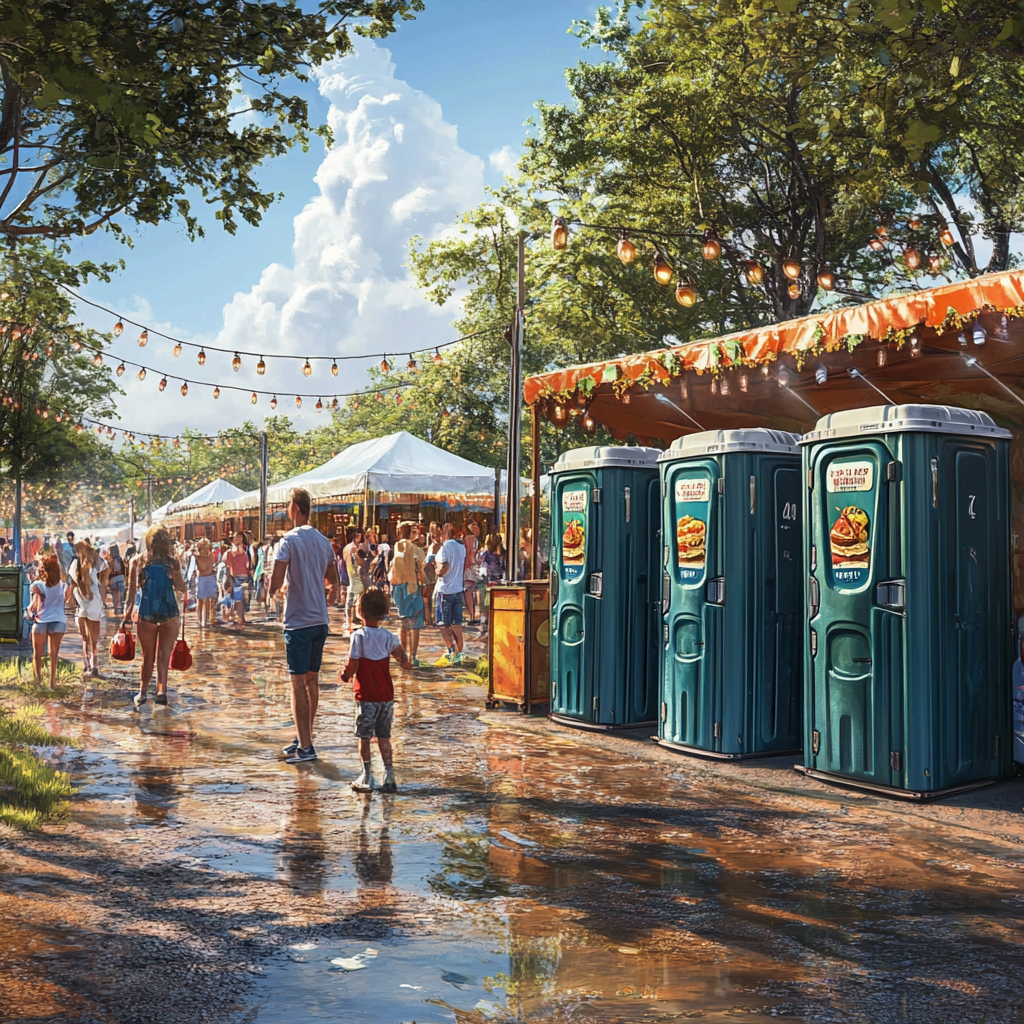
High attendance and alcohol service drive up usage frequency. Standard units cover general crowd needs, while deluxe flushing units reduce odor in high-traffic areas. Position extra handwashing stations near food and drink vendors.
Weddings and Upscale Events
Guest comfort is the priority. Restroom trailers offer flushing toilets, running water, air conditioning, and finished interiors that match the tone of the event. For smaller weddings, deluxe flushing units provide a clean and comfortable option at a lower price point. Include baby changing stations for family-friendly receptions.
Sporting Events
Concentrated usage during breaks and halftime means adequate unit counts matter more than unit upgrades. Position units strategically around the venue for quick access. For multi-day tournaments, schedule daily cleaning to maintain consistent conditions.
For events on construction sites, different requirements apply. OSHA regulations, personal protective equipment considerations, and workforce-specific hygiene protocols call for a separate approach.
Sanitization Protocols for High-Traffic Events
Large-scale events with hundreds or thousands of attendees require more aggressive sanitization than smaller gatherings.
Advanced sanitization programs use hospital-grade sprays that eliminate 99.9% of bacteria on contact. The process includes a pre-cleaning rinse followed by application of the sanitizing solution, which is left on surfaces for several minutes before wiping.
For high-traffic events, consider these additional measures: increase cleaning frequency during peak usage periods, focus extra attention on high-touch surfaces like door handles and locks, install touchless amenities where available to reduce contact points, and use high-capacity dispensers to minimize restocking interruptions.
Proper ventilation plays a supporting role in sanitization. Good airflow prevents bacteria from accumulating inside units and reduces odor buildup. Keep unit doors and vents unobstructed, and avoid placing units in areas with poor air circulation.
| Sanitization Element | Benefit |
| Hospital-grade disinfectants | Eliminates 99.9% of bacteria |
| Increased cleaning frequency | Maintains standards during peak use |
| Touchless amenities | Reduces germ spread through contact |
| Proper ventilation | Prevents bacterial buildup |
Keep Your Event Clean and Comfortable
Clean restroom facilities reflect well on the entire event. The right combination of unit selection, strategic placement, professional servicing, and well-stocked supplies keeps guests comfortable and prevents the hygiene complaints that can overshadow an otherwise successful gathering.
Contact our team at Prime Dumpster for portable restroom rentals tailored to your event, including help with unit counts, type selection, servicing schedules, and ADA compliance planning.
If you are looking for 5 Porta Potty Hygiene Tips for Kids (and Parents), Click Here
Recent Posts


Follow Us
Have any questions?
+1 844 853 3867
Give us a call today so we can help you find the right waste & sanitation solution for
your project!
Contact Us