REQUEST A QUOTE

UNLOCK THE BEST DEALS FOR YOUR DUMPSTER AND PORTA POTTY RENTAL NEEDS! 

  • clock icon

    Mon - Sat 7:00 am to 7:00 pm
Areas We Service

Porta Potty Rental in Washington

At Prime Dumpster, we provide porta potty rentals across 62 Washington cities, from Bellingham and the Puget Sound suburbs down to Vancouver and east to Spokane and the Tri-Cities. Whether you're staffing a construction site, hosting a wedding, fair, or other outdoor events, or need emergency restrooms after a windstorm or flood, we'll help you pick the right units and a cleaning schedule to match.

Your quote comes down to a few simple things. How many units you need, which kind, how long they stay, and how often a driver comes out to clean them all count. The drive to your site and how easy the spot is to reach count too.

Keep reading for price ranges, a quick guide to unit counts, the permit picture in Washington, and the state rules that cover job sites, food stands, and waste.

Call for a free quote
62

cities served in

7

unit types available

3 days

standard rental period

Washington Porta Potty Rental Prices

The prices below reflect average ranges per unit. Your account manager will confirm the rental period, service schedule, and delivery details during your free, custom quote.

Unit Type Average Price Range Best For
Standard Porta Potty $199–$349 Construction sites, small events, backyard projects
ADA-Compliant Porta Potty $200–$300 Public events and job sites that need an accessible unit
Deluxe Flushing Porta Potty $300–$400 Weddings, parties, and guest-facing events
Deluxe Porta Potty with Sink $300–$400 Events where guests need a sink inside the unit
Solar Porta Potty $500–$600 Remote sites and off-grid events
Handwashing Station $150–$250 Food areas, job sites, and events
Restroom Trailer From $1,500 Weddings, corporate events, and long-term sites
Exact prices, unit availability, and service schedules will vary based on many factors.
Standard Porta Potty
Average Price Range $199–$349
Best For Construction sites, small events, backyard projects
ADA-Compliant Porta Potty
Average Price Range $200–$300
Best For Public events and job sites that need an accessible unit
Deluxe Flushing Porta Potty
Average Price Range $300–$400
Best For Weddings, parties, and guest-facing events
Deluxe Porta Potty with Sink
Average Price Range $300–$400
Best For Events where guests need a sink inside the unit
Solar Porta Potty
Average Price Range $500–$600
Best For Remote sites and off-grid events
Handwashing Station
Average Price Range $150–$250
Best For Food areas, job sites, and events
Restroom Trailer
Average Price Range From $1,500
Best For Weddings, corporate events, and long-term sites
Exact prices, unit availability, and service schedules will vary based on many factors.

What Factors Affect Your Porta Potty Rental Price?

Every rental bundles the same core pieces: we bring the units, keep them clean, and haul them away when you're done. What moves the final number is the detail around those steps. - Rental length: Weddings and festivals are usually booked as a weekend rental, so one day and three days tend to cost about the same. Job sites run on four-week billing cycles for as long as the work lasts. - Number of units: Each extra unit adds to the total. Getting the count right up front saves you money and keeps lines moving. - Service visits: A driver pumps the tank, wipes down the inside, and restocks paper and sanitizer on each stop. Heavy use means more stops, and more stops mean a higher bill. - Delivery distance and site access: A flat spot beside a paved lot is quick work. A unit bound for a ferry island, a mountain pass, or a muddy lot in the rainy months takes more time and planning. - Unit type and add-ons: Deluxe flushing units, units with a sink, solar units, and restroom trailers all cost more than a standard unit. Handwashing stations are added on their own.

Two Washington points can change what you order:

  • Washington sets a tighter toilet count for construction crews than the federal rule, as you'll see below. A crew of 12 needs two units here, not one.
  • Food stands at events need warm running water for handwashing. That can mean choosing a handwashing station or a unit with a sink rather than a basic unit alone.

Your Prime Dumpster account manager can go over each factor with you and shape a quote around your dates, headcount, and address.

Do I Need a Permit for a Porta Potty in Washington?

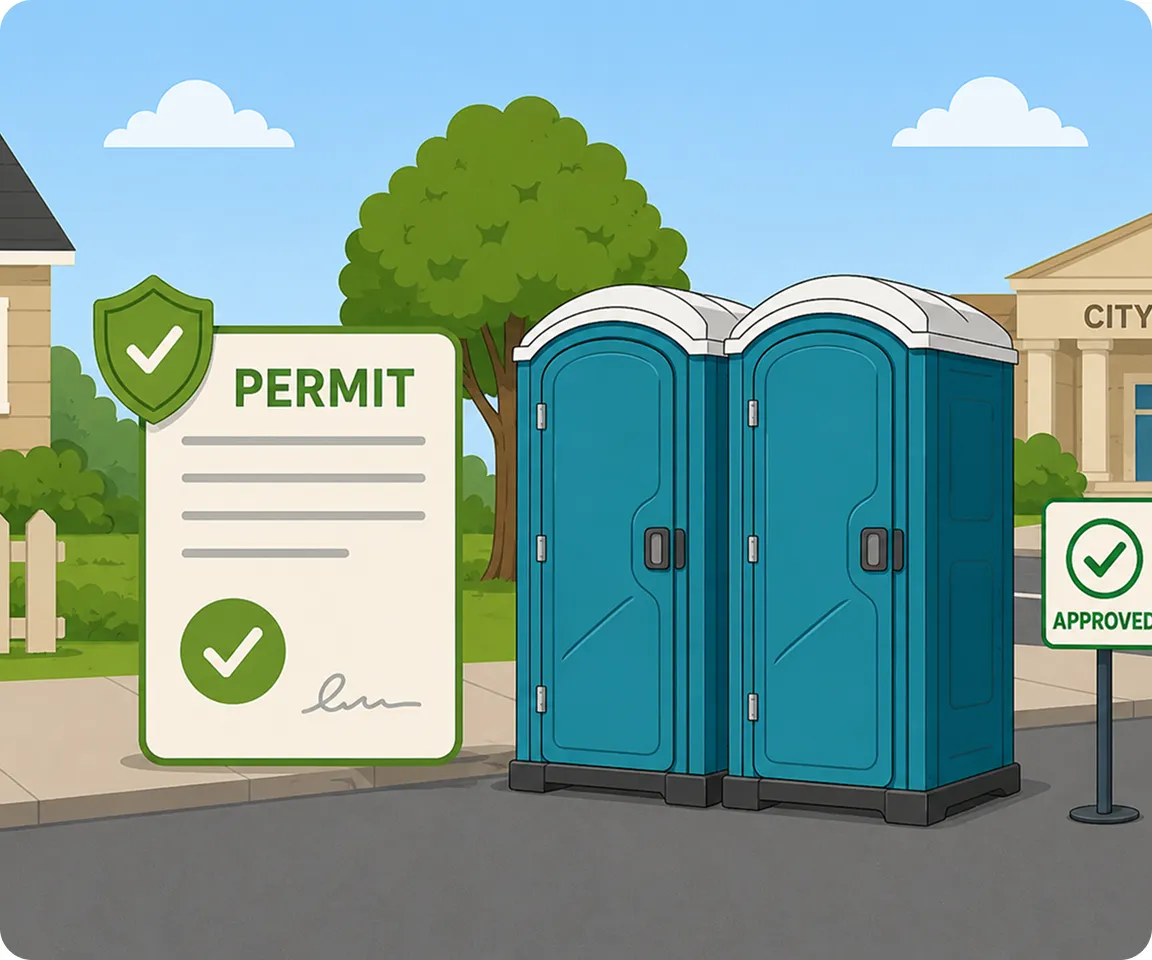
If the unit sits on private land, like your driveway, a farm, or a fenced job site, you usually won't need a permit. Public land is another story. A unit on a street, a sidewalk, or in a park needs an okay from the agency that runs that ground.

Washington has no single porta potty permit. The office depends on the spot:

  • State highways: The Washington State Department of Transportation handles its own right-of-way. Work there calls for a General Permit, and WSDOT asks you to reach out to your area development services manager before you apply.
  • State routes inside a city: When a state highway doubles as a main street, state law puts the city in charge of everything past the curb. So a unit on that sidewalk is a city question, not a WSDOT one. Freeways stay with the state.
  • City streets, county roads, and parks: The city or county sets its own rules. Many won't allow units on a sidewalk at all, and parks often want a reservation.
  • Events on a state highway: A parade or run that uses a state route needs a special event notice to WSDOT at least 90 days ahead. Most cities also want their own event permit, which often asks about restrooms.
  • Food at your event: Each food stand needs a permit from the county health department. You can find yours in the state's list of local health departments.

Since a city sidewalk can border a state route, the exact address decides the office. Your account manager can help track down the right contact before your delivery date.

How Many Porta Potties Do I Need?

Start with who will use the units and for how many hours. These rules of thumb cover most jobs: - Events: Figure 1 unit for every 50 guests at an event of about four hours. Serving beer or wine? Add 15 to 20 percent more. - Construction sites: The federal worker-safety rule asks for 1 toilet for up to 20 workers, then 1 toilet and 1 urinal per 40. Washington's own rule is stricter, so most crews here need more units than that. - Accessible units: For public events, plan at least 1 accessible unit in each group, or roughly 1 out of every 20. - Emergencies: For storm cleanup or a water outage, plan 1 unit for every 10 relief workers.

Hot days, long hours, and food all fill tanks sooner. Try our porta potty calculator for a first estimate, then ask your account manager to check the number.

Porta Potty Rules and Requirements in Washington

Most Washington rules that touch a rental fall into four groups: job sites, access, food, and waste. - Job site counts: Washington runs its own worker-safety program through the Department of Labor and Industries. Its construction sanitation rule calls for 1 toilet for up to 10 workers, 2 for 11 to 25, 3 for 26 to 40, 4 for 41 to 60, and 5 for 61 to 80. Past 80, add one more for each extra 20 workers. Units need an inside latch, and a mixed crew of 20 or more needs separate units for men and women. - Accessible units: When portable toilets are grouped for public use, federal ADA standards want 5 percent of each group to be accessible, with at least one per group. Units kept only for a building crew don't count toward that rule. - Food stands: Under the state food code, a temporary food stand must have toilets its workers can reach the whole time it's open, with warm running water for washing hands. The handwashing setup must sit within 25 feet of where food is made or served. If there's no plumbing, a large insulated jug of warm water with a spigot can do the job. - Waste handling: Washington's biosolids rules count portable toilet waste as septage. The Department of Ecology oversees the plants and septage sites that treat it through its biosolids permit system. In plain terms, the waste from your units is trucked to a treatment site, never dumped on the ground or down a storm drain.

If you're running a public event, a food fair, or a long build with a big crew, your Prime Dumpster account manager can confirm which of these rules apply and set up your units to meet them.

Cities We Serve in Washington

62

locations served across

With just one call or text, our team coordinates the services you need through our network of vetted local hauling partners, saving you valuable time and resources. Whether you’re overseeing a construction project, handling commercial waste, managing government contracts, or organizing large-scale events, Prime Dumpster delivers the expertise and reliability you need to keep operations running smoothly.

Frequently Asked Questions

How much does a porta potty rental cost in Washington?

Standard units average $199–$349 each, and ADA-compliant units average $200–$300. Deluxe flushing units and units with a sink run $300–$400, while restroom trailers start at $1,500. How many units you rent, how long you keep them, and how often they're cleaned set your final price. Your account manager confirms it in a free quote.

How many porta potties do I need for an event?

A good starting point is 1 unit per 50 guests for about four hours. Add 15 to 20 percent if alcohol is served, and more for all-day events or hot weather. Public events should have at least one accessible unit in each group. Our calculator gives a quick count, and your account manager can fine-tune it.

Do I need a permit for a porta potty in Washington?

Usually not on private property. A unit on a state highway needs a WSDOT General Permit, while city streets, sidewalks, and parks fall to the city or county. A parade on a state route needs WSDOT notice 90 days ahead. Your account manager can help you figure out which office to call.

How often are porta potties serviced?

Most rentals include one cleaning visit a week. The driver pumps the tank, cleans the inside, and restocks paper and sanitizer. Large crews, busy events, and summer heat may call for more visits. Washington job sites also need units kept clean and stocked all shift. Your account manager builds a schedule around your use.

Do I need an ADA-accessible porta potty?

Yes, if members of the public will use your units. Federal rules ask for about 5 percent of each group to be accessible, and at least one per group. Units used only by a building crew are exempt, though many sites add one anyway. Your account manager can help you choose the right mix.

How far in advance should I book a porta potty in Washington?

For a job site, a few days' notice usually works, and delivery often comes in 24 to 48 hours. For summer weddings, fairs, and festivals, book several weeks out. If your event uses a state highway, WSDOT wants notice at least 90 days before, so start that paperwork early.

Additional Porta Potty Resources

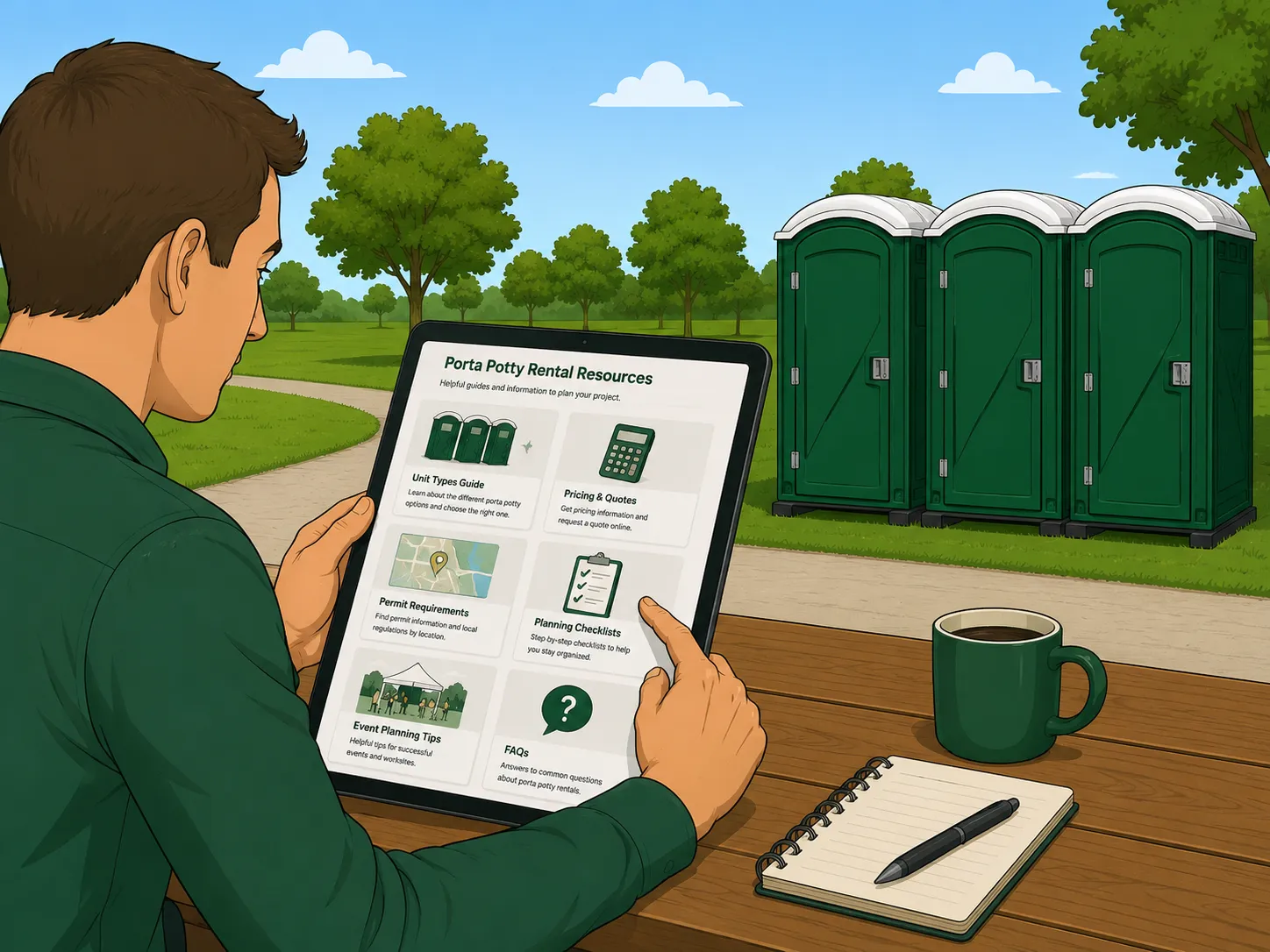
Porta Potty Resources Hub

Find all porta potty rental resources in one place, from pricing and unit types to permits and planning guides.
Porta Potty Pricing

Learn more details about porta potty rental pricing, including easy tips to save money.

Porta Potty Permits

Permit requirements can vary by project and location. Learn more about porta potty permits, regulations, and planning requirements.


We offer other services in Washington

Pair your Porta Potty rental with other services in your area

Dumpster Rentals

Waste Compactor

Commercial Waste

Restroom Trailer

Temporary Fencing

Holding Tanks

Handwash Station

Pumping Services

Shower Trailers

Mobile Office Trailers

Storage Containers

Give us a call today so we can help you find the right waste & sanitation solution for your project!