Mon - Sat 7:00 am to 7:00 pm
Perfect For:
Starting At: Contact Us For Best Price
*Specifications and exact dimensions may vary slightly based on model and location
Request a Quote NowREQUEST A QUOTE
UNLOCK THE BEST DEALS FOR YOUR DUMPSTER AND PORTA POTTY RENTAL NEEDS!
Mon - Sat 7:00 am to 7:00 pm
Home Areas We Service Washington Porta Potty Rental Walla Walla, Washington 99362
Find Sustainable Porta Potty
in Walla Walla
At Prime Dumpster, we provide porta potty rentals across Walla Walla, Washington, for construction crews working through a Blue Mountain summer, for harvest and vineyard work out in the county, and for every kind of event from a downtown street festival to a wedding on a wheat-country hillside. Demand here swings hard with the season, and so does the kind of unit people want.
What you pay comes down to how long you keep the unit, how many you need, how often the driver returns, and how far the truck travels to reach you. Below you will find the prices, the counts Washington law expects on a job site, the city and county rules that decide where a unit may stand, and how Prime Dumpster gets the waste out of town.
One Walla Walla cost driver is unusual enough to be worth knowing before you compare quotes. The city's own wastewater ordinance sets the terms on which its treatment plant takes our load, and it charges double for septage that comes from outside Walla Walla County. A job inside the county is cheaper to service than an identical job over the county line, and that difference is real rather than a rounding habit.
Distance out to the vineyards and the wheat ground matters too. A unit at a harvest site twenty minutes past the city limits costs more to keep serviced than one on a downtown lot, because every service visit is a round trip. Rural placements also tend to need the solar unit rather than a standard one, since there is no light out there after dusk.
Season is the third driver. Spring and early autumn are busy with both building work and events, and the units that go first are the flushing models and the trailers. Your account manager can hold stock for a dated event if you book while there is still choice.
Looking for a dependable porta potty rental solution? Contact us today for a free quote! We're here to provide you with a straightforward and competitive estimate for all your porta potty rental needs. Find out how easy sanitation can be with Prime Porta Potty.
Received your quote and ready to proceed? We make choosing your porta potty rental simple and efficient. Contact us to select the best options for your needs and we'll take care of the rest.
Scheduling your porta potty delivery is a breeze. Just tell us when and where you need it, and we’ll handle the rest. Prime Porta Potty is all about quick and reliable service, getting the right unit to your site when you need it.
Done with your event or need your porta potty serviced? Just give us a call to arrange a fast and convenient pickup. We’re ready to quickly remove or service your unit and make your experience hassle-free.
The prices below reflect average ranges for a standard five-day rental period. Your account manager will confirm tonnage, overage rates, and other project specifics during your free, custom quote.
| Unit Type | Average Price Range | Best For |
|---|---|---|
| Standard Porta Potty | $199–$349 | Construction sites, small events, backyard projects |
| ADA-Compliant Porta Potty | $200–$300 | Public events and job sites that need an accessible unit |
| Deluxe Flushing Porta Potty | $300–$400 | Weddings, parties, and guest-facing events |
| Deluxe Porta Potty with Sink | $300–$400 | Events where guests need a sink inside the unit |
| Solar Porta Potty | $500–$600 | Remote sites and off-grid events |
| Handwashing Station | $150–$250 | Food areas, job sites, and events |
| Restroom Trailer | From $1,500 | Weddings, corporate events, and long-term sites |
Perfect For:
Starting At: Contact Us For Best Price
*Specifications and exact dimensions may vary slightly based on model and location
Request a Quote Now
Perfect For:
Starting At: Contact Us For Best Price
*Specifications and exact dimensions may vary slightly based on model and location
Request a Quote Now
Perfect For:
Starting At: Contact Us For Best Price
*Specifications and exact dimensions may vary slightly based on model and location
Request a Quote Now
Perfect For:
Starting At: Contact Us For Best Price
*Specifications and exact dimensions may vary slightly based on model and location
Request a Quote Now
Perfect For:
Starting At: Contact Us For Best Price
*Specifications and exact dimensions may vary slightly based on model and location
Request a Quote Now
Perfect For:
Starting At: Contact Us For Best Price
*Specifications and exact dimensions may vary slightly based on model and location
Request a Quote Now
Perfect For:
Starting At: Contact Us For Best Price
*Specifications and exact dimensions may vary slightly based on model and location
Request a Quote Now
Perfect For:
Starting At: Contact Us For Best Price
*Specifications and exact dimensions may vary slightly based on model and location
Request a Quote Now
Perfect For:
Starting At: Contact Us For Best Price
*Specifications and exact dimensions may vary slightly based on model and location
Request a Quote NowWashington does not lean on the federal worker-sanitation table. It writes its own, and it is stricter from the eleventh worker on:
Compare that with the federal rule, which would still allow a single unit up to twenty workers, and you can see where a Walla Walla site gets caught out. The second unit lands at eleven people, not twenty-one.
The state rules add specifics worth pricing in. Wash water has to be tepid, between 70 and 100 degrees, at every site. A unit must sit within 200 feet of the crew and appear on every third floor of a structure. The holding tank may not be allowed past half full. Someone has to inspect the units at the start of each shift and keep that record for 72 hours. Where twenty or more workers of both sexes are on site, you need separate facilities for each sex. On a multiemployer job the prime contractor carries the liability.
There is one escape and it is measurable: a mobile crew does not need its own unit if a sanitary facility is within three minutes travel by the transportation provided. Three minutes, not "nearby" in the abstract.
One state requirement we cannot meet, stated plainly. Washington also requires a lactation space that is not a bathroom or a portable toilet. No unit in the table above satisfies that, and no supplier's unit can. If your site needs one, it has to be a room or a trailer fitted out for the purpose, and your account manager will say so rather than sell you around it.
For events, Washington publishes a schedule but it is narrower than people assume. It reaches an outdoor music gathering expecting 2,000 or more people running five hours or longer, and it then asks for three toilets for each sex for the first 500 patrons and one more per sex for each additional 500. Government-sponsored fairs on established fairgrounds sit outside it. A 600-person winery event is not inside that rule, so the number comes from planning rather than from the state. We work to one unit per 50 guests over about four hours, and add fifteen to twenty percent where alcohol is served.
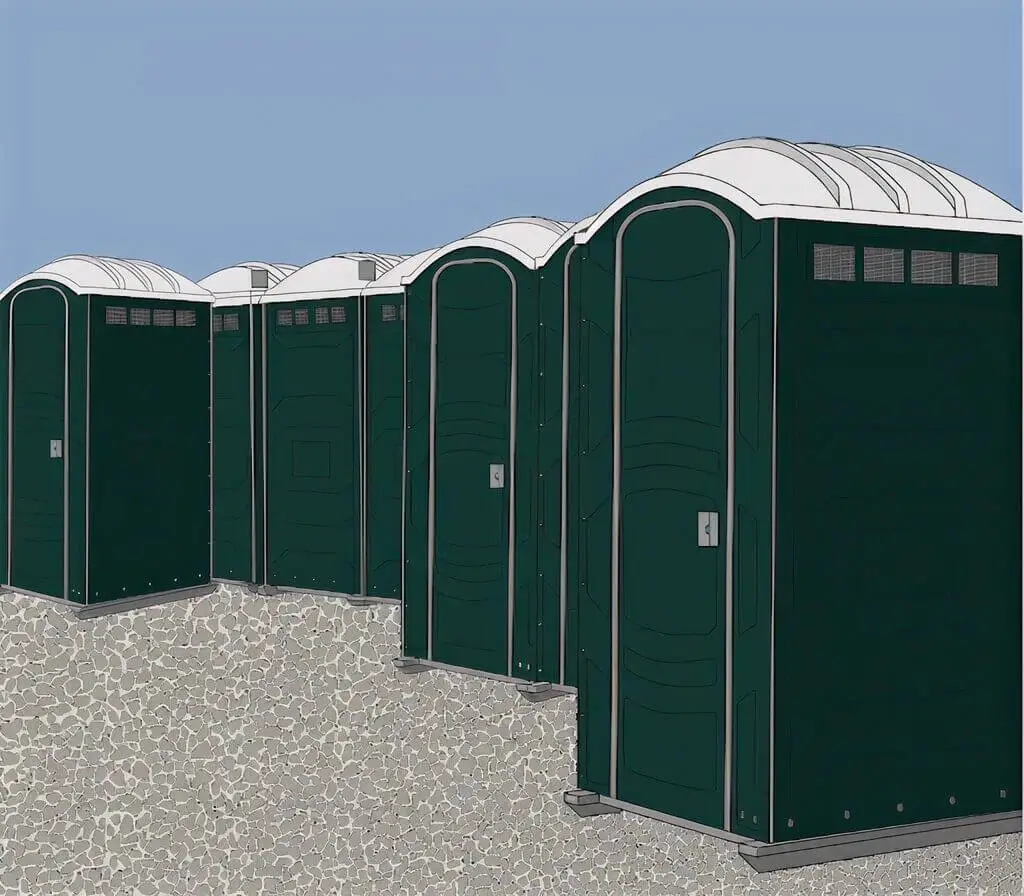
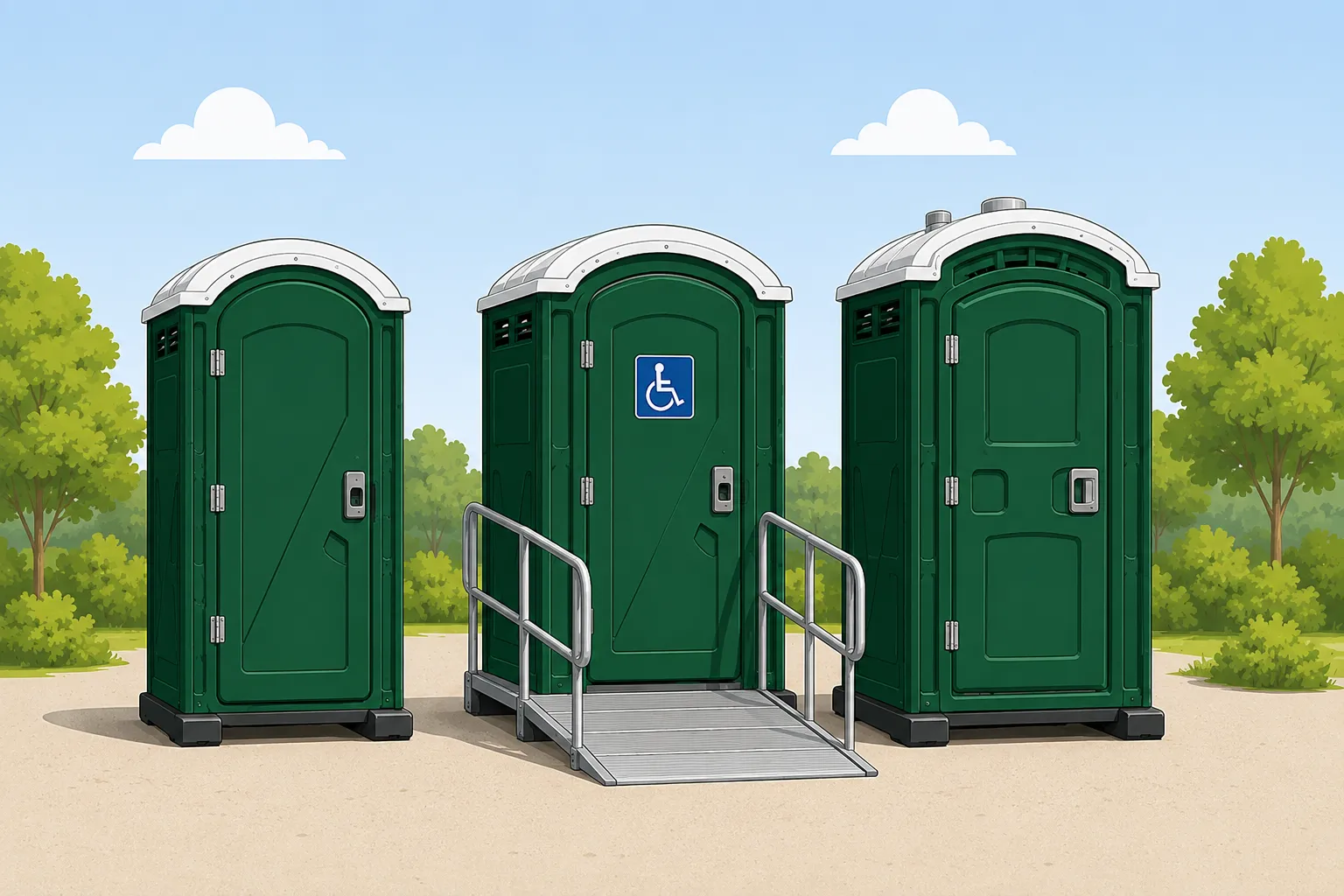
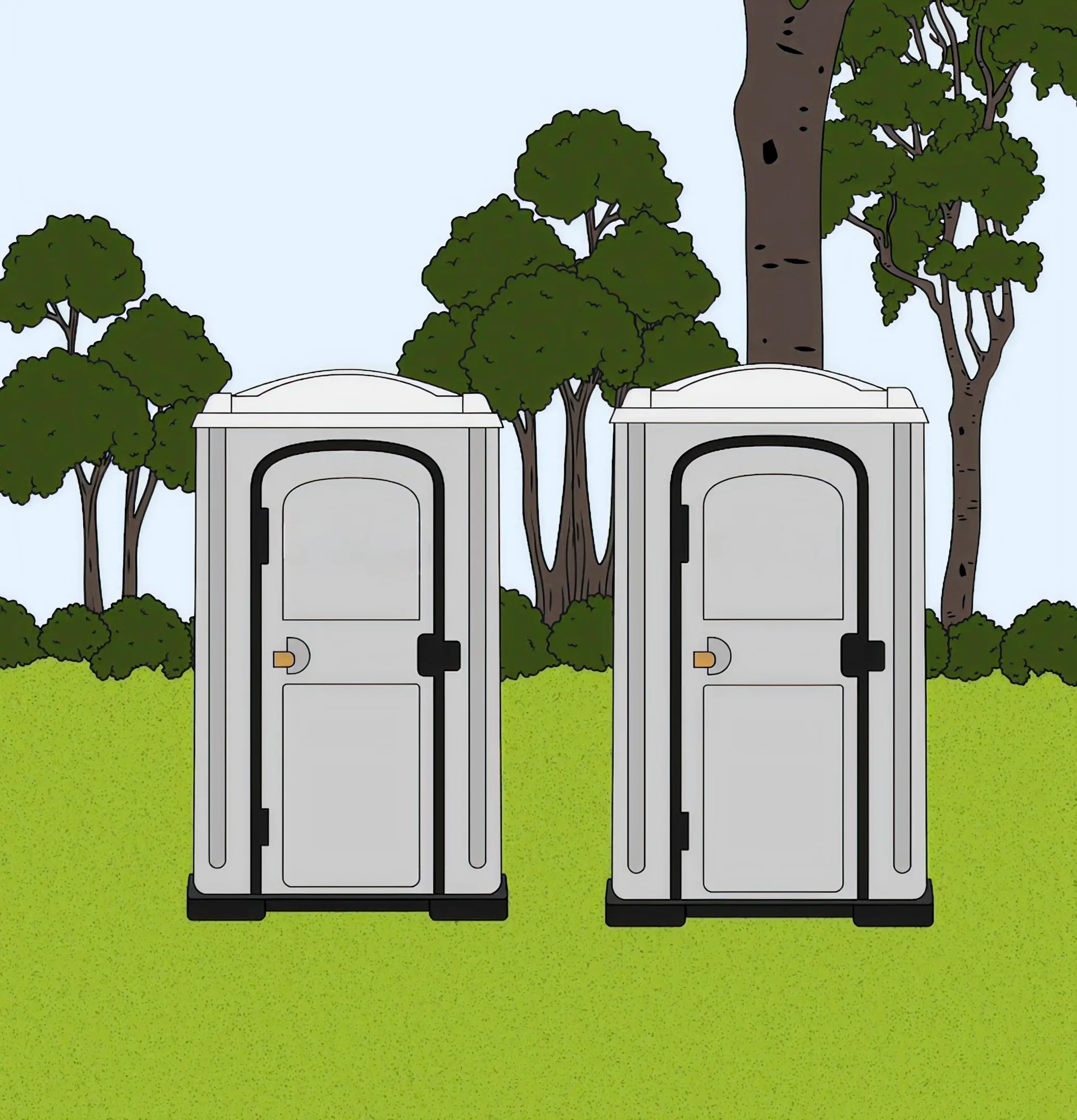
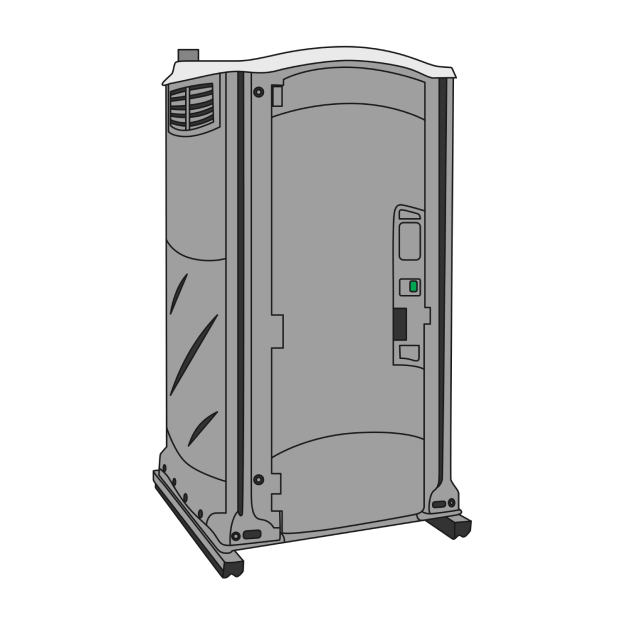
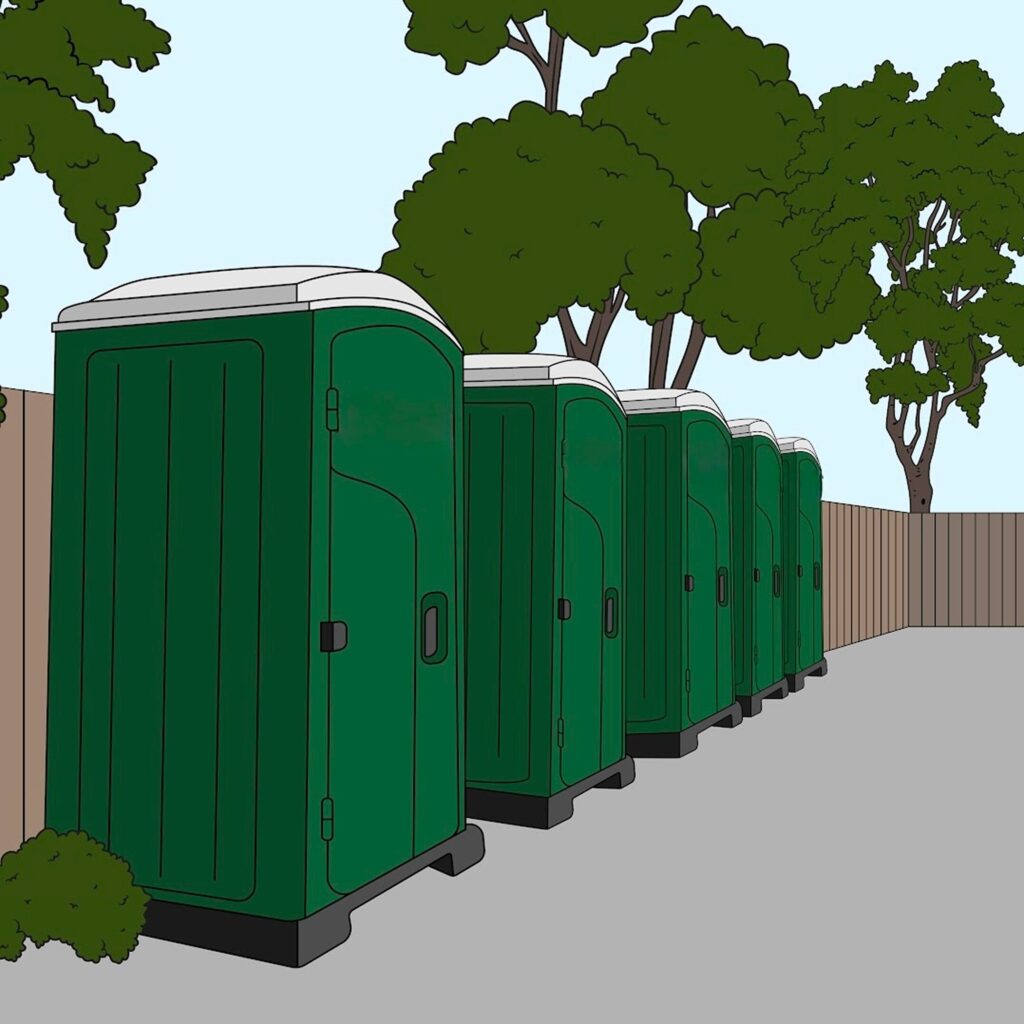
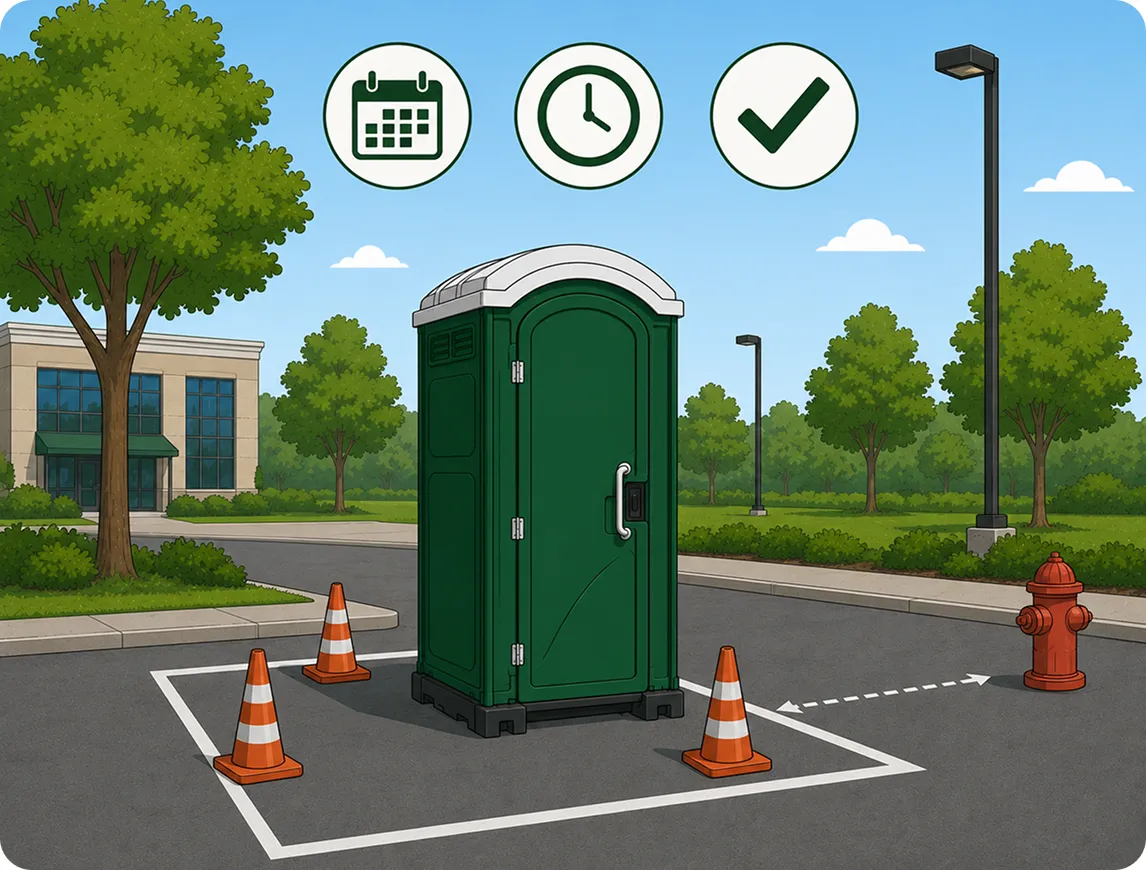
The Standard Porta Potty is the workhorse for building sites and fenced yards. The ADA-Compliant Porta Potty is the wider unit with a level entry, and any event open to the public should have at least one. The Deluxe Flushing Porta Potty gives guests a flush and a fresh-water bowl, which is what most wedding parties want. The Deluxe Porta Potty with Sink puts the handwashing inside the unit, useful where space is tight. The Solar Porta Potty lights itself and earns its keep on county ground with no power. The Handwashing Station stands separately and is the right answer near food. The Restroom Trailer is a different class of thing, with multiple stalls, climate control and real plumbing. You can see the full line-up on our porta potty options page, and your account manager will match the mix to the site.
On private ground, with the owner's agreement, you generally do not need a city permit. The rules bite once a unit touches public ground.
Walla Walla is blunt about that. The city council has declared that obstructions and structures of any kind placed on the city's sidewalks, curbs, gutters or planting strips are unlawful and are nuisances, and it directs the public works director to have them removed. The ordinance then lists what is exempt, and it is a closed list: federal mailboxes, drinking fountains, fire hydrants, ornamental public benches, public sidewalk trash containers, landscaping, trees, utility poles, telephone booths, parking meters, veterans' flag poles, street and traffic signs and signals, bicycle racks, authorized newspaper racks, public clocks and temporary sidewalk signs. A portable restroom is on none of it.
What saves the day is that the same exemption clause opens with the words "elsewhere authorized by this municipal code or approved by the city", and Walla Walla does publish routes:
The city's special event permit publishes no restroom number. That absence is a finding, not an oversight, so the count for a permitted Walla Walla event is something to agree with the city rather than read off a table. Contact the City of Walla Walla at 509-527-4591 and your account manager will take the sanitation conditions from there.
Pick firm, level ground a service truck can reach with a clear approach, because a unit the driver cannot get a hose to is a unit that does not get serviced. Keep it well away from food service and drinking water, and clear of the sidewalk and planting strip unless you hold one of the permits above.
Where the waste goes is settled here, and the city says so in its own words. Walla Walla's wastewater ordinance names portable toilets directly: the treatment plant accepts septage from domestic sources such as domestic septic tanks and port-a-potties, or their equivalent. Loads go to the septic discharge station at the city wastewater treatment plant during business hours, the driver checks in first, certifies that the waste is domestic and pays the charge. The plant turns trucks away on days when it is running at full capacity, and it takes no industrial, chemical or food waste at all.
Walla Walla County licenses the company that empties the unit. Its code makes it unlawful to clean any septic tank, sewage pit or other means of sewage disposal without a registration permit from the county health department. Those permits renew on the first of January, do not transfer, and require a bond or cash deposit so anyone harmed by a registrant's work has something to claim against. The county also makes the credential visible: every permitted vehicle carries the name of the firm and a sign on both sides reading that it is registered by the Walla Walla County Health Department, in letters at least two inches high. You can check that on the truck in your own driveway. Operators keep records of customer, date, who did the work and where the load went, and land application sites have to be approved through the Washington State Department of Ecology.
Standard service is weekly, which suits most crews. Heavy use, hot weather or a long event weekend wants more, and your account manager will set the frequency when you book.
To learn more about the benefits of portable toilets, check out our blog post “Benefits of Porta Potty Rentals.“
Routine standard units for a Walla Walla job site are usually a day or two out. Dated events are a different matter, because harvest season and the spring festival run collide with the same stock everyone else wants.
We cover the whole Walla Walla Valley from here, including College Place next door, Dixie, Waitsburg, Prescott and Touchet, and across the state line into Milton-Freewater. Our nearest porta potty cities on this network all sit west down the Columbia, in the Tri-Cities, so a Walla Walla order is generally served locally rather than from another city on the list.
Walla Walla orders start at $199 to $349 for a standard unit, with $200 to $300 for the accessible model and $300 to $400 for flushing or sink versions. Off-grid vineyard sites take the $500 to $600 solar unit. Stations are $150 to $250 and trailers begin at $1,500. Your account manager prices the schedule with it.
Plan one unit for every 50 guests across about four hours, then add fifteen to twenty percent if you are serving alcohol. A 200-guest wedding wants four units plus a handwashing station. Washington's state festival schedule only engages at 2,000 people over five hours or longer.
Washington writes a tougher table than the federal one, and a Walla Walla site works to it. One unit covers one to ten workers, two cover eleven to twenty-five, three cover twenty-six to forty, four cover forty-one to sixty, five cover sixty-one to eighty, then one more per additional twenty. Tepid wash water and a handwashing facility are required at every site.
Weekly service suits most Walla Walla crews. The driver pumps the tank, washes the interior, restocks paper and sanitizer and leaves the ground clean. Busy sites, hot stretches of summer and multi-day events need two or three visits a week, which your account manager schedules when you book.
On ground you own in Walla Walla, with the owner on side, normally not. Walla Walla's rules apply to public ground, where sidewalks, curbs, gutters and planting strips are protected by a closed exemption list that portable units are not on. Street and event placements need a city permit first, and your account manager finds the right office.
The accessible unit is wider inside, has a level entry with no step, and leaves room for a wheelchair to turn and for grab bars. A standard unit is narrower and cheaper to rent. Any Walla Walla event open to the public should carry at least one accessible unit.
Weekend rentals usually sit at the lower end of the standard range, $199 to $349, with delivery Friday and collection Monday. Wedding parties who want the flushing model pay $300 to $400 for it. Your account manager will price the exact dates, the unit mix and the service visits in a single quote.
Tell us about your event or project and your zip code. We will tell you what the county registration means for your site and what the city will want before a unit goes anywhere near a sidewalk.
Your Prime Dumpster account manager handles the details, from unit count and service schedule to permit contacts and delivery timing, so you can focus on your event or project.
| Business Name: | Prime Dumpster |
| Address: | Walla Walla, Washington 99362 |
| Phone: | 509-509-3229 |
| Website: | https://primedumpster.com/ |
| Monday-Saturday | 7:00 AM - 7:00 PM |
Find your location

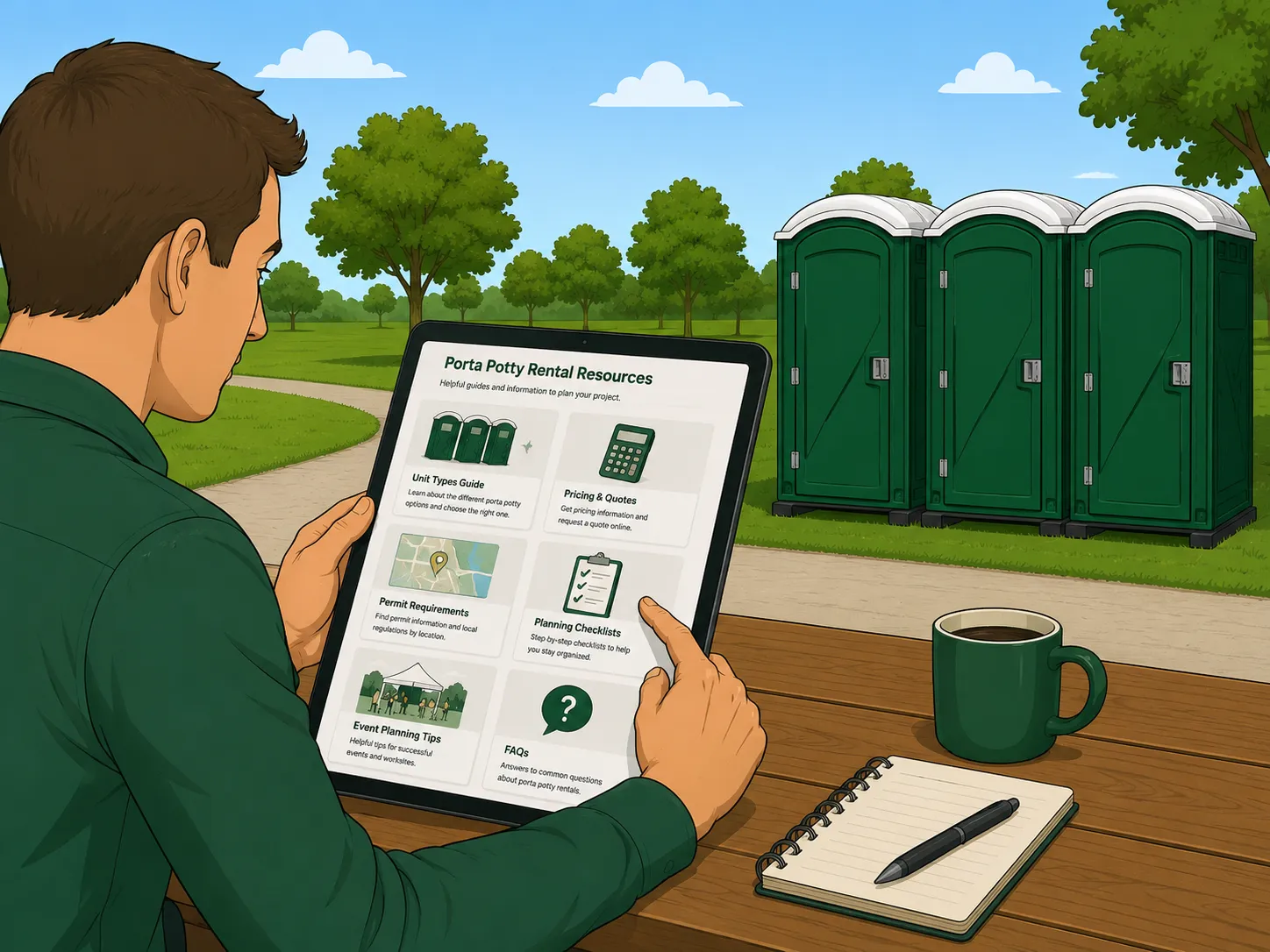
Find all porta potty rental resources in one place, from pricing and unit types to permits and planning guides.

Learn more details about porta potty rental pricing, including easy tips to save money.
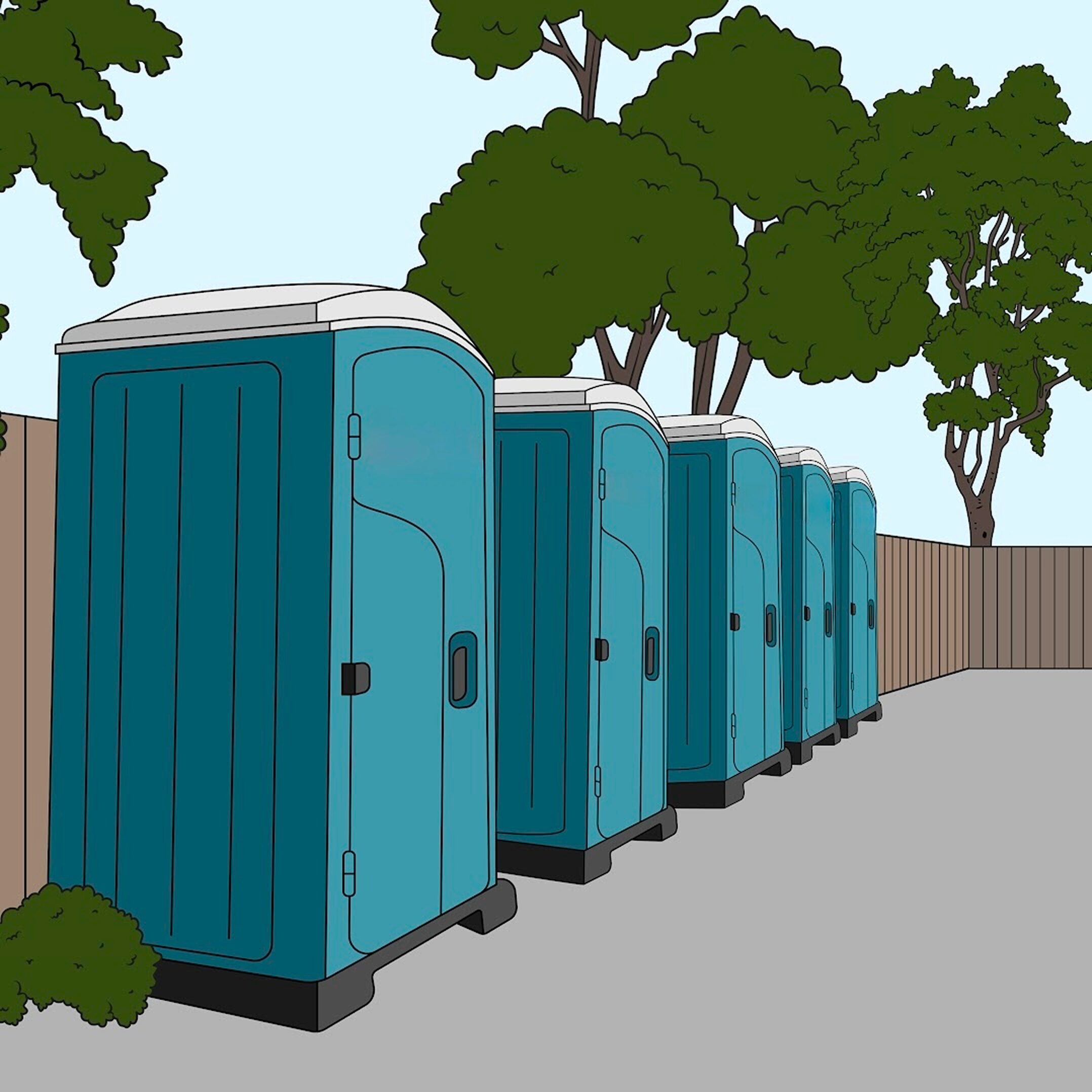
Permit requirements can vary by project and location. Learn more about porta potty permits, regulations, and planning requirements.

Give us a call today so we can help you find the right waste & sanitation solution for your project!