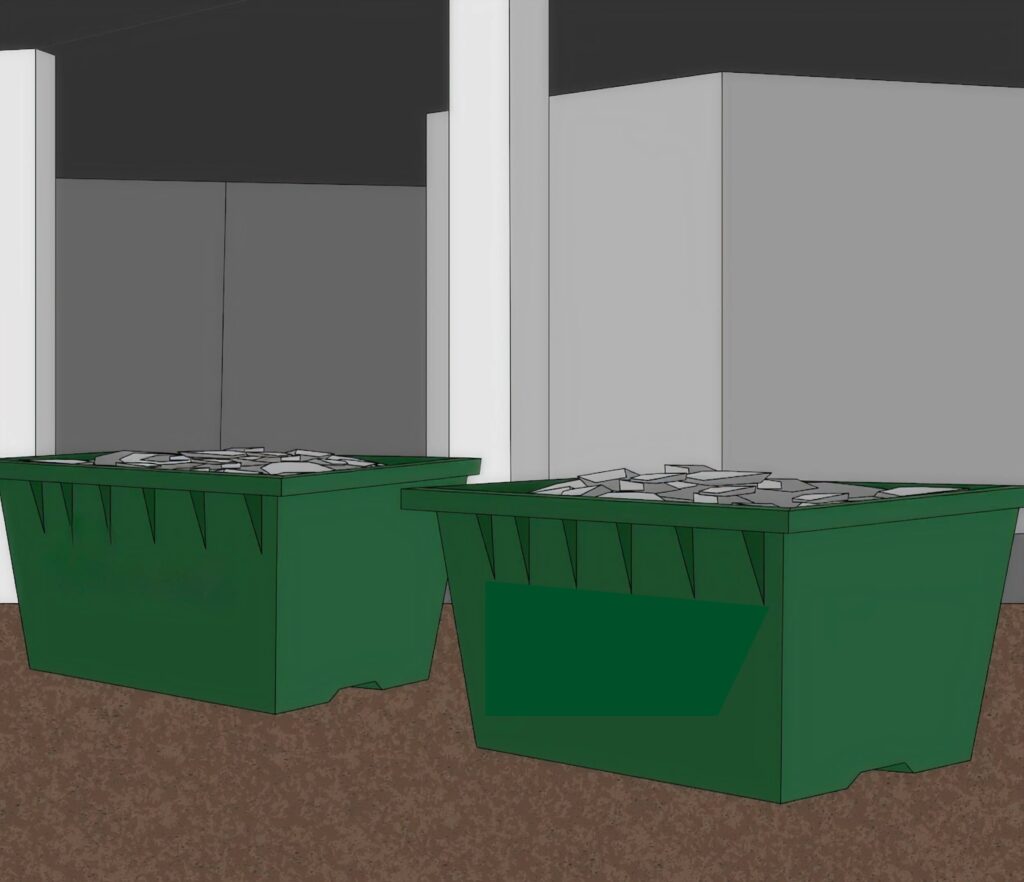
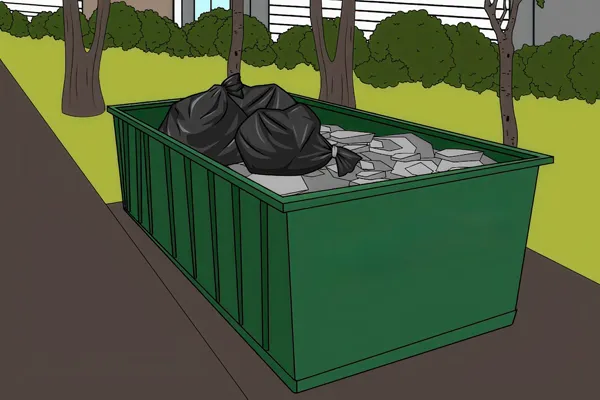
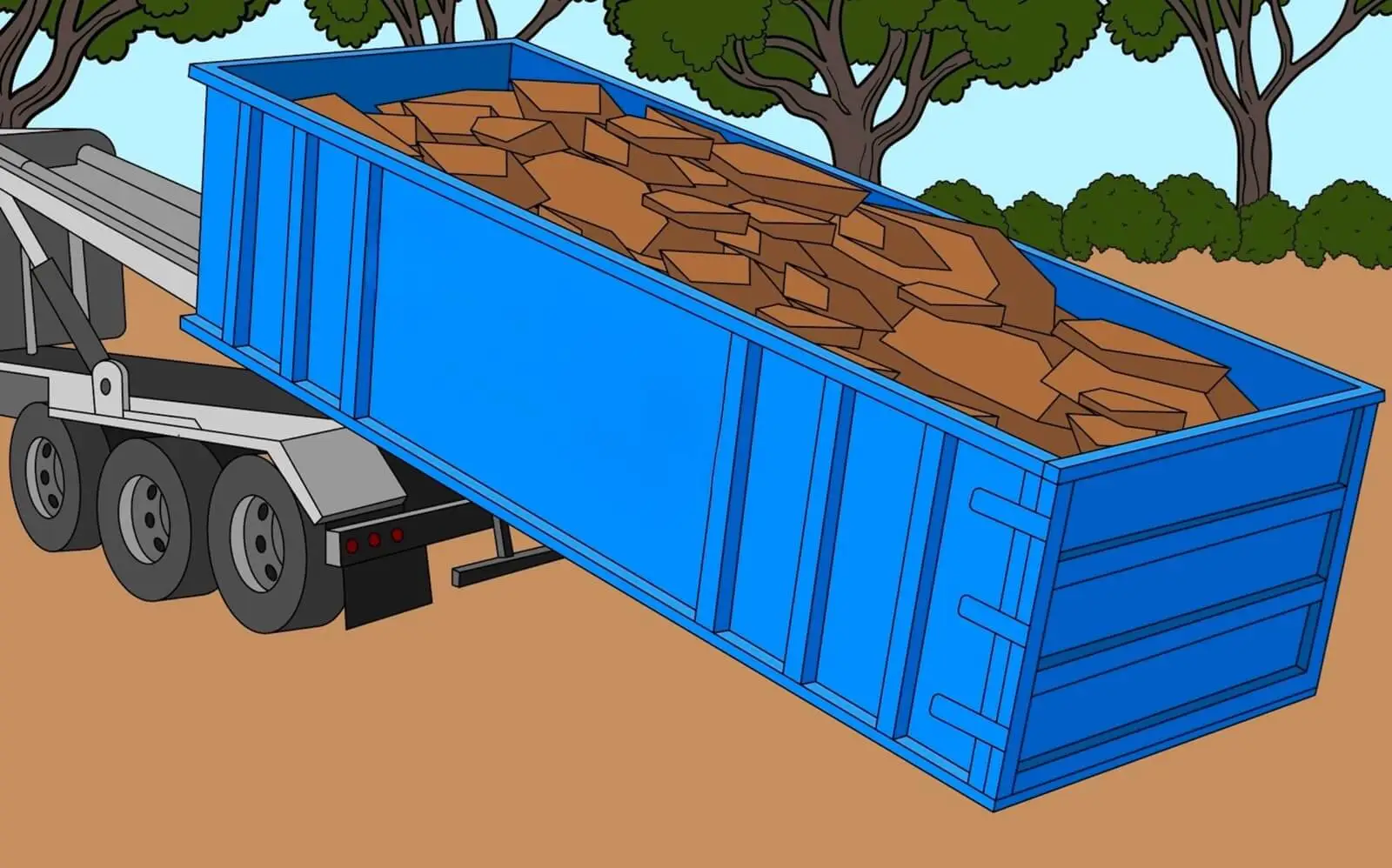
Ordinary construction and cleanout debris is fine. Lumber, drywall, plaster, siding, shingles, flooring, cabinets, doors, windows, furniture, carpet and cardboard all load without trouble, and clean brick, block and concrete belong in the smallest unit.
Hazardous material stays out. Monroe's code makes it unlawful to place hazardous waste in any container for disposal, with one narrow concession: paint cans may go in with the lids removed and no wet paint, and kitty litter or sand may be added to solidify what is left. That concession is for cans, not for a drum of thinner, so treat the rest of the list as a flat no: solvents, fuel, motor oil, antifreeze, propane cylinders, pool chemicals, pesticides, asbestos-containing material, wet batteries and liquids of any kind.
Two Monroe-specific rules catch people out. Live coals and hot ashes may not go in a container at all; ashes are accepted only once they have been wetted, are cool to the touch and are in securely tied bags. And sharps have to be rendered inoperable and placed in a secure container, because the city's rule is written around protecting the person who empties it.
Clothing, bedding, mattresses and bed springs from a home where a highly infectious disease has occurred are a separate case. They may be removed only under the direction of the county Environmental Health Department and may not be put in a container or at the curb.
Tires need confirming with your account manager before they go in, because the county takes them on different terms from ordinary debris.
If something is borderline, say a partly used tin of deck stain, a sealed drum or a cast iron tub, run it past your account manager before it goes in.