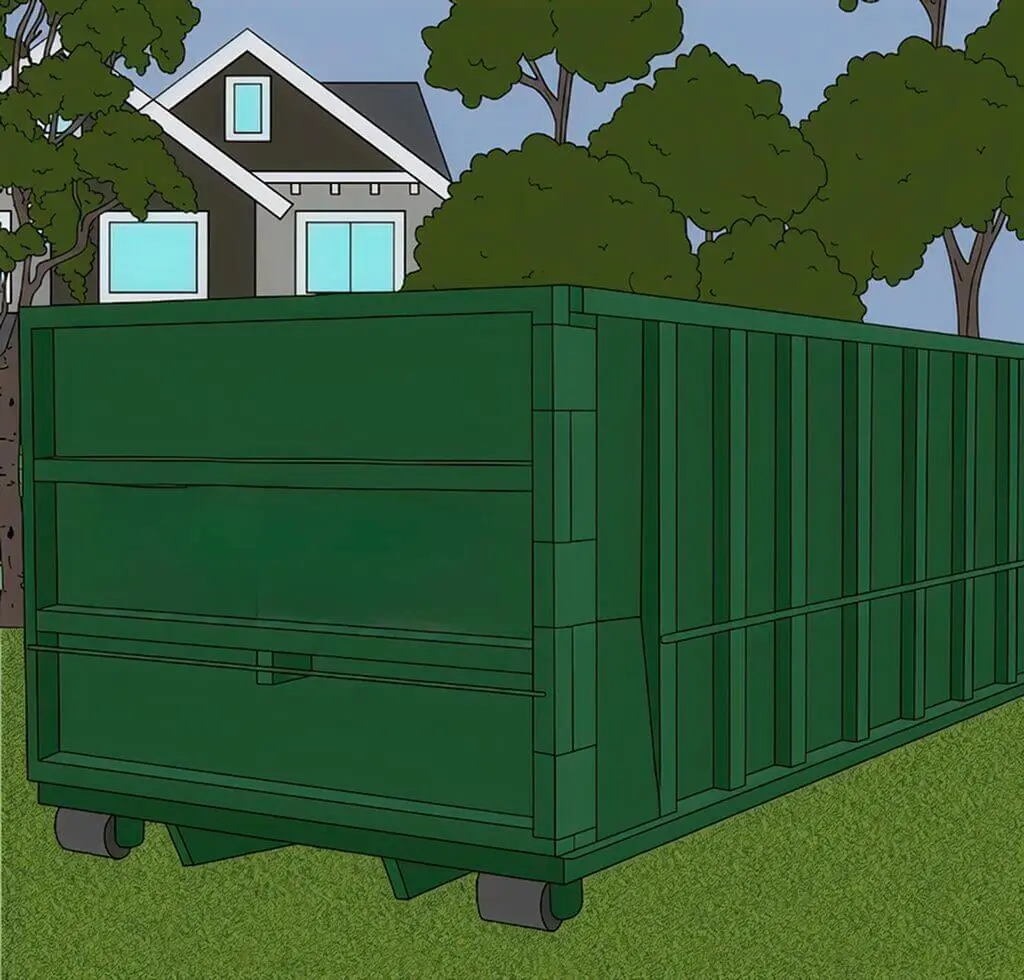
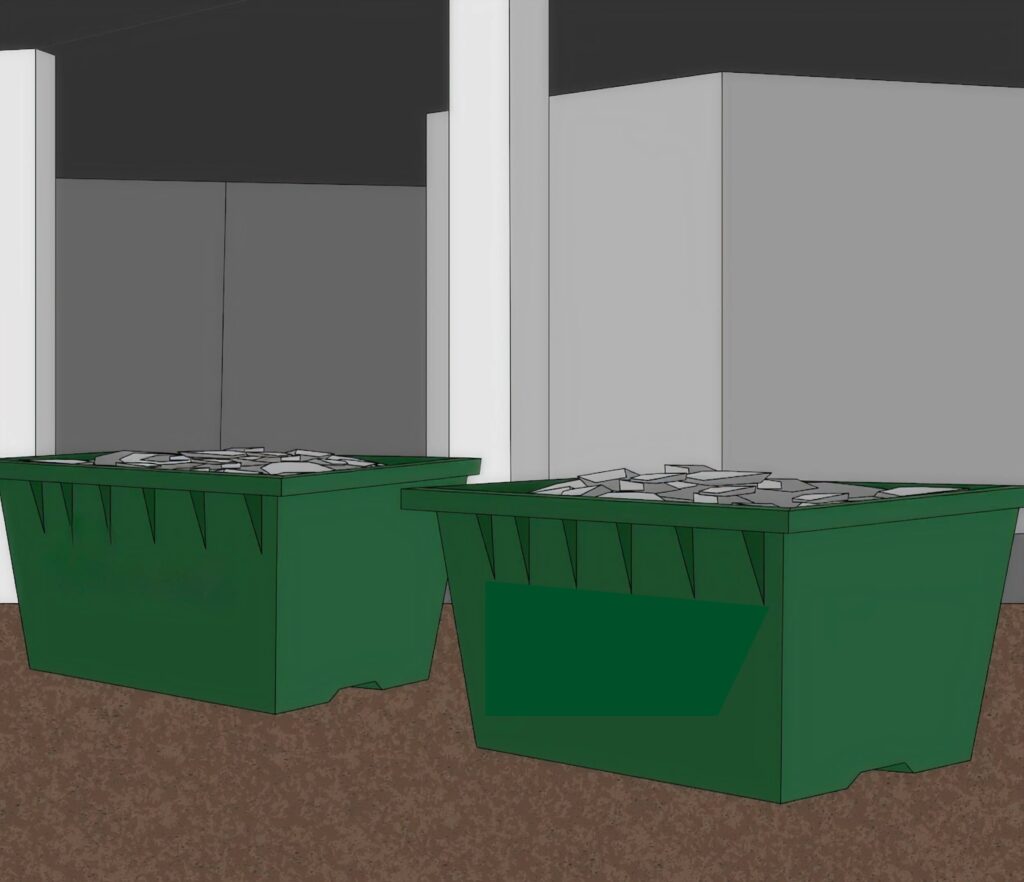
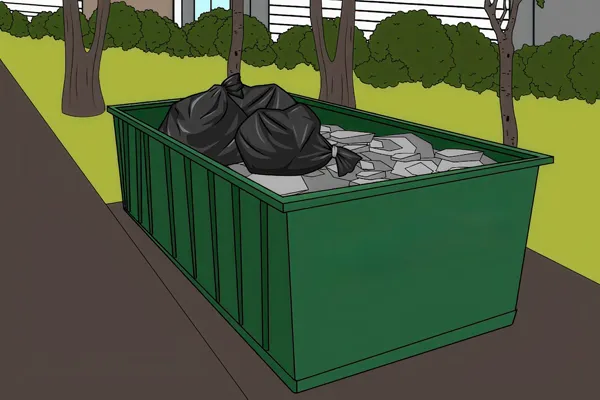
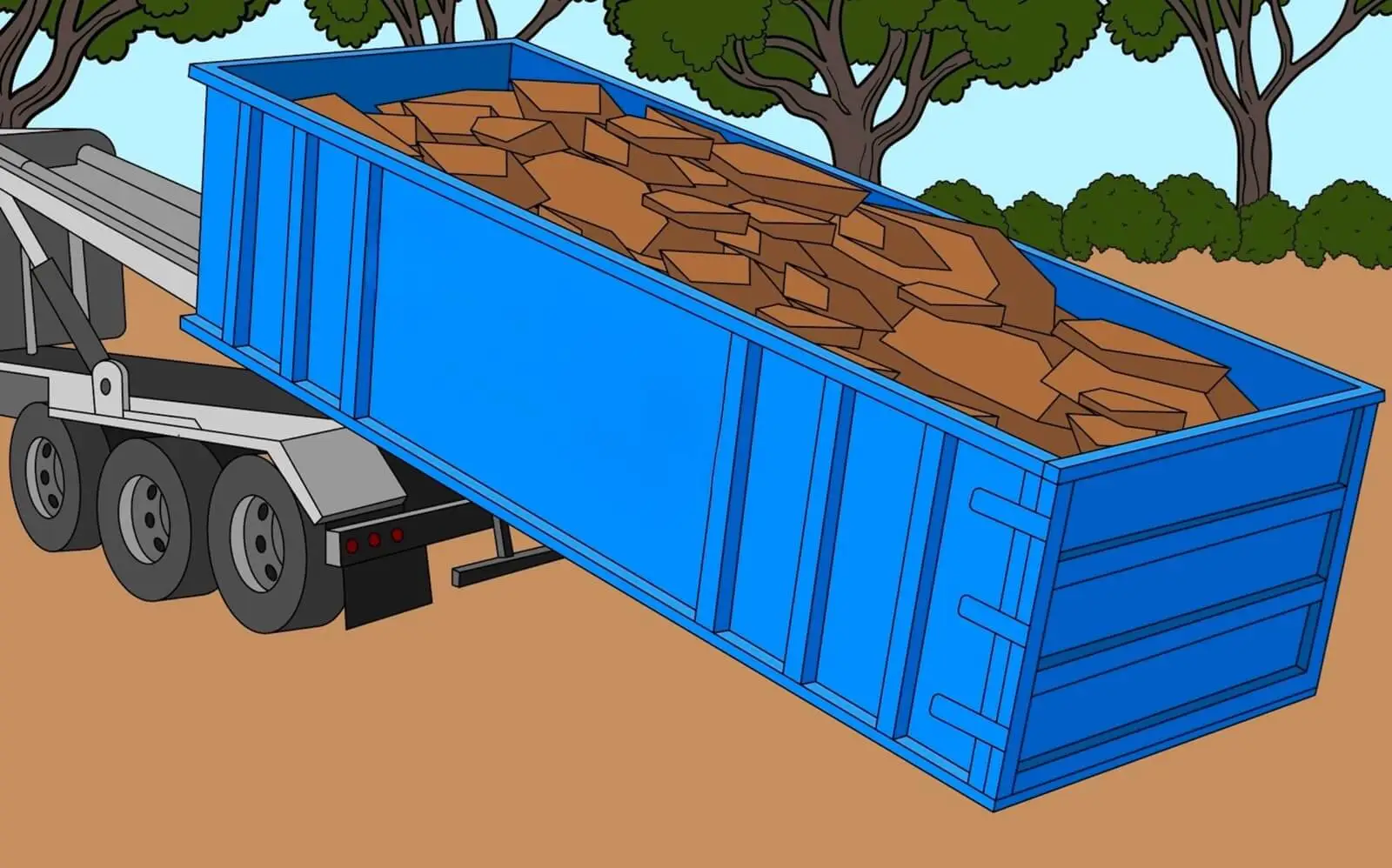
Lumber, drywall, roofing, flooring, carpet, cabinets, fixtures, siding, furniture and general cleanout debris are all ordinary roll-off material.
The Wake Forest code sets out what the Town itself will not collect or dispose of: industrial waste, hazardous waste and vehicle tires. It also tells residents in plain terms to privately dispose of building material such as brick, masonry block, rock, dirt, large quantities of drywall or sand, and any building material resulting from work done in the course of business. That last clause is the clearest demand signal in the code, because it puts the disposal of a contractor's debris squarely on the owner's own arrangements.
The general exclusions apply too. Liquids, paint and solvents, fuel, motor oil, antifreeze, pressurized cylinders and asbestos have no place in a Wake Forest container. Asbestos is worth checking in the historic district and in anything built before the late 1970s, where it shows up in floor tile, pipe wrap and textured ceilings, and it needs a licensed abatement contractor.
North Carolina adds a statewide limit that bites on any renovation load: fluorescent lighting and mercury-containing thermostats are banned from disposal in this state and need a separate recycling route. On a Wake Forest commercial fit-out that comes up often.
Electronics are their own stream too, which matters on a Wake Forest office clearance where the furniture and the hardware come out of one room.
The origin rule is the local one to remember. Material from outside the town limits may not be put into a container inside them, so flag a job that straddles a boundary when you book.
Tell your account manager what the debris is and roughly when the building went up, and the separate routes get arranged alongside the container.