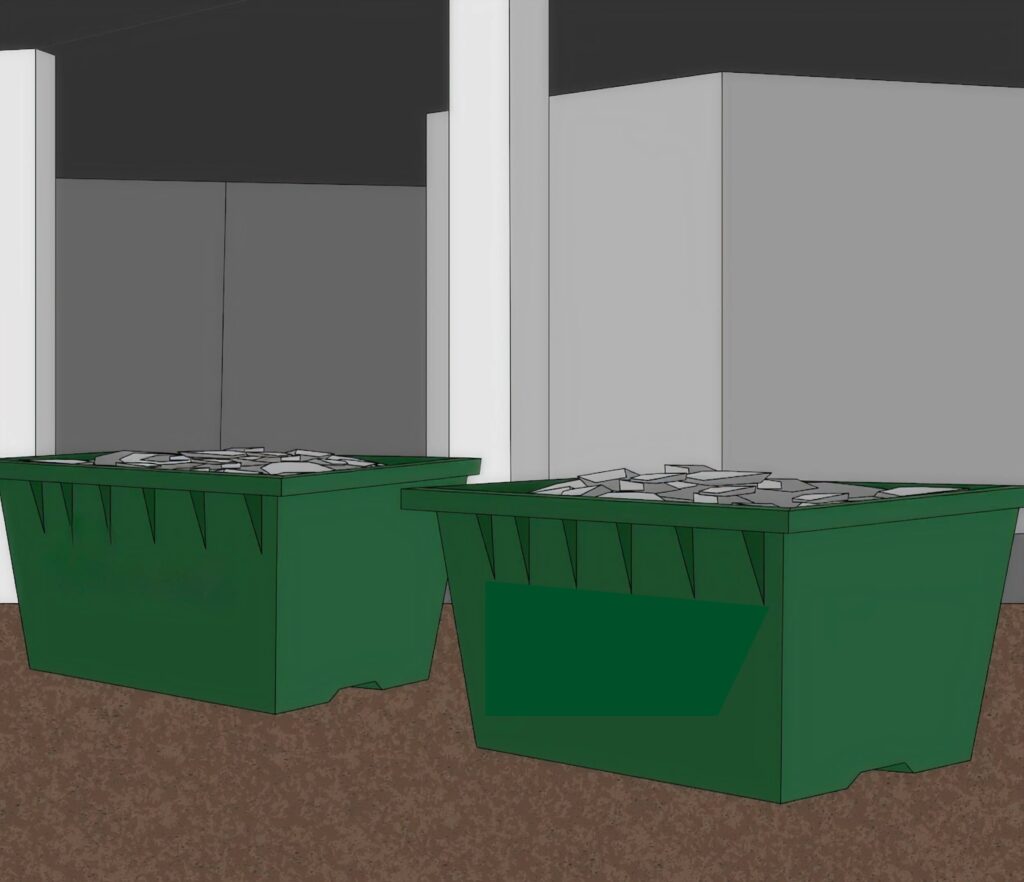
Everyday building and household debris is fine to load. The limits come from the class of landfill your container is sent to and from the material no site anywhere will accept.
Texas sorts its landfills into classes and the class decides the contents. The state's own list of active landfills shows a Type I site may accept all types of municipal solid waste, while a Type IV site may take only brush, construction and demolition waste and rubble and may not accept household or rotting waste. That is why a few bags of kitchen trash dropped into an otherwise clean demolition load can redirect the whole container to a different and costlier destination.
Hazardous material stays out of every container. Paint, solvents, thinners, fuel, motor oil, antifreeze, pool chemicals, pesticides, propane tanks, and any sealed drum of liquid all need separate handling, and asbestos is licensed removal work that travels its own route. Pearland's own rules also push special waste back onto the generator: industrial customers producing it are responsible for its disposal themselves, and the City's contractor will not collect it.
Tires, lead-acid batteries, appliances holding refrigerant, and large electronics are handled separately as well, and they are usually billed per piece rather than by weight.
If you are holding something and you are not sure which pile it belongs in, ask your account manager before it goes over the rail.