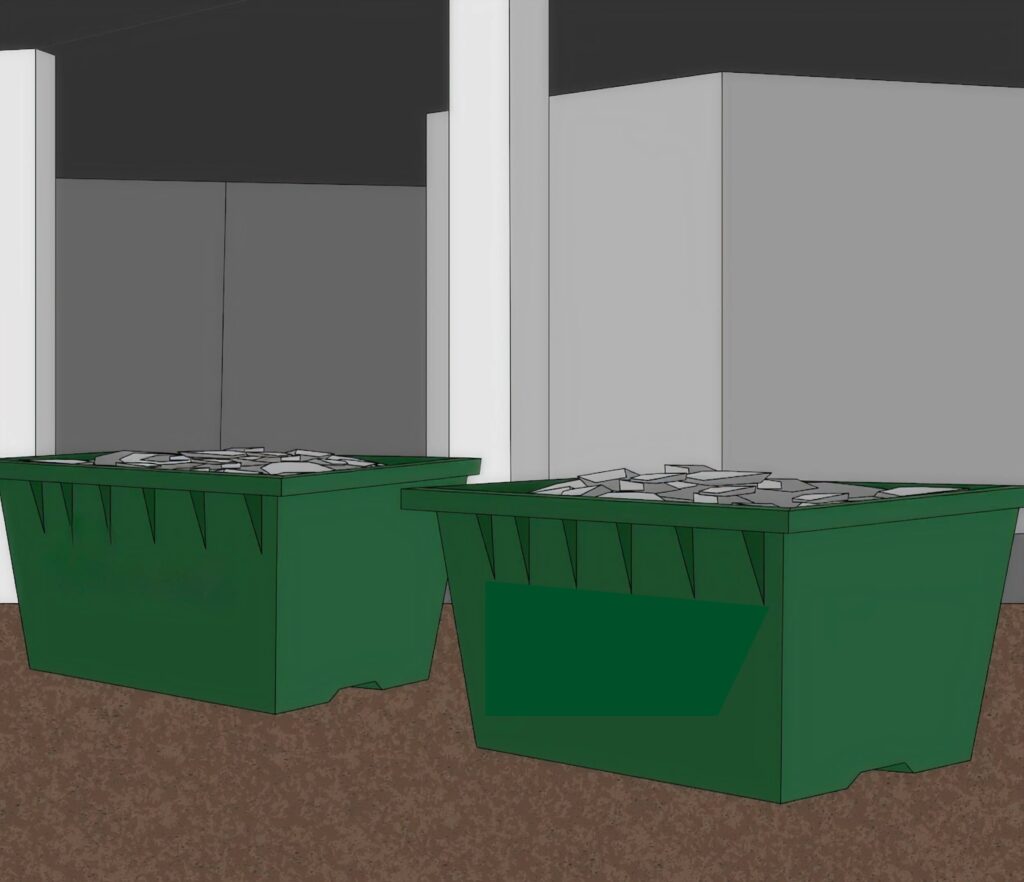
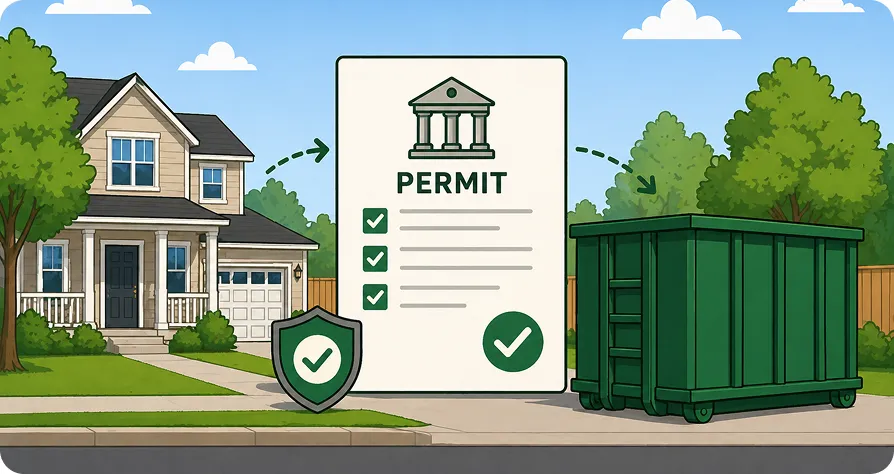
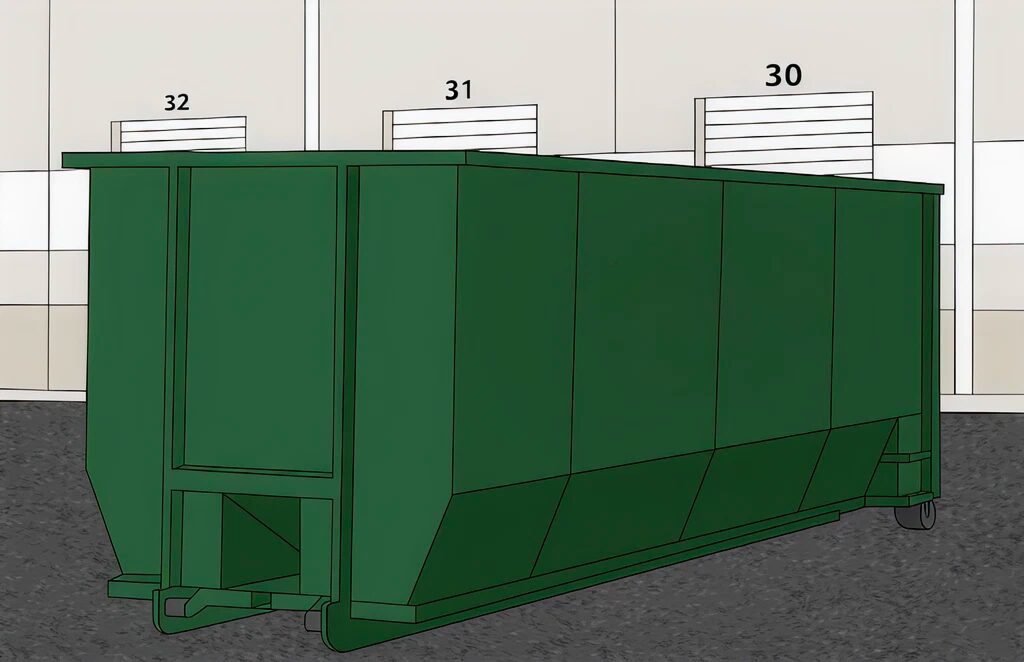
A container on private property, in a driveway or inside a job-site boundary, is the normal arrangement in Temple Terrace and that is how nearly every job here is served.
On the legal question this city is genuinely helpful, and the detail is worth setting out because it is better than the usual answer. The city's solid waste article defines solid waste so as to exclude building and construction materials by name. It then defines those materials separately, as sand, wood, stone, brick, cement, concrete, construction blocks, roofing and other building materials from a remodeling project. The article's collection rule reaches only solid waste and recyclables. So on the city's own definitions, a construction load sits outside that rule.
The city goes one step further, and this is the part worth quoting to anyone who doubts it. Its code states that the city shall not collect building and construction materials, whether they come from a contractor, an occupant or an owner. It then says that such waste will be picked up and disposed of via a commercial type of container service. The same article defines that term to include a large container, a dumpster, an open-topped roll-off container or a compactor. The city has named the product and pointed at it.
Two honest caveats belong here rather than buried. First, the city's older health and sanitation chapter carries a broader rule, written without definitions. It makes it unlawful to collect, or to permit anyone to collect, solid waste or recyclables from a bin, can, container or dumpster. The exceptions are city crews and anyone working under contract with the city with a special written permit from the director of public works. That rule reaches the customer as well as the hauler. The later and more specific solid waste article should govern. On a commercial job the sensible step is to have the director confirm it, and your account manager raises that for you.
Second, placement. The solid waste article says refuse may not be placed in a street, alley or other public place, or on private property. The exceptions are proper containers for collection and express approval from the director of public works. That is a published route rather than a ban. The health chapter adds a separate rule against anything on a street, curb or sidewalk that might be a menace to traffic, which is a condition rather than a ban. In practice: driveway placements are routine, anything touching the public way goes through the director, and the city's licensing chapter contains no waste class at all.